

Layne Staley (1967–2002): The Voice That Still Echoes in Us All
Layne Staley wasn’t just another frontman — he was the cracked mirror of our generation. His voice carried every ache, every truth, and every sleepless night we never said out loud. In this CommonX tribute, we look back at the man who turned pain into poetry and left an echo that refuses to fade.
by Ian Primmer, Co-host-CommonX
When Layne Staley took the stage during MTV Unplugged, it wasn’t just another performance — it was confession through melody. His hollow eyes told stories the lyrics could barely contain. The lights were soft, the air thick with silence, and a generation sat frozen in front of their TVs watching a man unravel his soul.

Layne Staley performs on MTV Unplugged, seated under soft blue-purple lights, microphone in hand, delivering an emotional performance that defined the 1990s grunge era.
Staley didn’t just sing about pain — he made it sound beautiful. Every note was a war between addiction and truth, between the life he lived and the one he wished he could reach. In an era that taught Gen X to bury feelings beneath sarcasm and cynicism, Layne stood there — fragile, unfiltered, unafraid — and let it all bleed through the mic.
“I believe in love and what it’s done to me.”
Those words, that trembling voice, became the heartbeat of the 90s Seattle sound — a generation of latchkey kids, garage-band dreamers, and late-night thinkers who found comfort in his chaos.
The Weight of a Generation
For many of us, Alice in Chains wasn’t background music; it was a survival tool. Staley’s voice could make you feel less alone in the middle of a storm. Songs like Nutshell, Down in a Hole, and Rooster weren’t just tracks — they were lifelines. Every time Layne opened his mouth, it was like he reached into the static of our teenage bedrooms and said, “I get it.” Even now, his performances remain hauntingly timeless. Watch that MTV Unplugged session again and you’ll see it — the rawest honesty ever broadcast through a mainstream channel. It was unpolished, imperfect, and completely unforgettable.
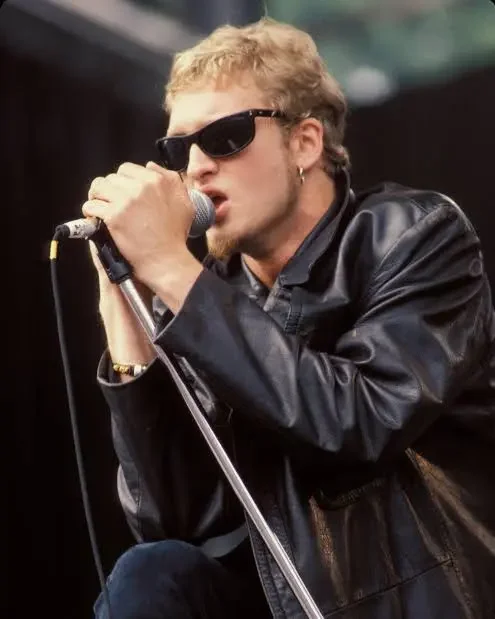
Layne Staley live in concert — the soul of Alice in Chains. His delivery was never about perfection; it was about truth. Every lyric carried the weight of lived experience, making him one of the most honest voices to emerge from the Seattle grunge movement.
The Beauty in the Broken
Layne’s story wasn’t a fairytale. It ended too soon, and yet his voice never really left. His pain became a mirror for an entire generation still trying to understand why the brightest lights often burn the fastest. In the years since his passing, his influence has only grown stronger. You can hear his echo in every modern artist who dares to show vulnerability, who sings like they’ve lived every word. Layne Staley didn’t just define an era — he humanized it.
Still Echoing
Two decades later, we still hear him — in the static between songs, in the ache of every record player needle, in the hearts of every Gen X’er who refuses to let the past fade quietly. He was more than a frontman. He was a poet for the misunderstood.
And as long as his songs keep playing, Layne Staley will never really be gone.
Rare Vinyl logo and imagery symbolizing classic record collecting — stacks of vintage LPs, turntables, and album art — representing a global destination for authentic vinyl records.
About This Article
This tribute is part of The X-Files series by CommonX Podcast, where we celebrate the artists, thinkers, and cultural sparks that shaped Generation X.
🎧 Read more at commonxpodcast.com/thex-files

The 90’s Home Run Kings: When the Crack of a Bat Still Meant Something
“From Ken Griffey Jr.’s smooth swing to backyard Wiffle ball showdowns, the ‘90s Home Run Kings defined a generation. CommonX looks back at the era when baseball was pure, personal, and played for love of the game — with a nod to Franklin Sports, the gear that started it all.”
There was a time when baseball wasn’t about algorithms, launch angles, or exit velocity — it was about swagger. About flipping on the TV, hearing that crowd swell, and seeing a man step into the box with nothing but pine tar, determination, and a dream.
The 1990s gave us an era of pure magic. You could walk into any backyard in America and hear kids calling out names — McGwire, Sosa, Griffey Jr. — before swinging at tennis balls with a cracked aluminum bat. The Home Run Chase of ’98 might’ve been the headline, but for those of us here in the Pacific Northwest, Ken Griffey Jr. was our guy. The smoothest swing the game has ever seen. He didn’t need the hype or the headlines — he had that effortless smile, the backwards cap, and a natural rhythm that made every home run look like poetry.
Griffey wasn’t just a player — he was a cultural landmark. In the PNW, he turned baseball into an art form, and for a generation of Gen-Xers, he became the symbol of what made the 90s real. The game wasn’t filtered, sponsored, or over-analyzed. It was grit, heart, and the smell of dust on a summer evening.
And every one of us had our own backyard version of that dream — a glove that never quite broke in, a bat we swore was lucky, and a Franklin ball set that somehow survived a hundred neighborhood games. It was the golden age of backyard baseball — before smartphones, before streams, before anyone said “content.”
That’s why we’re throwing it back today — to remember the kings who made the 90s unforgettable and to celebrate the gear that helped build those memories.
The Legacy Lives On
We didn’t grow up chasing algorithms or comparing exit velocity; we grew up chasing fly balls until the sun dipped behind the neighborhood trees. Those summer nights were the real highlight reels — dirty hands, busted knuckles, and that one friend who could launch a plastic ball clear over the fence like he was Sosa.
But for those of us who came up in the Pacific Northwest, one name still echoes louder than all the rest — Ken Griffey Jr. He wasn’t just a player, he was the soundtrack to our summers. That swing was pure rhythm, that backwards cap pure rebellion. Griffey taught an entire generation that cool didn’t mean trying too hard — it meant being yourself, and letting the work speak louder than the hype.
Today, when you pull on a glove or toss a ball to your kids in the yard, you’re not just passing time — you’re passing down a piece of that era. It’s more than nostalgia; it’s legacy. And whether you’re dusting off your old mitt or starting fresh with new gear, Franklin Sports is still out there — same logo, same spirit, same connection to the game we grew up loving.
👉 Check out Franklin Sports gear here — because the only thing better than remembering the 90s is reliving them with your own crew.


The X Files: The Greatest Horror Movies of the 1980s — When Fear Was FUN
Step back into the scream-soaked glow of the 1980s — when fear was fun, monsters had swagger, and Gen-X ruled the VHS era. From Freddy Krueger’s nightmares to The Lost Boys’ leather-clad rebellion, the CommonX X Files rewinds to the decade that made horror iconic.

If you were a Gen-X kid, chances are your first taste of rebellion didn’t come from a guitar riff — it came from the glow of a tube TV at 1 a.m. while your parents slept and Freddy Krueger whispered your name. The ’80s didn’t just make horror; it perfected it.
🩸
1. A Nightmare on Elm Street (1984)
Wes Craven’s dream demon turned sleep into a deathtrap and forever blurred the line between nightmare and reality. Freddy was every babysitter’s worst bedtime story and the first horror villain with true rock-star swagger.
🪚
2. The Thing (1982)
John Carpenter took paranoia to Antarctica and showed us that the real monster was the friend sitting next to you. Practical effects that still hold up 40 years later? That’s Gen-X craftsmanship.
🧟
3. The Evil Dead (1981)
Sam Raimi’s cabin-in-the-woods insanity birthed both cult horror and DIY filmmaking. Ash Williams became the chainsaw-armed blueprint for every reluctant hero that followed.
🔪
4. Friday the 13th (1980)
Before Jason donned the hockey mask, Camp Crystal Lake already ruined summer camp for an entire generation. Slasher tropes, blood budgets, and unforgettable screams — the ’80s started it here.
👻
5. Poltergeist (1982)
“They’re here…” Nothing captured suburban dread like this Spielberg-produced classic. Haunted TVs, static screens, and the myth that cursed the cast — it’s American folklore now.
🧛
6. The Lost Boys (1987)
Leather jackets, Echo & the Bunnymen, and vampire teens that made immortality look sexy. It wasn’t just horror; it was style — pure Gen-X rebellion with fangs.
💀
7. Hellraiser (1987)
Clive Barker’s masterpiece of pain, pleasure, and imagination opened a puzzle box we’ve never closed. The ’80s dared to get weird, and Pinhead made sure we liked it that way.
⚡
Why It Still Matters
These films weren’t just scary — they were mirrors of a generation that grew up between nuclear drills and MTV. They taught Gen-X that fear could be art, and art could be outrageous.
So cue up your VHS, dim the lights, and remember:
we survived the ’80s — and the monsters were our friends.