

THE HEROIN DIARIES: THE DARKEST PAGE IN ROCK & THE FIGHT TO STAY HUMAN
Nikki Sixx’s “The Heroin Diaries” is more than a memoir—it’s a raw, unfiltered look into addiction, survival, and the brutal reality behind rock’s most infamous era. In this CommonX X-Files deep dive, we examine the madness, the music, and the message that still echoes through generations.

By Ian Primmer CommonX Podcast — X-Files
Christmas Day, 1987
Nikki Sixx was dead. Clinically. Literally.
Two needles full of adrenaline later, his heart screamed back to life in a cheap Los Angeles apartment surrounded by strangers, paranoia, blood, and a body count of empty syringes. Outside, the world kept spinning to the soundtrack of “Home Sweet Home.” Inside, one of rock’s most iconic bassists lay in the shadows between fame and oblivion.
This wasn’t a movie. This wasn’t glam.
This was the truth behind the eyeliner.
And it became The Heroin Diaries.
GENX GREW UP ON THE CHAOS
We didn’t just witness the 80s—we were raised on it.
MTV, neon lights, hairspray bands, leather jackets soaking in cigarette smoke, and the soundtrack of a generation blasting from boom boxes. Our heroes looked bulletproof. Our icons were immortal.
And our culture said never show weakness.
Behind the music, there was a darkness no one wanted to talk about:
addiction
mental collapse
the crushing pressure of success
loneliness buried under the noise
Nikki Sixx put every ugly truth on paper. Not because he wanted sympathy—because he wanted to remember what he barely survived.
THE MONSTER BEHIND THE MUSIC
Heroin doesn’t care if you’re famous. It doesn’t care if you’re rich. It doesn’t care if you have a sold-out world tour. It’s a black hole that eats everything.
In Sixx’s own words from the diaries, he described entire weeks of paranoia so intense he barricaded himself inside his bathroom with a loaded gun, convinced intruders were coming to kill him. He wrote about crawling on the floor searching for imaginary needles. He wrote about seeing demons in his mirror. He described his mind as a battlefield where he was both the soldier and the casualty.
And all of it was happening while he was writing platinum hits. That’s the part GenX understands better than any other: the mask and the meltdown can coexist.
THE DIARY ISN’T ABOUT DRUGS — IT’S ABOUT DESPERATION
The Heroin Diaries is brutal because it’s honest. It’s pages stained with fear and ego and shame and hope all tangled together. Sixx wrote about losing everything that actually mattered:
family
friendships
identity
sanity
He even wrote about being hated by the version of himself he used to be. And it’s heartbreaking because you can feel him clawing at life while the world cheered his destruction.
WHAT OUR GENERATION LEARNED THE HARD WAY
GenX didn’t grow up with therapy culture.
We grew up with “walk it off.”
We grew up with silence.
We grew up with mental health shoved in a closet and locked with a padlock. We lost legends because of it:
Chester Bennington
Chris Cornell
Layne Staley
Shannon Hoon
Scott Weiland
And countless people we knew personally who weren’t famous enough for headlines. Nikki Sixx was lucky. He lived long enough to become a warning instead of a statistic.
2025: THE REALITY CHECK
Addiction doesn’t look like it did in the 80s. Today it’s quieter.
It’s the person next to you at work.
It’s the veteran who can’t sleep.
It’s the parent who hides their pain.
It’s the guy at the gym trying to outrun a past that claws at his heels.
Even now — decades after Nikki’s overdose — suicide rates climb. Veterans fight invisible wars long after the battlefield. People spiral in silence because they fear judgment more than death.
That’s why CommonX exists.
Not to lecture — to talk, openly.
To punch through the stigma with honesty and humanity.
To tell the truth that most people are afraid to say out loud.
THE COMEBACK
Nikki Sixx’s comeback wasn’t glamorous.
It wasn’t a montage set to “Kickstart My Heart.”
It was withdrawals, therapy, rebuilding his brain one sober hour at a time.
It was choosing life by inches. And that’s the real message of The Heroin Diaries: Recovery isn’t a highlight reel. It’s a knife fight with your own past.
WHY HIS STORY STILL MATTERS
Because it proves something we need to tattoo on the soul of this generation: You can be broken and still come back.
You can fall off the edge and still climb back up.
You can be dead for two minutes and still walk back into the light. And you can take your story and use it to help somebody else find theirs. That’s the heart of CommonX. That’s the mission. That’s why this article exists.
THE FINAL NOTE
Nikki Sixx didn’t write The Heroin Diaries to glorify anything.
He wrote it to remember.
He wrote it to anchor himself to truth.
He wrote it to keep someone—ANYONE—from following him into the abyss. And maybe—just maybe—that’s the legacy he didn’t know he’d leave.
Nikki Sixx’s “The Heroin Diaries” is more than a memoir—it’s a raw, unfiltered look into addiction, survival, and the brutal reality behind rock’s most infamous era. In this CommonX X-Files deep dive, we examine the madness, the music, and the message that still echoes through generations.
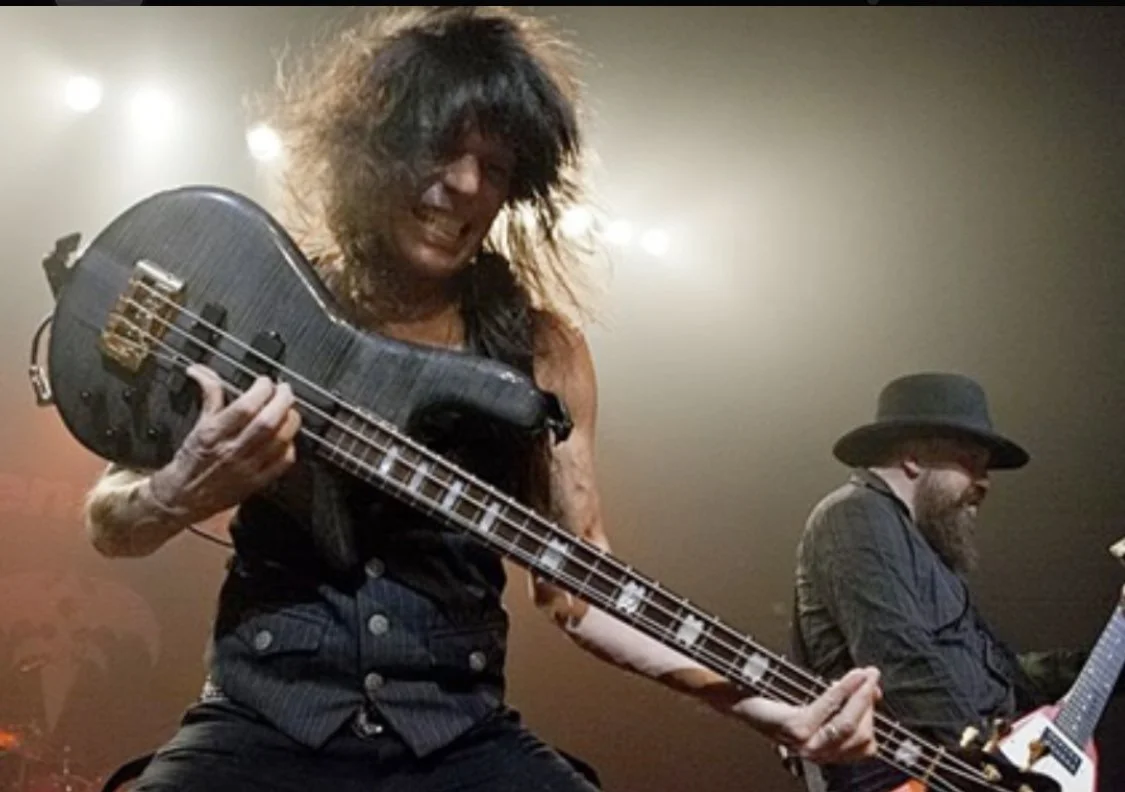
Rudy Sarzo: Bass Lines, Faith, and the Power of Resilience
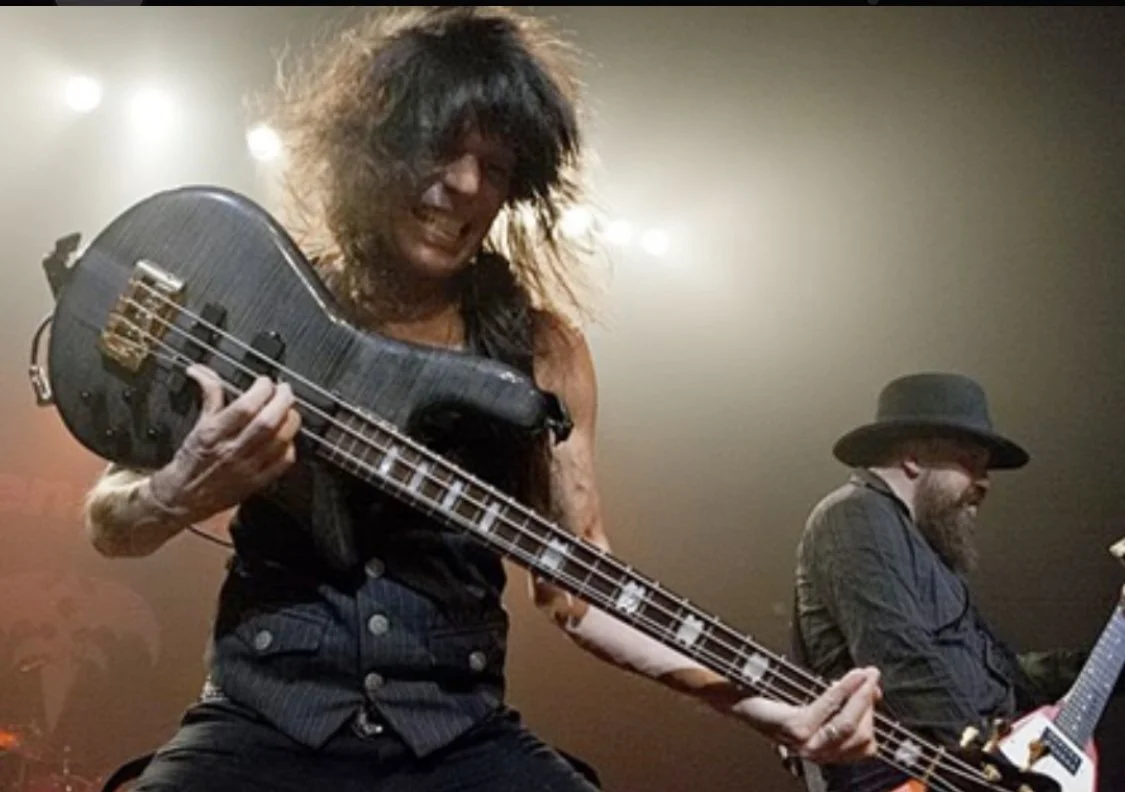
Few musicians have lived through as many eras of rock and metal as Rudy Sarzo — and fewer still have done it with his humility, faith, and purpose intact. The CommonX Podcast sat down with the legendary bassist of Ozzy Osbourne and Quiet Riot to talk legacy, loss, and the lifelong rhythm of reinvention.
By Ian Primmer | CommonX Podcast
Every generation has a few musicians who aren’t just players — they’re pillars. For Gen X, Rudy Sarzo stands tall among them.
From the roaring stages of Ozzy Osbourne’s early tours to the anthemic grit of Quiet Riot, Rudy’s bass lines shaped the soundtrack of a generation. But what makes his story truly powerful isn’t the fame — it’s his faith, his discipline, and the way he continues to live with intention long after the spotlight fades.
When Rudy joined us on the CommonX Podcast, he didn’t just tell road stories. He shared life lessons. The kind of wisdom you only get after decades of chasing purpose through chaos.
He talked about the late Randy Rhoads — a friend and musical soulmate whose impact still guides his spirit. He opened up about surviving the wildest years of metal and finding peace in balance, humility, and spirituality. You could hear it in his voice: this is a man who knows who he is, and who’s grateful for every note he’s played.
Rudy’s journey mirrors what we stand for here at CommonX — resilience, reflection, and real talk. He’s proof that greatness doesn’t come from ego; it comes from gratitude.
And even now, he’s still pushing boundaries, performing, writing, and giving back to the craft that made him. For Gen Xers who grew up with “Bang Your Head” blaring from their speakers, hearing Rudy talk about purpose hits harder than ever.
Because in the end, the groove doesn’t fade. It evolves. It deepens. It reminds us that every stage — from arenas to quiet reflection — matters.
🎸 #CommonXPodcast #RudySarzo #QuietRiot #OzzyOsbourne #GenX #XFiles

🕯️ Ozzy Osbourne: The Sound That Never Dies
Ozzy Osbourne wasn’t just the Prince of Darkness — he was the light that kept rock alive for more than five decades. From Black Sabbath’s heavy beginnings to a solo career filled with chaos, brilliance, and heart, Ozzy lived louder than anyone and loved deeper than most. His music didn’t just shape metal; it gave generations permission to be unapologetically themselves.

“You can’t kill rock and roll — it’s alive in every note he left behind.”
There are rock stars — and then there’s Ozzy Osbourne. The man who single-handedly helped shape heavy metal, terrified parents, inspired millions, and somehow made the entire world fall in love with his madness.
Born in Birmingham, England in 1948, John Michael “Ozzy” Osbourne came from working-class grit. Before he was the “Prince of Darkness,” he was just a kid with dyslexia, odd jobs, and a voice that didn’t quite fit anywhere — until it changed music forever.
🎸 The Birth of Heavy Metal
When Ozzy joined forces with Tony Iommi, Geezer Butler, and Bill Ward, the result was Black Sabbath — the band that invented a genre. Their 1970 self-titled debut was raw, dark, and loud — a thunderclap that split rock in two. Albums like Paranoid and Master of Reality didn’t just define metal; they built it from the ground up.
Songs like Iron Man, War Pigs, and Paranoid weren’t just riffs — they were rebellion set to distortion. Ozzy’s haunting voice and unfiltered energy turned fear into freedom.
⚡ The Solo Resurrection
After his firing from Sabbath, most thought Ozzy’s story was over. Instead, it was just beginning. Teaming up with guitar prodigy Randy Rhoads, he unleashed Blizzard of Ozz (1980) and Diary of a Madman — records that became instant classics. Crazy Train and Mr. Crowley remain two of the most recognizable rock anthems in history.
Even after tragedy struck with Rhoads’ death, Ozzy kept pushing. With players like Jake E. Lee, Zakk Wylde, and Geezer Butler returning to his orbit, his solo career became a masterclass in endurance. Albums like No Rest for the Wicked, No More Tears, and Ozzmosis proved he could outlast every critic and every demon.
🧠 The Myth and the Man
Then came the moments that blurred the line between legend and lunacy — the infamous bat-biting incident, the MTV reality show The Osbournes, and decades of being both rock’s wildest figure and its most unlikely symbol of love and humor.
But through it all, Ozzy never stopped being real. Beneath the spectacle was a man who wore his struggles with addiction, depression, and fame openly. He survived what most couldn’t — and somehow still showed up on stage, microphone in hand, giving everything he had left.
🕊️ The Final Notes
His 2022 album Patient Number 9 became a haunting farewell — reflective, experimental, and packed with collaborations from icons like Eric Clapton, Tony Iommi, and Jeff Beck. It wasn’t just a goodbye; it was a celebration of a life that changed the sound of the world.
When Ozzy Osbourne passed away in 2025, the shock reverberated through generations. But for those of us who grew up with his voice echoing through our walls, it wasn’t an ending — it was immortality being confirmed.
🖤 From the CommonX Host’s Desk — Ian Primmer
Ozzy’s music raised us. His madness made us laugh, his honesty made us feel seen, and his riffs — they taught us to feel alive.
He was chaos and compassion in equal measure, a man who gave the misfits, metalheads, and midnight souls a home. In every gym, garage, and garage band that ever plugged in a guitar — Ozzy’s DNA is there.
Rest easy, legend. You didn’t just scream into the void — you made the void sing back.

🎸 Spaceman and the Riffs That Never Fade
Ace Frehley wasn’t just the Spaceman of KISS — he was the cosmic outlaw who made rock feel infinite. His riffs still echo in every amp that hums and every dreamer who dares to plug in.

Remembering Ace Frehley (1951 – 2025)
There are guitarists who play notes, and then there are those who bend the universe. Ace Frehley was the latter — the interstellar architect of tone, swagger, and showmanship who helped build one of the loudest legacies in rock history.
As the original lead guitarist and co-founder of KISS, Frehley didn’t just shred — he launched. In full Spaceman regalia, silver makeup glinting under the stage lights, he turned every solo into liftoff. His riffs didn’t just ring through arenas; they became anthems of escape for every kid who ever felt like they didn’t belong on this planet.
When you strip away the pyrotechnics and the smoke, what remains is pure electricity — the sound of a man channeling energy through six strings and a Les Paul that glowed as bright as the stars he sang about. Ace wasn’t just a character; he was a cosmic outlaw with a grin and a tone that could melt steel.
The Man Behind the Mask
Beneath the paint, Ace was human — beautifully flawed, wildly creative, and unflinchingly real. His solo career proved that his identity was never limited to KISS. Songs like “New York Groove” still pulse with that city-street confidence — gritty, rhythmic, unpretentious. It’s a track that could only come from someone who’d lived every high and low of rock’s roller coaster and still found his groove on the other side.
In interviews, he was funny, raw, and occasionally unpredictable — a true reflection of the era he helped define. Ace was never afraid to say what he felt, even if it rattled the establishment. Maybe that’s why his fans loved him so fiercely. He was real, and in rock ’n’ roll, real is rare.
A Legacy Written in Light and Feedback
From his iconic smoking guitar solos to his unspoken influence on generations of rock and metal players, Ace Frehley’s DNA runs through modern music. You can hear it in the swagger of Slash, the tone of Joe Perry, the showmanship of countless arena bands that followed.
For Gen-Xers, Ace wasn’t just part of KISS — he was the reason kids picked up guitars in the first place. He represented possibility: that someone a little weird, a little wild, and completely themselves could take over the world armed with nothing more than a dream and a distortion pedal. And now, as the amps go quiet, the echo of that dream remains.
The Spaceman Lives On
It’s easy to say rock stars never die — but in Ace’s case, it feels true. His riffs are still orbiting. His laughter still hums in interviews and backstage stories. His fingerprints are on every pick-slide and power chord that ever made a crowd lose its mind.
He once said he wasn’t sure where the Spaceman came from — maybe outer space, maybe the Bronx, maybe a little of both. Wherever it was, the energy he brought to this world was bigger than any stage could hold.
Rest easy, Ace. You took us higher than we ever thought we could go.
The Spaceman has returned to the stars — but his riffs will never fade.