
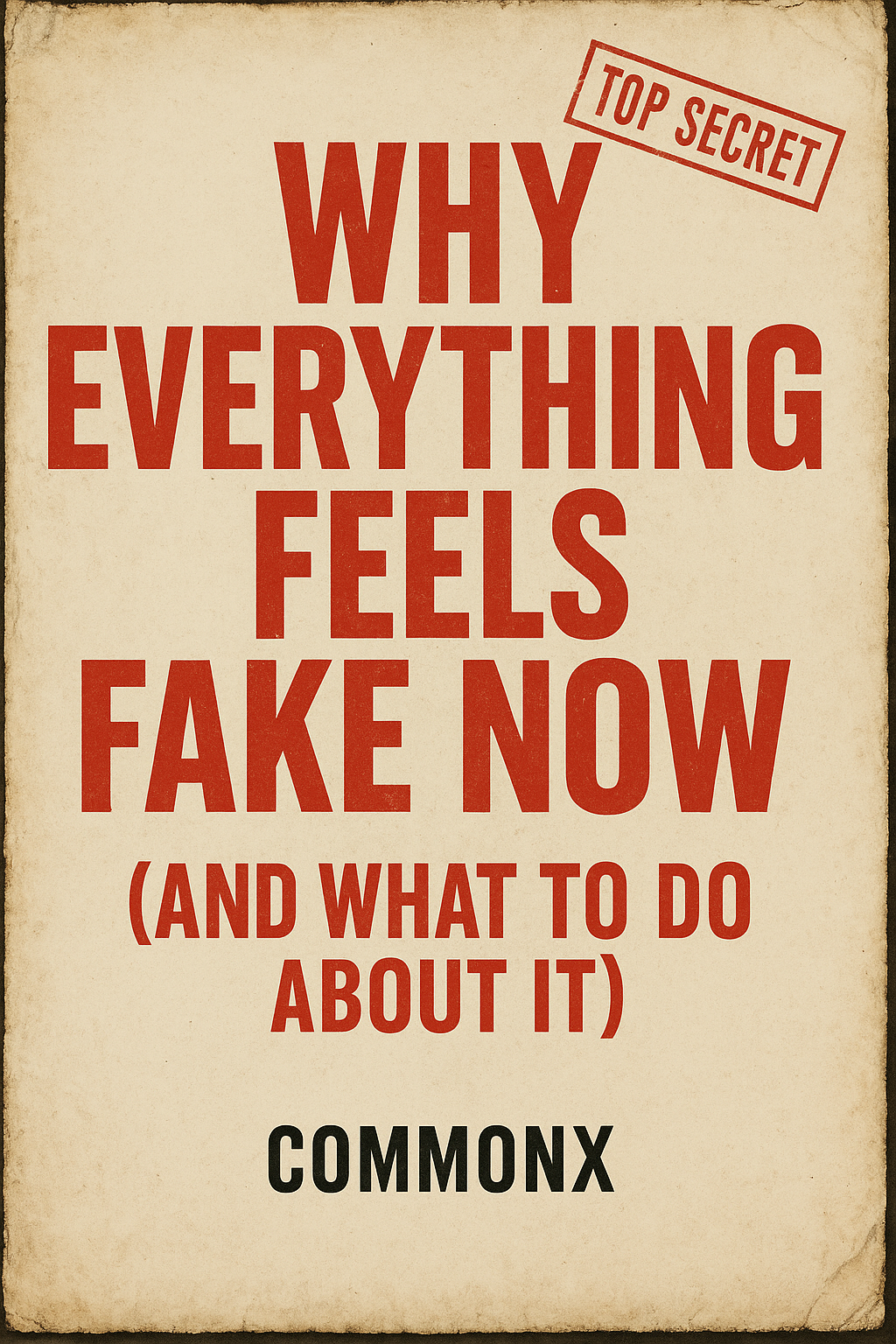
WHY EVERYTHING FEELS FAKE NOW (AND WHAT TO DO ABOUT IT)
If the world feels staged, scripted, and hollow lately, you’re not imagining it. Here’s why modern life feels so fake — and what you can actually do to bring real moments, real connection, and real meaning back into your daily life.

You don’t have to be a philosopher, a scientist, or a spiritual guru to notice it — something about the world feels… off lately.
People feel off.
Conversations feel off.
Work feels off.
Relationships feel off.
The internet feels very off.
Everything feels a little staged, scripted, filtered, packaged, polished, and hollow. It’s not that life is meaningless — it’s that the meaning has been watered down until it tastes like room-temperature tap water.
If you’ve been feeling it too, you’re not crazy.
You’re not alone.
You’re just awake.
So here’s the breakdown:
Why everything feels fake now — and what the hell we can actually do about it.
1. We replaced real experiences with “content opportunities.”
People don’t just live their lives anymore — they curate them. Vacations aren’t vacations. They’re photo shoots.
Outings with friends turn into staged clips. Anniversaries become slideshow captions. Meals get treated like museum exhibits. We’re not documenting life. We’re performing it. Real moments feel rare because we’re too busy trying to capture them instead of being in them.
2. Everyone is branding themselves 24/7.
We used to have personalities. Now we have personal brands.
People change how they talk, dress, and act based on how it will look online instead of how it feels inside. You aren’t talking to a person anymore — you’re talking to their PR department. And when everyone is trying to be a “version” of themselves, you stop seeing the real thing.
3. We’re drowning in ads disguised as authenticity.
The influencer who “just loves this product”? Paid.
The celebrity who “randomly discovered this brand”? Paid. The heartfelt post with hashtags at the bottom? Paid. We’re stuck in a world where the line between genuine and sponsored is basically invisible. When everything becomes marketing, nothing feels real.
4. Technology outran humanity.
We built:
AI faces
AI voices
AI art
AI relationships
AI conversations
AI EVERYTHING
But we never stopped to ask how much artificial life a real human psyche can tolerate before it cracks. We live in the most “connected” era in human history — and yet nothing feels personal. Screens simulate connection, but they don’t deliver it.
5. Outrage is the new entertainment.
Everyone is performing emotions now. Anger is exaggerated. Sadness is monetized. Happiness is faked. Grief is staged. Opinions are calculated. Everything is turned up to 11 because subtlety doesn’t get clicks. And when emotions become currency, the real ones go broke.
6. Algorithms decide what you see — not your own eyes.
Your “feed” is not a window. It’s a mirror. It only reflects what you’ve already clicked on, liked, watched, or paused on for a second too long. You’re not seeing the world. You’re seeing your personalized simulation of it. Everything feels fake because everything is tailored — nothing is universal anymore.
7. Everyone is terrified of having an unfiltered opinion.
People walk on eggshells. Everyone’s afraid to offend someone, somewhere.
So instead of speaking from the heart, we speak from a script. We don’t talk to understand — we talk to avoid trouble. When people are scared to be real, everything around them becomes fake.
8. Modern life hides all the real struggle behind closed doors.
Nobody posts:
the breakdown
the bills
the sleepless nights
the fear
the arguments
the loneliness
the insecurity
the “I don’t know what I’m doing” moments
They post the mask. They post the highlight reel. Meanwhile everyone is quietly falling apart behind the scenes thinking they’re the only one. You’re not. Everyone feels this.
So… what do we do about it?
Luckily, the solution isn’t complicated.
It’s not easy,
but it’s simple.
Here’s how you start feeling real again:
1. Talk to real humans — in person.
The quickest way to kill the “fake world” feeling is to sit down with someone face-to-face. Voices. Bodies. Eye contact. Tone. Real reactions. It resets your brain like a hard reboot.
2. Do one thing every day that has zero content value.
Literally:
a walk without posting
a meal without photographing
a hobby nobody knows about
a workout without a selfie
a moment that isn’t shared
Real life grows in private.
3. Limit your scrolling — increase your doing.
Scrolling makes everything feel fake.
Action makes everything feel real.
Move your body.
Touch grass.
Build something.
Learn something.
Clean something.
Create something.
Reality rewards movement.
4. Say how you actually feel.
Even once a day. Give your real opinion. Ask the real question. Speak the real truth. Authenticity is rare now — that’s why it hits so hard.
5. Rediscover the boring stuff.
Real life is:
morning routines
chores
small talk
fixing things
cooking
paying bills
lifting weights
being tired
laughing with friends
showing up
It’s not glamorous.
It’s real.
6. Protect a part of your life from the internet.
Not everything is meant for display. Some love, some struggle, some joy is meant to be lived — not posted.
7. Choose depth over dopamine.
Deep conversations. Deep friendships. Deep work. Deep experiences. The world feels fake because everyone is addicted to surface-level stimulation. Be the opposite.
FINAL WORD
Everything feels fake now… because we’re living too much through screens, simulations, branding, and noise.
But the real world is STILL THERE. It didn’t disappear — it just got buried. You just have to go dig it back up. The moment you do? Life hits different again. And you remember what “real” actually feels like.
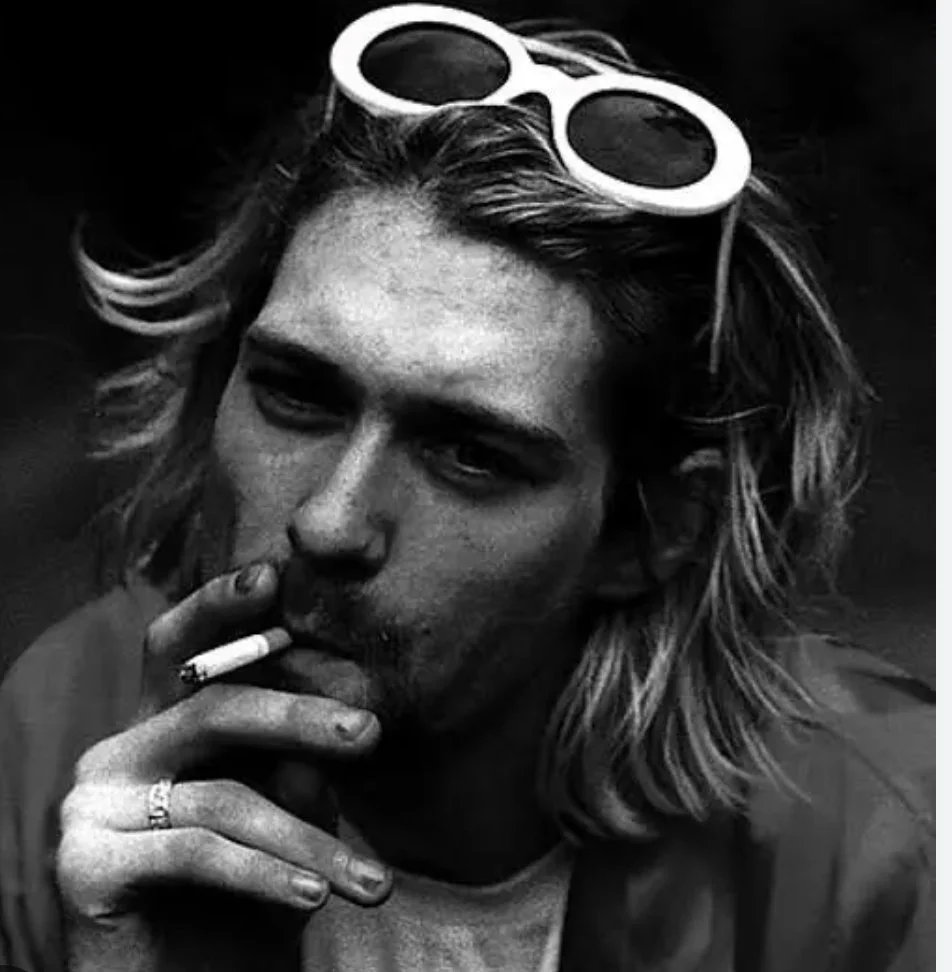
🎸 “What Else Could I Write? I Don’t Have the Right.” — Kurt Cobain and the Echo of a Generation
Kurt Cobain didn’t just write songs — he wrote the ache of a generation that refused to be polished. In his tattered sweaters, chipped nails, and truth-soaked lyrics, he showed Gen-X what honesty really looked like. Decades later, his ghost still hums in every garage, every heartbreak, every artist daring to stay real.
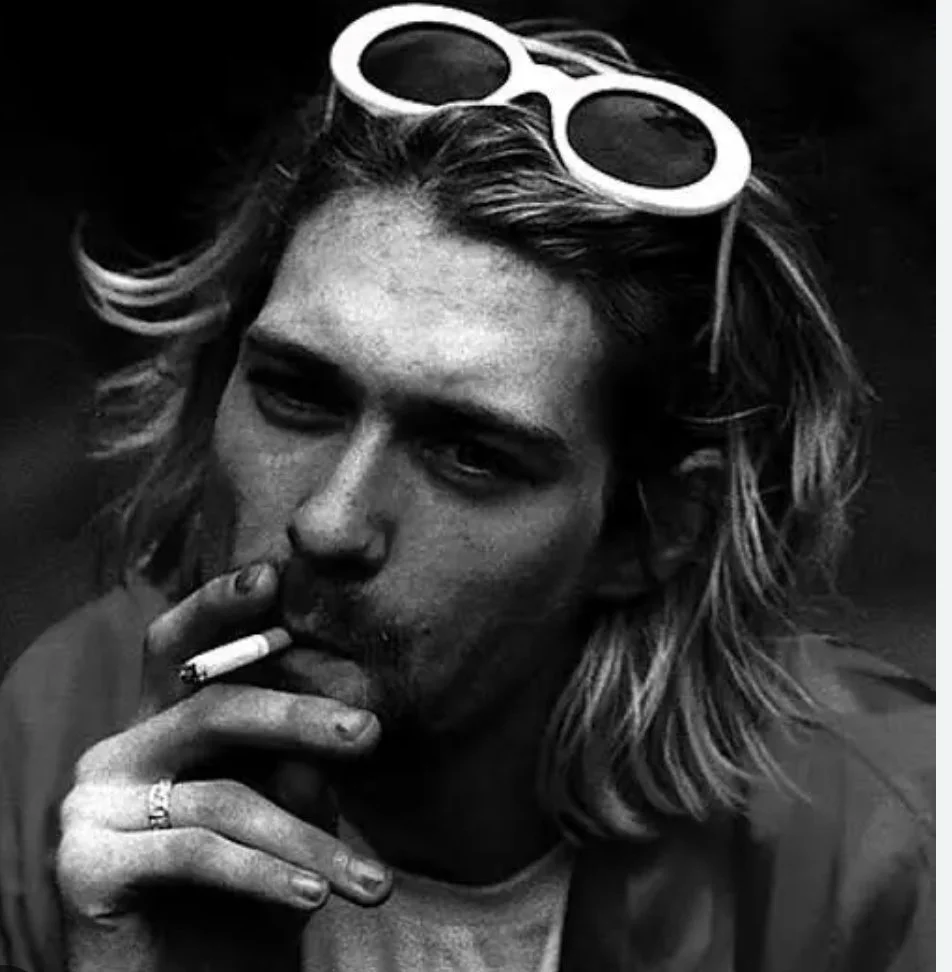
“The sound of truth never dies. It just finds new chords.”
Written by Ian Primmer
In the quiet between the noise, Kurt Cobain’s words still linger like cigarette smoke in the back of every Gen-X memory. “What else could I write? I don’t have the right.” It wasn’t just a lyric — it was a confession. A poet caught between fame and fracture, saying the quiet part out loud before anyone else dared to.
Born from the grunge-soaked heart of Aberdeen, Washington, Cobain didn’t just write songs — he wrote truths that still punch decades later. Nirvana’s sound wasn’t built to be clean; it was built to be honest. That rawness, that resistance to polish, was the pulse of a generation that refused to be marketed, molded, or muted.
At CommonX, we talk a lot about what it means to grow up Gen-X — a mix of latchkey rebellion, mixtapes, and that sense of being unseen in the crowd. Cobain was that spirit, distilled into one human being. He didn’t just play music; he made us feel like we weren’t alone in our contradictions.
Even now, when you strip away the nostalgia and the myth, there’s something timeless about how Kurt saw the world — broken yet beautiful, cynical but sincere. In a time when social media celebrates the surface, his vulnerability feels even more radical.
Maybe that’s why Gen-X still finds itself humming his lyrics while scrolling headlines that feel more corporate than cultural. Cobain once said, “I’d rather be hated for who I am, than loved for who I am not.” That line could be tattooed across the entire CommonX ethos — and maybe across our hearts, too.
Because at the end of the day, being Gen-X isn’t about what we owned or streamed or posted. It’s about what we felt. And few ever made us feel quite like Kurt did.
From the CommonX Host’s Desk – Ian Primmer
Every time I listen to Kurt, I’m reminded why we started CommonX in the first place — to give a voice to the generation that never really asked for one, but damn well earned it. I think about those lines: “What else could I write? I don’t have the right.”
That hits harder as a creator, a dad, and a Gen-X’er trying to build something real. Whether it’s in the gym before sunrise or behind the mic with Jared, I try to bring that same raw honesty to what we do. We’re not chasing perfection; we’re chasing truth — just like Kurt did.
So here’s to every listener, artist, and misfit who still believes that being real means something. You’re our people.

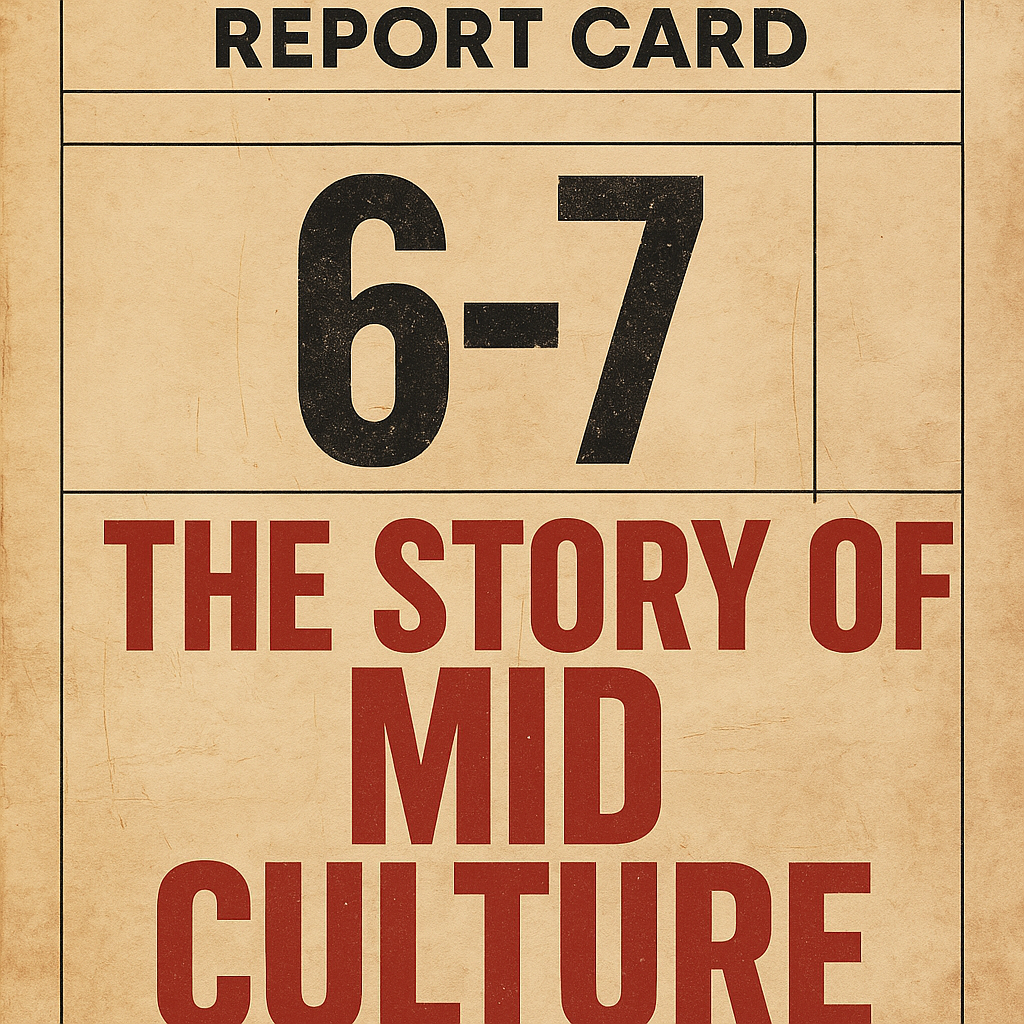
That’s So Mid, Bruh: The Story Behind 6-7
Somewhere along the line, being a 10 stopped mattering — and everyone settled into a safe 6 or 7. “Mid” became the anthem of mediocrity, and we all started pretending we were fine with it. But not here. Not in the land of CommonX. This is where we push back against average and bring authenticity back to the front lines.
By CommonX Staff | The X-Files | Deer Park, WA
There was a time when average wasn’t cool. When “good enough” was never enough. When people stayed up all night with a soldering iron, a four-track recorder, and a bad attitude just to prove they could do something better.
Then somewhere along the way, we landed in what could only be called the 6-7 era — the time when “mid” became not only an adjective but a lifestyle.
How “Mid” Took Over
“Mid” didn’t start as a compliment. It was born in comment sections and memes, weaponized by Gen Z to describe anything that didn’t totally suck… but didn’t hit either.
“It’s mid.”
Translation: It exists. I noticed. Moving on.
Music, movies, relationships, and even food get hit with the “mid” tag daily. It’s the universal shrug of modern life — a word that captures our collective indifference, the vibe of a generation raised on algorithms telling them what to like before they even press play.
But here’s the twist: “mid” isn’t new. It’s just the rebrand of mediocrity — and CommonX is calling it out.
The Rise of the 6-7
Once upon a time, people rated stuff 1 through 10. Five meant “meh.” Six or seven meant “pretty good.” But then the whole system collapsed into safe zones — nobody wants to offend, nobody wants to stand out, so everything’s just… six or seven.
That restaurant? “A solid seven.”
That Netflix show? “It’s a six, maybe seven.”
Your coworker’s band? “Six-ish, bro.”
We’ve become a world allergic to extremes — to being a one (failure) or a ten (try-hard). Everyone’s stuck in the middle, sipping $8 lattes, posting mid takes, living mid lives.
Gen X Never Did Mid
That’s where Gen X rolls up in a beat-up Civic with the stereo cracked and says: Nah, we’re not doing that.
Gen X grew up in the analog trenches. We didn’t have participation trophies; we had rejection letters. We didn’t download; we dubbed. We didn’t go viral; we earned our scars.
And now, as the world slides into the comfort of 6-7, the CommonX Podcast is here as a rallying cry for the ones who still chase the 10 — not because it’s easy, but because doing it halfway never satisfied the soul.
From Ivan Doroschuk talking legacy to Steve Mayzak breaking down AI consciousness, to Sid Griffin keeping Americana alive — CommonX refuses to be mid. It’s the antidote to the algorithm. The unfiltered, long-form, real talk antidote to a world of scrollable sameness.
The CommonX Ethos
Every episode, every blog, every quote we drop — it’s built on one simple creed: Don’t be mid. Be memorable.
Whether you’re writing songs, building companies, or raising kids, being a 10 isn’t about perfection — it’s about giving a damn. It’s about heart, risk, authenticity. The kind of stuff you can’t fake with filters or hashtags.
We don’t settle for 6-7 around here. That’s where comfort lives — and comfort kills creativity.
So yeah, call us old-school, call us analog dreamers, call us stubborn. But when history looks back, it won’t remember the “mid.”
It’ll remember the misfits, the makers, and the mic-droppers who gave everything they had.
Welcome to CommonX — where 6-7 gets left on read.

Why the CommonX Podcast Is the Best Show in the Pacific Northwest
From the backroads of Deer Park to the digital airwaves of the world, the CommonX Podcast is redefining what authentic, independent media sounds like in the Pacific Northwest. Blending grit, music, and raw conversation, it’s more than a podcast — it’s a movement built by two Gen X voices who never stopped asking why.

A Podcast Born in the Heart of the Inland Northwest
When co-hosts Ian Primmer and Jared Mayzak launched CommonX out of a small shop studio in Deer Park, WA, they weren’t chasing fame — they were chasing truth.
What began as late-night conversations about music, media, and the human condition has evolved into one of the most talked-about independent shows in the region.
Their guest list reads like a cross-section of culture itself — from rock legends like Ivan Doroschuk (Men Without Hats) and Rudy Sarzo (Quiet Riot) to authors, veterans, political voices, and everyday people with extraordinary stories.
The Sound of the PNW — Unfiltered
The Pacific Northwest has always been home to the rebels, thinkers, and dreamers who prefer campfires over spotlights. CommonX taps straight into that energy — raw, honest, and unapologetically Gen X.
Listeners across Washington, Oregon, Idaho, and beyond tune in because the show speaks a language corporate podcasts forgot: authenticity. Whether it’s exploring faith, freedom, music, or modern censorship, CommonX keeps it real — no scripts, no spin, just conversation.
From TikTok to the Turntables
Before CommonX exploded, host Ian Primmer found viral success as GENXDAD on TikTok — proof that Gen X still knows how to command the internet. That following became the foundation for a regional powerhouse: the CommonX brand now spans TikTok, YouTube, Spotify, and a fast-growing web platform at commonxpodcast.com.
The show’s reach has extended from Spokane to Seattle, Portland, and Vancouver B.C., proving that the Pacific Northwest still knows how to make noise that matters.
What Makes CommonX the Best in the PNW
🎙️ Authenticity Over Agenda – Real talk without the political polish.
Rooted in Gen X Grit – A generation that built bridges between analog and digital.
Culture Meets Conversation – Every episode blends music, memory, and modern reality.
Independent to the Core – Produced by two lifelong Washington creators, not a network.
It’s not corporate, it’s not curated — it’s CommonX. And that’s exactly why it’s resonating from the Cascades to the Columbia.
Looking Ahead
With Season 2 already in production and high-profile guests lining up, CommonX is poised to bring the voice of the Pacific Northwest to a global audience. Whether listeners are lifelong locals or digital nomads, the message is the same: real conversation still lives here.
As the Pacific Northwest continues to grow, CommonX stands as its raw, unfiltered pulse — the podcast built for those who still believe authenticity matters.