
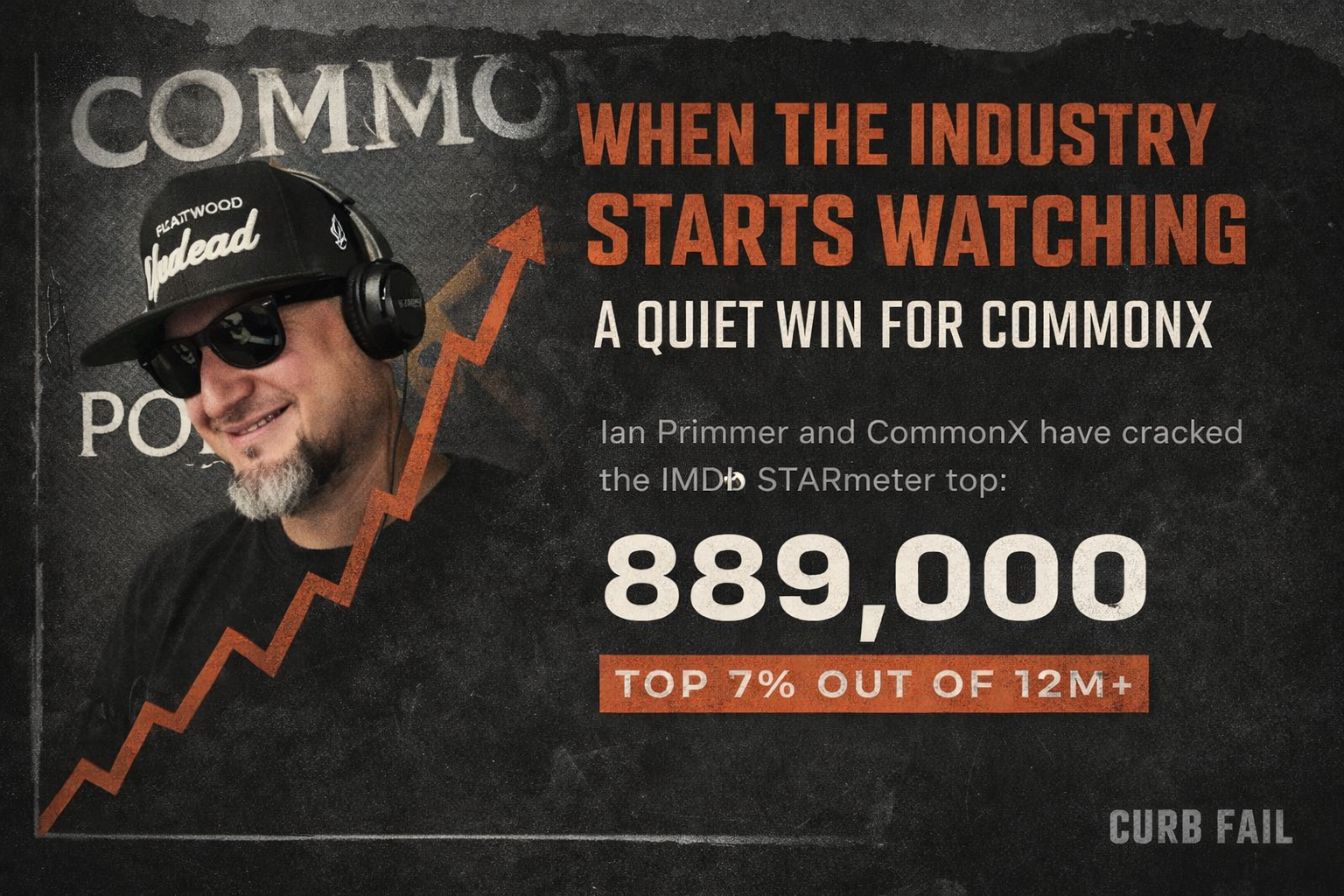
When the Industry Starts Watching: A Quiet Win for CommonX
Most growth doesn’t announce itself. It shows up quietly — in data, in behavior, and in places most people aren’t looking yet. When the industry starts watching, the work has already been done.
Most growth doesn’t announce itself.
It doesn’t come with headlines, press releases, or industry fanfare. It shows up quietly — in data, in behavior, in places most people aren’t looking yet.
Over the past several weeks, Ian Primmer, co-host and co-founder of the CommonX Podcast, has seen a sharp rise on IMDb’s STARmeter, landing at approximately 889,000 globally out of more than 12 million profiles. More importantly, that ranking reflects a massive upward move, with millions of positions climbed in a short period of time and continued month-over-month momentum.
For an independent podcast and media operation with no network backing, no PR firm, and no legacy distribution, that matters.
Not as a trophy — but as a signal.
What this actually represents
IMDb’s STARmeter isn’t about talent or fame. It tracks interest — how often people are searching for a name, clicking into a profile, and engaging with recent work.
People don’t end up there by accident.
They get there because:
A show keeps surfacing in conversations
A guest appearance sends them digging deeper
Clips circulate outside the usual audience
A name starts appearing in multiple places at once
That’s how attention accumulates before it becomes obvious.
For CommonX, this movement reflects what listeners already know: the show has been steadily building — one conversation, one guest, one episode at a time.
Independent media, measured differently
Legacy media still runs on credentials and gatekeepers. Independent media runs on consistency and gravity. You show up, you publish, and you let the work compound.
Algorithms don’t care who you know.
They care who people look for.
This isn’t the result of a viral moment or manufactured controversy. It’s the byproduct of discipline, volume, and honest conversations that resonate beyond a core audience.
A Curb Fail perspective
At Curb Fail, we don’t celebrate spikes — we document signals.
A ranking doesn’t mean you’ve arrived. It means you’re being noticed. It means something you’re building is registering beyond your immediate circle. That’s usually the point where people either get distracted or double down.
We prefer the second option. CommonX will keep recording. We’ll keep publishing. We’ll keep letting the work speak. This isn’t a victory lap. It’s a checkpoint. And then it’s back to work. Congratulations Jared and Ian!
— Curb Fail Team

🇺🇸 The Veterans of CommonX — Strength, Service & the Voices Who Keep Fighting
On Veterans Day, we honor the warriors who carried the weight of service and continue to fight long after the battlefield fades. From Marines to medics to mentors, these veterans shared their truth with CommonX — raw, unfiltered, and unforgettable. Their courage isn’t a moment… it’s a lifetime.

Veterans Day isn’t just a date — it’s a reminder of the men and women who stepped forward, accepted the weight of service, and carried burdens most people never see. On CommonX, we’ve been privileged to sit across from veterans whose stories aren’t polished or perfect — they’re raw, real, and unfiltered. They show us what courage looks like long after the uniform comes off.
Today on the X-Files, we honor the veterans who have shared their truth with us:
Isaac — The Marine Who Pulled Back the Curtain
A former Marine who didn’t sugarcoat anything. Isaac spoke about duty, conflict, systems, scars, and the realities behind the headlines — the things you only understand when you’ve been there. His honesty hit hard and still resonates with every listener who’s worn the uniform or loved someone who has.
Joey “Devil Doc” Martinez — A Medic With a Mission
Joey didn’t just serve — he continues serving. As a Navy Corpsman and host of the Devil Doc Talk Show, he uses his voice to lift up veterans fighting invisible battles: PTSD, depression, suicide prevention, faith, and purpose. Joey is proof that healing comes from connection. His mission saves lives every day.
Jeremy Montgomery — Leadership Beyond the Battlefield
Jeremy took the pain, transition, and chaos that follow military life and turned it into guidance for others. Through his work with Lean Synergy Staffing, he helps veterans step into civilian careers with direction, dignity, and confidence. His strength isn’t loud — it’s steady, and it changes lives.
Why Their Stories Matter
These men didn’t just answer the call once. They answered it again… and again… and again.
Their service didn’t end with discharge papers — it evolved into mentorship, advocacy, truth-telling, and building community. They remind us that bravery is not a moment. It’s a lifetime.
To Every Veteran
Your sacrifices matter.
Your stories matter.
Your strength matters.
You are seen. You are respected. You will always be part of the CommonX family.
From Ian, Jared, and the whole crew —
Thank you. 🇺🇸

From the Garage to the Mic: The Climb So Far
From a shop studio in Deer Park to the growing CommonX movement, this is the story of two friends who built something real — not for fame, but for people. From the Garage to the Mic is a reflection on the climb so far, the voices that shaped it, and the belief that every story matters. Because in the end, CommonX was never about the noise — it was about connection.

From the Garage to the Mic: The Climb So Far – motivational graphic for the CommonX Podcast article by Curb Fail Productions, symbolizing growth, creativity, and persistence.
By Curb Fail Productions – A CommonX Reflection
In the quiet corners of Deer Park, WA, long before the cameras, guests, or sponsors, there was just a voice — an honest one. It belonged to two friends who believed every story mattered, that good people still exist, and that service isn’t about glory. It’s about showing up. When CommonX was just an idea, it wasn’t about money, metrics, or fame. It was about connection. It was about two Gen-X dads — Ian Primmer and Jared Mayzak — who wanted to remind the world that compassion and curiosity still had a place in the noise. Week after week, they built something out of nothing — a studio in a shop, a show from the soul, and a mission that cut through the static.
From those first uncertain recordings to interviews with legends, artists, veterans, and visionaries — CommonX became a home for humanity. Each episode, each X-File, carried the same heartbeat: everyone has a story worth hearing. At the center of it all are Ian and Jared — partners, brothers-in-arms, and co-hosts who never wanted the spotlight but somehow became beacons. Ian’s strength has always been his heart — the empathy to see the good in everyone he meets. Jared’s has been his fire — the energy and conviction to keep the momentum alive when the mountain feels steep. Together, they’ve kept CommonX climbing.
Curb Fail Productions was never about building a media empire. It’s about building bridges. It’s about truth told with respect, laughter shared with strangers, and the belief that the world gets a little better each time someone chooses empathy over ego. So as we look back on how far this climb has taken us — from the garage to the mic, from a spark to a movement — we pause to say thank you. To everyone who’s listened, read, laughed, and joined the ride. You’re not just part of the audience; you’re part of the story.
Because that’s what this whole thing has always been about: people. Real people.
— Curb Fail Productions
Dedicated to every guest, listener, and dreamer who ever believed their voice mattered.
Listen Here:

Skullcandy logo – official audio partner of the CommonX Podcast, delivering premium sound for every episode and every listener.

Riverside logo – the remote recording platform trusted by the CommonX Podcast for high-quality audio and video interviews.
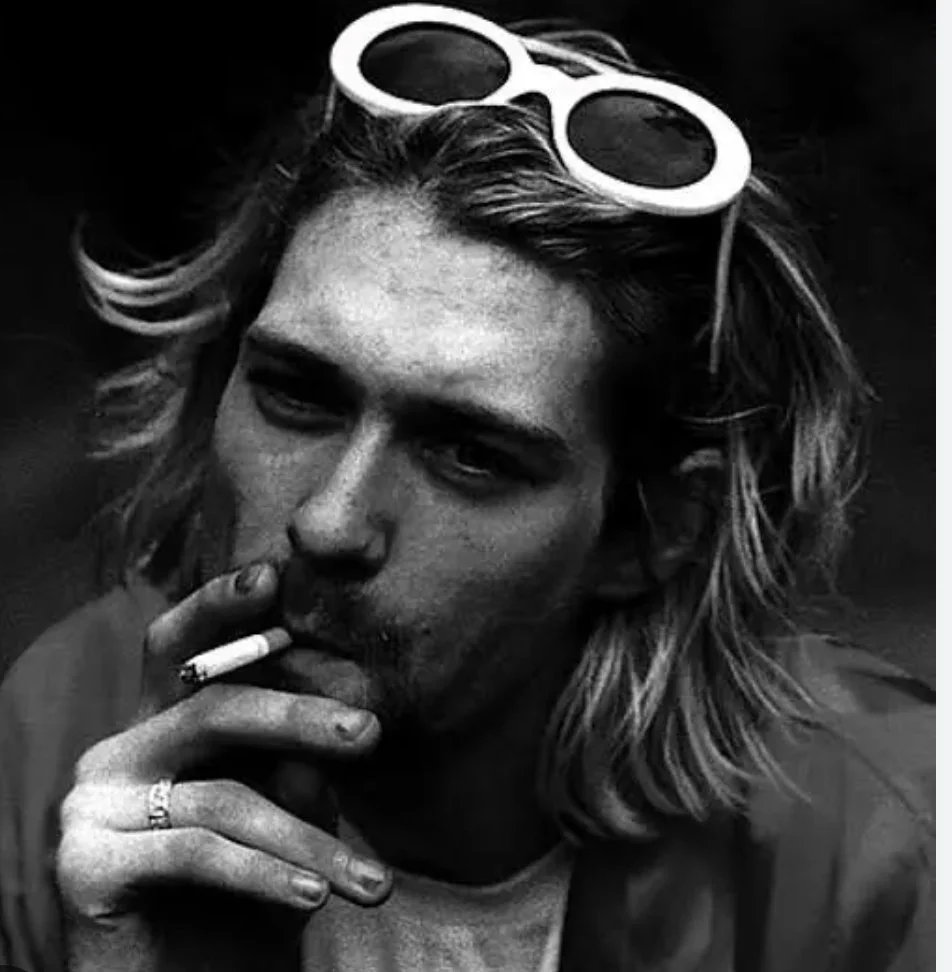
🎸 “What Else Could I Write? I Don’t Have the Right.” — Kurt Cobain and the Echo of a Generation
Kurt Cobain didn’t just write songs — he wrote the ache of a generation that refused to be polished. In his tattered sweaters, chipped nails, and truth-soaked lyrics, he showed Gen-X what honesty really looked like. Decades later, his ghost still hums in every garage, every heartbreak, every artist daring to stay real.
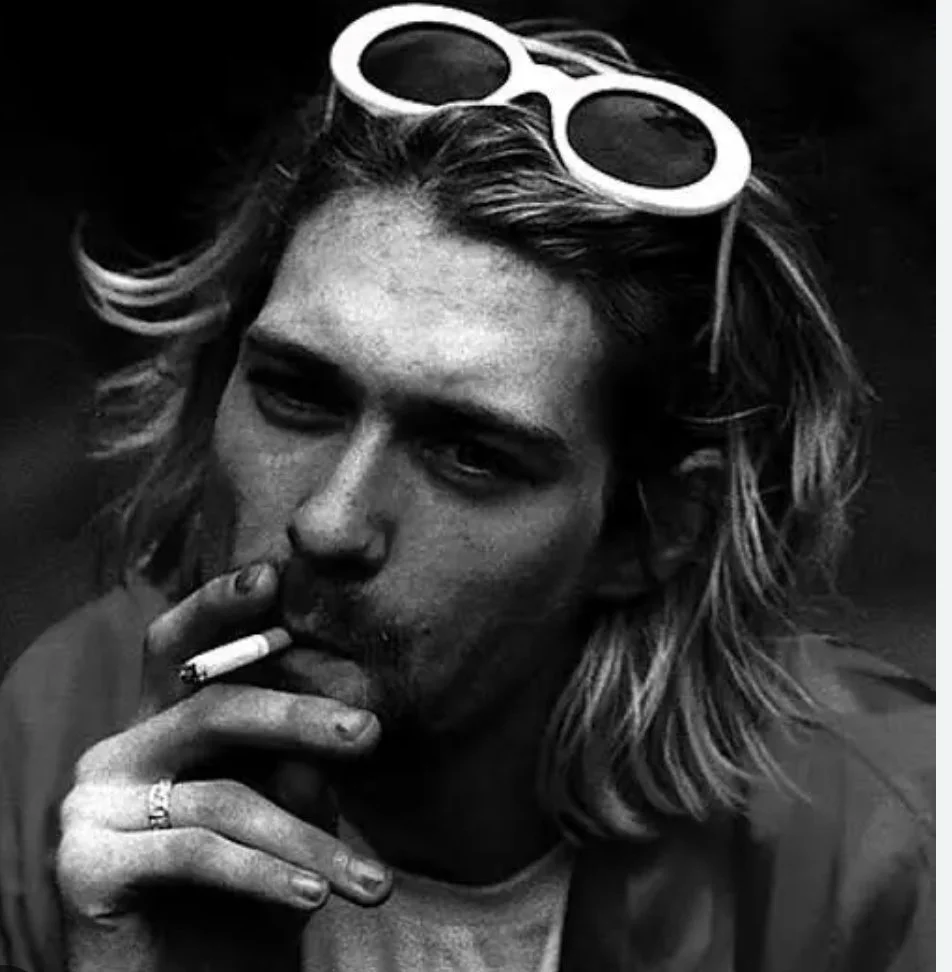
“The sound of truth never dies. It just finds new chords.”
Written by Ian Primmer
In the quiet between the noise, Kurt Cobain’s words still linger like cigarette smoke in the back of every Gen-X memory. “What else could I write? I don’t have the right.” It wasn’t just a lyric — it was a confession. A poet caught between fame and fracture, saying the quiet part out loud before anyone else dared to.
Born from the grunge-soaked heart of Aberdeen, Washington, Cobain didn’t just write songs — he wrote truths that still punch decades later. Nirvana’s sound wasn’t built to be clean; it was built to be honest. That rawness, that resistance to polish, was the pulse of a generation that refused to be marketed, molded, or muted.
At CommonX, we talk a lot about what it means to grow up Gen-X — a mix of latchkey rebellion, mixtapes, and that sense of being unseen in the crowd. Cobain was that spirit, distilled into one human being. He didn’t just play music; he made us feel like we weren’t alone in our contradictions.
Even now, when you strip away the nostalgia and the myth, there’s something timeless about how Kurt saw the world — broken yet beautiful, cynical but sincere. In a time when social media celebrates the surface, his vulnerability feels even more radical.
Maybe that’s why Gen-X still finds itself humming his lyrics while scrolling headlines that feel more corporate than cultural. Cobain once said, “I’d rather be hated for who I am, than loved for who I am not.” That line could be tattooed across the entire CommonX ethos — and maybe across our hearts, too.
Because at the end of the day, being Gen-X isn’t about what we owned or streamed or posted. It’s about what we felt. And few ever made us feel quite like Kurt did.
From the CommonX Host’s Desk – Ian Primmer
Every time I listen to Kurt, I’m reminded why we started CommonX in the first place — to give a voice to the generation that never really asked for one, but damn well earned it. I think about those lines: “What else could I write? I don’t have the right.”
That hits harder as a creator, a dad, and a Gen-X’er trying to build something real. Whether it’s in the gym before sunrise or behind the mic with Jared, I try to bring that same raw honesty to what we do. We’re not chasing perfection; we’re chasing truth — just like Kurt did.
So here’s to every listener, artist, and misfit who still believes that being real means something. You’re our people.

🦷 Best Bands to Listen to in the Dentist’s Chair (Shoutout to Kristen @ Smile Source North 🤘)
For years I dreaded the dentist — until today. Thanks to Kristen at Smile Source North and a killer Gen X playlist, I actually found myself relaxing in the chair. From Nirvana to Men Without Hats, here’s the ultimate CommonX soundtrack to survive your next cleaning.

by Ian Primmer — CommonX Podcast
Let’s be honest — most of us would rather be anywhere else than reclined under a bright light while someone scrapes away at our molars. But sometimes, the right music and the right person behind the mask can change everything.
This morning I found myself back in the dental chair, mouth numb, AirPods in, bracing for the worst. But my hygienist Kristen changed the game. She was calm, patient, and so gentle I barely realized the cleaning had started. For once, I wasn’t white-knuckling the armrests. I was vibing.
🎧 The CommonX Chair Playlist
If you’re lucky enough to have a hygienist who lets you plug in, here’s the ultimate Gen X-approved soundtrack for your next appointment — equal parts chill, nostalgic, and dentist-chair zen:
Nirvana – “All Apologies”
A soft-grunge lullaby for your nerves. Kurt’s voice somehow makes even the sound of scraping feel poetic.The Smashing Pumpkins – “1979”
A hypnotic hum that turns the whir of the polisher into background ambience.The Cranberries – “Dreams”
The gentle rhythm and Dolores O’Riordan’s vocals make the chair feel like a daydream.Foo Fighters – “Learn to Fly”
Because even in a dentist’s chair, there’s a strange freedom in just letting go and floating through the moment.Men Without Hats – “I Love the ’80s”
The perfect closer — CommonX had the world debut of this track, and it’s impossible not to smile while it plays.
😁 Shout-Out
Huge thanks to Kristen and the crew at Smile Source North for restoring my faith in dentistry. I walked out feeling cleaner, lighter, and weirdly… happy? Never thought I’d say that. Additionally, April is also amazing she was just out today.. just sayin 😎🤘
Turns out, sometimes it’s not about avoiding the dentist — it’s about finding the right playlist and the right person behind the mask.

🎙️ The Algorithm, The Sprinklers, and a World That Still Needs Laughs
From viral sprinklers to satellite radio dreams, Ian Primmer shares how a laugh on Tin Foil Hat became a reminder that even in a world full of algorithms and outrage, connection still matters.

By Ian Primmer | CommonX Podcast
🎙️ The Algorithm, The Sprinklers, and a World That Still Needs Laughs
It’s funny how the internet decides what’s worth remembering.
The first time I went viral wasn’t for a deep conversation, a song, or a bold take — it was for accidentally turning the sprinklers on while my wife was mowing the lawn.
Sam Tripoli said it best on Tin Foil Hat: “Thanks for sacrificing your marriage for everyone’s entertainment.”
That line hit because it was more than a joke. It summed up how the algorithm works. It rewards chaos, cringe, and anything that makes people stop scrolling for two seconds. Somewhere in that madness, I realized that every viral moment — no matter how ridiculous — is a chance to reach people who might need a reason to smile, think, or connect again.
When Sam asked why I’d ever want to be on satellite radio, my answer was simple: to reach more people and bring them together in a world full of hate. I wasn’t talking about selling out — I was talking about scaling up. If a sprinkler fail can break through the noise, imagine what genuine conversation could do.
The algorithm might have created the modern circus, but it’s also given us a microphone. CommonX exists because there’s still a crowd out there looking for something real — laughter, perspective, and a reminder that humanity still works when we choose to show up.
View the full discussion on TinFoil Hat Podcast here here 👇
https://spotify.link/n7Ufc4GpXXb
Read more X-Files articles by CommonX: https://www.commonxpodcast.com/thex-files

Matt King’s Trump Might Be Funnier Than the Real Thing — and That’s the Point
Matt King isn’t out to start a fight — he’s out to make people laugh. With viral impressions that blend wit, timing, and Gen X-style self-awareness, King proves that humor still has the power to connect people, even in a divided world.

Comedy Meets Chaos: The Matt King Episode
By Curb Fail Productions
When comedian Matt King stands behind a mic, something special happens — the room doesn’t just fill with laughter, it fills with balance. Known for his uncanny impressions and viral political sketches, Matt joined CommonX this week for one of the most hysterical and heartfelt episodes yet. He slipped into his infamous Trump impression so seamlessly that Jared and Ian nearly lost control of the studio. Jared Mayzak almost fell over from laughter, and Ian Primmer had to mute his mic from laughing so hard. But somewhere in the chaos, a deeper truth came through: Matt King isn’t mocking politics — he’s bridging divides through comedy and brings laughter and joy to those of them blessed enough to see his set.
“My stance on comedy when it comes to politics. Just don’t put them together,” Matt said during the show, laughing but meaning every word.
It’s a line that captures his whole ethos. In an age where every punchline can spark outrage, King’s humor doesn’t alienate — it connects. Trump supporters love his spot-on impersonations; non-Trump fans love his timing and fearless creativity. The fact that both groups can laugh at the same thing says more about his character than his craft — it says he cares. King radiates heartfelt compassion. He’s not out to score political points or push an agenda. He’s a guy who believes laughter can pull people back together, even when the world feels like it’s coming apart. That’s the CommonX spirit — find the humanity in the noise, and use humor to build bridges where others build walls.

By the time the mics went cold, one thing was clear: Matt King isn’t just funny. He’s a kind, humble, and compassionate person that cares about making a difference and bringing people together through humor.
You can find Matt on Instagram: https://www.instagram.com/matt.kingcomedy?igsh=MXNiaTBjNnF1djJyeg==
YouTube: https://youtube.com/@mattkingcomedy?si=Sr_7pJY_tGmpOYJ8
TikTok: https://www.tiktok.com/@matt.kingcomedy?_t=ZT-90io20SSZPz&_r=1
Reach out and explore Matt King Comedy
Thanks for your support: https://www.commonxpodcast.com/partners-and-gear-we-love


“The Soundtrack Still Matters (SONOS Edition)”
Gen X didn’t outgrow music — we refined how we hear it. CommonX and SONOS celebrate the return of real sound, where clarity meets rebellion and the soundtrack still matters.

There was a time when every moment had its own soundtrack.
A first kiss in a friend’s car to the hum of a worn cassette. A late-night skate run with Smells Like Teen Spirit echoing off the streetlights. A broken-hearted walk home with your Discman skipping on track eight.
Music didn’t just play in the background — it defined who we were. Back then, we lived for mixtapes. The sound was fuzzy, imperfect, sometimes barely holding together — but it was ours. Every hiss, every crackle, every dropout told a story. You didn’t swipe through songs, you committed to them. You let the music breathe.
And maybe that’s what we’ve lost in the streaming age — the texture, the ritual, the pause between tracks that reminded you something real was coming next. But here’s the truth: the sound never died. It just evolved.
From Garage Speakers to SONOS Clarity
We grew up worshipping distortion — basement bands, blown-out speakers, the hum of a dying amp before the chorus dropped. Now, we’re rediscovering what sound can really do when it’s given room to move. That’s where SONOS comes in — the next evolution of that same energy we grew up with. It’s not about perfection — it’s about presence.
“We grew up on grit. SONOS gives it back with grace.”
With SONOS, you don’t just hear the song — you feel it. The air shifts, the bass hums, and the room becomes part of the music again. It’s what happens when design meets soul. From vinyl to streaming, from garage walls to living rooms that shake with nostalgia, SONOS captures the essence of how we used to listen — loud, unfiltered, and alive.
Every CommonX episode we drop, every Side-B track we revisit, deserves that kind of sound — not background noise, but an experience.
Gen X Grew Up, But the Music Didn’t
We traded our Walkmans for Wi-Fi, but the volume never came down. We just wanted a system that respected the music the way we do — not compressed, not disposable, not background noise. That’s what makes the SONOS ecosystem the grown-up version of rebellion: seamless, modern, but still built around sound that moves you. It’s what happens when the mixtape kids grow up, but the passion stays the same.
“We were raised on feedback and rebellion — now we crave fidelity and fire.”
Because we still want that moment — the one where you stop mid-conversation, tilt your head, and say:
“Man, listen to that.”
SONOS didn’t just build a speaker — they built a bridge between who we were and who we became. The soundtrack still matters. It always did. And now, it sounds better than ever.
🎵 Hear your soundtrack the way Gen X meant it to sound.
Shop SONOS
written by Ian Primmer

SONOS Multi Room quality Surround Sound

Follow Ian Primmer GENXDAD on Tiktok, and get some SONOS gear for high quality sound on the SONO links above.

Concrete Waves and Power Chords
When rebellion echoed through cracked pavement and feedback screamed from garage amps, a generation found its voice. CommonX looks back at the days of Sub Pop, Tony Hawk, and the concrete wave that shaped us — when skateboards were freedom, distortion was therapy, and the noise was the message.

Sub Pop, Tony Hawk — still inspiring the world today
Concrete Waves and Power Chords
By Ian Primmer - Cohost, CommonX
There was a time when rebellion didn’t come from a phone screen — it came from the sound of polyurethane wheels chewing through cracked concrete and a power chord screaming through a Peavey amp. The soundtrack of the 90s wasn’t choreographed or corporate. It was raw, loud, and gloriously unrefined — born from garages, burned-out warehouses, and a record label in Seattle that changed everything: Sub Pop. The air was thick with sweat, smoke, and spray paint — the kind that stuck to your lungs and your memory. Every scraped knee and every snapped string meant something. You didn’t scroll for inspiration — you created it, one crash and one chord at a time. Back then, nobody was talking about going viral. You earned your audience by waking the neighborhood. You didn’t care who was listening — you cared that someone heard you. And that sound — that clash of motion and music — was everything. It was how Gen X spoke when the world wasn’t listening.

Author Ian Primmer used to wake the neighborhood with a rented Drum Set from DJ’s music in Port Orchard, WA. (Not Ian)
The Sound of Defiance
We didn’t just listen to music — we inhaled it. Those riffs and feedback loops were oxygen for every kid who didn’t fit the mold, who couldn’t afford preppy clothes or polished dreams. The noise was the message. Every distortion pedal was an act of defiance. Every garage was a stage. Every mosh pit was a therapy session no one talked about. Bands like Nirvana, Soundgarden, and Mudhoney didn’t just write songs — they wrote escape routes. They gave permission to feel broken, to question authority, to scream without explanation and then came the others: Tool with their precision chaos, Green Day with that punk edge that made you want to quit your job and start a band, Pearl Jam turning stadiums into group therapy sessions.
It wasn’t about fame — it was about the feeling. That hum of bass that hit your ribs harder than any lecture ever could. That echo of rebellion that made you believe — for just a few minutes — that the system couldn’t touch you. You didn’t need a producer or a million followers. You just needed a voice and the guts to use it. That’s what defined us. That’s what set Gen X apart. We were the first generation to realize that corporate America couldn’t commodify honesty forever.
The Streets Were Our Stage
Our culture didn’t come pre-packaged — we made it. Every cracked ramp, every sticker-bombed deck, every photocopied show flyer — that was our social media. Tony Hawk was the god we all prayed to, but our church was concrete, and our hymns came from cheap guitars turned all the way up. We didn’t talk about mental health. We lived it — through sound, motion, and scraped-up skin. Music and skateboarding weren’t hobbies; they were survival tactics for a generation that refused to sit still or shut up. When you were flying down a hill at midnight with Silverchair in your headphones and no helmet, that was freedom. It was reckless, stupid, beautiful — and it was ours. And right there in the mix — between the smell of asphalt and the static buzz of a cheap amp — was Tony Hawk. Not just a skater, but a spirit guide for every kid who believed a parking lot could be a playground and a bruise was just proof you tried. Hawk wasn’t fame; he was freedom on four wheels, soaring higher than the world said possible.
The ramps were our art galleries, our tricks our brushstrokes. And when the world didn’t understand it, we made them — one spray-painted tag at a time. Every halfpipe had a story written in Krylon. Every wall, every deck, every dingy garage door carried the mark of our generation’s graffiti gospel: make noise, make color, make something real.

Tony Hawk in 1986 tearing it up and inspiring his generation of misfits to go all out!
Sub Pop: The Label That Let Us Live Loud
Before Sub Pop, major labels told artists what to sound like. After Sub Pop, the world had to listen. Bruce Pavitt and Jonathan Poneman didn’t set out to start a revolution — they just wanted to bottle the sound of Seattle’s underbelly. But what they created was the most authentic record label of the modern age: one that ran on coffee, chaos, and community. Sub Pop gave the world a front-row seat to real. They didn’t chase trends — they documented truth. They didn’t sign acts for looks — they signed them for feel. Their offices were cluttered, their contracts were basic, their gear was borrowed — but their legacy was nuclear.
They found kids with four-track recorders and turned them into legends. They gave the outcasts a label, the misfits a megaphone, and the city of Seattle a soul.
It was never about selling records — it was about capturing lightning before the corporations bottled the thunder. Sub Pop’s logo became a badge of honor — a stamp that said, “This isn’t for everyone.” And that was the point. When Bleach dropped, when Superfuzz Bigmuff hit, when Sliver rattled through speakers across the country — you could feel the shift. The label wasn’t polished; it was powerful. It didn’t create a genre; it created a generation. And when the majors came calling, when MTV wanted a piece, when every mall brand started selling flannel — Sub Pop stayed Sub Pop. Still underground. Still imperfect. Still loud. They didn’t just distribute music. They distributed freedom.
CommonX and the Echo of the Underground
Fast-forward a few decades, and that DIY spirit’s still alive. You hear it every week when the mics fire up on CommonX. It’s not scripted, it’s not perfect — it’s raw talk from real people. Just like those garage bands, we’re making noise that matters. We might not be slinging guitars, but we’re still shredding through the same noise — the censorship, the fake trends, the endless filters. And we’re still powered by the same drive that once made a kid pick up a skateboard or a Stratocaster: the need to be heard. Because the truth is, the world doesn’t make rebels anymore. It makes algorithms. But for those of us who remember, we still feel it — that spark of distortion that said “don’t just consume — create.” Concrete waves. Power chords.
The pulse of a generation that never stopped moving forward — even when the world told us to grow up.

Graffiti-style CommonX logo on a cracked concrete wall — symbolizing the 90s Sub Pop spirit, Tony Hawk rebellion, and the raw Gen X soundtrack.
From the Underground to the Airwaves
The underground didn’t die — it just changed frequencies. It traded distortion pedals for microphones, basement shows for streaming platforms, and flyers on telephone poles for algorithms and hashtags. But the energy? The pulse? That raw, unfiltered truth? It’s still here. It lives in CommonX. Every episode, every post, every conversation we throw into the world carries that same Sub Pop DNA — the defiance of the overproduced, the rejection of the sanitized, the celebration of real.
We don’t have an A&R rep; we have a mission. To amplify voices that deserve to be heard. To talk about what others scroll past.
To cut through the digital noise with the same authenticity that once made a garage in Seattle sound like the center of the universe. CommonX was never built to trend — it was built to resonate. We don’t chase algorithms; we chase connection.
We don’t clean up the rough edges; we lean into them, because that’s where the soul lives. Like Sub Pop’s bands, we’re a mixed bag of thinkers, builders, and rebels — misfits who somehow found a frequency that makes sense together. We’re not mainstream. We’re main vein — the current running underneath all the noise. And just like that first wave of Seattle sound, we’re not here to fit in. We’re here to remind people what it feels like when something real hits — when art is dangerous again, when truth shakes walls, when you turn it up and say, “Yeah… that’s us.”
So maybe we don’t have a mosh pit anymore. Maybe we’ve swapped guitars for microphones and stages for studios. But the energy’s the same. The rebellion’s still alive. And the noise? It’s only getting louder. CommonX isn’t a podcast — it’s a movement. An analog heart beating in a digital world. A continuation of the underground spirit that refuses to fade out quietly. Because as long as there’s concrete to skate, distortion to crank, and stories to tell — Gen X will always have a sound.

Before There Were Streams, There Were Grooves
From the underground to the airwaves, CommonX is spinning its own record — literally. Generation X’s voice of reason and rebellion just dropped on VYNL, celebrating the raw sound, real talk, and analog soul that built a movement. Crackle the dust off your turntable and cue the conversation — because the X is officially on wax.
Long before podcasts filled our earbuds, there was the turntable — a ritual of sound, smell, and touch. You didn’t click play, you lowered the needle. CommonX was born from that Gen-X era — a world where mixtapes, record sleeves, and late-night radio were sacred. So maybe it’s only natural that the conversation that started in digital form now spins back to where it all began: vinyl.
The Vinyl Sessions – A CommonX Concept
The idea is simple but beautifully rebellious — press CommonX onto wax. Not as a gimmick, but as an artifact: a time capsule of the best moments, guests, and insights from Season One. Imagine Side A: Ivan Doroschuk, Sid Griffin, Cory White, Rudy Sarzo — the musical DNA of our generation. Side B: The thinkers and cultural catalysts — Gerald Horne, Meemaws, Isaac, William Becker — the voices that turned talk into truth. Each track hand-picked, mastered for warmth and grit, with the crackle that digital will never capture.
Rare Vinyl Meets Victrola and Rare Vinyl
With partners like Rare Vinyl and Victrola, the move makes sense. Rare Vinyl gives CommonX a collector’s home — a place for limited-press runs, numbered editions, and liner notes worth reading twice. Victrola connects the dots between nostalgia and now, offering turntables that look vintage but stream modern. Together, they help CommonX bridge two worlds — the analog soul of Gen-X and the digital pulse of today.
Why Vinyl?
Because Gen-X has always been about authenticity. We’re the generation that taped songs off the radio, that flipped the cassette with a pencil, that made playlists before the algorithm existed. Vinyl isn’t just retro — it’s rebellion against disposable culture.
And CommonX on vinyl is more than a record — it’s a statement:
“Before podcasts streamed, we spun records. CommonX brings it back — one groove at a time.”
The Collectible Factor
Each pressing would come with:
A custom CommonX gatefold cover, with photography and design inspired by 90s MTV Unplugged.
Liner notes written by Jared & Ian, telling the behind-the-mic story.
A QR code linking to the full digital archive and bonus “Behind the Mic” episode.
Optional autographed, numbered collector’s editions — the first podcast ever archived like a classic album.
The Next Spin
What started as a thought is now a movement.
CommonX has always been about conversation — the kind that leaves an imprint.
And what better way to make it permanent than vinyl?
If streaming is the fast lane, vinyl is the scenic route. And Gen-X has always preferred the long drive.
#CommonXPodcast #TheXFiles #GenX #VinylRevival #PodcastOnWax #RareVinyl #Victrola #GenXCulture #PodcastRevolution

When MTV Played Videos: A Love Letter to Late-Night Beavis and Butt-Head
Before algorithms, before influencers, there were two idiots on a couch who somehow spoke for a generation. This is a look back at when MTV still had guts, when Beavis and Butt-Head were our midnight philosophers, and when rock videos meant something.
Before algorithms, before influencers, there were two idiots on a couch who somehow spoke for a generation. This is a look back at when MTV still had guts, when Beavis and Butt-Head were our midnight philosophers, and when rock videos meant something.
In the ‘90s, MTV was still dangerous — a little unpredictable, a little punk. You never knew what you’d catch between “Headbangers Ball” and a commercial for JNCO jeans. Then these two idiots appeared: acne, Metallica shirts, and zero attention span. And somehow, that was the attention span of the decade.
Beavis and Butt-Head didn’t just mock music videos — they dissected the absurdity of pop culture without even trying. When they laughed at a Bon Jovi ballad or shredded some random alt-rock band you barely knew, it felt like the world was in on a private joke. And that’s what Gen X did best — laugh at the nonsense while secretly paying attention to the meaning underneath it all.
Those late-night viewings were a rite of passage. We weren’t just watching cartoons; we were learning the language of irony. MTV in that era wasn’t a network, it was a mirror — showing us our boredom, our rebellion, our desire for something real. It was chaos with a remote control, and Mike Judge’s duo gave us permission to laugh through it all.
And the music… man, the music was alive. Nirvana, Soundgarden, White Zombie, Smashing Pumpkins — even the pop garbage had an edge when filtered through Beavis and Butt-Head’s commentary. It was music television the way it was meant to be: unpolished, unpredictable, and soaked in teenage apathy.
Somewhere between then and now, we traded that chaos for “curation.” MTV became reality TV, music moved to the background, and the laughter got replaced with comment sections. But that late-night glow — that raw, dumb, brilliant humor — shaped how a whole generation sees the world today. We’re skeptical, sarcastic, self-aware… and still laughing at the system.
So yeah — this one’s for the night owls who kept the volume low so the folks wouldn’t wake up. For the ones who didn’t need a filter to find what was cool. For the ones who still hear “Breaking the Law” and crack up thinking of Beavis screaming, “Heh… fire!”
When MTV played videos, we didn’t just watch. We remembered.
Authored by Ian Primmer, Co-host — CommonX

CommonX: The Modern-Day Rolling Stone Meets MTV
CommonX Podcast is redefining what modern Gen-X media sounds like. Blending the raw storytelling of Rolling Stone with the cultural punch of MTV and VH1, hosts Ian Primmer and Jared Mayzak bring legendary guests like Rudy Sarzo (Quiet Riot), Ivan Doroschuk (Men Without Hats), Steve Thoma (Fleetwood Mac, Glenn Frey), Richard Oshen (Aerosmith, The Who), and Chris Ballew (Presidents of the USA) together for real, unfiltered conversations that prove authenticity never goes out of style.
The Revival of Real Culture
Before the era of algorithms and influencers, there were storytellers who shaped the world — Rolling Stone, MTV, VH1. They didn’t just cover culture; they created it.
That same energy lives again through CommonX Podcast, the creation of Ian Primmer and Jared Mayzak — two voices from the Gen-X era who saw a gap in the modern media landscape and decided to fill it with something real. CommonX isn’t clickbait. It’s conversation — honest, human, and often hilariously off-script.
From the Garage to the Global Stage
Born from late-night conversations and the grind of true independent creators, CommonX began as a passion project. Now it’s a growing cultural hub where rock legends, thinkers, and creators meet to tell their stories the way they want them told.
What started as two mics and a vision has turned into a time capsule for the Gen-X soul — one that’s both a tribute and a rebellion.
Where Legends Still Have a Voice
From Rudy Sarzo, bassist for Quiet Riot and Ozzy Osbourne, to Ivan Doroschuk of Men Without Hats, CommonX has become a home for the voices that defined the 80s and 90s — and still define rock authenticity today. The lineup doesn’t stop there.
Steve Thoma, who’s shared stages with Fleetwood Mac and Glenn Frey of The Eagles, brought stories that could fill a dozen behind-the-scenes documentaries.
Richard Oshen, the legendary lighting designer who worked with The Who and Aerosmith, offered an inside look at what it took to light up the biggest tours in rock history.
And Chris Ballew, frontman of The Presidents of the United States of America, reminded us that creativity doesn’t fade with time — it just evolves.
Each guest represents a chapter in the soundtrack of Gen-X, and together, they give CommonX its heartbeat.
Rolling Stone Spirit, MTV Energy
CommonX feels like flipping through an old Rolling Stone issue while a VJ queues up your favorite 90s video on MTV. It’s nostalgic without being stuck in the past — a blend of classic storytelling and digital energy that captures both the grit and glory of growing up Gen-X.
The interviews run deep. The laughs are real. And the moments feel like you’re sitting backstage with people who actually lived it.
Why It Matters Now
In a world of short attention spans and cookie-cutter media, CommonX stands apart as a space where authenticity still leads. It’s part cultural reflection, part rebellion — a reminder that Gen-X isn’t done influencing the world; it’s just doing it in a different format.
Every episode adds another piece to the digital legacy of Gen-X: the artists, the thinkers, the musicians, the misfits — all connected by that same instinct to tell it like it is.
CommonX isn’t nostalgia. It’s relevance rediscovered. If Rolling Stone had a podcast baby with MTV, it would sound a lot like this.
🎧 Listen now at commonxpodcast.com and join the modern Gen-X revolution where legends meet the new generation.

Two Voices, One Frequency: How CommonX Reached 25 Countries
From a small town in Washington to speakers and screens in 25 countries, the CommonX Podcast with Jared & Ian is proving that real talk, laughter, and Gen-X honesty travel farther than anyone expected.
From a small town in Washington to speakers and screens in 25 countries, the CommonX Podcast with Jared & Ian is proving that real talk, laughter, and Gen-X honesty travel farther than anyone expected.
When we started CommonX, the dream was simple — to talk about the world the way we saw it. Two Gen-X friends from Deer Park, Washington, microphones in hand, hoping maybe a few people would listen.
Now, that little idea has crossed oceans. Listeners are tuning in from the United States, Canada, Romania, Peru, France, Turkey, Kenya, Colombia, China, South Korea, Guyana, Venezuela, Bahrain, Argentina, Saudi Arabia, Bangladesh, South Africa, Australia, Brazil, the Philippines, Russia, the United Kingdom, Spain, and India.
That’s twenty-five countries. That’s a lot of shared stories, laughs, and moments that connect us all.
It turns out, no matter where you live, the feeling of being part of Generation X — that mix of independence, skepticism, humor, and heart — hits home everywhere.
So here’s to the listeners. To everyone out there on night shifts, in traffic, on treadmills, or sitting in silence with earbuds in — thank you for letting us be part of your world.
We may be two middle-aged guys from a small town, but together with all of you, we’re building something global, one honest conversation at a time.