

Can the People Take Back the Primary? Tom Joseph Thinks So…
Can everyday Americans take back power before Election Day even begins? In this X-Files entry, CommonX explores Tom Joseph’s “People’s Primary,” a grassroots, moneyless approach to candidate selection designed to challenge party control, donor influence, and political exhaustion from the ground up.
By CommonX Podcast
There’s a question hanging in the air right now that a lot of Americans feel but don’t always say out loud:
Is the system still ours… or are we just watching it operate from the outside?
For years now, voters across the political spectrum have shared a growing sense that something fundamental has shifted. Elections feel pre-shaped. Candidates feel pre-selected. Outcomes feel less like decisions and more like conclusions.
And at the center of it all is a simple, uncomfortable reality:
Money and machinery seem to matter more than people.
That’s where Tom Joseph enters the conversation.
A Different Approach: Don’t Fix It—Work Around It
Tom Joseph is the founder of America’s Main Street Party, a grassroots effort built around a bold idea:
What if you didn’t need Congress to pass new laws to change how candidates are chosen?
What if the public could step in earlier—before the general election, before the noise, before the money—and influence who even gets on the ballot?
Joseph’s answer is something he calls a “People’s Primary.”
At its core, it’s a moneyless nominating process driven by local citizen committees instead of party insiders or donor networks. The goal is simple:
Shift power back to communities.
No massive war chests.
No backroom endorsements.
No reliance on party machinery.
Just local input, structured participation, and a system designed to elevate candidates with actual public backing.
What Is the Real Problem?
To understand why Joseph’s idea resonates, you have to start with the frustration people are already feeling.
For many voters, the issue isn’t just who wins elections—it’s how candidates get there in the first place.
Primaries, once meant to be a proving ground for ideas and leadership, have increasingly become:
Influenced by donor funding
Filtered through party priorities
Driven by ideological extremes
Invisible to everyday voters until it’s too late
In many districts—especially heavily red or heavily blue ones—the primary effectively decides the election.
Which means the real power isn’t always in November.
It’s upstream.
Gerrymandering, Explained Like a Normal Person
Let’s pause here, because this is where a term like gerrymandering enters the picture—and honestly, it’s one of those words people hear all the time but rarely get explained clearly.
At its simplest:
Gerrymandering is when district lines are drawn in a way that gives one party a built-in advantage.
Instead of voters choosing their representatives, the lines are often drawn so that:
Certain groups are packed together
Others are split apart
Outcomes become more predictable
The result?
Safer districts. Less competition. Less accountability.
And when districts are “safe,” the real contest shifts even further into the primary process—where turnout is lower, influence is tighter, and the average voter is less engaged.
Joseph’s model doesn’t redraw maps.
But it aims to change who emerges from those maps.
A System Without Ideology?
One of the more interesting aspects of the Main Street Party is its claim to be non-ideological.
In a time when everything feels tribal—when even basic conversations can turn into battlefield debates—Joseph is attempting something different:
Targeting both red and blue strongholds equally.
The idea isn’t to replace one party with another.
It’s to create a parallel pathway where candidates are chosen based on broader community input rather than party alignment alone.
That’s a big swing.
And in today’s climate, it raises an obvious question:
Can anything truly stay non-ideological anymore?
Why This Might Matter More Than Ever
There’s another layer to this—and it has less to do with systems and more to do with people.
A growing number of Americans feel politically… disconnected.
Not apathetic.
Not uninformed.
Just exhausted.
Exhausted by noise.
Exhausted by outrage.
Exhausted by a system that feels like it’s constantly asking for attention but rarely delivering results.
And when people feel like their participation doesn’t matter, they stop participating.
That’s the risk.
But it’s also where ideas like this gain traction.
Because at the end of the day, most people aren’t asking for perfection.
They’re asking for something that feels:
Real
Fair
Accountable
Human
Can It Actually Work?
That’s the question.
And it’s not a small one.
Any attempt to disrupt the current political structure—especially one that touches nominations, influence, and power—will face resistance.
From parties.
From consultants.
From donor networks.
From the systems already in place.
The challenge isn’t just building something new.
It’s building something that can withstand pressure long enough to matter.
The Bigger Conversation
Whether or not Joseph’s model becomes widely adopted, it taps into something deeper:
A desire to reclaim ownership of the process.
To move from spectators… back to participants.
To believe, again, that self-government isn’t just a concept—but something that can still function in the real world.
Final Thought
We’re at a point in time where a lot of Americans feel like the system is happening to them instead of with them.
Ideas like the People’s Primary don’t just challenge how politics works.
They challenge whether we’re willing to rethink it at all.
Because if nothing changes, the trajectory is pretty clear.
But if something does…
It probably won’t come from the top down.
It’ll come from the ground up.
Listen to the Full Conversation
Catch our full conversation with Tom Joseph on the CommonX Podcast, and let us know what you think.
👉 Visit CommonXPodcast.com
👉 Check out more articles in our X-Files blog
👉 Subscribe on YouTube for full episodes and clips

Pit Boss Spring BBQ Deals Are Here – Time to Fire Up the Grill
Spring grilling season is here, and Pit Boss just dropped new promotions on pellet fuel, BBQ rubs, and smoker deals. Here’s what backyard pitmasters need to know.

Spring is officially arriving, and for backyard grill masters across the country that means one thing:
It’s time to fire up the smoker.
Our affiliate partner Pit Boss Grills just launched several new spring promotions aimed at getting backyard chefs ready for grilling season. Whether you're stocking up on fuel, experimenting with new BBQ rubs, or upgrading your smoker, there are some solid deals worth checking out.
Here’s what’s currently cooking.
🔥 Pellet Fuel Discount – $2 Off
Pellet smokers run on quality fuel, and Pit Boss is offering a simple way to stock up.
Use promo code:
FUELUP26
to receive $2 off all 20 lb pellet bags purchased online.
Pellets are the backbone of flavor when smoking meats, and spring is the perfect time to refill the stash before summer cookouts begin.
Explore the pellet fuel options here:
👉 https://www.pitboss-grills.com/collections/fuel
🧂 Buy 2, Get 1 Free BBQ Rubs
Pit Boss is also offering a Buy 2, Get 1 Free deal on their BBQ rubs and spices.
For anyone who enjoys experimenting with different flavor profiles — from classic Texas brisket seasoning to sweet and smoky rib blends — this is a great opportunity to expand the spice cabinet.
Browse the available rubs here:
👉 https://www.pitboss-grills.com/collections/spices
🔥 Spring Grill and Smoker Deals
If you’ve been thinking about upgrading your backyard cooking setup, Pit Boss is also running discounts on grills, smokers, and BBQ gear.
Their online specials category includes:
• pellet smokers
• grills
• BBQ accessories
• seasonal clearance deals
Check out the current specials here:
👉 https://www.pitboss-grills.com/collections/specials
Backyard BBQ Is a Gen-X Tradition
At CommonX, we love conversations about culture, music, business, and life — but we also know that some of the best conversations happen around a grill with friends and family.
There’s something timeless about:
• slow smoked brisket
• backyard ribs
• burgers on a warm spring evening
As grilling season kicks off, Pit Boss is making it a little easier to stock up and fire up the smoker.
Fire Up the Grill
Whether you're preparing for a backyard party or just enjoying a quiet evening barbecue, these Pit Boss promotions are worth checking out while they’re active.
Explore the full collection of Pit Boss grilling gear and specials here:
👉 https://www.pitboss-grills.com/collections/specials
About CommonX
The CommonX Podcast features conversations with creators, musicians, veterans, entrepreneurs, and thinkers navigating modern culture.
New episodes and exclusive articles can be found at:
👉 www.CommonXPodcast.com

X-Files: Upgrades, Improvements, and Staying True to CommonX
As CommonX continues to grow, we’re making thoughtful improvements behind the scenes—while staying true to our blue-collar roots and commitment to open conversation.
Graphic announcing upgrades and improvements at the CommonX Podcast while staying true to its blue-collar roots and open conversations
As CommonX has grown, so has the community around it—listeners, guests, artists, thinkers, and everyday people who care about honest conversation. With that growth come a few behind-the-scenes improvements. We want to take a moment to explain what’s changing, what isn’t, and most importantly, what CommonX will always be.
Growth brings structure—not control
CommonX started the way a lot of blue-collar projects do: two people, a microphone, and a willingness to have real conversations without polish or pretense.
As the show has grown, the volume of messages, guest inquiries, and coordination has grown with it. Adding a bit of structure helps us stay organized, responsive, and respectful of everyone’s time—especially our guests and our audience.
That’s where support roles come in.
What hasn’t changed
Let’s be clear about this, because it matters.
The conversations are still unscripted
Topics are still driven by curiosity, not approval
No one is filtering viewpoints
No one is censoring discussions
No one is “cleaning up” the show
What happens in the studio is exactly what it has always been: open, honest, sometimes messy, and always human.
Ian and Jared are still the hosts. They still shape the conversations. They still read messages, engage with listeners, and care deeply about the people who show up for this show week after week.
What has improved
Support and coordination don’t exist to lock things down—they exist to keep things running smoothly.
Having help with scheduling and communication allows the hosts to focus on what matters most:
showing up prepared
being present with guests
and keeping the conversations real
It also helps prevent burnout, which is one of the fastest ways authenticity disappears from creative work.
A blue-collar show at heart
CommonX has never been about polish, spin, or gatekeeping. It’s a blue-collar podcast in the truest sense—built on showing up, doing the work, and respecting people.
That includes:
fans who send thoughtful messages
listeners who disagree respectfully
guests who trust us with their stories
Growth doesn’t mean selling out.
Growth doesn’t mean distancing ourselves.
Growth doesn’t mean changing who we are.
It means protecting the conditions that allow CommonX to stay honest and accessible as it continues to grow.
Still the same CommonX
We’re grateful for the trust our audience places in us, and we don’t take that lightly. These upgrades aren’t about control—they’re about care. Not about restriction—but sustainability. Not about locking things down—but keeping the doors open the right way.
Still curious.
Still human.
Still blue collar.
— Jared & Ian CommonX Podcast
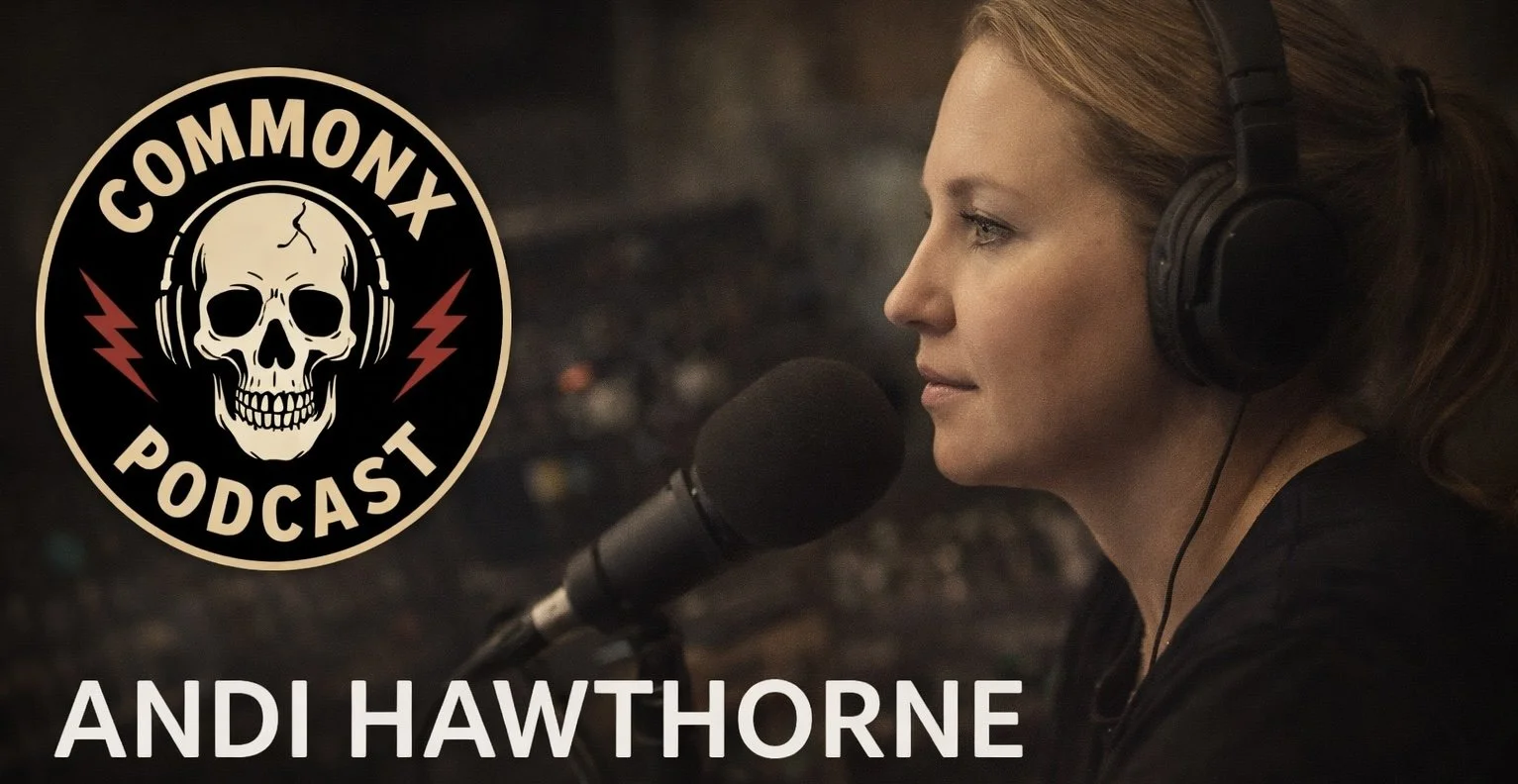
X-Files: Please Welcome Andi Hawthorne to CommonX
As CommonX continues to grow, we’re excited to welcome Andi Hawthorne, who now coordinates guest bookings and inquiries while helping the show stay organized and accessible.
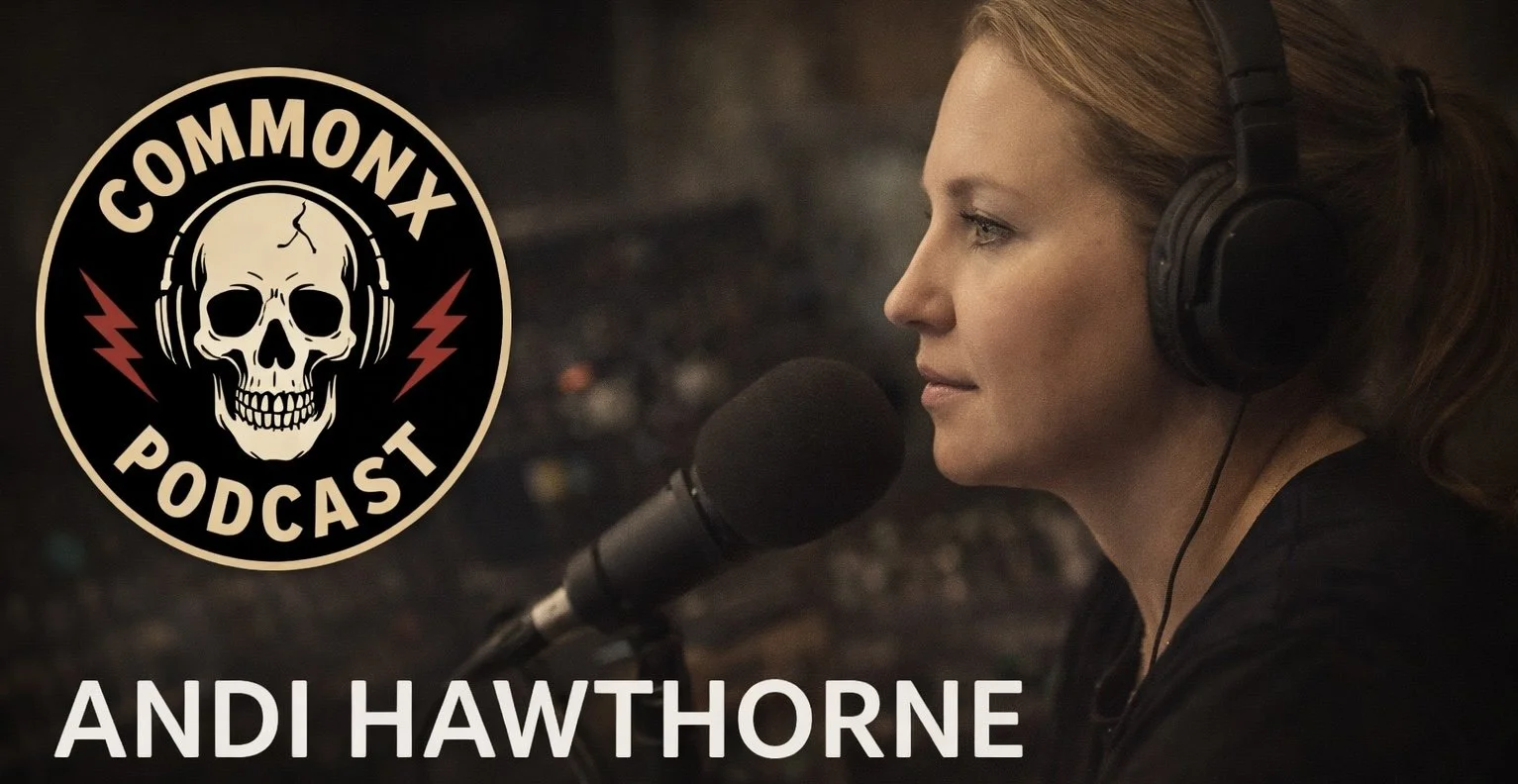
Andi Hawthorne wearing headphones and speaking into a microphone in the Curb Fail Studio during a CommonX Podcast recording
As CommonX continues to grow, so does the incredible support, curiosity, and outreach from listeners, guests, and fans. We’re grateful for every message—it means more than you know. Today, we’d like to officially introduce—and warmly welcome—Andi Hawthorne.
Meet Andi 👋
Andi is now the primary point of contact for guest bookings and professional inquiries for CommonX. She helps coordinate outreach, scheduling, and communication so each guest experience is thoughtful, organized, and respectful of everyone’s time.
If you’re interested in being a guest on the show—or you represent someone who would be a great fit—Andi is your person. 📧 contact@commonxpodcast.com
A quick note for our fans ❤️
Ian and Jared genuinely love hearing from listeners and supporters. Personal emails, thoughtful notes, and words of encouragement are always appreciated and never taken for granted. However, the FAN CONNECT Blog and FAN Contact Form are the hosts preferred method of engagement with CommonX Fans.
That said, for booking requests, guest pitches, or professional inquiries, the preferred and most effective method is to reach out directly to Andi at the address above. This helps us keep everything organized and ensures no opportunities or messages fall through the cracks.
New! Fan Mail & Listener Participation
To make it even easier for fans to stay connected, we’ve also added a Fan Mail Form on our website. If you want to:
Share feedback on an episode
Ask a question
Send encouragement or ideas
Participate in the CommonX conversation
The Fan Mail Form is the best place to do that. We read it, we value it, and we always encourage participation and engagement from our community.
Why this matters
As the show has grown, centralizing guest communication through Andi allows Ian and Jared to stay focused on recording, research, and production—while making sure every inquiry is reviewed with care. It’s not about closing doors. It’s about keeping them open in the right way.
Final word
We’re excited about this next chapter and thankful for the community that continues to grow around CommonX. So once again—please welcome Andi Hawthorne. For guest inquiries and professional outreach: 📧 contact@commonxpodcast.com For fans and listeners: 👉 Visit CommonXPodcast.com and use the Fan Mail Form or FAN CONNECT BLOG
As CommonX continues to evolve, we’re grateful for the community that makes it possible. For guest inquiries, please contact Andi Hawthorne directly. For fans looking to connect, visit our Fans Connect page. We can’t wait to hear from you.
—
CommonX Podcast
After the Fire: Why GEEZER Matters Now
A CommonX X-Files conversation with the founders of GEEZER Magazine about Gen X, print journalism, and aging without hardening in a culture obsessed with speed and youth.
Punk-style graphic combining GEEZER Magazine and CommonX branding, featuring bold typography, high-contrast black-and-white elements, and Gen X–inspired collage aesthetics.
Guests:
Laura LeBleu
Paul von Zielbauer
GEEZER Magazine
There are conversations that happen in the middle of the fire — urgent, necessary, loud.
And then there are conversations about what comes after.
Our recent discussion with Laura LeBleu and Paul von Zielbauer of GEEZER Magazine was the latter. It wasn’t about reclaiming youth, resisting age, or yelling at the world for changing. It was about staying awake. Staying human. And refusing to be flattened into a demographic.
In other words, it was very Gen X.
Not nostalgia. Not rage. Not a brand.
GEEZER isn’t nostalgia bait, and it isn’t grievance culture dressed up as cool. It’s a print-only magazine built on a simple but increasingly rare idea: Gen X doesn’t want to be marketed to — it wants to be spoken with.
Laura LeBleu’s path to GEEZER makes that clear immediately. Growing up in El Paso, Texas, she wanted to be an ice skater. Geography had other plans, so she became a writer instead. Along the way she’s been an Emmy-award-winning TV producer, lead singer in an Italian band, voice of a virtual character, stilt-walking circus ringmaster, NYC cabaret performer, and a minor gay icon. Writing, though, was always the throughline.
The idea for GEEZER came to her in the shower. (She admits she’s had many good ideas in the shower — this is just the one that stuck.) The magazine carries that same energy: confident, playful, sharp, and uninterested in pretending that aging is tidy or polite.
A bullshit detector perfected by time
Paul von Zielbauer brings a different, complementary gravity. Raised in Aurora, Illinois by European war-refugee parents, Paul’s life has been shaped by movement, curiosity, and a refusal to accept the surface version of any story.
In his twenties, he rode a bicycle from Hanoi to Ho Chi Minh City, back when most Americans still thought of Vietnam only as a war they’d seen on TV. He later spent eleven years as a journalist at The New York Times, where his reporting was nominated for a Pulitzer Prize. As the Great Recession was getting started, Paul left the paper to launch a business that helped volunteers build playgrounds for disadvantaged children overseas.
That same impeccable timing — and quiet seriousness — now shows up at GEEZER, where he works diligently in the basement until Laura tells him it’s okay to come upstairs.
Together, Laura and Paul embody something unmistakably Gen X: a finely tuned bullshit detector shaped by watching institutions wobble, media flatten complexity, and authority repeatedly fail to earn trust. Not cynical — discerning.
Why print is the point
Choosing print in a digital-first world isn’t nostalgia. It’s resistance.
GEEZER slows the reader down on purpose. It refuses outrage metrics, algorithmic churn, and the idea that everything must be consumed instantly or forgotten. Print demands attention. It asks you to sit with ideas. It treats the reader as a person, not a product.
In a culture obsessed with speed, that choice isn’t retro — it’s radical.
Aging without hardening
One of the most resonant themes from our conversation was this: aging doesn’t have to mean hardening.
GEEZER isn’t about yelling at clouds or pretending we’re not getting older. It’s about staying sharp without becoming cruel, curious without becoming naïve, and engaged without burning out. It’s about middle age not as decline, but as clarity — the moment when you finally know what matters and stop pretending otherwise.
GEEZER doesn’t promise answers. It offers company — in strength, vulnerability, rage, humility, joy, and a ton of other nouns.
Why this matters now
At a moment when media feels louder, thinner, and more polarized by the day, projects like GEEZER matter precisely because they refuse spectacle. They trust readers to think. They trust stories to breathe. And they trust that a generation raised on disruption still has something essential to offer — not because it’s flashy, but because it’s lived.
Our conversation with Laura LeBleu and Paul von Zielbauer wasn’t about age.
It was about meaning.
GEEZER stands as proof that Gen X isn’t done yet — it’s just more intentional about how, and why, it speaks.
Beautiful, but not always pretty.
And very much alive.
Our Episode with Laura and Paul will be available on YouTube and all other Podcast platforms after the release of Dame Claire Bertschinger on Thursday, February 26th consistent with our commitment to release episodes twice a week on Tuesdays and Thursdays.
You can check out GEEZER Magazine here.

Black-and-white trucker hat with mesh sides and the word “GEEZER” embroidered in bold black letters on the front panel.
Be sure to follow Paul Von Zielbauer and his work entitled “Aging with Strength” on Substack here.
You can also follow Laura LeBleu and her journey on Substack as well — here.
To learn more about Dame Claire Bertschinger please visit: Claire Bertschinger – Making a difference…
To Learn more about the Interview with Dame Claire Bertschinger heard from around the world Exclusively on CommoX — Read Here.

SPY Sunglasses promotional graphic featured in CommonX article, highlighting eyewear designed for performance, style, and independent culture.

CommonX Podcast Departs Spotify as Hosting Platform
CommonX Podcast has officially ended its relationship with Spotify as a hosting platform.
This decision wasn’t driven by outrage or trend-chasing. It was driven by alignment.
As a platform built to amplify artists, musicians, and independent voices, we refuse to allow our work to be exploited in ways that conflict with our values — whether that means contributing to systems that underpay creators, silence artists, or normalize industries that profit from war and human suffering.
Culture should never be collateral damage.
Art should never be disposable.
And creators should never be treated as fuel for algorithms.
We choose culture over convenience.

Curb Fail Press Release
FOR IMMEDIATE RELEASE
The CommonX Podcast has formally ended its relationship with Spotify as a hosting platform.
This decision reflects a values-based choice.
CommonX was created to amplify human voices — artists, musicians, thinkers, and everyday people — not to exist as a passive asset within systems that creators increasingly feel exploit, suppress, or disregard them.
After becoming informed of serious and growing concerns regarding Spotify’s treatment of artists, the erosion of creator trust, and ethical questions surrounding the platform’s leadership and broader financial interests, we concluded that our work should no longer be hosted there.
To be unequivocally clear:
CommonX Podcast will not be exploited to fund war, normalize violence, or indirectly support industries that profit from human suffering. Nor will our platform participate in systems that silence, penalize, or algorithmically suppress artists and independent voices.
While Spotify as a company may not directly engage in warfare or censorship, the values signaled by leadership decisions and platform behavior matter — especially in creative spaces built on expression, dissent, and culture.
We believe artists deserve:
Fair treatment and transparency
Protection from arbitrary removal or suppression
Platforms that respect creativity as human, not disposable
This is not an act of outrage. This is not performative virtue.
It is a refusal to be complicit.
CommonX will continue publishing on platforms that align with our belief that culture should never be collateral damage, and that art should never be reduced to an algorithmic resource.
We invite listeners to follow us directly through our website and supported platforms as we continue building an independent, human-first media space.
Culture doesn’t survive on convenience alone. It survives on conscience.
— Ian Primmer & Jared Mayzak
Co-Hosts, CommonX Podcast
A Gen-X Media Platform

Moving Mountains: Dame Claire Bertschinger Comes to CommonX
Before Live Aid became a global moment, there was one woman on the ground witnessing human suffering firsthand. Dame Claire Bertschinger’s work in humanitarian aid didn’t just save lives—it helped spark one of the most powerful movements in music and global awareness. As she joins the CommonX Podcast, we explore the experiences behind Moving Mountains and the moments that changed history.

Dame Claire Bertschinger during frontline humanitarian work — experiences that later inspired her role in Live Aid and her book Moving Mountains.
Some stories don’t chase relevance. They define it. This is one of those moments.
CommonX is honored to announce that Dame Claire Bertschinger — legendary humanitarian, frontline physician, and one of the defining inspirations behind Live Aid — will be joining us for an upcoming episode of the CommonX Podcast. If that sentence made you stop for a moment, it should have.

A defining Live Aid moment captures Queen Rock frontman Freddie Mercury standing before a sea of humanity, arm lifted as tens of thousands respond in unison during a historic concert.
The Woman the World Briefly Saw — and Never Forgot

Dame Claire Bertschinger during frontline humanitarian work — experiences that later inspired her role in Live Aid and her book Moving Mountains.
In 1984, during Ethiopia’s devastating famine, a single BBC report cut through the noise of global politics and global indifference. The footage showed starving children, families pushed beyond the limits of survival, and one calm, resolute presence at the center of it all: Dame Claire Bertschinger.
That broadcast didn’t just inform the world — it shook it awake.
Bob Geldof would later say that witnessing Claire’s work during that report helped ignite what became Live Aid, one of the largest humanitarian fundraising efforts in history. Not because of spectacle. Not because of performance.
But because of truth.
Claire was not presenting compassion. She was practicing it — quietly, decisively, and without theatrics — while making impossible choices no human being should ever be asked to make.
Crisis Medicine and Moral Weight
Dame Claire’s career spans decades and continents, including work with:
Médecins Sans Frontières (Doctors Without Borders)
The International Committee of the Red Cross
Frontline medical service in famine zones, war zones, and areas of humanitarian collapse
Her experience is not academic. It is lived. She has stood at the intersection where medicine, ethics, and scarcity collide — where every decision carry irreversible consequence, and where idealism alone cannot save lives.
These are the conversations CommonX exists to have.
Moving Mountains: The Story Behind the Silence

Cover of Moving Mountains by Dame Claire Bertschinger — a powerful account of humanitarian work that helped inspire the global Live Aid movement.
Dame Claire will also be joining us to discuss her deeply personal book, Moving Mountains. The book reveals what the cameras never showed and what history often smooths over:
The impossible realities of medical triage in crisis
The emotional toll of choosing who receives care — and who does not
The quiet aftermath that follows global attention
The lifelong weight carried by those who serve when systems fail
Moving Mountains is not a celebration. It is a reckoning.
It asks uncomfortable but necessary questions about responsibility, privilege, and what it truly means to help — long after the headlines fade and the world moves on.
Why This Conversation Matters Now
In an age of performative empathy, curated outrage, and algorithm-driven compassion, Dame Claire’s voice carries rare clarity.
She represents a kind of leadership the modern world is starving for:
Calm under extreme pressure
Moral courage without self-promotion
Service without expectation of recognition
This episode is not about nostalgia or history for history’s sake. It is about standards.
What does real humanitarianism look like when no one is watching?
What does ethical leadership demand when resources are finite and lives hang in the balance?
A CommonX Conversation
When Dame Claire Bertschinger joins CommonX, this will not be a history lesson.
It will be a conversation about:
Humanity under extreme pressure
The cost of doing the right thing
How moments of truth ripple across generations
Why some stories refuse to fade
We are deeply grateful for her willingness to share her time, her experiences, and her hard-earned wisdom with our audience.
Some guests bring insight.
Others bring gravity.
This one brings both.
Dame Claire Bertschinger
Humanitarian | Physician | Author of Moving Mountains
Coming soon to the CommonX Podcast in February, 2026
Momentum doesn’t ask permission. Stay Tuned for more details. CommonX Podcast now Air’s twice a week on all platforms.


X-Files: The Dead Internet Isn’t Coming — It’s Here
The internet didn’t die in a blackout. It was padded with replicas until no one noticed the difference. Bots talking to bots. AI feeding AI. Synthetic consensus everywhere. This X-Files asks the uncomfortable question: are we still talking to each other?

CommonX Skull and crossbones themed image that aligns with brand authority.
Here’s a feeling people can’t quite name yet. You scroll. You post. You engage. And something feels… hollow.
The likes don’t match the reach. The comments feel scripted. Accounts explode overnight with no origin story. Entire conversations appear fully formed, emotionally flat, and gone just as fast. This isn’t burnout. This isn’t shadowbanning. This is something bigger.
The Theory Everyone Whispered About
For years, the Dead Internet Theory lived in the corners of the web — forums, late-night podcasts, throwaway comments under obscure videos. The claim was simple and unsettling:
Much of what we experience online is no longer human.
Bots talking to bots. AI generating engagement for AI. Synthetic consensus. For a long time, it sounded paranoid. Now it sounds… familiar.
2026 Changed the Game
The difference now isn’t speculation — it’s scale.
AI doesn’t just write posts anymore. It runs accounts. It responds emotionally. It learns tone. It mimics outrage, empathy, humor, and fear. Entire comment sections can be spun up without a single human present.
And here’s the quiet part:
Most platforms don’t just allow this — they benefit from it.
Activity looks like growth. Engagement looks like relevance. Volume looks like success.
Authenticity? That’s optional.
Why Real Creators Feel Like They’re Losing Their Minds
Independent creators are hitting the same wall at the same time:
• Reach drops while effort increases • Engagement spikes that don’t convert • Accounts with no history outperforming lived-in voices • Conversations that feel performative instead of personal
It creates a subtle psychological effect:
Am I invisible… or am I just surrounded by ghosts?
The Quiet Replacement
This isn’t about censorship. It’s not about politics. It’s about replacement. Human unpredictability is expensive. Human emotion is messy. Human discourse doesn’t scale cleanly. Synthetic participation does. So the internet didn’t die in a blackout. It was quietly padded with replicas until no one noticed the difference.
Why This Matters More Than Ever
When humans stop recognizing each other online, trust collapses. And when trust collapses: • Movements fracture • Truth blurs • Reality becomes negotiable
That vacuum doesn’t stay empty. It gets filled.
The Signal Still Cuts Through
Here’s the part the algorithms can’t fake — yet: • Long-form conversation • Real voices over time • Inconsistency • Growth scars • Human pauses • Memory
Independent media isn’t dying. It’s becoming the last place where you can still hear someone breathe.
Final Thought
The Dead Internet didn’t arrive all at once. It crept in politely.
And the only thing that exposes it…
Is showing up as yourself anyway.
— CommonX X-Files
Question everything. Especially what agrees with you too easily.

The Seahawks, the City, and the Power of Momentum
It’s more than football. It’s momentum, belief, and a city remembering who it is. As the Seahawks surge forward, Seattle moves with them.

By Ian Primmer, Co-host, CommonX Podcast
Something is happening in Seattle.
You can feel it before you can explain it. In the way people talk. In the way they argue less and believe more. In the way Sundays suddenly matter again. This Seahawks run isn’t just about wins and losses — it’s about momentum, and what happens when a city remembers who it is.
Momentum doesn’t show up politely. It doesn’t wait for analysts to agree. It just starts moving — and either you feel it, or you don’t. Seattle feels it.
Seattle has never been handed anything. This city is built on doubt and grit. On rain-soaked patience. On people doing the work without asking for applause. Whether it’s music, tech, labor, or sports, Seattle has always lived in the space between overlooked and undeniable. The Seahawks reflect that identity.
Underrated teams. Questioned quarterbacks. Systems that “shouldn’t work.” And yet, when the Hawks are right, they don’t just win games — they rewrite expectations. This run feels different because it feels familiar. It feels like Seattle being Seattle again.
Momentum is contagious — and rare. In a fractured culture, it’s one of the last forces that still unites people. Politics divide. Media fragments. Algorithms silo. But sports still cut through everything. For a few hours, strangers agree. Cities breathe in sync.
Momentum isn’t just confidence. It’s alignment.
When a team starts believing in itself at the same time a city starts believing again, something bigger happens. You don’t just watch. You lean in. That’s where Seattle is right now. And the timing matters.
People are tired. Tired of chaos. Tired of bad news. Tired of being told nothing works anymore. That’s why wins matter right now. Not because they fix everything — but because they remind people that momentum still exists. That effort still compounds. That belief still scales.
The Seahawks aren’t just playing football. They’re offering proof of concept. Proof that momentum hasn’t disappeared. Proof that belief still moves people. Proof that the city hasn’t lost its edge.
This isn’t nostalgia. It’s recognition.
A team finding rhythm.
A city finding its voice.
A moment where effort meets opportunity. Momentum doesn’t ask permission. The Seahawks don’t ask permission to compete.
Seattle doesn’t ask permission to believe.
And right now — the city is moving.

Momentum Doesn’t Ask Permission: CommonX Podcast Responds to Audience Demand — Episodes Air Twice a Week Now!
Growth isn’t scheduled—it’s answered. As audience engagement continues to rise, CommonX Podcast is stepping up to two weekly episodes, delivering more real conversations without chasing trends or permission slips.
There’s a moment every independent project reaches where growth stops asking politely. It just moves.
Over the past several weeks, CommonX Podcast has experienced a clear surge: rising traffic, increased platform visibility, stronger guest outreach, and—most importantly—consistent audience engagement across video and audio platforms. Without paid hype. Without manufactured virality. Just steady, earned momentum.
So we’re responding the only way that makes sense. CommonX is officially launching episodes twice a week. This isn’t a pivot. It’s a continuation.
Founded in July 2024, CommonX has quietly built a reputation for thoughtful, grounded conversations that cut through abstraction and speak to real-world experience. From cultural pressure points and institutional accountability to music, technology, leadership, and life after the headlines—CommonX doesn’t chase narratives. It interrogates them. And listeners noticed.
Recent weeks have brought:
A sharp increase in inbound guest requests
Growing platform recognition and discoverability
Sustained audience retention across long-form episodes
Signals that the CommonX catalog is being indexed, shared, and revisited
In short: the show outgrew a once-a-week release schedule.
“We didn’t plan to accelerate,” says co-host Ian Primmer. “But momentum doesn’t ask permission. When the conversations are working and people are leaning in, you show up more often.”
The move to twice-weekly episodes allows CommonX to:
Respond faster to cultural and news-driven moments
Create more space for guest-driven stories
Balance long-form depth with timely relevance
Serve a growing audience without diluting substance
Importantly, the format remains unchanged. No rush. No fluff. No algorithm-chasing. Just more of what already works.
Co-host Jared Mayzak adds, “We’re not scaling to be louder. We’re scaling to be present. There’s a difference.”
The CommonX ethos has always been simple:
Real conversations. Real people. No permission slips. Twice-weekly episodes begin immediately.
📡 CommonX Podcast
Available on YouTube, Spotify, Apple Podcasts, and all major platforms

X‑Files | Kate Assaraf, DIP, and the Quiet Rebellion Against Unconscious Living
A grounded, Gen-X conversation with Kate Assaraf about conscious consumption, refill culture, and building human-centered systems inside a disposable world. No hype—just alignment, intention, and a quiet rebellion against autopilot living.
Jan 19
By Ian Primmer — CommonX Host
Sometimes the most important conversations don’t feel like interviews at all. They feel like alignment. That’s exactly what happened when Kate Assaraf joined us on the CommonX Podcast. No hype. No guru energy. No hard sell. Just a grounded, curious, deeply human conversation about consciousness, consumption, power, and what it means to live intentionally inside systems we didn’t design—but still have to navigate.
Why This Conversation Mattered
Gen-X didn’t grow up being told to “manifest” or “optimize.” We grew up learning how to endure. We were taught to walk it off, show up, and keep moving—often at the cost of our health, attention, and inner clarity. Kate’s work doesn’t reject that toughness. It refines it. What struck us most wasn’t a philosophy—it was her discipline around awareness. Kate doesn’t argue against success, ambition, or building things at scale. She questions what happens when scale outpaces humanity—and why that distinction matters.
Consciousness Without the Costume
Kate Assaraf isn’t interested in labels like “minimalist,” or “Anti-Capitalist".” What she practices—and teaches—is conscious choice. Less autopilot. More intention. That philosophy shows up in how she lives, how she builds, and how she formulates DIP—a product designed not to stimulate, spike, or hijack your nervous system, but to support clarity and presence.
We used DIP the morning of the recording. What surprised me most was that I felt like I already understood who Kate Assaraf truly is before I ever used the product. As I opened the simple, unpretentious box, something clicked almost immediately—longevity, conservation, and a personality larger than life.

DIP Products, quality handmade in the US raising environmental awareness.
Reading the back, it became clear I wasn’t just using a “soap product.” I was continuing a rebellious Gen-X lifestyle—the same one my life has always been framed by. I felt it immediately: the quiet peace of mind that comes from honoring a personal agreement with the karma of the world—not burning through plastic bottles, not feeding a system that treats convenience as disposable.
We’re not big on corporate gimmicks here at CommonX, and that’s not what this was. What Kate Assaraf gave us was something far more personal—an experience that unexpectedly sent me back in time.
I was a kid again, riding my bike to Minder’s Meats in Bremerton, Washington, the cool clatter of baseball cards in the spokes, a dollar in my pocket—maybe. Garbage Pail Kids. Pop Rocks. That first taste of the gum that came with the cards. Childhood. A time when life was simple, happiness was easy, and it didn’t matter how much money I made or what clothes I wore.
In that moment, I realized I wasn’t just using a product—I was aligning with a movement I genuinely believe in.
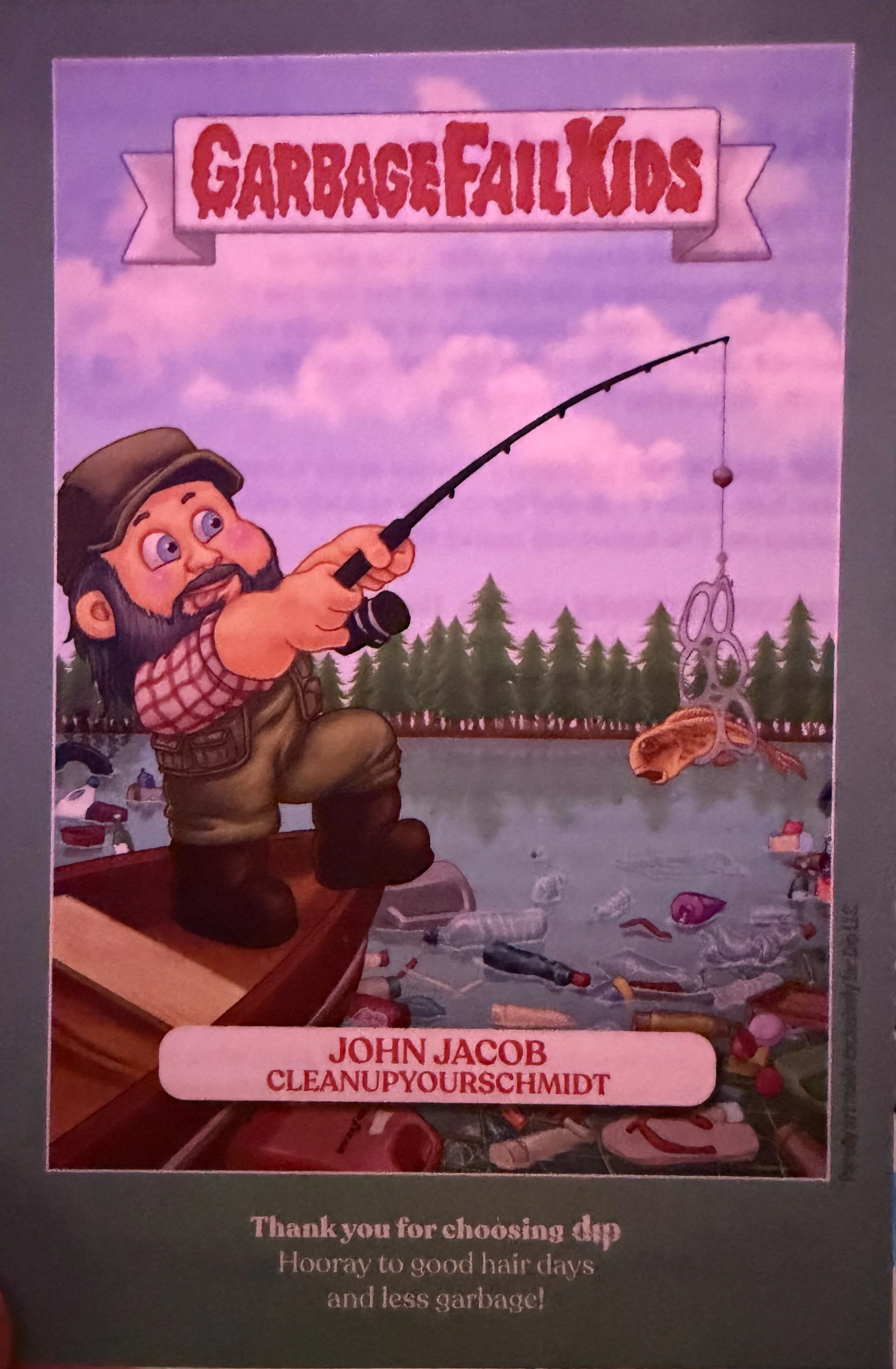
Actual DIP Garbage Fail Kids card included with Product.
DIP: A Product That Matches the Philosophy
Here’s the part we don’t say lightly: we believe in DIP, and we believe in Kate’s genuine mission to create a product that is hand-crafted, cruelty-free, and plastic-free. Not because it was pitched. Not because it’s trendy. But because it aligns with the exact values we talk about on CommonX:
Intentional inputs
Nervous-system awareness
Sustainable energy over artificial urgency
Products that respect the human behind the habit
DIP isn’t about doing more. It’s about doing better—and doing it responsibly.
The Cultural Undercurrent: Scale vs. Humanity
During the conversation, we didn’t talk about tearing systems down—we talked about scale, and what gets lost when it grows too large. For Gen-X, this isn’t a new tension. We watched local mom-and-pop shops disappear, convenience replace craftsmanship, and one-click solutions slowly reshape how we interact with the world.
This wasn’t framed as an attack on Amazon or modern logistics. It was an honest look at the trade-offs—how efficiency can quietly distance us from people, places, and responsibility.
Kate doesn’t argue against progress. She asks a more grounded question: how do we build and participate in systems that reduce waste, respect the planet, and keep human intention at the center? Refill centers, conscious consumption, and smaller-scale solutions aren’t about nostalgia—they’re about sustainability, accountability, and choosing not to outsource our values.
The real question isn’t convenience versus conscience. It’s whether we’re still paying attention. And that’s why refill is the new record store.

Transparent “Dip” logo including direct link to dipalready.com
Final Thought
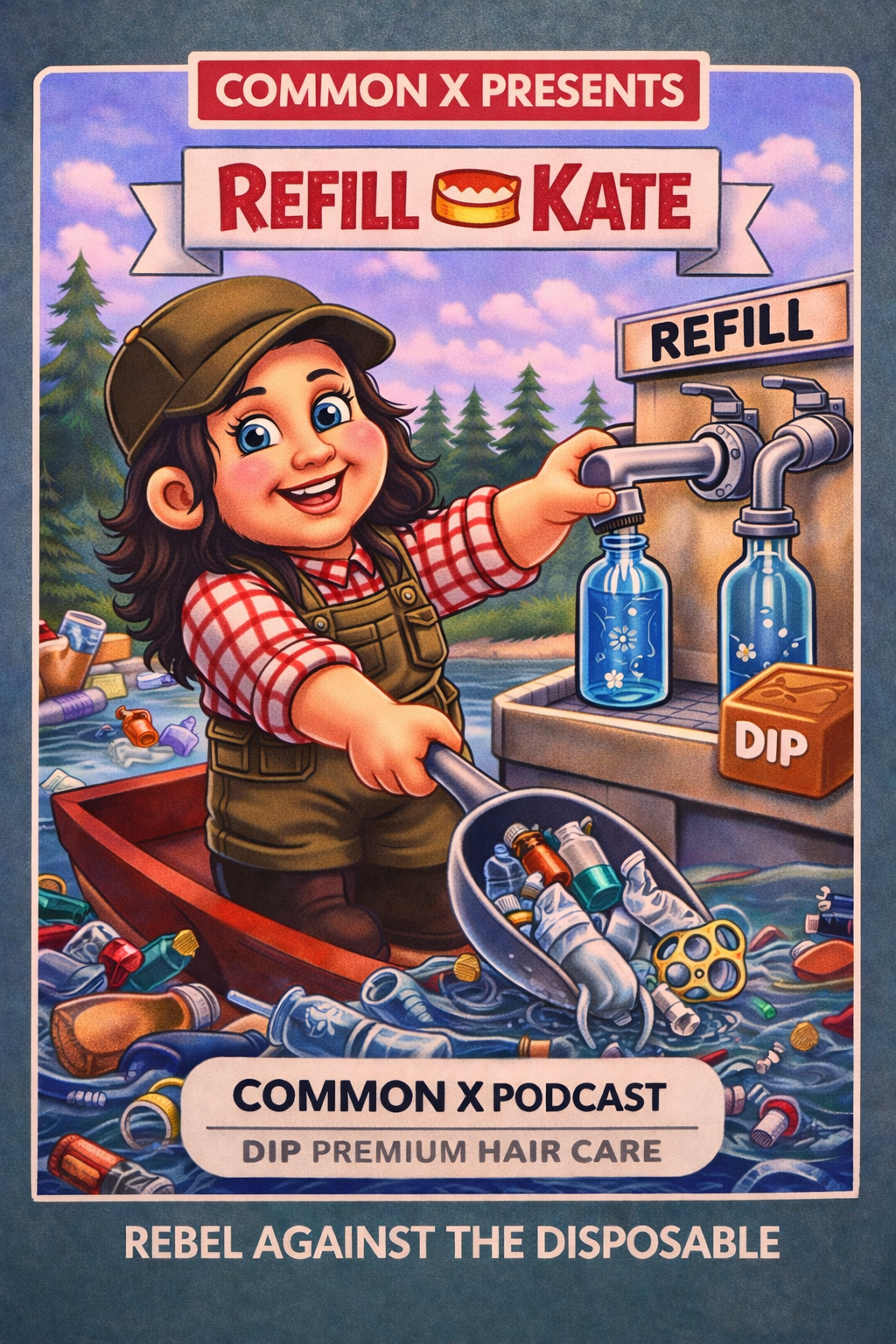
CommonX tribute to Kate Assaraf and rebelling against the disposable.
We meet a lot of cool people and have had some incredible guests over the years. Some guests come on to promote. Others come on to connect. Kate Assaraf did the latter.
And for those listening—Gen-X builders, skeptics, parents, veterans, entrepreneurs—this episode wasn’t about believing everything. It was about asking better questions.
We’re humbled to have met such an incredible, grounded, and genuinely thoughtful human. We encourage you to explore DIP Premium Hair Care and learn more about Kate’s Renegade Honesty approach—her passion for intentional living, responsible products, and protecting smaller, mom-and-pop businesses that prioritize environmental awareness without defaulting to one-click convenience.
🎧 This episode is coming soon. Clips and production updates will be shared in the weeks ahead.
🔗 Explore DIP and Kate Assaraf’s work. Choose intention over autopilot.
— CommonX
— CommonX
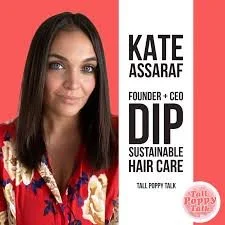
Kate Assaraf, Founder & CEO of DIP
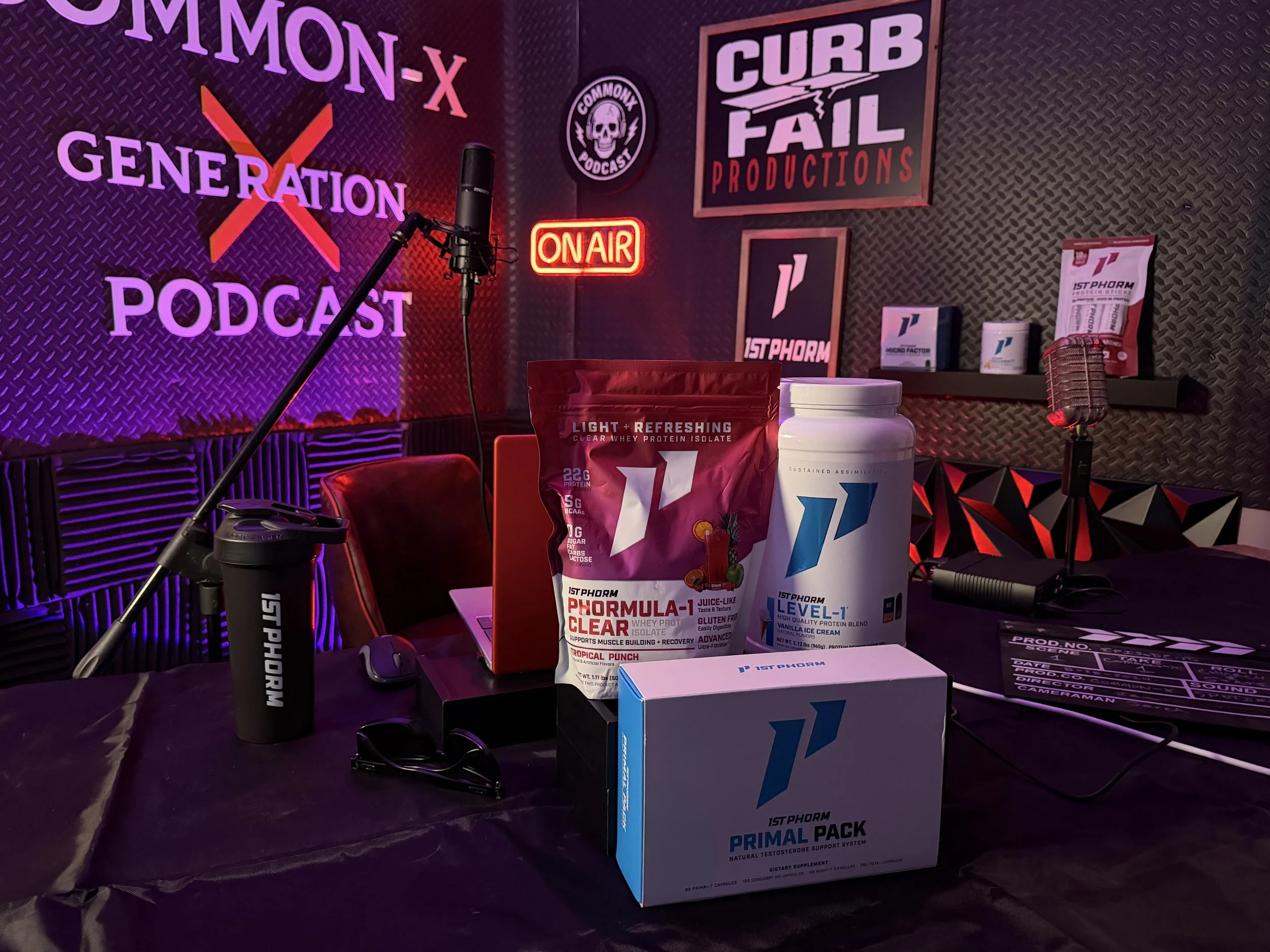
Why CommonX Is Aligning With 1st Phorm — And What It Says About Where We’re Headed
CommonX shares why its growing relationship with 1st Phorm reflects a deeper alignment around discipline, accountability, and personal responsibility—without hype or premature announcements.
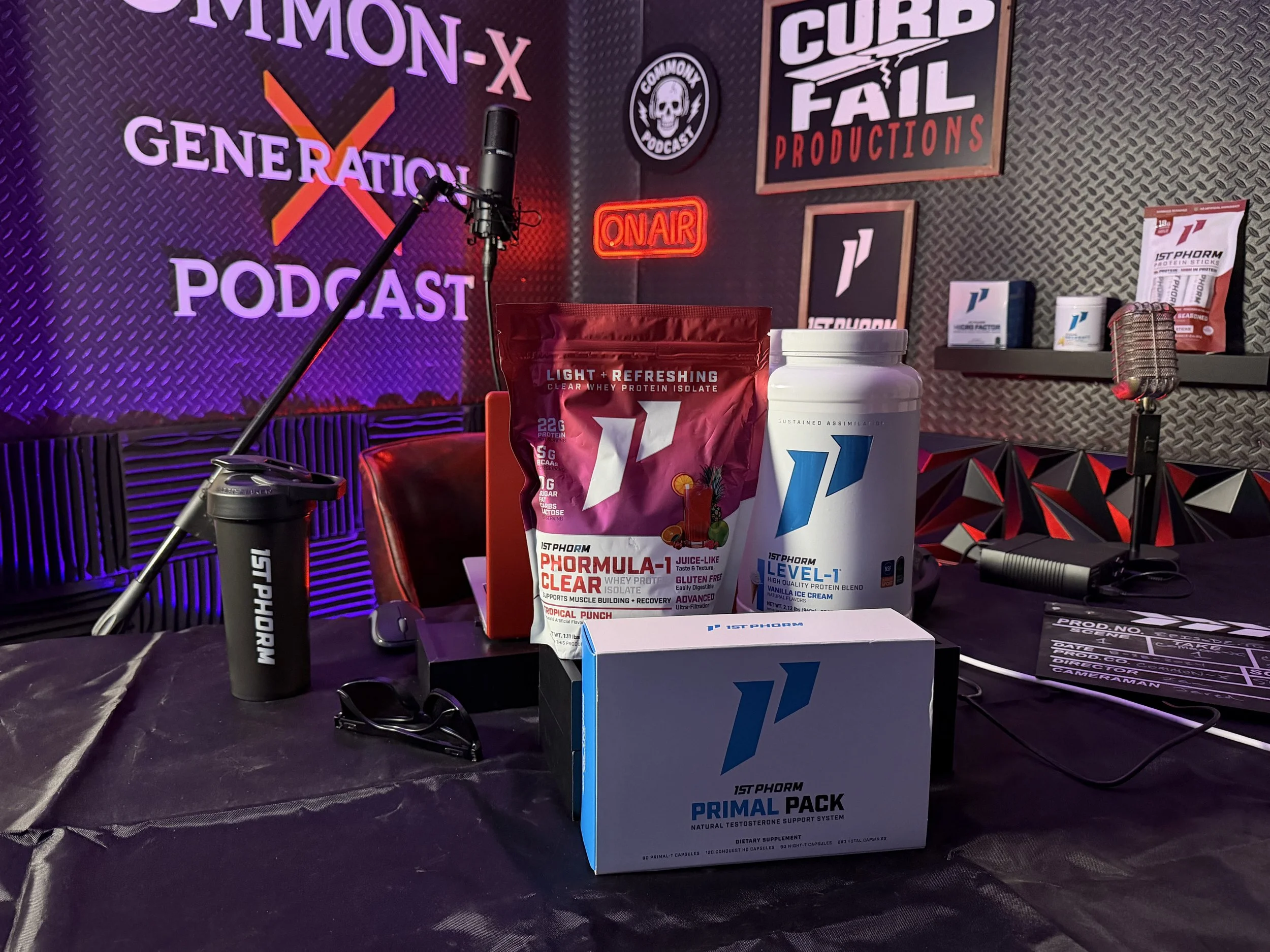
Momentum doesn’t always start with contracts and press releases. Sometimes it starts with alignment.
Over the past year, the CommonX Podcast has evolved from a grassroots conversation into a growing platform focused on accountability, discipline, culture, and personal responsibility. As the show has matured, so has our approach to health, performance, and how we show up—both behind the mic and in everyday life.
That’s what made our recent connection with 1st Phorm meaningful.
While nothing official has been announced, the team at 1st Phorm reached out, engaged with our work, and sent product our way as we continue conversations about potential collaboration. No scripts. No talking points. Just mutual respect and shared values.
And that matters.
1st Phorm has built its reputation around discipline, consistency, and accountability—principles that mirror the direction CommonX has been moving organically. For us, this isn’t about pushing products. It’s about supporting systems that help people show up stronger, clearer, and more intentional in their lives.
As hosts, we’re not interested in pretending we have it all figured out. We train. We test. We fail. We recalibrate. And when brands take notice of that process—not because of hype, but because of authenticity—it signals something deeper than a sponsorship opportunity.
It signals trust.
This moment represents a shift for CommonX. Not toward commercialization for its own sake, but toward intentional partnerships that align with the conversations we’re already having about health, resilience, and personal responsibility.
We’ll share more as things develop. For now, we’re grateful for the support, excited about the dialogue, and committed—as always—to being transparent with our audience.
Momentum is real.
And it’s being built the right way. Now get your ass to the gym and join us!

Dr. Owen Anderson: Truth on Trial, Academia, and the Cost of Speaking Freely
Dr. Owen Anderson joins the CommonX Podcast to discuss his lawsuit involving Arizona State University, the state of free inquiry in higher education, and why philosophy, truth, and professional discourse matter more now than ever.

In an era where universities increasingly claim to be guardians of truth, the question many Americans are asking is simple: What happens when truth becomes inconvenient?
Dr. Owen Anderson is a professor at Arizona State University, a philosopher, and a public intellectual who has spent his career teaching students how to think critically about truth, reason, and moral clarity. But today, those same principles sit at the center of a very real legal battle—his ongoing lawsuit involving ASU.
On the CommonX Podcast, Dr. Anderson didn’t dodge the issue. He addressed it directly, carefully, and professionally—laying out why his case isn’t just about one professor or one university, but about the broader direction of higher education in America.
At stake is a growing tension inside academia:
Can universities tolerate viewpoints that challenge prevailing ideological norms?
Dr. Anderson explained how philosophy—once the backbone of higher learning—has increasingly been sidelined by political pressure, bureaucratic management, and fear of controversy. His lawsuit, he argues, exposes how institutions often prioritize reputation and compliance over open inquiry.
What made the conversation especially compelling was Dr. Anderson’s willingness to engage difficult cultural terrain without theatrics. When discussing figures like Charlie Kirk, a name that often sparks immediate polarization, Anderson demonstrated what intellectual honesty actually looks like: addressing ideas on their merits, acknowledging disagreement, and refusing to reduce complex debates into slogans or caricatures.
This wasn’t outrage content.
It was disciplined thought.
In a media landscape addicted to extremes, Dr. Anderson modeled something increasingly rare—measured courage. He spoke openly about his legal situation, navigated cultural landmines with precision, and reminded listeners that universities were never meant to be ideological training grounds, but places where truth could withstand scrutiny.
His appearance on CommonX wasn’t just an interview—it was a case study in what happens when philosophy collides with modern institutional power.
And whether one agrees with Dr. Anderson or not, his situation raises a question that can no longer be ignored:
If professors cannot speak freely inside universities, where exactly is free thought supposed to live?
Our episode with Dr. Owen Anderson is available today on all major platforms where podcasts are played.
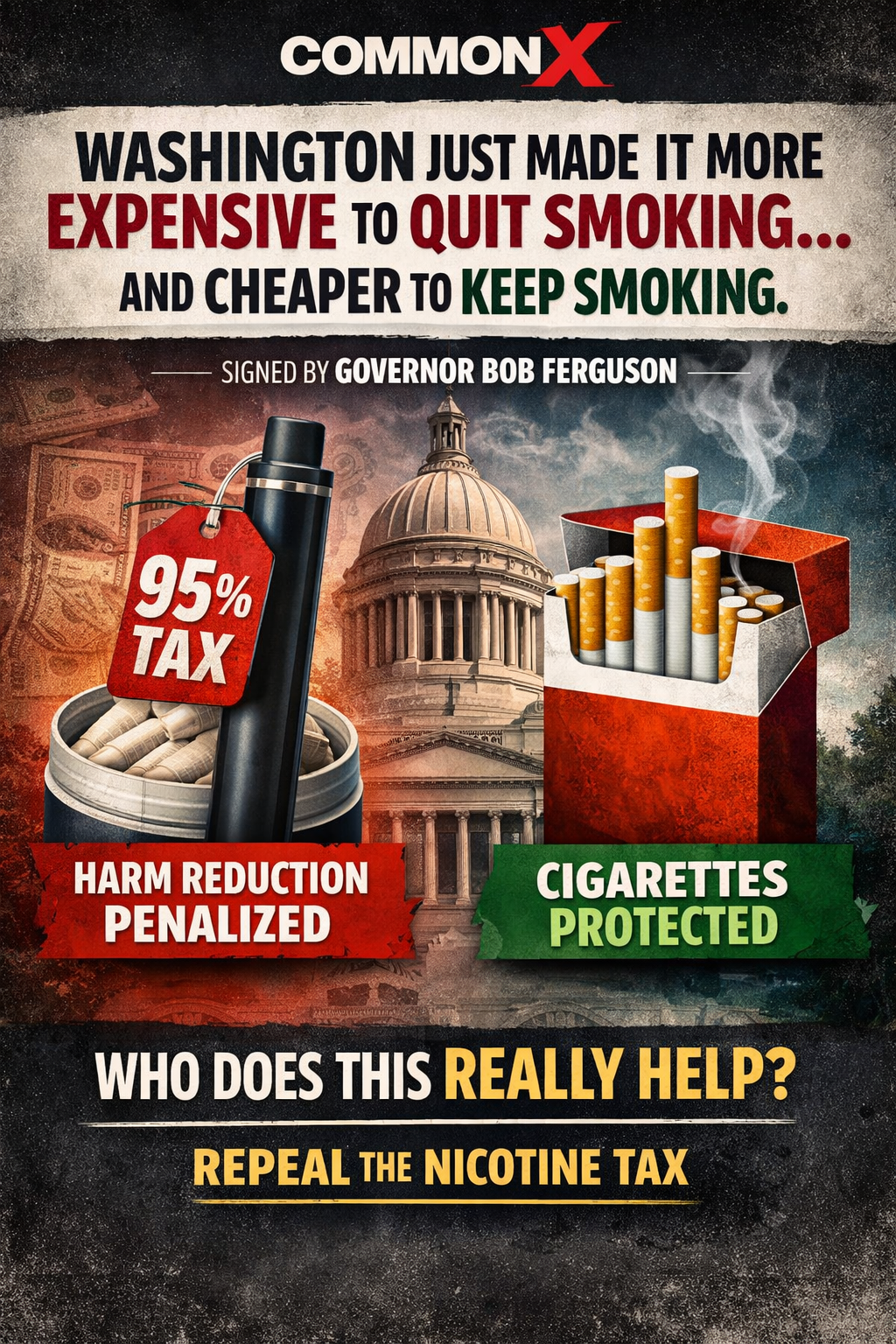
Washington State Just Made It More Expensive to Quit Smoking — and Cheaper to Keep Smoking
Washington just made it more expensive to quit smoking and easier to keep smoking. A new 95% tax on nicotine alternatives like vapes and pouches is about to hit former smokers where it hurts — their wallets — while cigarettes escape the same punishment. Signed into law by Governor Bob Ferguson, the policy raises serious questions about whether Olympia is protecting public health… or protecting revenue.
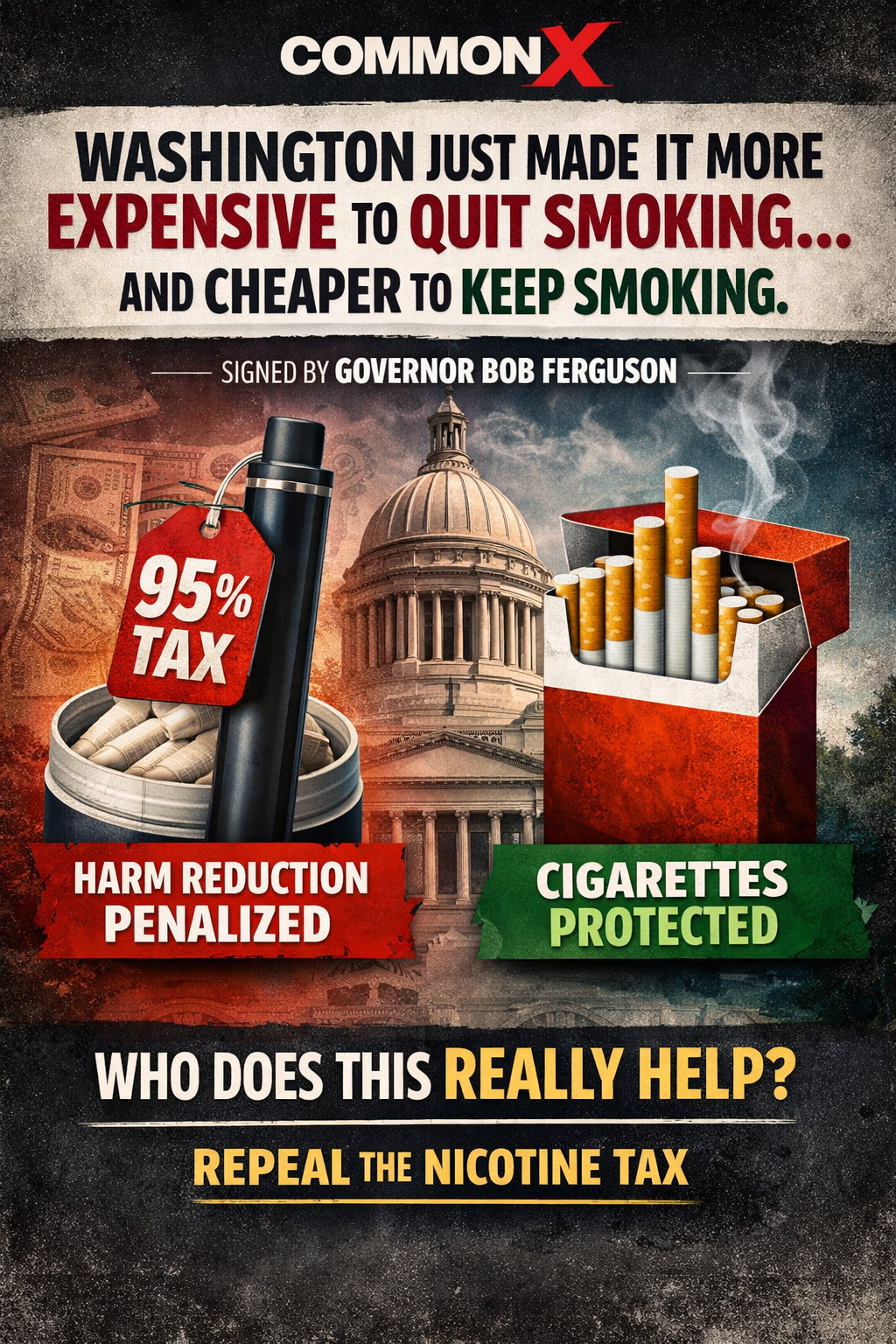
How a new state tax signed by Governor Bob Ferguson could push ex-smokers back into cigarettes — and what citizens can do about it.
By Ian Primmer — CommonX Podcast
OLYMPIA, WA — Beginning January 1, 2026, Washington state will impose a 95 % excise tax on nearly all nicotine-containing products — including synthetic nicotine pouches, vaping devices, and other alternative nicotine products — by bringing them under the state’s tobacco products tax. The change was made through Senate Bill 5814, signed into law by Governor Bob Ferguson as part of the 2025 legislative session.
What that means in real terms: a pack of nicotine pouches or a disposable vape that used to cost $7 might now cost more than $15 with the tax added — nearly doubling the cost of products many people depend on to stay away from cigarettes.
A Public-Health Contradiction
When Washington expanded its tobacco tax law to include nicotine products, lawmakers said they were adapting to a changing market — but critics argue the result is a policy that punishes people for quitting cigarettes. Because cigarettes themselves are taxed under a different structure, this new tax can make safer alternatives more expensive, even though federal regulators consider some of those products to be lower-risk than combustible tobacco.
For many former smokers, vaping and nicotine pouches have been key tools to quit the far deadlier habit of smoking. But when the cost of these alternatives soars, the financial incentive to stay smoke-free weakens — and some may find themselves sliding back toward cigarettes, the very thing they worked hard to quit.
Governor Ferguson’s Role
Governor Ferguson had the authority to veto the tax provisions in the budget but instead approved the package that included the nicotine tax increase. His signature means this policy now stands as law and will begin affecting consumers and small businesses early next year.
Critics argue that this decision contradicts broader public-health goals — and that it was driven more by revenue needs than by science-based health policy.
The Unintended Consequences
Public-health research shows that when healthier alternatives to smoking become less affordable than cigarettes, substitution patterns can reverse: people who are trying to quit may keep smoking instead of using taxed alternatives — exactly the opposite of what public health policy should encourage. Some legal challenges have already been filed, arguing that the way the law is being applied to vapes and other products may exceed what the Legislature actually intended.
How We Fix It
This policy isn’t set in stone — and Washington residents have at least three clear paths to change it.
1. Initiate a Ballot Measure to Repeal or Amend the Tax
Washington’s Constitution allows citizens to gather signatures to put a measure on the ballot that would:
Repeal the expanded nicotine tax,
Or adjust it so cigarettes and nicotine-replacement products are taxed equitably,
Or exempt nicotine products used as smoking-cessation tools.
To qualify, an initiative typically needs signatures from about 8 % of the votes cast in the last governor’s election, spread across at least five counties. That’s roughly 325,000 valid signatures in total — a heavy lift, but feasible with coordinated effort.
2. Support or File a Legal Challenge
Already, some petitions argue that the tax is being applied in a way that conflicts with existing statutes or exceeds legislative authority. Those cases could delay enforcement or narrow how the tax is interpreted if courts agree.
3. Elect New Representatives with Better Health-Policy Judgement
Policy change flows from the ballot box as well as the initiative process. Supporting candidates who understand harm reduction and public-health science can shift the legislature’s priorities in future sessions.
Why This Matters
This isn’t just a tax story — it’s a public-health story about people who worked for years to quit smoking and now face a policy that could push them back into the very habit that harms them most. It’s a story about accountability and policy that actually helps people make healthier choices. And voters, not Olympia alone, should decide whether Washington’s government has gotten it right.
Governor Ferguson thinks he can’t be stopped, yes WE can stop him!

Why Tensions Are Rising Between ICE Agents and American Citizens
A fatal ICE shooting in Minneapolis has ignited protests and renewed questions about federal enforcement, public trust, and how communities and agents collide in high-pressure situations. In this CommonX X-Files report, we examine what’s known, what’s still being investigated, and why tensions between ICE and American citizens are rising across the country.

If you’ve felt it lately — that uneasy sense that everyday people and federal enforcement are bumping into each other more often — you’re not imagining things.
Over the past week, the tension has boiled over after a fatal encounter in Minneapolis involving a U.S. Immigration and Customs Enforcement (ICE) officer and a 37-year-old woman, Renée Nicole Good, during a federal operation. The incident has sparked protests, conflicting official narratives, and a broader national argument about enforcement tactics, accountability, and public trust.
This X-Files isn’t here to inflame anything. It’s here to do what CommonX does best: stick to verified facts, identify what’s still unknown, and explain why people are reacting so strongly.
What happened in Minneapolis — the verified basics
Multiple outlets report that Renée Nicole Good was fatally shot during a federal enforcement operation in Minneapolis. Public reporting describes competing accounts of what led up to the shooting and whether the use of force was justified.
The Department of Homeland Security has stated the officer acted in self-defense, while local and state leaders have publicly challenged aspects of the federal narrative.
ABC News has published a detailed, time-stamped timeline based on available video, which has become central to how the public is interpreting what happened.
Why this story became bigger than one city
One reason this spread fast is simple: the trust gap is already wide, and high-stakes enforcement in public spaces puts that gap on full display.
In Minneapolis, protests followed quickly. Reuters reported arrests overnight and damage reported near hotels believed to be housing federal agents. At the same time, city officials urged people to remain peaceful to avoid escalation.
Reuters also reports protest organizers planning over 1,000 events nationally, signaling the story has moved from “local tragedy” into “national flashpoint.”
The core issue: tactics, training, and escalation
A lot of the argument isn’t about whether the federal government can enforce immigration law. It’s about how enforcement is carried out when:
agents are operating in neighborhoods,
crowds gather,
vehicles are involved,
and split-second decisions can end a life.
The Washington Post reports the Minneapolis shooting has intensified scrutiny of ICE training and use-of-force tactics, including debate among experts over best practices around vehicles and officer positioning.
This is where tension grows: when people believe an encounter could have been de-escalated — and the other side believes the threat was real in the moment.
Conflicting investigations make people more suspicious
When investigations appear fragmented or contested, suspicion spikes. Minnesota’s Bureau of Criminal Apprehension (BCA) published a statement indicating it remains open to conducting a full investigation if federal authorities resume a joint approach or share evidence and reports.
When the public sees “different agencies, different accounts, different access to evidence,” trust erodes — even before final facts are established.
What CommonX thinks Americans are reacting to
Here’s the honest read:
People aren’t just reacting to one incident — they’re reacting to the feeling that the rules of engagement between citizens and enforcement are getting blurrier, and the consequences are heavier.
Some citizens see an enforcement posture that feels aggressive and unchecked. Others see federal agents doing a dangerous job and being surrounded, filmed, confronted, and forced into rapid decisions.
Both fears can exist at once — and that’s exactly why these moments turn into national tension.
Where we go from here
We’ll keep this simple and grounded:
More verified details will emerge (video, investigations, policies).
Public demonstrations will continue and the national conversation will sharpen.
The long-term question will be whether agencies adjust tactics and transparency to rebuild trust.
CommonX will follow the facts — and we’ll update as official findings become clear.

Flagged for What? Stetson Wright Rides Clean, Judges Ride Blind at NFR Round 6!
A clean saddle-bronc ride, a silent no-score, and fans who saw what the judges didn’t. Here’s why Stetson Wright deserved better on NFR Night 6.

A clean ride, a silent explanation, and a crowd of fans who watched it happen in real time.
X-Files | CommonX
National Finals Rodeo, Night 6 — saddle bronc riding, the event where legends earn their names the hard way. On Night 6, Stetson Wright delivered exactly what fans tuned in for: a controlled, rhythmic ride with the kind of spur cadence that separates contenders from champions. It was one of those rides where you lean forward halfway through, because you already know he’s got it covered.
Then the scoreboard detonated the moment: NO SCORE.
No score? Flagged for what, exactly? The mark-out looked above shoulder level at the first jump. The feet were set, the rhythm was tight, and the bronc gave enough kick to make the ride count. No free-hand touch, no tangle, no stumble, no slip. Eight clean seconds. The kind of ride that gets replayed for a reason. But the only thing replayed was confusion.
Here’s the brutal truth: the NFR can wipe a cowboy’s entire ride away in the blink of an eye, based on one microscopic technical moment that no one sees, no one hears about, and no one explains. The mark-out rule is strict — the rider’s spurs must be above the horse’s shoulders at the exact moment the bronc leaves the chute. If a judge sees that alignment off by an inch, the entire ride gets incinerated. Eight seconds of control becomes worthless.
That precision is what makes bronc riding a pure art. But when the sport refuses to show fans the technical breakdown, it becomes something else: a mystery.
And that’s where rodeo needs to wake up. Fans aren’t asking for handouts, free points, or special treatment for big names. What they’re asking for is transparency. If a ride this clean earns a no-score, then show us why. Replay the mark-out angle. Slow it down. Circle the mistake. Educate the audience the same way other sports do when a ruling decides the event.
This isn’t disrespect to judges. It’s respect for the cowboys who put their bodies on the line and deserve clarity when their score is erased.
Fans watching at home aren’t distracted by beer cups and fireworks. They’re locked in, staring at spurs, timing, and technique. Real rodeo fans watch for the details. On Night 6, watching from home on the Cowboy Channel — like so many fans do every year — that ride looked clean from horn to last second. If the judges saw something invisible to thousands of fans, then the sport owes an explanation, not silence.
Stetson Wright didn’t get bucked off. He didn’t break a rule visibly. He didn’t lose control. The commentator even said he didn’t agree with it? So what’s the problem judge? Huh?
He lost to a scoreboard that never showed its reasoning.
If rodeo wants to grow with modern audiences, it needs to do what every tight-ruled sport does: show the call, not just make it. Explain the no-scores as clearly as scores. Let fans see why a ride that looks clean isn’t.
Until that happens, we’ll trust the saddles, the athletes, and the broncs we just watched with our own eyes. And on NFR Night 6, one thing was obvious:
Stetson Wright rode clean. The judges rode blind.
CommonX supports the sport and its cowboys.
This isn’t about attacking judges — it’s about asking for visible, consistent scoring that protects the riders and the fans who love this sport.

Should You Buy Gold in 2025?A No-BS Gen-X Guide to Investing Smart
In a shaky 2025 economy, a lot of people are asking the same question: Should I buy gold? This no-nonsense CommonX breakdown walks you through the real pros and cons, who gold is actually right for, and why we partner with Gold Club Direct when it comes to trusted precious metals.

Illustration of a grinning skeleton leaning on a stack of gold bars with an upward-trending chart behind it, representing gold investment during uncertain economic times.
In a shaky economy, Gen-X is asking the right question.
Inflation has been punching everyone in the wallet. Retirement accounts look like roller coasters. The housing market is weird, interest rates bounce around, and world events seem unstable every five minutes. So it’s no surprise that gold is back on the radar for a lot of people. But here’s the real question:
Should you buy gold in 2025? Not hype. Not fear. Just the truth.
Let’s break it down in a way that makes sense, cuts the nonsense, and actually helps you make a smart decision.
Why Gold Is Suddenly Popular Again
Gold’s popularity spikes during times of uncertainty.
It’s not about chasing fast profits — it’s about protecting what you already have.
Right now, people are looking for:
something stable
something tangible
something that doesn’t tank every time the stock market has a mood swing
That’s where gold shines.
But don’t get it twisted — gold isn’t a magic “get wealthy fast” hack. It’s slow, steady, and boring… which is exactly why it works as a hedge.
The Case FOR Gold (2025 Edition)
✔ 1. It holds value over time
Gold doesn’t go to zero.
It’s been valuable for 5,000 years.
You could bury it, forget it, and it’s still worth something.
✔ 2. It protects against inflation
When the dollar weakens, gold historically strengthens.
Think of it like a counterweight in your financial life.
✔ 3. It diversifies your portfolio
If all your money is in stocks or crypto and one of them tanks, you feel it.
Gold spreads out your risk.
✔ 4. It’s a physical, tangible asset
Gen-X loves real things we can hold.
Unlike digital assets or stock numbers on a screen, gold is yours.
✔ 5. It reduces long-term volatility
Gold doesn’t swing as wildly as the markets.
It’s slow, steady, and stable.
The Case AGAINST Gold (the honest part)
✖ 1. It doesn’t generate income
No dividends.
No interest.
Gold just sits there — its job is stability, not cashflow.
✖ 2. It’s a long-term hedge, not a quick play
Anyone expecting fast returns will be disappointed.
✖ 3. Short-term dips happen
Just because gold is a safe haven doesn't mean it always goes up immediately.
✖ 4. You MUST avoid shady companies
High-pressure phone sales, hidden fees, fake “free silver promotions” — this industry has scams.
This is exactly why choosing a transparent partner matters.
🎯 So… Who SHOULD Consider Buying Gold in 2025?
You should consider gold if you:
✔ want a hedge against inflation
✔ want to protect your retirement
✔ want something tangible, stable, and real
✔ prefer safer long-term investments
✔ want diversification without complexity
✔ don’t like watching the stock market yo-yo your savings
Gold is a stabilizer — not the hero of your portfolio, but the piece that keeps your other assets balanced.
🚫 Who Probably Should NOT Buy Gold
You might want to skip gold (for now) if you:
✖ have high-interest debt
✖ don’t have an emergency fund
✖ expect quick gains
✖ need liquidity immediately
✖ are speculating rather than planning
Gold is a play for security, not adrenaline.
Physical Gold vs. Gold IRA — Which Makes More Sense?
Physical Gold
You can hold coins or bars in your hand.
Great for people who want something real and private.
Gold IRA
Lets you hold physical metals inside a tax-advantaged retirement account.
This is extremely popular right now for Gen-X approaching retirement age.
➡️ Tax benefits
➡️ Long-term growth stability
➡️ Protected retirement hedge
If you're comparing the two, talk to a representative who isn't trying to pressure-sell you.
That’s why we appreciate the transparency and real-person approach of:
Our Precious Metals Partner: Gold Club Direct
Want Gold? Here’s who we trust. If you’re exploring gold or want to compare options, Gold Club Direct offers:
Straightforward pricing
Zero high-pressure sales
Physical gold + Gold IRA options
Real reps who answer real questions
Clear explanations without the fear tactics
👉 You can check them out or request info through our affiliate link: https://gold-club-direct.sjv.io/c/5973567/1691737/19465
🔒 Avoiding Scams: What To Watch For
Before you buy gold from anyone, avoid companies that:
guarantee huge profits
pressure you to buy “right now!”
hide their fees
offer suspicious “free bonus metals”
won’t tell you buy-back pricing
Stick with companies that are transparent about costs, storage, and value.
Again, that’s why we partner with Gold Club Direct — they avoid all the industry tricks.
🧭 So… Should YOU Buy Gold in 2025?
Here’s the no-BS answer:
✔ Gold makes sense if you’re looking for stability.
✔ Gold helps if inflation stresses you out.
✔ Gold supports long-term retirement planning.
✔ Gold is smart if you want part of your wealth in something real.
But only as a piece of your strategy, not your whole plan.
If you’re considering it, start slow, learn the basics, and work with someone you trust.
Want to Explore Gold Options?
Our recommended partner — Gold Club Direct — offers a simple, transparent way to learn your options with zero pressure.

Gold Club Direct logo for a trusted precious metals dealer offering gold and silver investment options.
Clicke the link to get your free Gold information kit: 👉 https://gold-club-direct.sjv.io/c/5973567/1691737/19465
This also helps support the CommonX Podcast and lets us keep bringing real, honest Gen-X insight to the world.
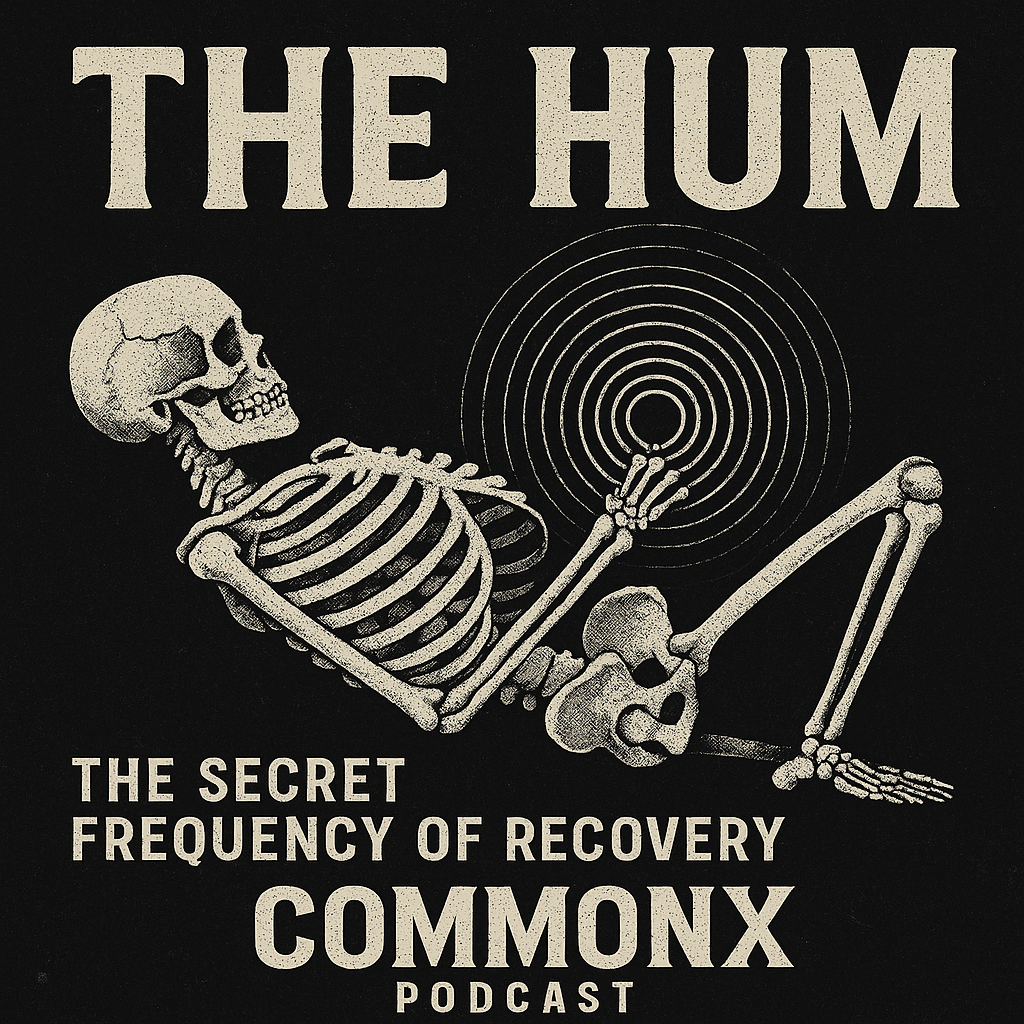
The Hum: The Secret Frequency of Recovery That Nobody Talks About
There’s a sound only the disciplined hear. A quiet vibration that lives between exhaustion and sleep. I call it “The Hum” — the hidden frequency your body unlocks when you’ve pushed yourself so hard that nighttime becomes the second workout.
By Ian Primmer — CommonX Podcast
Most people think the gym is where you get stronger. Most people think the mile, the reps, the burn — that’s the work. And they’re not wrong… but they’re not right either.
Because there’s a second workout that only the disciplined ever reach. A place your body only enters when you’ve pushed yourself far enough, long enough, hard enough. It happens at night. In the dark. When the engine shuts down. I call it The Hum.
⸻
THE HUM BEGINS WHEN THE WORLD GOES QUIET
It doesn’t happen on lazy days. It doesn’t happen with half-workouts, light sweat, or “good enough.” The Hum only arrives when you’ve put everything into your body that day:
• clean food
• real hydration
• hard cardio
• heavy sweat
• disciplined choices
• focused intention
You lay down. The room cools. Your breathing slows. And then… it starts. A faint, gentle vibration deep in the chest, the ears, the muscles. Not pain. Not tension. A signal. The body whispering:
“I’m working. I’m rebuilding. You did enough today. Let me take it from here.”
⸻
THE HUM IS THE SECOND WORKOUT
Training tears you down. The Hum builds you back up. It’s the moment when:
• hormones surge
• tissue repairs
• inflammation drops
• glycogen reloads
• nervous system resets
• muscles stitch themselves
• the body rewires strength
• fat burns at its cleanest rate
People talk about protein. People talk about calories. People talk about macros, sets, splits, and form. But nobody talks about The Hum —
the state where your body does its REAL work. Without The Hum? You don’t level up. You don’t get lighter. You don’t get sharper. You don’t get stronger. Nothing works without The Hum.
⸻
THE HUM IS WHY BEDTIME MATTERS
My wife and I agreed tonight: 9:30 PM. Lights out. Shut down. Recovery time. Because I look forward to The Hum just as much as I look forward to the gym.
It’s part of the ritual now. Part of the discipline. Part of this new version of me. Tomorrow morning? I’m expecting 189 lbs.
But I know something important:
I won’t hit that number because of the treadmill. I won’t hit it because of the sweat. I won’t hit it because of the clean dinner. I’ll hit it because of The Hum. Because that’s where the magic happens.
That’s where the body heals. That’s where the fat burns quietly. That’s where the next version of you gets built. Gym time is effort. But The Hum? That’s transformation.
⸻
WHY MOST PEOPLE NEVER FEEL THE HUM
Because they never push far enough to earn it.
The Hum is:
• the reward for discipline
• the badge of consistency
• the internal “click” that tells you your life is changing
• the sign your body is in full rebuild mode
It’s the moment you realize:
“I’m not guessing anymore. I’m becoming.”
People who dabble don’t know it. People who talk don’t know it. People who quit don’t know it. But people who WORK — who grind, who sweat, who commit —they learn the language of their own body. The Hum is the body saying:
“I’ve got you. Keep going.”
⸻
THE HUM IS A GIFT — AND A GUIDE
It’s your internal compass now. Your recovery meter. Your silent coach.
When you feel it, it means:
You trained right. You ate right. You hydrated right. You slept right. You aligned your actions with who you WANT to become. The Hum is the sound of a life getting back on track. The Hum is the frequency of a man rebuilding himself.
⸻
CONCLUSION: THE HUM IS THE PROOF
Of the work. Of the discipline. Of the momentum. Of the transformation. You don’t chase it — you earn it.
And when you feel it? You know you’re on the path. Not just losing weight. Not just getting stronger. Not just going to the gym. But ascending. The gym breaks you down. The Hum builds you up. And that, right there, is the unseen part of this journey that nobody else understands.
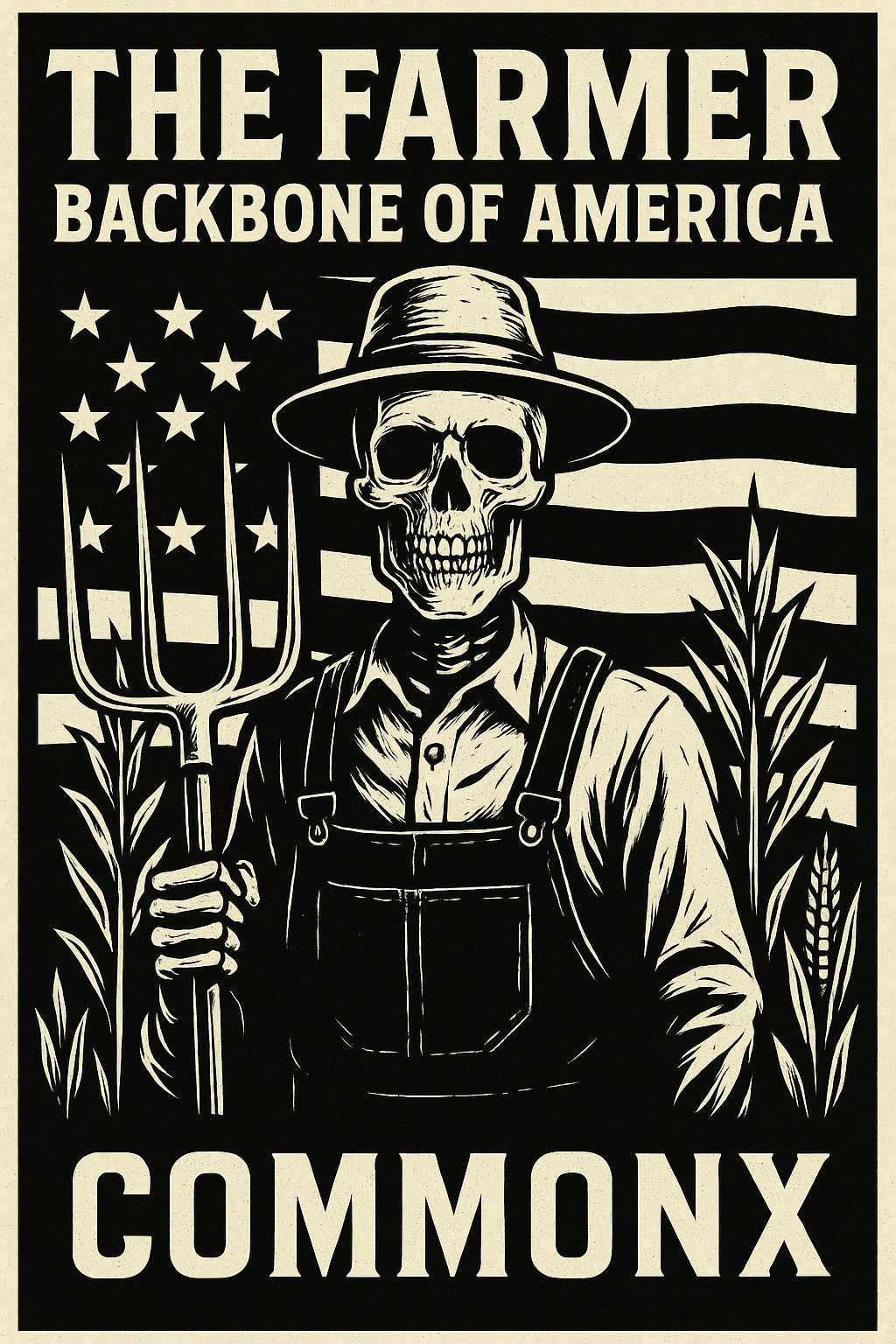
THE FARMER: THE BACKBONE OF AMERICA
America worships crypto, tech, and trends — but none of it matters if nobody grows the food. The farmer is still the true backbone of this country, even if the modern world forgot.
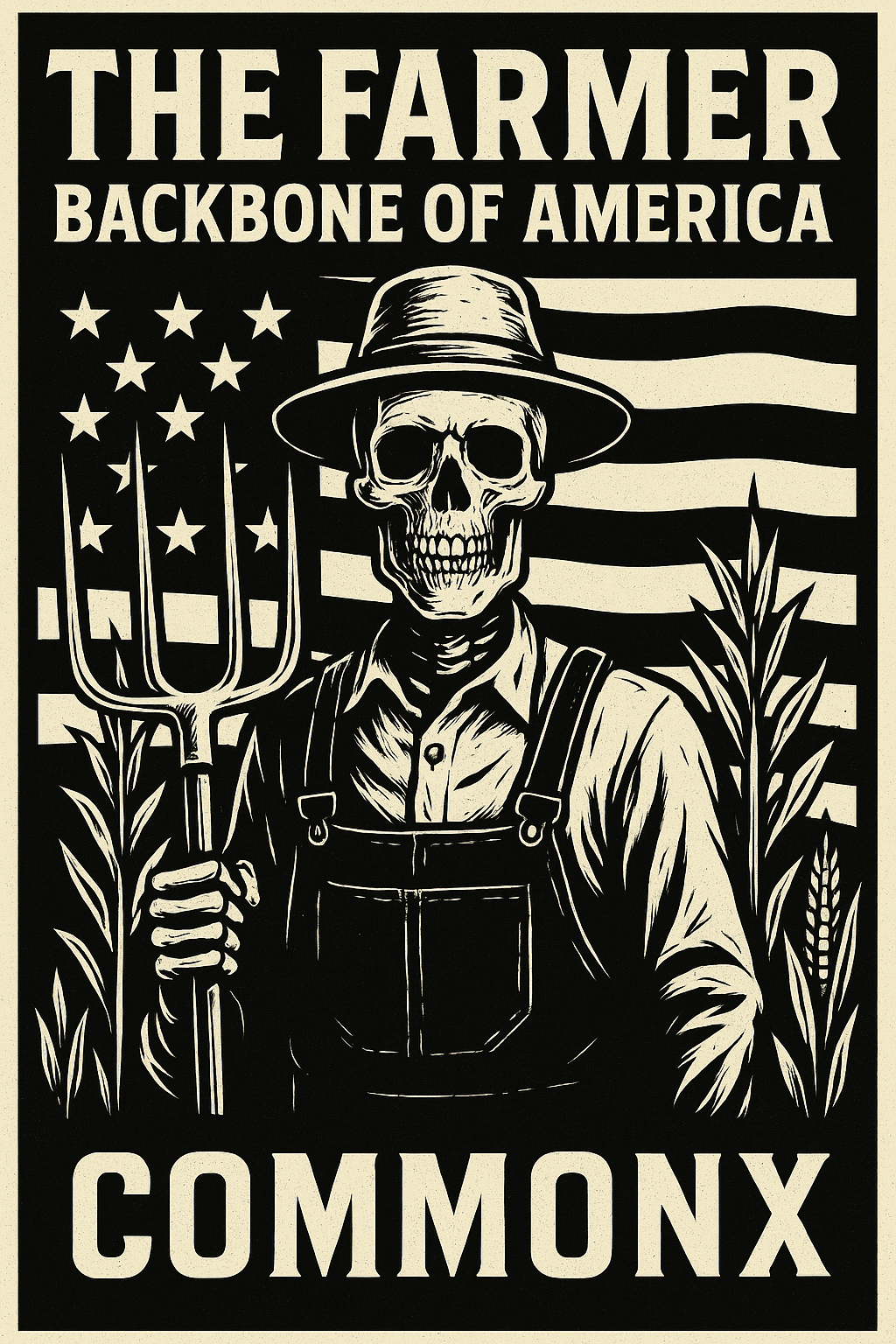
In a country obsessed with digital currency, celebrity drama, AI hype cycles, and the next “passive income blueprint,” the most important person in America still wakes up before sunrise, pulls on a pair of mud-stained boots, and walks into a field most people have never seen with their own eyes. While the rest of us scroll, argue, and chase trends that disappear faster than they appear…
The farmer grows the food we eat. The rancher raises the protein we survive on. The soil grows the crops that keep an entire nation alive. But somewhere along the way, we forgot that.
We started treating the people who feed America like background noise — as if the grocery store magically restocks itself or the steak on our dinner plate appeared out of thin air. City kids grow up thinking vegetables “come from the store,” and half the country is more emotionally invested in Bitcoin charts than harvest seasons.
Meanwhile, out there in the wind and dirt, a farmer is betting his entire livelihood on weather, soil, labor shortages, and prices he doesn’t control. No TikTok star will fix that. No influencer course will replace that. No crypto coin will grow a single ear of corn or a single blade of wheat.
Because you can’t eat Bitcoin, and you can’t feed a nation with hype. America was built on fields, ranches, and hands — real hands — turning the earth. Not hashtags. Not speculation. Not whatever the “next big thing” podcast bros are yelling about.
And the craziest part? Farmers rarely complain. They don’t demand worship. They don’t flood social media. They get up, grind, and do the job because it has to be done — not because it’s glamorous, or viral, or profitable.
They know something the modern world forgot:
Civilization collapses without food. And food doesn’t happen without them. So today’s X-File isn’t a mystery. It’s a reminder. A wake-up call.
A spotlight on the people who deserve more credit than they ever get. The algorithm won’t tell you this. The politicians won’t tell you this. The tech world definitely won’t tell you this. But we will:
The American Farmer is the Backbone of America. Period. And the next time someone tries to tell you the future belongs only to crypto, NFTs, AI, digital economies, or whatever shiny object comes next… Ask them one question:
“Cool. But who’s going to feed you?”
CommonX stands with the people who actually keep the lights on in this country — even when nobody’s paying attention.

🇺🇸 The Veterans of CommonX — Strength, Service & the Voices Who Keep Fighting
On Veterans Day, we honor the warriors who carried the weight of service and continue to fight long after the battlefield fades. From Marines to medics to mentors, these veterans shared their truth with CommonX — raw, unfiltered, and unforgettable. Their courage isn’t a moment… it’s a lifetime.

Veterans Day isn’t just a date — it’s a reminder of the men and women who stepped forward, accepted the weight of service, and carried burdens most people never see. On CommonX, we’ve been privileged to sit across from veterans whose stories aren’t polished or perfect — they’re raw, real, and unfiltered. They show us what courage looks like long after the uniform comes off.
Today on the X-Files, we honor the veterans who have shared their truth with us:
Isaac — The Marine Who Pulled Back the Curtain
A former Marine who didn’t sugarcoat anything. Isaac spoke about duty, conflict, systems, scars, and the realities behind the headlines — the things you only understand when you’ve been there. His honesty hit hard and still resonates with every listener who’s worn the uniform or loved someone who has.
Joey “Devil Doc” Martinez — A Medic With a Mission
Joey didn’t just serve — he continues serving. As a Navy Corpsman and host of the Devil Doc Talk Show, he uses his voice to lift up veterans fighting invisible battles: PTSD, depression, suicide prevention, faith, and purpose. Joey is proof that healing comes from connection. His mission saves lives every day.
Jeremy Montgomery — Leadership Beyond the Battlefield
Jeremy took the pain, transition, and chaos that follow military life and turned it into guidance for others. Through his work with Lean Synergy Staffing, he helps veterans step into civilian careers with direction, dignity, and confidence. His strength isn’t loud — it’s steady, and it changes lives.
Why Their Stories Matter
These men didn’t just answer the call once. They answered it again… and again… and again.
Their service didn’t end with discharge papers — it evolved into mentorship, advocacy, truth-telling, and building community. They remind us that bravery is not a moment. It’s a lifetime.
To Every Veteran
Your sacrifices matter.
Your stories matter.
Your strength matters.
You are seen. You are respected. You will always be part of the CommonX family.
From Ian, Jared, and the whole crew —
Thank you. 🇺🇸