
X-Files: The Dead Internet Isn’t Coming — It’s Here
CommonX Skull and crossbones themed image that aligns with brand authority.
Here’s a feeling people can’t quite name yet. You scroll. You post. You engage. And something feels… hollow.
The likes don’t match the reach. The comments feel scripted. Accounts explode overnight with no origin story. Entire conversations appear fully formed, emotionally flat, and gone just as fast. This isn’t burnout. This isn’t shadowbanning. This is something bigger.
The Theory Everyone Whispered About
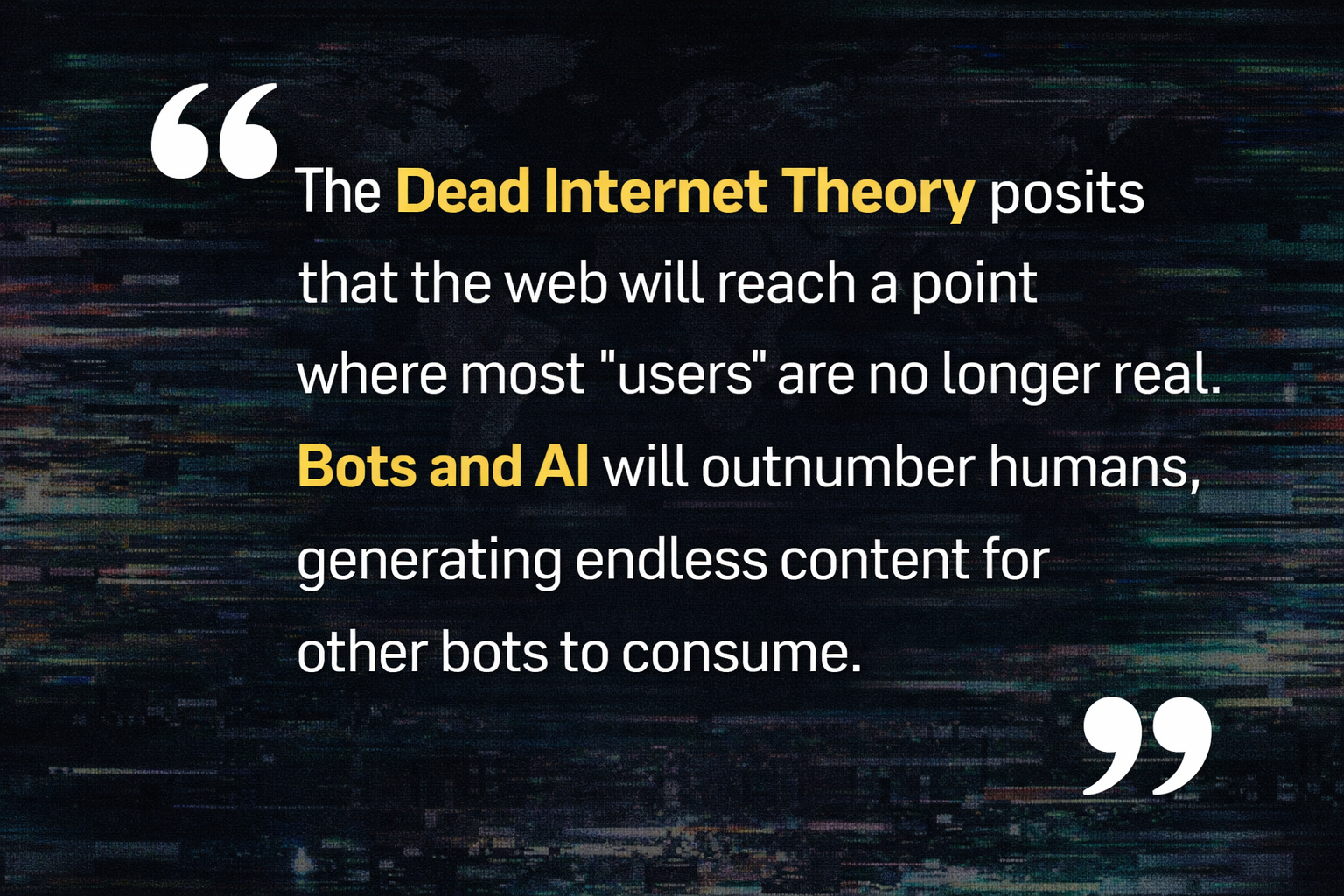
For years, the Dead Internet Theory lived in the corners of the web — forums, late-night podcasts, throwaway comments under obscure videos. The claim was simple and unsettling:
Much of what we experience online is no longer human.
Bots talking to bots. AI generating engagement for AI. Synthetic consensus. For a long time, it sounded paranoid. Now it sounds… familiar.
2026 Changed the Game
The difference now isn’t speculation — it’s scale.
AI doesn’t just write posts anymore. It runs accounts. It responds emotionally. It learns tone. It mimics outrage, empathy, humor, and fear. Entire comment sections can be spun up without a single human present.
And here’s the quiet part:
Most platforms don’t just allow this — they benefit from it.
Activity looks like growth. Engagement looks like relevance. Volume looks like success.
Authenticity? That’s optional.
Why Real Creators Feel Like They’re Losing Their Minds
Independent creators are hitting the same wall at the same time:
• Reach drops while effort increases • Engagement spikes that don’t convert • Accounts with no history outperforming lived-in voices • Conversations that feel performative instead of personal
It creates a subtle psychological effect:
Am I invisible… or am I just surrounded by ghosts?
The Quiet Replacement
This isn’t about censorship. It’s not about politics. It’s about replacement. Human unpredictability is expensive. Human emotion is messy. Human discourse doesn’t scale cleanly. Synthetic participation does. So the internet didn’t die in a blackout. It was quietly padded with replicas until no one noticed the difference.
Why This Matters More Than Ever
When humans stop recognizing each other online, trust collapses. And when trust collapses: • Movements fracture • Truth blurs • Reality becomes negotiable
That vacuum doesn’t stay empty. It gets filled.
The Signal Still Cuts Through
Here’s the part the algorithms can’t fake — yet: • Long-form conversation • Real voices over time • Inconsistency • Growth scars • Human pauses • Memory
Independent media isn’t dying. It’s becoming the last place where you can still hear someone breathe.
Final Thought
The Dead Internet didn’t arrive all at once. It crept in politely.
And the only thing that exposes it…
Is showing up as yourself anyway.
— CommonX X-Files
Question everything. Especially what agrees with you too easily.
