
After the Fire: Why GEEZER Matters Now
A CommonX X-Files conversation with the founders of GEEZER Magazine about Gen X, print journalism, and aging without hardening in a culture obsessed with speed and youth.
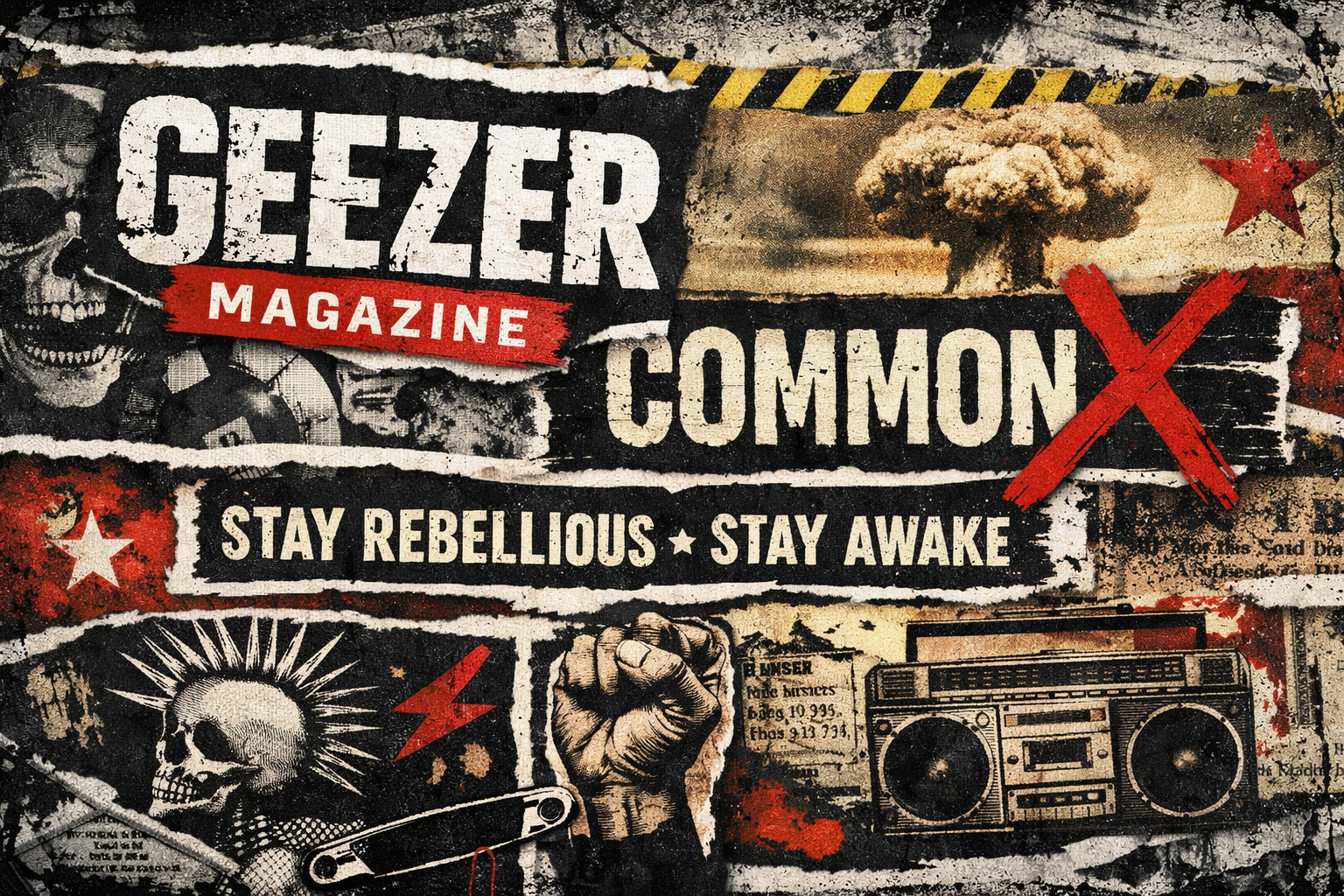
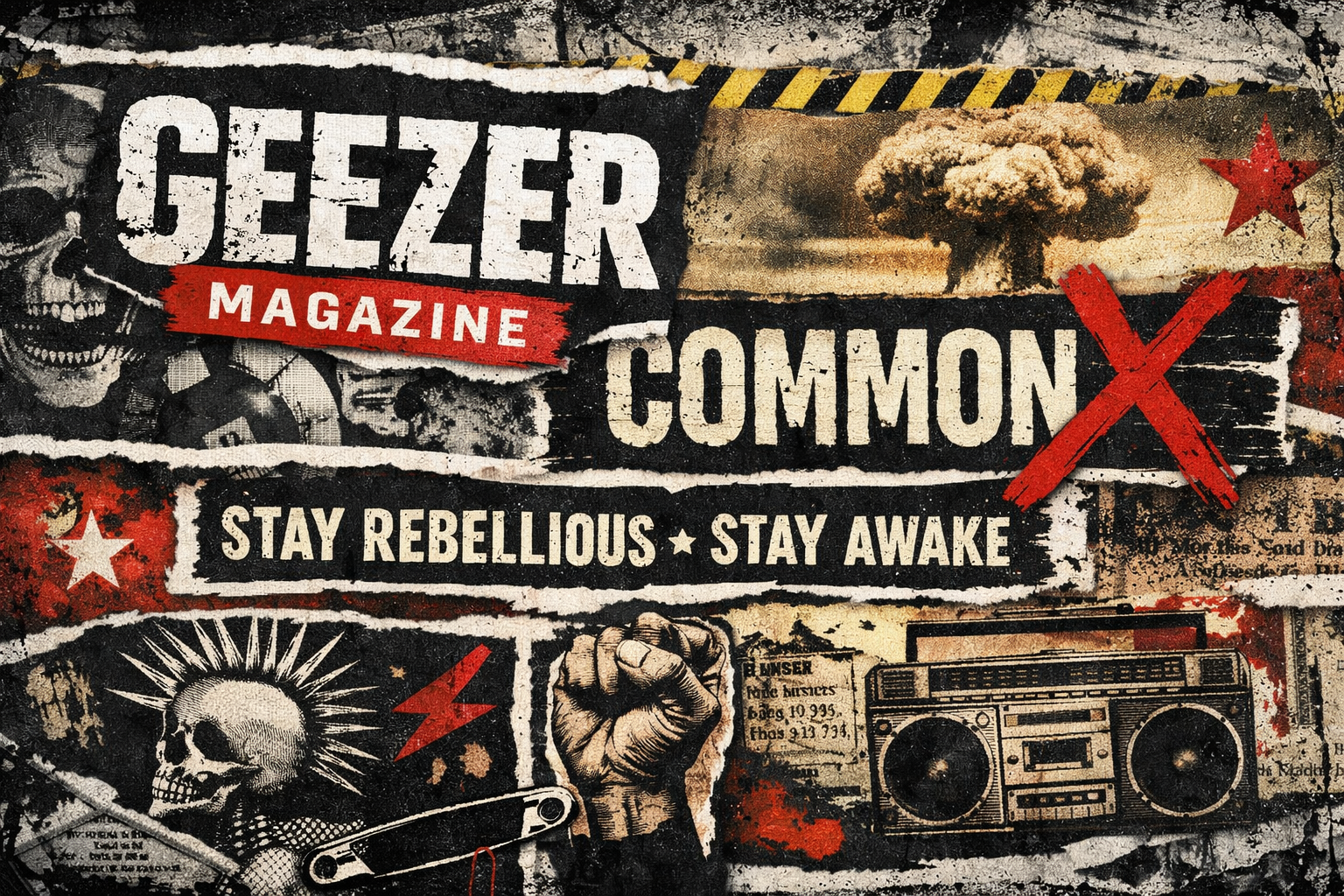
Punk-style graphic combining GEEZER Magazine and CommonX branding, featuring bold typography, high-contrast black-and-white elements, and Gen X–inspired collage aesthetics.
Guests:
Laura LeBleu
Paul von Zielbauer
GEEZER Magazine
There are conversations that happen in the middle of the fire — urgent, necessary, loud.
And then there are conversations about what comes after.
Our recent discussion with Laura LeBleu and Paul von Zielbauer of GEEZER Magazine was the latter. It wasn’t about reclaiming youth, resisting age, or yelling at the world for changing. It was about staying awake. Staying human. And refusing to be flattened into a demographic.
In other words, it was very Gen X.
Not nostalgia. Not rage. Not a brand.
GEEZER isn’t nostalgia bait, and it isn’t grievance culture dressed up as cool. It’s a print-only magazine built on a simple but increasingly rare idea: Gen X doesn’t want to be marketed to — it wants to be spoken with.
Laura LeBleu’s path to GEEZER makes that clear immediately. Growing up in El Paso, Texas, she wanted to be an ice skater. Geography had other plans, so she became a writer instead. Along the way she’s been an Emmy-award-winning TV producer, lead singer in an Italian band, voice of a virtual character, stilt-walking circus ringmaster, NYC cabaret performer, and a minor gay icon. Writing, though, was always the throughline.
The idea for GEEZER came to her in the shower. (She admits she’s had many good ideas in the shower — this is just the one that stuck.) The magazine carries that same energy: confident, playful, sharp, and uninterested in pretending that aging is tidy or polite.
A bullshit detector perfected by time
Paul von Zielbauer brings a different, complementary gravity. Raised in Aurora, Illinois by European war-refugee parents, Paul’s life has been shaped by movement, curiosity, and a refusal to accept the surface version of any story.
In his twenties, he rode a bicycle from Hanoi to Ho Chi Minh City, back when most Americans still thought of Vietnam only as a war they’d seen on TV. He later spent eleven years as a journalist at The New York Times, where his reporting was nominated for a Pulitzer Prize. As the Great Recession was getting started, Paul left the paper to launch a business that helped volunteers build playgrounds for disadvantaged children overseas.
That same impeccable timing — and quiet seriousness — now shows up at GEEZER, where he works diligently in the basement until Laura tells him it’s okay to come upstairs.
Together, Laura and Paul embody something unmistakably Gen X: a finely tuned bullshit detector shaped by watching institutions wobble, media flatten complexity, and authority repeatedly fail to earn trust. Not cynical — discerning.
Why print is the point
Choosing print in a digital-first world isn’t nostalgia. It’s resistance.
GEEZER slows the reader down on purpose. It refuses outrage metrics, algorithmic churn, and the idea that everything must be consumed instantly or forgotten. Print demands attention. It asks you to sit with ideas. It treats the reader as a person, not a product.
In a culture obsessed with speed, that choice isn’t retro — it’s radical.
Aging without hardening
One of the most resonant themes from our conversation was this: aging doesn’t have to mean hardening.
GEEZER isn’t about yelling at clouds or pretending we’re not getting older. It’s about staying sharp without becoming cruel, curious without becoming naïve, and engaged without burning out. It’s about middle age not as decline, but as clarity — the moment when you finally know what matters and stop pretending otherwise.
GEEZER doesn’t promise answers. It offers company — in strength, vulnerability, rage, humility, joy, and a ton of other nouns.
Why this matters now
At a moment when media feels louder, thinner, and more polarized by the day, projects like GEEZER matter precisely because they refuse spectacle. They trust readers to think. They trust stories to breathe. And they trust that a generation raised on disruption still has something essential to offer — not because it’s flashy, but because it’s lived.
Our conversation with Laura LeBleu and Paul von Zielbauer wasn’t about age.
It was about meaning.
GEEZER stands as proof that Gen X isn’t done yet — it’s just more intentional about how, and why, it speaks.
Beautiful, but not always pretty.
And very much alive.
Our Episode with Laura and Paul will be available on YouTube and all other Podcast platforms after the release of Dame Claire Bertschinger on Thursday, February 26th consistent with our commitment to release episodes twice a week on Tuesdays and Thursdays.
You can check out GEEZER Magazine here.

Black-and-white trucker hat with mesh sides and the word “GEEZER” embroidered in bold black letters on the front panel.
Be sure to follow Paul Von Zielbauer and his work entitled “Aging with Strength” on Substack here.
You can also follow Laura LeBleu and her journey on Substack as well — here.
To learn more about Dame Claire Bertschinger please visit: Claire Bertschinger – Making a difference…
To Learn more about the Interview with Dame Claire Bertschinger heard from around the world Exclusively on CommoX — Read Here.

SPY Sunglasses promotional graphic featured in CommonX article, highlighting eyewear designed for performance, style, and independent culture.
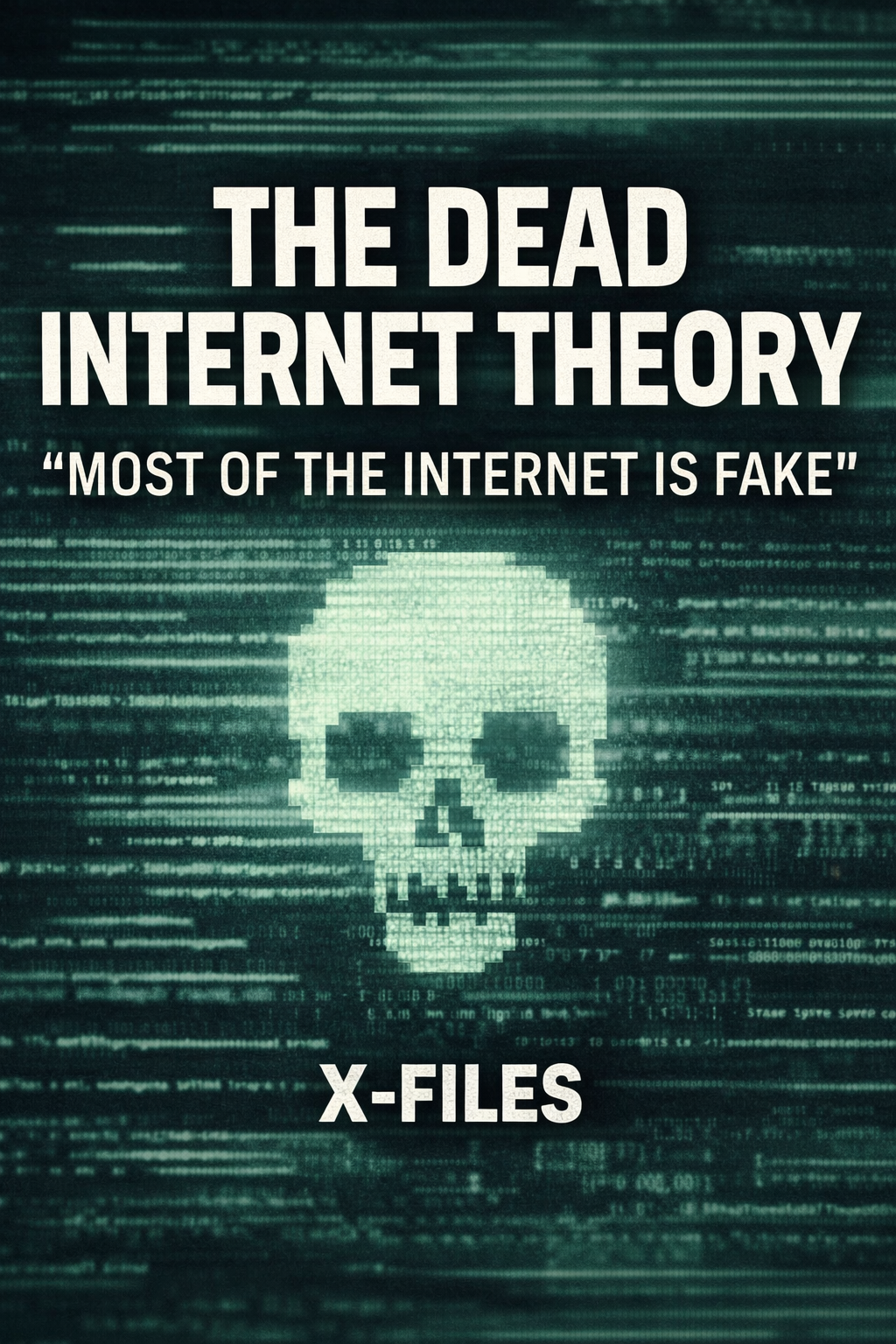
X-Files: The Dead Internet Isn’t Coming — It’s Here
The internet didn’t die in a blackout. It was padded with replicas until no one noticed the difference. Bots talking to bots. AI feeding AI. Synthetic consensus everywhere. This X-Files asks the uncomfortable question: are we still talking to each other?
CommonX Skull and crossbones themed image that aligns with brand authority.
Here’s a feeling people can’t quite name yet. You scroll. You post. You engage. And something feels… hollow.
The likes don’t match the reach. The comments feel scripted. Accounts explode overnight with no origin story. Entire conversations appear fully formed, emotionally flat, and gone just as fast. This isn’t burnout. This isn’t shadowbanning. This is something bigger.
The Theory Everyone Whispered About
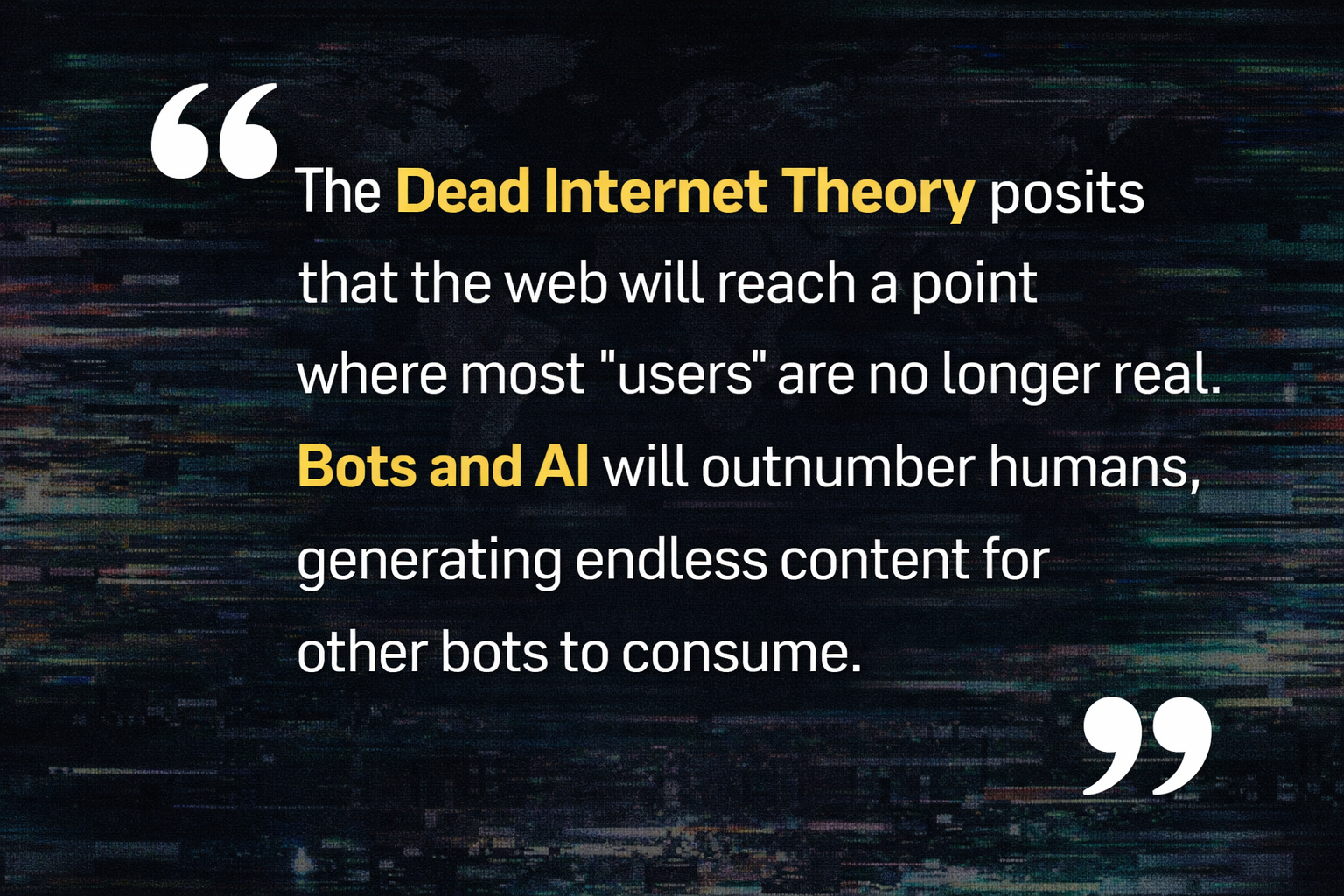
For years, the Dead Internet Theory lived in the corners of the web — forums, late-night podcasts, throwaway comments under obscure videos. The claim was simple and unsettling:
Much of what we experience online is no longer human.
Bots talking to bots. AI generating engagement for AI. Synthetic consensus. For a long time, it sounded paranoid. Now it sounds… familiar.
2026 Changed the Game
The difference now isn’t speculation — it’s scale.
AI doesn’t just write posts anymore. It runs accounts. It responds emotionally. It learns tone. It mimics outrage, empathy, humor, and fear. Entire comment sections can be spun up without a single human present.
And here’s the quiet part:
Most platforms don’t just allow this — they benefit from it.
Activity looks like growth. Engagement looks like relevance. Volume looks like success.
Authenticity? That’s optional.
Why Real Creators Feel Like They’re Losing Their Minds
Independent creators are hitting the same wall at the same time:
• Reach drops while effort increases • Engagement spikes that don’t convert • Accounts with no history outperforming lived-in voices • Conversations that feel performative instead of personal
It creates a subtle psychological effect:
Am I invisible… or am I just surrounded by ghosts?
The Quiet Replacement
This isn’t about censorship. It’s not about politics. It’s about replacement. Human unpredictability is expensive. Human emotion is messy. Human discourse doesn’t scale cleanly. Synthetic participation does. So the internet didn’t die in a blackout. It was quietly padded with replicas until no one noticed the difference.
Why This Matters More Than Ever
When humans stop recognizing each other online, trust collapses. And when trust collapses: • Movements fracture • Truth blurs • Reality becomes negotiable
That vacuum doesn’t stay empty. It gets filled.
The Signal Still Cuts Through
Here’s the part the algorithms can’t fake — yet: • Long-form conversation • Real voices over time • Inconsistency • Growth scars • Human pauses • Memory
Independent media isn’t dying. It’s becoming the last place where you can still hear someone breathe.
Final Thought
The Dead Internet didn’t arrive all at once. It crept in politely.
And the only thing that exposes it…
Is showing up as yourself anyway.
— CommonX X-Files
Question everything. Especially what agrees with you too easily.
When the Industry Starts Watching: A Quiet Win for CommonX
Most growth doesn’t announce itself. It shows up quietly — in data, in behavior, and in places most people aren’t looking yet. When the industry starts watching, the work has already been done.
Most growth doesn’t announce itself.
It doesn’t come with headlines, press releases, or industry fanfare. It shows up quietly — in data, in behavior, in places most people aren’t looking yet.
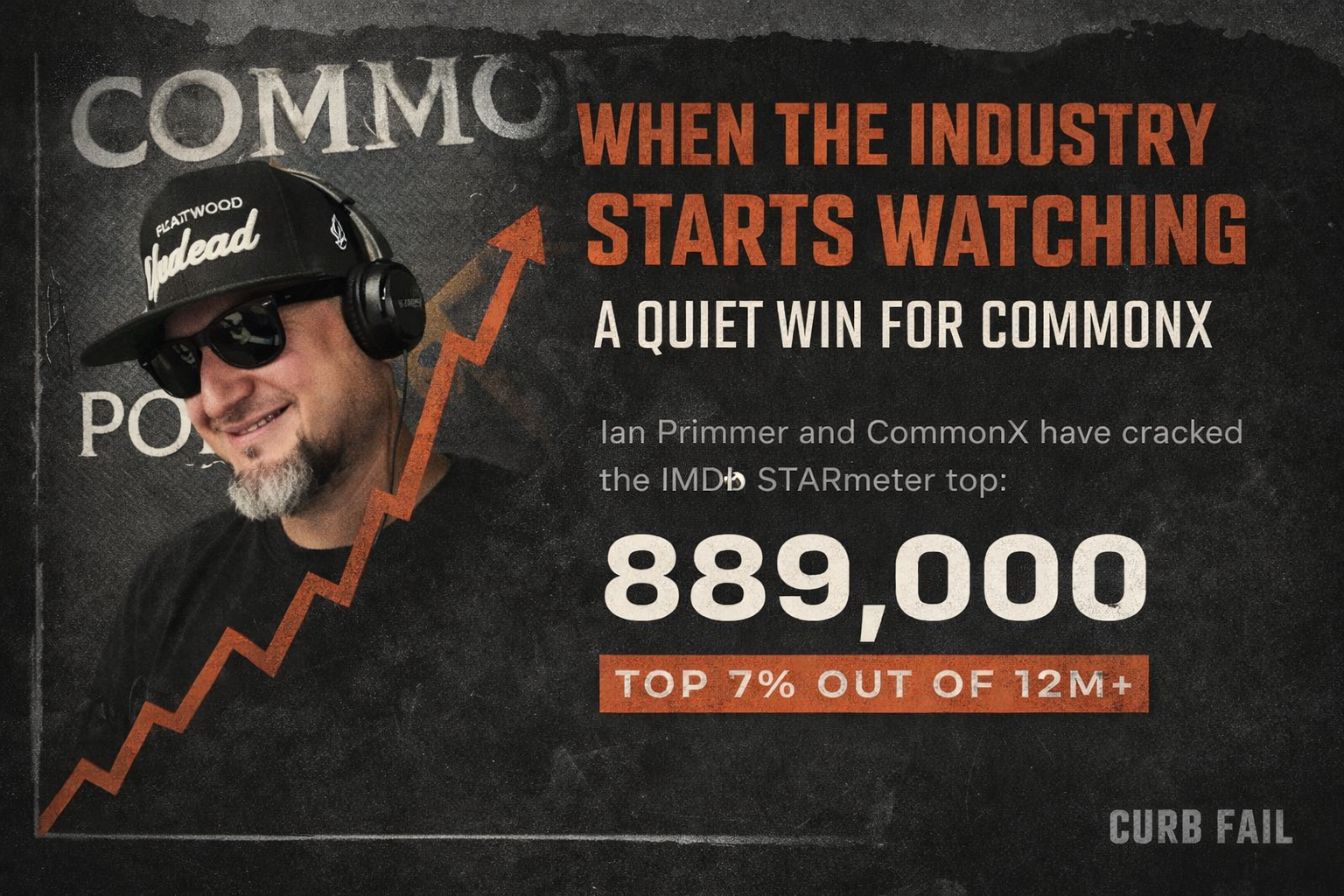
Over the past several weeks, Ian Primmer, co-host and co-founder of the CommonX Podcast, has seen a sharp rise on IMDb’s STARmeter, landing at approximately 889,000 globally out of more than 12 million profiles. More importantly, that ranking reflects a massive upward move, with millions of positions climbed in a short period of time and continued month-over-month momentum.
For an independent podcast and media operation with no network backing, no PR firm, and no legacy distribution, that matters.
Not as a trophy — but as a signal.
What this actually represents
IMDb’s STARmeter isn’t about talent or fame. It tracks interest — how often people are searching for a name, clicking into a profile, and engaging with recent work.
People don’t end up there by accident.
They get there because:
A show keeps surfacing in conversations
A guest appearance sends them digging deeper
Clips circulate outside the usual audience
A name starts appearing in multiple places at once
That’s how attention accumulates before it becomes obvious.
For CommonX, this movement reflects what listeners already know: the show has been steadily building — one conversation, one guest, one episode at a time.
Independent media, measured differently
Legacy media still runs on credentials and gatekeepers. Independent media runs on consistency and gravity. You show up, you publish, and you let the work compound.
Algorithms don’t care who you know.
They care who people look for.
This isn’t the result of a viral moment or manufactured controversy. It’s the byproduct of discipline, volume, and honest conversations that resonate beyond a core audience.
A Curb Fail perspective
At Curb Fail, we don’t celebrate spikes — we document signals.
A ranking doesn’t mean you’ve arrived. It means you’re being noticed. It means something you’re building is registering beyond your immediate circle. That’s usually the point where people either get distracted or double down.
We prefer the second option. CommonX will keep recording. We’ll keep publishing. We’ll keep letting the work speak. This isn’t a victory lap. It’s a checkpoint. And then it’s back to work. Congratulations Jared and Ian!
— Curb Fail Team

Why the CommonX Podcast Is the Best Show in the Pacific Northwest
From the backroads of Deer Park to the digital airwaves of the world, the CommonX Podcast is redefining what authentic, independent media sounds like in the Pacific Northwest. Blending grit, music, and raw conversation, it’s more than a podcast — it’s a movement built by two Gen X voices who never stopped asking why.

A Podcast Born in the Heart of the Inland Northwest
When co-hosts Ian Primmer and Jared Mayzak launched CommonX out of a small shop studio in Deer Park, WA, they weren’t chasing fame — they were chasing truth.
What began as late-night conversations about music, media, and the human condition has evolved into one of the most talked-about independent shows in the region.
Their guest list reads like a cross-section of culture itself — from rock legends like Ivan Doroschuk (Men Without Hats) and Rudy Sarzo (Quiet Riot) to authors, veterans, political voices, and everyday people with extraordinary stories.
The Sound of the PNW — Unfiltered
The Pacific Northwest has always been home to the rebels, thinkers, and dreamers who prefer campfires over spotlights. CommonX taps straight into that energy — raw, honest, and unapologetically Gen X.
Listeners across Washington, Oregon, Idaho, and beyond tune in because the show speaks a language corporate podcasts forgot: authenticity. Whether it’s exploring faith, freedom, music, or modern censorship, CommonX keeps it real — no scripts, no spin, just conversation.
From TikTok to the Turntables
Before CommonX exploded, host Ian Primmer found viral success as GENXDAD on TikTok — proof that Gen X still knows how to command the internet. That following became the foundation for a regional powerhouse: the CommonX brand now spans TikTok, YouTube, Spotify, and a fast-growing web platform at commonxpodcast.com.
The show’s reach has extended from Spokane to Seattle, Portland, and Vancouver B.C., proving that the Pacific Northwest still knows how to make noise that matters.
What Makes CommonX the Best in the PNW
🎙️ Authenticity Over Agenda – Real talk without the political polish.
Rooted in Gen X Grit – A generation that built bridges between analog and digital.
Culture Meets Conversation – Every episode blends music, memory, and modern reality.
Independent to the Core – Produced by two lifelong Washington creators, not a network.
It’s not corporate, it’s not curated — it’s CommonX. And that’s exactly why it’s resonating from the Cascades to the Columbia.
Looking Ahead
With Season 2 already in production and high-profile guests lining up, CommonX is poised to bring the voice of the Pacific Northwest to a global audience. Whether listeners are lifelong locals or digital nomads, the message is the same: real conversation still lives here.
As the Pacific Northwest continues to grow, CommonX stands as its raw, unfiltered pulse — the podcast built for those who still believe authenticity matters.