
WHY EVERYTHING FEELS FAKE NOW (AND WHAT TO DO ABOUT IT)
If the world feels staged, scripted, and hollow lately, you’re not imagining it. Here’s why modern life feels so fake — and what you can actually do to bring real moments, real connection, and real meaning back into your daily life.

You don’t have to be a philosopher, a scientist, or a spiritual guru to notice it — something about the world feels… off lately.
People feel off.
Conversations feel off.
Work feels off.
Relationships feel off.
The internet feels very off.
Everything feels a little staged, scripted, filtered, packaged, polished, and hollow. It’s not that life is meaningless — it’s that the meaning has been watered down until it tastes like room-temperature tap water.
If you’ve been feeling it too, you’re not crazy.
You’re not alone.
You’re just awake.
So here’s the breakdown:
Why everything feels fake now — and what the hell we can actually do about it.
1. We replaced real experiences with “content opportunities.”
People don’t just live their lives anymore — they curate them. Vacations aren’t vacations. They’re photo shoots.
Outings with friends turn into staged clips. Anniversaries become slideshow captions. Meals get treated like museum exhibits. We’re not documenting life. We’re performing it. Real moments feel rare because we’re too busy trying to capture them instead of being in them.
2. Everyone is branding themselves 24/7.
We used to have personalities. Now we have personal brands.
People change how they talk, dress, and act based on how it will look online instead of how it feels inside. You aren’t talking to a person anymore — you’re talking to their PR department. And when everyone is trying to be a “version” of themselves, you stop seeing the real thing.
3. We’re drowning in ads disguised as authenticity.
The influencer who “just loves this product”? Paid.
The celebrity who “randomly discovered this brand”? Paid. The heartfelt post with hashtags at the bottom? Paid. We’re stuck in a world where the line between genuine and sponsored is basically invisible. When everything becomes marketing, nothing feels real.
4. Technology outran humanity.
We built:
AI faces
AI voices
AI art
AI relationships
AI conversations
AI EVERYTHING
But we never stopped to ask how much artificial life a real human psyche can tolerate before it cracks. We live in the most “connected” era in human history — and yet nothing feels personal. Screens simulate connection, but they don’t deliver it.
5. Outrage is the new entertainment.
Everyone is performing emotions now. Anger is exaggerated. Sadness is monetized. Happiness is faked. Grief is staged. Opinions are calculated. Everything is turned up to 11 because subtlety doesn’t get clicks. And when emotions become currency, the real ones go broke.
6. Algorithms decide what you see — not your own eyes.
Your “feed” is not a window. It’s a mirror. It only reflects what you’ve already clicked on, liked, watched, or paused on for a second too long. You’re not seeing the world. You’re seeing your personalized simulation of it. Everything feels fake because everything is tailored — nothing is universal anymore.
7. Everyone is terrified of having an unfiltered opinion.
People walk on eggshells. Everyone’s afraid to offend someone, somewhere.
So instead of speaking from the heart, we speak from a script. We don’t talk to understand — we talk to avoid trouble. When people are scared to be real, everything around them becomes fake.
8. Modern life hides all the real struggle behind closed doors.
Nobody posts:
the breakdown
the bills
the sleepless nights
the fear
the arguments
the loneliness
the insecurity
the “I don’t know what I’m doing” moments
They post the mask. They post the highlight reel. Meanwhile everyone is quietly falling apart behind the scenes thinking they’re the only one. You’re not. Everyone feels this.
So… what do we do about it?
Luckily, the solution isn’t complicated.
It’s not easy,
but it’s simple.
Here’s how you start feeling real again:
1. Talk to real humans — in person.
The quickest way to kill the “fake world” feeling is to sit down with someone face-to-face. Voices. Bodies. Eye contact. Tone. Real reactions. It resets your brain like a hard reboot.
2. Do one thing every day that has zero content value.
Literally:
a walk without posting
a meal without photographing
a hobby nobody knows about
a workout without a selfie
a moment that isn’t shared
Real life grows in private.
3. Limit your scrolling — increase your doing.
Scrolling makes everything feel fake.
Action makes everything feel real.
Move your body.
Touch grass.
Build something.
Learn something.
Clean something.
Create something.
Reality rewards movement.
4. Say how you actually feel.
Even once a day. Give your real opinion. Ask the real question. Speak the real truth. Authenticity is rare now — that’s why it hits so hard.
5. Rediscover the boring stuff.
Real life is:
morning routines
chores
small talk
fixing things
cooking
paying bills
lifting weights
being tired
laughing with friends
showing up
It’s not glamorous.
It’s real.
6. Protect a part of your life from the internet.
Not everything is meant for display. Some love, some struggle, some joy is meant to be lived — not posted.
7. Choose depth over dopamine.
Deep conversations. Deep friendships. Deep work. Deep experiences. The world feels fake because everyone is addicted to surface-level stimulation. Be the opposite.
FINAL WORD
Everything feels fake now… because we’re living too much through screens, simulations, branding, and noise.
But the real world is STILL THERE. It didn’t disappear — it just got buried. You just have to go dig it back up. The moment you do? Life hits different again. And you remember what “real” actually feels like.

The Unwritten Rules of Being a Man in 2025 — According to Gen X
Gen X never needed gurus or influencers to explain manhood—we learned through trial, error, and showing up. In 2025, these unwritten rules matter more than ever.

Ask a Gen X man about “the rules,” and he’ll usually shrug and say something like,
“Rules? We just kinda figured it out as we went.”
But that’s the secret.
Gen X didn’t grow up with YouTube gurus, 19-year-old influencers selling “alpha” courses, or 47 podcasts telling you how to be a man.
We had trial, error, a toolbox, a Walkman, and whatever wisdom we could steal from older cousins or Metallica lyrics.
Now it’s 2025 — and the world is louder, softer, stranger, faster, and more confusing than ever.
So here they are.
Not written in any book.
Not taught in any class.
But lived, practiced, and passed on quietly by the last generation that grew up without an undo button.
1. If you say you’re going to do something, you do it.
Gen X didn’t learn honor from philosophy books — we learned it from watching adults show up five days a week, punch in, punch out, and not complain.
The rule is simple: Your word is your currency. Spend it wisely.
2. You don’t have to be loud to be strong. The strongest men we knew didn’t talk about it.
They fixed your bike. Carried the heavy stuff.
Said “I’m proud of you” once a decade — which meant it was sacred.
Today’s world rewards noise. Gen X rewards consistency.
3. Know how to fix at least three things without Googling it
A clogged drain.
A loose door hinge.
A tire that needs changing.
Not because you need to be “macho,”
but because being useful is the original superpower.
4. Don’t treat women like princesses — treat them like partners.
Gen X men figured something out:
Women don’t need saving.
They need someone who stands beside them, not above them.
Partnership > pedestal.
5. If you mess up, own it. Immediately.
Gen X grew up without social media.
When you screwed up, the whole school heard about it by lunch.
We learned real fast:
Accountability stops the bleeding.
Avoidance makes it a circus.
6. Don’t ghost your friends — check in on them.
Especially the quiet ones.
Especially the strong ones.
Especially the ones who “seem fine.”
We’ve buried enough of our generation to know this rule matters.
7. Find a craft, a workout, or a discipline — and stick with it.
Lifting.
Running.
Welding.
Painting.
Woodworking.
Drums.
Writing.
A man needs a skill that keeps him sane when the world goes sideways.
8. Respect your parents — even if they’re complicated.
Gen X had the most chaotic childhood decade in modern history.
Latchkey kids.
Broken homes.
Divorced parents.
No supervision.
Yet we still understand this truth: Forgiveness isn’t approval — it’s freedom.
9. Be dangerous — but controlled.
A man who can fight but chooses peace?
That’s a man worth listening to.
A man who can’t fight and pretends he can? That’s Twitter.
10. Never stop evolving.
The world changes.
Technology shifts.
Jobs disappear.
Families transform.
But resilience?
That’s Gen X’s final superpower.
We adapt.
We rebuild.
We grow — even at 45, 55, 65.
Because being a Gen X man in 2025 means this:
You don’t have to be perfect.
You just have to show up — stronger, wiser, and more grounded than yesterday.
11. You don’t brag about the struggle — you show the results.
Everybody talks now.
Everybody posts everything.
Gen X?
We work in silence, then walk in with results.
12. You leave things better than you found them.
Your relationships.
Your body.
Your home.
Your career.
This world.
If you’re a real Gen X man, you’re not here to impress — you’re here to contribute.
Final Word
Being a man in 2025 doesn’t mean being perfect or tough or emotionless.
It means being grounded.
It means leading quietly.
It means pushing forward when it sucks.
It means taking care of the ones who depend on you — and letting them take care of you when you’re the one who needs the help.
Gen X didn’t ask to be the bridge generation.
But we became it anyway.
Because real men don’t wait for someone else to go first.
We just step forward.

Why Woodstock 2030 Matters: Giving People a Real Reason to Keep Going
When the world feels heavy, “call a hotline” isn’t enough. Woodstock 2030 is our dare to love out loud—music, community, and belonging for anyone who needs a reason to keep going.

Woodstock 2030 Revival mission image — community gathering and unity event concept. Support Woodstock 2030
By Ian Primmer • CommonX Podcast
There’s a moment in life when the room gets too quiet.
The bills stack up.
The pressure builds.
The world feels heavy in your chest.
And even the strongest among us start to wonder if tomorrow is worth the climb.
Maybe you’ve been there.
Maybe you’re there right now.
If you are — hear me clearly:
You’re not alone.
“Call a hotline” helps some people. It truly does. But for most of us, especially in the Gen X tribe who grew up figuring it out ourselves, that isn’t the whole answer. We don’t just need crisis help — we need connection before the crisis ever hits.
We need community.
We need purpose.
We need a reason to keep going.
That’s why we’re building Woodstock 2030.
It’s not nostalgia. It’s a blueprint for belonging.
This isn’t about tie-dye and old posters.
This is about creating a place — a real, physical, living movement — where people can show up without judgment. A place where music, humanity, and honest conversation collide. Where you can look around and see a crowd of people who understand exactly what you’re carrying.
Woodstock 2030 is our dare to the world:
Show up. Stand together. Love out loud.
It’s music with intention.
Service with sleeves rolled up.
And a thousand small moments that whisper, “You matter. Stay.”
What Woodstock 2030 IS
A movement for connection
A place for veterans, first responders, single parents, neighbors — everyone
A celebration of music, culture, and humanity
A spotlight on mental health without shame
A network of local chapters doing real work
What Woodstock 2030 is NOT
Not a cash grab
Not a selfie moment
Not a one-day trend
Not an empty slogan
Not another place where you feel alone
If we do this right, the real currency is belonging.
Why Gen X needs to lead this movement
We grew up with mixtapes, pay phones, walkmans, and a world where you had to figure out life without Google or tutorials. We didn’t have safe spaces, online communities, or “mental health days.” We had grit, duct tape, and a stubborn refusal to quit.
We also watched some of the greatest voices of our generation fall to silent battles.
Chester Bennington. Chris Cornell. Too many veterans. Too many brothers and sisters.
Our generation knows the cost of silence better than most.
So now, we’re turning that pain into purpose.
What we’re asking from you
This isn’t a corporate movement.
It’s people-powered.
We ask for three things:
1. Add your voice.
Share a story. Share a skill. Share a song. Write in the comments below 😎
Your presence matters more than your perfection.
2. Stand with someone.
Invite a friend who’s been quiet.
Take someone to coffee.
Send the message you’ve been putting off.
3. Build with us.
Help us map local partners — gyms, VFW halls, indie venues, skate shops, churches, record stores.
Let’s make this community real, city by city.
If you’re struggling today
Let me say this without hesitation or fluff:
Don’t throw in the towel. Stay with us.
There’s more for you than you realize.
We are building something you can stand inside of when the wind kicks up.
You matter.
Your voice matters.
Your life matters.
We’re CommonX.
We believe in common ground.
In real talk.
In showing up for one another.
In conversations that save people who never wanted to ask for help.
And with Woodstock 2030, we’re going to prove it —
loud, kind, brave, and together.
— Ian & Jared
Make Woodstock 2030 happen and support today.

Woodstock 2030 Revival t-shirt — official CommonX Podcast apparel.
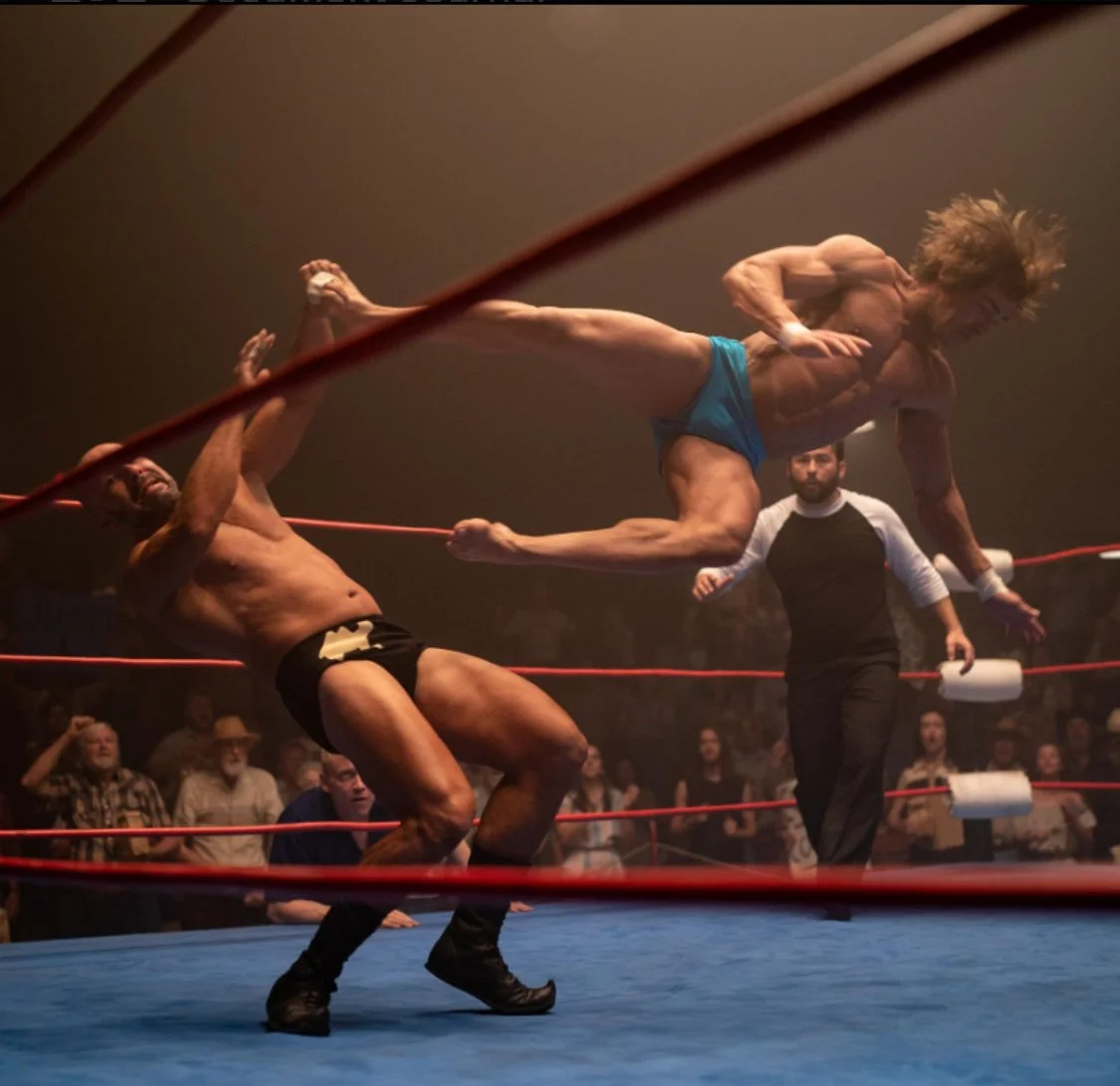
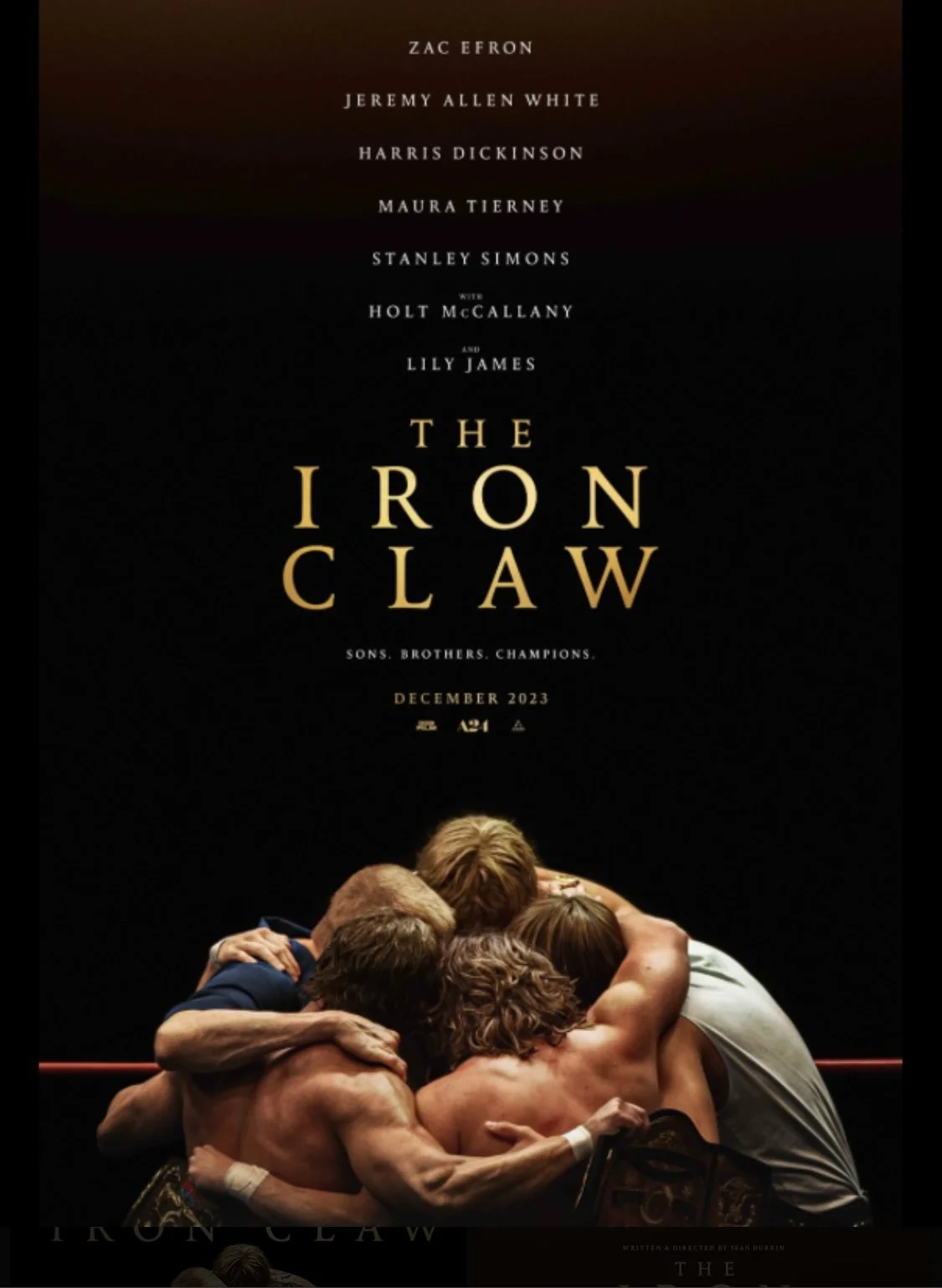
The Iron Claw: When Strength Becomes a Burden
The Iron Claw is more than a wrestling film — it’s a eulogy for the Von Erich family and every generation of men who were told that pain was weakness. CommonX looks at how the real curse wasn’t fate, but the weight of silence.
“The Von Erichs didn’t wrestle opponents. They wrestled fate — and it always fought back harder.”
There’s a moment in The Iron Claw where Zac Efron’s Kevin Von Erich stares into nothing, his face carved by exhaustion and quiet grief. It’s not acting — it’s witnessing. You see a man holding the weight of a bloodline built on strength, success, and tragedy. You see every generation of men who were told to take the hit and keep standing.
A Family That Built an Empire on Pain
Before the movie lights, before the glitz of Texas stadiums, there was Jack Adkisson — known to the world as Fritz Von Erich. He was a powerhouse in wrestling’s golden age and the architect of a dynasty. But what he really built wasn’t a brand; it was a burden.
Fritz raised his sons to be champions, not children. He gave them muscles before mercy, fame before freedom. Wrestling wasn’t a choice — it was the family business, and the business came with blood.
What followed was heartbreak so relentless it became legend.
David Von Erich died mysteriously in Japan.
Mike, devastated by injury and pressure, took his own life.
Chris, frail and broken, followed him.
Kerry, beloved by fans, ended his life in 1993.
Four sons, gone. One father left behind, and one brother — Kevin — forced to carry their ghosts into every sunrise.
The Curse: Not Superstition, but Expectation
People called it the Von Erich curse, like it was some cosmic punishment. But what The Iron Claw shows us is that the real curse wasn’t mystical at all — it was cultural. It was the curse of men who were taught that emotion is weakness, that winning redeems pain, and that silence is strength.
In every flex of Efron’s performance, you can feel it — the strain of holding in tears that never had permission to fall.
“We were raised to be strong,” Kevin says in the film.
“But maybe strong just means you can’t ask for help.”
That line cuts right to the Gen X core — to every man who learned to swallow failure, bury pain, and smile through breakdowns.
The Weight of Myth
Sean Durkin’s direction is merciless and beautiful. He films the Von Erichs like gods and ghosts at the same time — always illuminated, always doomed. The camera lingers on every bruise, every smile hiding exhaustion, every locker-room prayer that feels like a goodbye.
And Holt McCallany as Fritz? Pure power and heartbreak. He isn’t a villain; he’s a product of his own myth — a man who believed that if you pushed hard enough, love could be forged out of discipline.
But the truth The Iron Claw exposes is simple: you can’t out-train pain.
And you can’t out-wrestle grief.
The Last Man Standing
Kevin Von Erich — the real man, not just the character — lives in Hawaii now. Surrounded by his children and grandchildren, he’s found peace in nature, love, and distance from the ring. But he’ll tell you himself — peace wasn’t free.
He watched every brother fall, watched the empire burn down, and still carried the name. The movie ends not with victory, but survival. That’s what makes it powerful — it’s not about champions. It’s about endurance.
“Survivors don’t win,” Kevin once said in an interview. “They just keep going.”
That’s the gospel of The Iron Claw. The Von Erichs gave everything — their bodies, their youth, their sanity — to an industry that cheered while they broke.
Why It Hits So Hard for Our Generation
For Gen X, The Iron Claw feels like looking in a mirror that doesn’t lie. We grew up in a world that worshipped toughness — latchkey kids turned into relentless adults, hustling, grinding, hiding pain under sarcasm and work ethic.
The Von Erich story asks the question most of us avoid: What if strength is the very thing that’s killing us?
That’s not weakness — that’s revelation. It’s the moment you realize that vulnerability isn’t surrender. It’s healing.
🎙️The CommonX Takeaway
The legacy of the Von Erichs isn’t about fame or failure — it’s about the cost of inherited pain. And The Iron Claw doesn’t just resurrect their story; it redeems it. It shows what happens when a family tries to build forever out of flesh and willpower. It shows that love without permission to be human turns into tragedy.
And most of all, it reminds us that silence — the thing we were taught to call strength — can destroy everything we love if we let it. “Maybe the Von Erichs weren’t cursed,” the article closes.
“Maybe they were just the first to show us what the curse really looks like.”

The Quiet Hours: When the World Sleeps, I Walk
Sometimes, life doesn’t need to be loud to be powerful. Sometimes, the most revolutionary act is simply not giving up.

(An X-Files by Ian Primmer | CommonX Podcast)
There’s a certain peace that lives in the early hours — the kind that only shows up when the world hasn’t yet opened its eyes. It’s 2:30 a.m. when I wake up, not by choice, but because life decided I needed a moment with myself. The house is quiet. The coffee maker stirs. The moon hangs like a soft bulb over a world too distracted to notice. My wife is still sleeping, and I envy her ability to rest so deeply. She’s earned it.
Me? I shower, lace up my shoes, and head for the gym. Not because I have to. Because I promised myself I would.
There’s something sacred about walking while everyone else is dreaming. Each step feels like a conversation with the universe — one where the only thing required is honesty. The treadmill hums beneath me, the heart rate climbs, and for 90 minutes, it’s just me, my thoughts, and the steady rhythm of motion. I’m not chasing youth. I’m chasing peace.
We don’t talk enough about the quiet victories — those moments when no one’s watching, no one’s clapping, and no one’s there to post about it. The alarm goes off, your body aches, your spirit feels small, and still, you show up. That’s what defines a person. That’s what builds a soul that can weather storms.
Sometimes, life doesn’t need to be loud to be powerful. Sometimes, the most revolutionary act is simply not giving up.
I think about all the people out there right now, fighting invisible battles — the ones who drag themselves out of bed despite the weight on their chest, who smile when they want to break, who choose to keep walking when standing still would be easier. You are the quiet heroes. The ones the world overlooks but can’t function without.
So if today feels heavy, let me remind you: it’s not about perfection. It’s about persistence. The gym, the grind, the growth — it’s all a reflection of the fight inside you. And you’re stronger than you think.
When I finish that 90-minute walk, I won’t have changed the world. But I’ll have changed my world. And maybe, if these words reach someone who needs them, that’ll be enough.
Because in these quiet hours, when the world sleeps and I walk, I find my truth — and my truth is this: You are not alone. Keep going.

Is the News Making You Fat? The Hidden Weight of Staying Informed
We thought junk food was the problem — turns out junk information might be worse. Between endless 24-hour news cycles, doom-scrolling, and political rage bait, America’s waistline is growing for reasons that have nothing to do with fast food. This isn’t about calories — it’s about cortisol, comfort, and control.

Written by Ian Primmer
Remember when watching the news meant a 30-minute update at dinner? Now it’s a full-time job. We wake up to breaking alerts, doom-scroll through lunch, and fall asleep to anchors arguing about the end of the world. And while we’re “staying informed,” something else is happening — our stress levels, eating habits, and waistlines are quietly expanding. Yes! Fox, CNN, Trump, Dems, Reps, are MAKING YOU FAT! Here’s why!
The Science Behind the Scroll
Every time we watch a shocking headline or heated debate, our bodies trigger a small stress response. Cortisol rises. Heart rate jumps. Over time, that chronic stress tells your body to store energy — just in case there’s a real threat.
Where does it store it? Right around the gut.
Add in late-night snacking while you’re watching cable chaos, and you’ve got a perfect storm of hormones and habits working against you.
News, Snacks, and the Dopamine Loop
Most people don’t realize they’re not watching the news — they’re feeding on it.
The constant outrage cycle is designed to hit the same dopamine centers that sugar and carbs do. Your brain wants more stimulation, so it pairs perfectly with comfort food. Chips. Soda. Doom-scrolling. Repeat.
It’s not just bad news — it’s addictive bad news.
When “Staying Informed” Becomes “Staying Stuck”
After a few months of daily news binges, motivation drops. You feel tired, hopeless, and convinced the world’s falling apart. So you skip the gym. You grab fast food. You call it “self-care.”
But really, it’s burnout — disguised as awareness.
We’re mistaking consumption for action.
⚡ The CommonX Challenge
Try this:
Take one week off mainstream news.
Replace that time with 30 minutes of walking, stretching, or podcasting (CommonX counts 😉).
Watch what happens to your mood, your focus, and even your appetite.
Odds are, you’ll feel lighter — mentally and physically.
Turns out, the heaviest thing we’ve been carrying isn’t our bodies… it’s the weight of the world, delivered in HD.

Derek Morris Is Proof You’re Not Alone: Songs, Scars, and Showing Up
Humble, driven, and unafraid to speak about what matters most — Derek Morris is a musician who turns pain into purpose. Through his music, he’s helping others find hope, healing, and the courage to keep going. In this exclusive CommonX feature, Derek opens up about his journey through PTSD, his passion for giving back, and the power of using your voice for good.
By Ian Primmer
Today’s guest Derek Morris is the kind of artist who walks in like a neighbor and leaves like a friend — humble, direct, and focused on lifting people up. A San Diego singer-songwriter and visual artist (the mind behind the playful “VEMPS” universe), Derek turns hard chapters into hopeful anthems, sharing messages like “Don’t give up” and “You are not alone” across his work. On the show he opened up about living with PTSD and how music became both a lifeline and a lighthouse for others finding their way. If you land on Derek’s site, you’re greeted with a chorus of encouragement — “You are so loved… You are not a mistake… Don’t give up!” It’s not branding; it’s a mission statement. Derek’s catalog threads pop-punk snap with reflective alt-rock and cinematic textures, from the electric punch of “777” to the atmospheric “You Don’t Need to Know Right Now.”

Turning Pain Into Promise
Derek has spoken publicly about surviving abuse, addiction, and the long tail of trauma, naming PTSD directly — and then writing through it. Recent posts tease “Never Stop Fighting,” a song explicitly about living with PTSD and refusing to let it have the last word. For fans who need to hear it, Derek writes like a friend on the other side of the storm: keep going. Beyond songs, Derek’s “VEMPS” characters and art books widen his canvas — a bright, hand-drawn counterweight to heavy themes. It’s kinetic, kid-curious, and unmistakably his — evidence that recovery isn’t just survival; it’s creative overflow.
777” — official video; neon-noir energy with a resilient core. YouTube
“You Don’t Need to Know Right Now” — reflective, West-coast melancholy. YouTube
“Never Stop Fighting” (teaser) — a direct letter to anyone living with PTSD.

On-mic and off, Derek carried himself with the same humble steadiness you hear in his songs. He told us he shares freely and keeps showing up because someone out there needs the message today, not tomorrow. Beyond the stage lights and studio sessions, Derek Morris has found another outlet for connection — the podcast world. Whether he’s sharing stories about overcoming challenges, talking shop about songwriting, or offering words of encouragement to those battling PTSD, Derek’s voice carries the same honesty found in his lyrics. His mission is simple: to uplift, to connect, and to give freely through both conversation and music. Each time he picks up a mic, it’s not just about the notes or the words — it’s about healing, hope, and helping others find their own rhythm in the noise.
There’s a rare kind of artist who reminds you that authenticity still exists — that music can still heal, inspire, and bridge the space between pain and purpose. Derek Morris is one of those artists. From the first moment he walked into the studio, there was no ego, no walls — just a genuine soul who uses his voice and his guitar as tools for light. His story is one of resilience, of living with purpose through the storms of PTSD and finding redemption in the notes he shares so freely with the world. Derek doesn’t just make music — he gives it away, both literally and emotionally, pouring pieces of himself into every chord and every conversation. As podcasters, we meet a lot of people chasing fame or recognition; Derek isn’t one of them. He’s chasing connection. And in a world that can feel divided and loud, that kind of humility and strength is something worth amplifying. CommonX is honored to share his story — not because he asked us to, but because people like him remind us why we do this in the first place.