The Big Dogs Are Done Paying for Gridlock
When the government shuts down, it’s not politicians who pay the price — it’s the people who keep the country running. From air-traffic controllers to TSA agents to families waiting on checks, the real cost of gridlock is felt by working Americans. CommonX calls for accountability and protection for essential workers through the Shutdown Accountability & Essential Worker Protection petition

By CommonX | The X-Files
Every time Congress stalls, regular Americans pay the price. Government workers miss paychecks, air-traffic controllers hold the line, and families watch leaders argue while bills pile up. Enough’s enough.
CommonX is calling for accountability. If the government can’t keep itself open, it shouldn’t be taking our tax dollars. Period.
Our new petition demands a Shutdown Accountability & Essential Worker Protection Act — a plan that protects the people who keep the country running and puts pressure where it belongs: on the decision-makers.
👉 Sign the Petition Here Help us make it loud — share it, tag your reps, and tell them:
“No pay for political failure. Protect the people who actually work.”

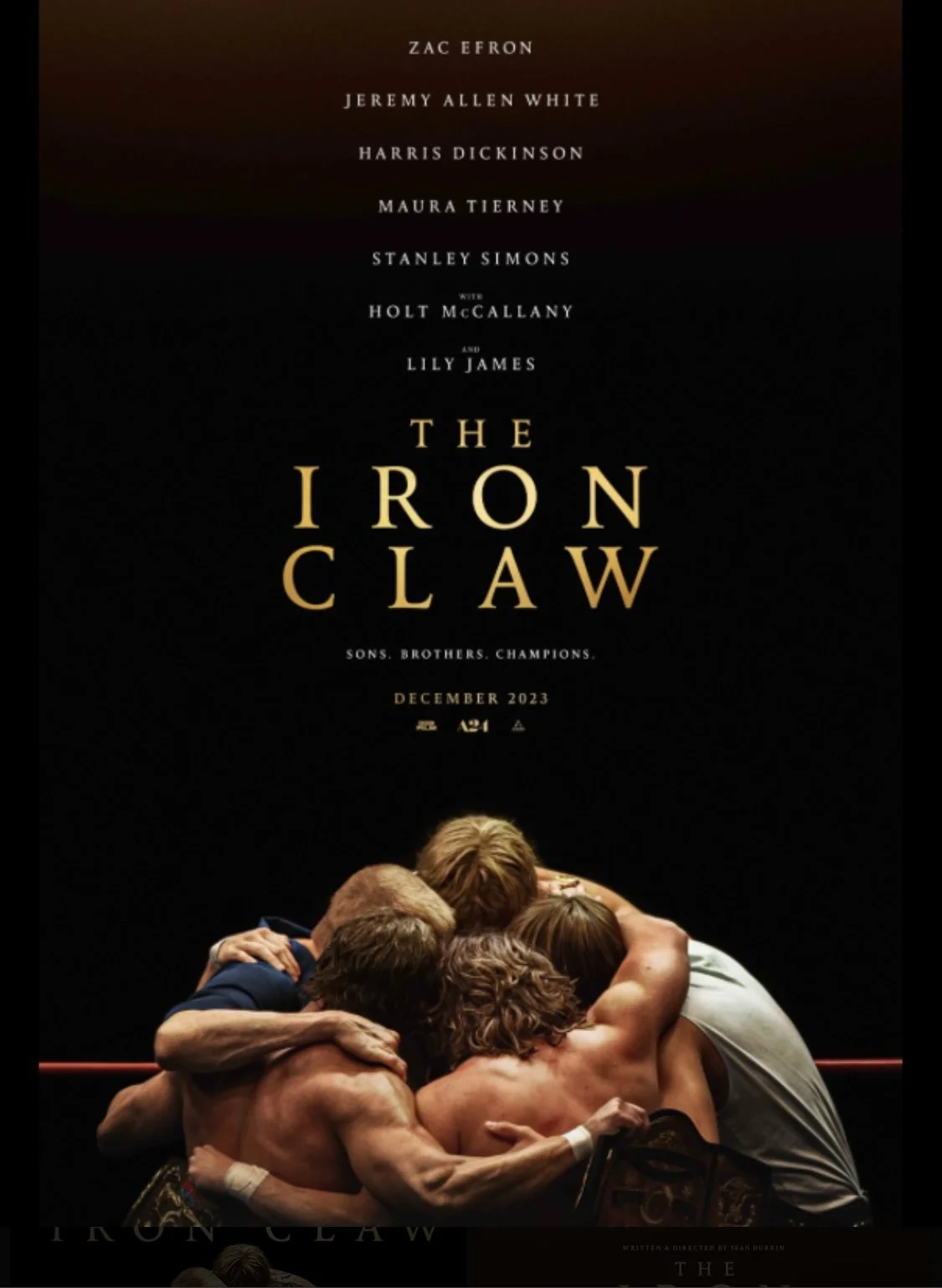
The Iron Claw: When Strength Becomes a Burden
The Iron Claw is more than a wrestling film — it’s a eulogy for the Von Erich family and every generation of men who were told that pain was weakness. CommonX looks at how the real curse wasn’t fate, but the weight of silence.

“The Von Erichs didn’t wrestle opponents. They wrestled fate — and it always fought back harder.”
There’s a moment in The Iron Claw where Zac Efron’s Kevin Von Erich stares into nothing, his face carved by exhaustion and quiet grief. It’s not acting — it’s witnessing. You see a man holding the weight of a bloodline built on strength, success, and tragedy. You see every generation of men who were told to take the hit and keep standing.
A Family That Built an Empire on Pain
Before the movie lights, before the glitz of Texas stadiums, there was Jack Adkisson — known to the world as Fritz Von Erich. He was a powerhouse in wrestling’s golden age and the architect of a dynasty. But what he really built wasn’t a brand; it was a burden.
Fritz raised his sons to be champions, not children. He gave them muscles before mercy, fame before freedom. Wrestling wasn’t a choice — it was the family business, and the business came with blood.
What followed was heartbreak so relentless it became legend.
David Von Erich died mysteriously in Japan.
Mike, devastated by injury and pressure, took his own life.
Chris, frail and broken, followed him.
Kerry, beloved by fans, ended his life in 1993.
Four sons, gone. One father left behind, and one brother — Kevin — forced to carry their ghosts into every sunrise.
The Curse: Not Superstition, but Expectation
People called it the Von Erich curse, like it was some cosmic punishment. But what The Iron Claw shows us is that the real curse wasn’t mystical at all — it was cultural. It was the curse of men who were taught that emotion is weakness, that winning redeems pain, and that silence is strength.
In every flex of Efron’s performance, you can feel it — the strain of holding in tears that never had permission to fall.
“We were raised to be strong,” Kevin says in the film.
“But maybe strong just means you can’t ask for help.”
That line cuts right to the Gen X core — to every man who learned to swallow failure, bury pain, and smile through breakdowns.
The Weight of Myth
Sean Durkin’s direction is merciless and beautiful. He films the Von Erichs like gods and ghosts at the same time — always illuminated, always doomed. The camera lingers on every bruise, every smile hiding exhaustion, every locker-room prayer that feels like a goodbye.
And Holt McCallany as Fritz? Pure power and heartbreak. He isn’t a villain; he’s a product of his own myth — a man who believed that if you pushed hard enough, love could be forged out of discipline.
But the truth The Iron Claw exposes is simple: you can’t out-train pain.
And you can’t out-wrestle grief.
The Last Man Standing
Kevin Von Erich — the real man, not just the character — lives in Hawaii now. Surrounded by his children and grandchildren, he’s found peace in nature, love, and distance from the ring. But he’ll tell you himself — peace wasn’t free.
He watched every brother fall, watched the empire burn down, and still carried the name. The movie ends not with victory, but survival. That’s what makes it powerful — it’s not about champions. It’s about endurance.
“Survivors don’t win,” Kevin once said in an interview. “They just keep going.”
That’s the gospel of The Iron Claw. The Von Erichs gave everything — their bodies, their youth, their sanity — to an industry that cheered while they broke.
Why It Hits So Hard for Our Generation
For Gen X, The Iron Claw feels like looking in a mirror that doesn’t lie. We grew up in a world that worshipped toughness — latchkey kids turned into relentless adults, hustling, grinding, hiding pain under sarcasm and work ethic.
The Von Erich story asks the question most of us avoid: What if strength is the very thing that’s killing us?
That’s not weakness — that’s revelation. It’s the moment you realize that vulnerability isn’t surrender. It’s healing.
🎙️The CommonX Takeaway
The legacy of the Von Erichs isn’t about fame or failure — it’s about the cost of inherited pain. And The Iron Claw doesn’t just resurrect their story; it redeems it. It shows what happens when a family tries to build forever out of flesh and willpower. It shows that love without permission to be human turns into tragedy.
And most of all, it reminds us that silence — the thing we were taught to call strength — can destroy everything we love if we let it. “Maybe the Von Erichs weren’t cursed,” the article closes.
“Maybe they were just the first to show us what the curse really looks like.”

X-Files Feature: “The Common-X Store — Born From Panic, Sweat, and Gen-X Stubbornness
After 13 hours of caffeine, chaos, and treadmill rage-sessions, the Common-X crew finally flipped the switch — the official merch store is live. From the “TaWkin Shit 6-7 AF” tee to our Gen-X inspired gear, this drop proves that stubbornness, sweat, and sarcasm still build empires.
The Build
It started like everything we do at Common-X — with an idea that refused to die.
We spent 13 straight hours wrestling with Squarespace settings, Printify sync errors, and checkout bugs that demanded more clearance than the Secret Service. There were panic attacks, profanity, and at least one rage session on the treadmill.
But you know what? We pushed through it — because that’s what Gen-X does.
We don’t quit when something breaks. We break it harder until it finally works.
The Merch
The 6-7 AF Graphic Tee was the first one off the line — a front-and-back design that captures everything we love about this project: bold, a little smart-ass, and unapologetically ours.
Fun fact: Ian’s iPhone refused to let him buy one (thanks, Apple security), but his wife slid right in and became Customer #1 in Common-X history. That’s how we knew the store was officially alive.
The Meaning
This isn’t about selling shirts. It’s about planting a flag for every Gen-Xer who still believes in doing it yourself — even when the system makes it hard.
We built this store the same way we built this show: from the ground up, one stubborn step at a time.
“If you can’t find a lane, pave one.”
That’s Common-X, said Ian Primmer - Co-Host of CommonX Podcast
The Future
The cash register’s open 24/7.
More designs, more drops, more chaos are coming — because now that the gears are turning, there’s no slowing down.


Reclaiming Minds: Lisa Ekman on Deprogramming and the Path Back to Unity
In a world where division dominates headlines, Lisa Ekman’s journey stands out as a rare story of self-reflection and courage. In this CommonX conversation, she opens up about the process of unlearning, healing, and rediscovering unity through faith, compassion, and truth. Reclaiming Minds reminds us that the hardest battles are often the ones fought within — and that understanding, not ideology, is what truly brings people together.

Graphic for the CommonX X-Files article “Reclaiming Minds,” featuring a quote from guest Lisa Ekman and the release date November 16, set in a minimalist Gen-X design style.
(An X-Files Feature by CommonX Podcast)
The Courage to Question Everything
Sometimes the hardest battles aren’t fought overseas or in the streets — they’re fought in our own minds. For author and activist Lisa Ekman, the journey of stepping away from once-familiar beliefs wasn’t about politics — it was about truth, courage, and the willingness to face what no longer felt right. “The left became radicalized during my lifetime to take positions that I can no longer be associated with or defend. Coming to these conclusions and deprogramming myself was the hardest thing I have ever done,” said Ekman. Her words aren’t just political commentary — they’re personal confessions from someone who dared to unlearn what she once stood for and rebuild her worldview from the ground up.
The Awakening
In a time when division feels like the new normal, Lisa’s story asks a bold question: can a nation ever find unity if its people don’t first reclaim their minds?
“A country divided cannot stand,” she adds. “We have an opportunity to unify the country but only if we can help people who are brainwashed or indoctrinated reclaim their minds. Replacing fear with love, faith, acceptance, and love of liberty and country provides a path to unity.”
Her new book explores that challenge — not through anger or blame, but through transformation. She speaks openly about replacing fear with love, judgment with faith, and ideology with liberty.
The CommonX Conversation
Lisa Ekman joins Ian Primmer and Jared Mayzak for a powerful new episode of the CommonX Podcast — recorded Friday, November 8 at 10 AM and premiering Sunday, November 16. Expect a raw, honest discussion about truth, media, and the courage it takes to think for yourself. Like every CommonX episode, this one seeks balance, empathy, and deeper understanding — not division.
What I took away from our conversation this morning with Lisa Ekman is that healing our minds doesn’t begin with screens or systems — it begins with each other. Reprogramming ourselves means reconnecting with real life: sharing dinner with friends, taking walks without distraction, and making space for genuine conversation. The path to reclaiming our minds starts when we step back into humanity — together. Lisa offers powerful ideas and practical tools in this piece — it’s a must-read.
— Ian Primmer
⚖️ Disclaimer
CommonX is not a political podcast and does not endorse any political party or ideology. Our goal is simple: to host real conversations with real people — across every belief system — in pursuit of understanding, not persuasion.
Read & Share
Her story challenges us to think deeper, listen closer, and remember what truly unites us. You can follow Lisa on X here and visit her website at Deprogramming Democrats



Author Lisa Ekman, writer of “Deprogramming Democrats & unEducating the Elites: How I Escaped the Progressive Cult,” standing in front of an American flag, featured in the CommonX X-Files article “Reclaiming Minds.”

From the Garage to the Mic: The Climb So Far
From a shop studio in Deer Park to the growing CommonX movement, this is the story of two friends who built something real — not for fame, but for people. From the Garage to the Mic is a reflection on the climb so far, the voices that shaped it, and the belief that every story matters. Because in the end, CommonX was never about the noise — it was about connection.

From the Garage to the Mic: The Climb So Far – motivational graphic for the CommonX Podcast article by Curb Fail Productions, symbolizing growth, creativity, and persistence.
By Curb Fail Productions – A CommonX Reflection
In the quiet corners of Deer Park, WA, long before the cameras, guests, or sponsors, there was just a voice — an honest one. It belonged to two friends who believed every story mattered, that good people still exist, and that service isn’t about glory. It’s about showing up. When CommonX was just an idea, it wasn’t about money, metrics, or fame. It was about connection. It was about two Gen-X dads — Ian Primmer and Jared Mayzak — who wanted to remind the world that compassion and curiosity still had a place in the noise. Week after week, they built something out of nothing — a studio in a shop, a show from the soul, and a mission that cut through the static.
From those first uncertain recordings to interviews with legends, artists, veterans, and visionaries — CommonX became a home for humanity. Each episode, each X-File, carried the same heartbeat: everyone has a story worth hearing. At the center of it all are Ian and Jared — partners, brothers-in-arms, and co-hosts who never wanted the spotlight but somehow became beacons. Ian’s strength has always been his heart — the empathy to see the good in everyone he meets. Jared’s has been his fire — the energy and conviction to keep the momentum alive when the mountain feels steep. Together, they’ve kept CommonX climbing.
Curb Fail Productions was never about building a media empire. It’s about building bridges. It’s about truth told with respect, laughter shared with strangers, and the belief that the world gets a little better each time someone chooses empathy over ego. So as we look back on how far this climb has taken us — from the garage to the mic, from a spark to a movement — we pause to say thank you. To everyone who’s listened, read, laughed, and joined the ride. You’re not just part of the audience; you’re part of the story.
Because that’s what this whole thing has always been about: people. Real people.
— Curb Fail Productions
Dedicated to every guest, listener, and dreamer who ever believed their voice mattered.
Listen Here:

Skullcandy logo – official audio partner of the CommonX Podcast, delivering premium sound for every episode and every listener.

Riverside logo – the remote recording platform trusted by the CommonX Podcast for high-quality audio and video interviews.

The Providers and Protectors: Why the Real Heroes Aren’t in Office — They’re Among Us
While the headlines scream and the politicians perform, the real heroes keep showing up — the ones who build, heal, teach, and protect without applause. The Providers and Protectors is a CommonX look at the people holding America together while the elite play pretend.

The aisles were empty. No crowds, no noise, just quiet shelves where struggle used to have company. That’s when it hit me — the real story in America isn’t about who’s shouting loudest in D.C., it’s about who’s still showing up for each other in the silence.
We’ve spent decades watching politics sell performance art while regular people carry the weight of survival. The rich get richer, the talking heads get louder, and the rest of us — the providers, the protectors, the ones who actually build and keep this place running — get written out of the script.
The Distraction Economy
Scroll long enough and you’ll see it: politics turned into a 24-hour circus. Outrage sells better than truth. Drama clicks faster than compassion. And somewhere between the ads and algorithms, we stopped asking who’s really taking care of us?
The answer isn’t on a stage or in a headline. It’s the nurse on a double shift. The dad who fixes a stranger’s car. The woman holding down two jobs to keep her family steady. These people don’t trend. They don’t go viral. But they’re the backbone of a country that’s been too busy arguing to notice them.
The Collapse of Pretend Leadership
Every generation hits a point where the mask falls off. For Gen X, it’s right now. We grew up without filters, without the comfort of participation trophies or curated feeds. We were told to deal with it — and somehow, that made us stronger.
Now, while the political world stages its next act, Gen Xers and the generations following are starting to build outside the system. They’re turning podcasts, indie media, local movements, and community projects into new power bases. The microphone became the megaphone, and authenticity became currency.
The Rise of the Real Ones
The people who never quit — they’re the ones redefining influence. The firefighters, the veterans, the teachers, the artists, the single parents, the blue-collar dreamers. They don’t need a platform to matter. They already do.
What they need is amplification — and that’s where media like CommonX steps in. We’re not chasing clicks; we’re chasing connection. The next revolution won’t come from a press conference — it’ll come from the garage, the studio, the podcast mic, the gym, the backyards where people are still talking about change like it’s possible.
So here’s to the guy at the gym who said, “Don’t quit on the 5,000th step.”
He’s right — this is the climb. This is the moment before everything breaks open. Because while the world waits for another political savior, we already have the people who save it every day.
We’re not just telling stories — we’re documenting the uprising of the ordinary. — Ian Primmer CommonX
🎙️ CommonX. The New Rolling Stone. The Voice of the Working Class Dreamer.

🍼 The Top 10 Albums That Created the Most Babies
CommonX turns up the lights — and the romance — with a hilarious, heartfelt look at the Top 10 Baby-Making Albums of All Time. From Sade to Prince, these records didn’t just set the mood — they made history. Read the full list on The X-Files at CommonXPodcast.com.

🍼 Intro (CommonX Style)
Some albums changed the charts. Others changed lives.
Then there are those rare records that dimmed the lights, lit the candles, and — nine months later — filled hospital nurseries.
This is for every Gen Xer who remembers when love had a soundtrack and playlists were made on mixtapes.
These are the Top 10 Albums That Created the Most Babies.
(No lab data, no science — just the collective experience of a generation that knew how to set the mood.)
🎧 1. Sade — Diamond Life (1984)
The queen of smooth. “Your Love Is King” might as well have come with a warning label. From her velvet voice to those saxophone lines — this record’s responsible for more romantic confessions than any dating app ever will.
💜 2. Prince — Purple Rain (1984)
This wasn’t an album. It was an aphrodisiac on vinyl. From “The Beautiful Ones” to “Darling Nikki,” it made everyone believe they were in a movie scene lit in purple neon.
🌹 3. Maxwell — Urban Hang Suite (1996)
Every Gen X couple had this CD within reach. A masterclass in quiet confidence and satin-smooth soul — if this wasn’t on your 90s “special playlist,” were you even trying?
4. Boyz II Men — II (1994)
There are two kinds of people: those who admit this album worked, and those who lie about it. “I’ll Make Love to You” was the universal prom night national anthem.
🔥 5. Janet Jackson — The Velvet Rope (1997)
A blend of mystery, passion, and introspection. Janet didn’t whisper — she commanded. This one made people brave enough to ask for what they wanted.
🎤 6. Journey — Escape (1981)
“Don’t Stop Believin’” might not scream baby-making, but the rest of this record had just enough soft rock and emotional charge to melt hearts. The Gen X slow-dance essential.
🕯 7. Luther Vandross — Never Too Much (1981)
Silk in sound form. Luther made vulnerability powerful — and sensual. “A House Is Not a Home” might as well have come with dimmer-switch instructions.
🖤 8. The Cure — Disintegration (1989)
For the moody romantics — eyeliner, emotion, and affection. “Lovesong” made even the most cynical fall for someone they probably still think about.
💀 9. Aerosmith — Get a Grip (1993)
Before the power ballad era got cheesy, Aerosmith turned every slow song into a cinematic love scene. “Crazy” and “Cryin’” played during every 90s make-out marathon.
💿 10. Barry White — Can’t Get Enough (1974)
The origin story. Before there were playlists, there was Barry. This record didn’t ask for permission — it set the rules.
🎸 Encore: CommonX Playlist
Spin these classics on the gear built for them —
🎧 Victrola Turntables x CommonX
“Because real love deserves real vinyl.”
Get yours here ➜ (insert affiliate link)

Matt King’s Trump Might Be Funnier Than the Real Thing — and That’s the Point
Matt King isn’t out to start a fight — he’s out to make people laugh. With viral impressions that blend wit, timing, and Gen X-style self-awareness, King proves that humor still has the power to connect people, even in a divided world.

Comedy Meets Chaos: The Matt King Episode
By Curb Fail Productions
When comedian Matt King stands behind a mic, something special happens — the room doesn’t just fill with laughter, it fills with balance. Known for his uncanny impressions and viral political sketches, Matt joined CommonX this week for one of the most hysterical and heartfelt episodes yet. He slipped into his infamous Trump impression so seamlessly that Jared and Ian nearly lost control of the studio. Jared Mayzak almost fell over from laughter, and Ian Primmer had to mute his mic from laughing so hard. But somewhere in the chaos, a deeper truth came through: Matt King isn’t mocking politics — he’s bridging divides through comedy and brings laughter and joy to those of them blessed enough to see his set.
“My stance on comedy when it comes to politics. Just don’t put them together,” Matt said during the show, laughing but meaning every word.
It’s a line that captures his whole ethos. In an age where every punchline can spark outrage, King’s humor doesn’t alienate — it connects. Trump supporters love his spot-on impersonations; non-Trump fans love his timing and fearless creativity. The fact that both groups can laugh at the same thing says more about his character than his craft — it says he cares. King radiates heartfelt compassion. He’s not out to score political points or push an agenda. He’s a guy who believes laughter can pull people back together, even when the world feels like it’s coming apart. That’s the CommonX spirit — find the humanity in the noise, and use humor to build bridges where others build walls.

By the time the mics went cold, one thing was clear: Matt King isn’t just funny. He’s a kind, humble, and compassionate person that cares about making a difference and bringing people together through humor.
You can find Matt on Instagram: https://www.instagram.com/matt.kingcomedy?igsh=MXNiaTBjNnF1djJyeg==
YouTube: https://youtube.com/@mattkingcomedy?si=Sr_7pJY_tGmpOYJ8
TikTok: https://www.tiktok.com/@matt.kingcomedy?_t=ZT-90io20SSZPz&_r=1
Reach out and explore Matt King Comedy
Thanks for your support: https://www.commonxpodcast.com/partners-and-gear-we-love


🎸 Spaceman and the Riffs That Never Fade
Ace Frehley wasn’t just the Spaceman of KISS — he was the cosmic outlaw who made rock feel infinite. His riffs still echo in every amp that hums and every dreamer who dares to plug in.

Remembering Ace Frehley (1951 – 2025)
There are guitarists who play notes, and then there are those who bend the universe. Ace Frehley was the latter — the interstellar architect of tone, swagger, and showmanship who helped build one of the loudest legacies in rock history.
As the original lead guitarist and co-founder of KISS, Frehley didn’t just shred — he launched. In full Spaceman regalia, silver makeup glinting under the stage lights, he turned every solo into liftoff. His riffs didn’t just ring through arenas; they became anthems of escape for every kid who ever felt like they didn’t belong on this planet.
When you strip away the pyrotechnics and the smoke, what remains is pure electricity — the sound of a man channeling energy through six strings and a Les Paul that glowed as bright as the stars he sang about. Ace wasn’t just a character; he was a cosmic outlaw with a grin and a tone that could melt steel.
The Man Behind the Mask
Beneath the paint, Ace was human — beautifully flawed, wildly creative, and unflinchingly real. His solo career proved that his identity was never limited to KISS. Songs like “New York Groove” still pulse with that city-street confidence — gritty, rhythmic, unpretentious. It’s a track that could only come from someone who’d lived every high and low of rock’s roller coaster and still found his groove on the other side.
In interviews, he was funny, raw, and occasionally unpredictable — a true reflection of the era he helped define. Ace was never afraid to say what he felt, even if it rattled the establishment. Maybe that’s why his fans loved him so fiercely. He was real, and in rock ’n’ roll, real is rare.
A Legacy Written in Light and Feedback
From his iconic smoking guitar solos to his unspoken influence on generations of rock and metal players, Ace Frehley’s DNA runs through modern music. You can hear it in the swagger of Slash, the tone of Joe Perry, the showmanship of countless arena bands that followed.
For Gen-Xers, Ace wasn’t just part of KISS — he was the reason kids picked up guitars in the first place. He represented possibility: that someone a little weird, a little wild, and completely themselves could take over the world armed with nothing more than a dream and a distortion pedal. And now, as the amps go quiet, the echo of that dream remains.
The Spaceman Lives On
It’s easy to say rock stars never die — but in Ace’s case, it feels true. His riffs are still orbiting. His laughter still hums in interviews and backstage stories. His fingerprints are on every pick-slide and power chord that ever made a crowd lose its mind.
He once said he wasn’t sure where the Spaceman came from — maybe outer space, maybe the Bronx, maybe a little of both. Wherever it was, the energy he brought to this world was bigger than any stage could hold.
Rest easy, Ace. You took us higher than we ever thought we could go.
The Spaceman has returned to the stars — but his riffs will never fade.

The Torch Still Burns: How CommonX Is Keeping MTV’s Spirit Alive
When MTV started fading from the airwaves, a generation felt like part of its soul was slipping away. But the truth is — the movement isn’t dead. CommonX is carrying the torch, keeping alive the spirit of connection, creativity, and rebellion that MTV once gave us. From iconic artists to new voices, we’re still tuning into the same frequency — the one that plays from the heart of Generation X.

A glowing retro CRT television flickers in a dark room with the CommonX logo and skull emblem on-screen, symbolizing the passing of the MTV torch to a new generation of creators.
🎸 The Torch Still Burns: How CommonX Is Keeping MTV’s Spirit Alive
MTV didn’t just play music.
It played moments — the kind you felt in your bones long before you could name them.
When the headlines hit that MTV was winding down some of its music channels, the internet reacted like it just heard the last guitar feedback fade out. Nostalgia, disbelief, heartbreak — but also something else: a sense that a torch needed carrying. And that’s where we come in. MTV may be changing, but the movement it sparked — that fusion of rebellion, rhythm, and raw emotion — never died. It just evolved. CommonX isn’t replacing MTV. We’re preserving what it stood for and reigniting it for the world we live in now.
🎧 The Signal Never Died
The ‘80s and ‘90s MTV generation was raised on a steady diet of noise, neon, and truth. From “Headbangers Ball” to “120 Minutes,” MTV taught us that music wasn’t just background — it was identity. Now, as traditional TV fades and algorithms decide what you see, CommonX is the counterpunch — a reminder that authentic culture still lives off the grid. From Rudy Sarzo and Ivan Doroschuk to Sid Griffin and Chris Ballew, we’ve sat down with the voices that shaped a generation. The names may have changed, but the spirit — that fearless curiosity to ask, challenge, and create — is still the same. MTV gave us the soundtrack. CommonX is picking up the mic.
🔥 Keeping the Flame Alive
MTV once gave a generation permission to be loud, weird, and unapologetically real. Somewhere along the way, it turned into reruns and reality shows. But here’s the truth — the artists, the dreamers, and the rebels it inspired didn’t disappear. They just went independent. That’s why CommonX exists — to keep the flame burning. To tell the stories behind the music, the meaning behind the madness, and the movement behind the noise. Whether it’s through The X-Files blog, the CommonX Podcast, or Curb Fail Productions, we’re building the next chapter of a legacy that started in front of that flickering TV screen.
⚡ A New Era for Gen-X
We don’t see MTV’s decline as an ending — it’s an invitation. A challenge to the next wave of creators to stop waiting for permission and start broadcasting their own signal. Because the truth is, the world still needs the energy MTV gave us — the guts to challenge, the hunger to create, and the soundtrack that told us who we were. And that’s exactly what CommonX is doing: not replacing the past, but remixing it into the future. ⚡ A New Home for Generation X We’re not competing with MTV — we’re continuing it. Because the truth is, the world still needs what MTV gave us: culture with a conscience, rebellion with rhythm, stories that matter. And now, it’s our turn to amplify it in a new way — one podcast, one article, one story at a time.
This isn’t the end of an era. It’s the next track in the playlist.
💫 CommonX aims to keep MTV Alive
The music didn’t stop — it just found a new station. Welcome to CommonX, where the spirit of MTV still spins.
Written by Ian Primmer — CommonX Podcast

Crusty Demons of Dirt: When Gen-X Took Flight and Never Looked Back
Before GoPros and algorithms, there were the Crusty Demons — a dirt-fueled cult of chaos that taught Gen-X how to fly, fall, and live louder than ever.

By Ian Primmer
Before GoPros, before energy-drink deals, before social-media stunts and clickbait “fails,” there were the Crusty Demons of Dirt — a band of maniacs who didn’t just ride; they launched. If you grew up Gen-X, you remember it. Those grainy VHS tapes passed around like underground contraband, covered in dust, duct tape, and fire. Each one was a mixtape of speed, punk rock, blood, and glory. The Crusty Demons weren’t just motocross riders. They were a movement — a cultural combustion engine that redefined what “extreme” meant. They didn’t have sponsors, hashtags, or choreographers. They had balls, dirt, and soundtrack albums loud enough to rattle the gods of safety.
Born from Chaos
The Crusty saga started in the mid-’90s, when Jon Freeman and Dana Nicholson of Freeride Entertainment decided to film what motocross really looked like — not the sanitized, family-friendly ESPN clips, but the wild-eyed desert rides and bone-snapping wipeouts that no one else would touch. They strapped cameras to bikes, hung out of helicopters, and cranked Pennywise and Metallica until the footage felt alive. It wasn’t just a video. It was a sermon for the reckless. Every crash, every burn, every impossible jump became a statement: We’re not here to survive. We’re here to live. The first Crusty Demons of Dirt dropped in 1995 and detonated across skate shops, video stores, and garages everywhere. Within months, it was a cult. Within a year, it was a religion.
The Soundtrack of Adrenaline
You can’t talk about Crusty without talking about the sound. The music was the gasoline. The Offspring. Sublime. Metallica. NOFX. It wasn’t background noise — it was the manifesto. Crusty didn’t just showcase motocross — it fused two worlds that were never supposed to meet: punk-rock attitude and high-octane adrenaline. That combination shaped everything from Freestyle Motocross (FMX) to the look of early action-sports video games. The fast cuts, the soundtracks, the chaos — all of it traces back to Crusty.
The Church of Adrenaline
To the fans, Crusty was proof that we didn’t need permission. We didn’t need perfect hair, million-dollar gear, or safe contracts.
We needed a bike, a buddy, a ramp, and some guts. The Crusty riders — names like Seth Enslow, Carey Hart, and Mike Metzger — were the new rock stars. Covered in dirt, blood, and duct tape, they were the anti-MTV heroes. They weren’t chasing medals. They were chasing moments. Moments where gravity bowed out and instinct took over.
Legacy in the Dust
Nearly thirty years later, Crusty Demons still tour the world with live stunt shows, keeping that renegade DNA alive. You can find them on streaming services now, but nothing compares to holding one of those old tapes in your hands — stickers peeling, label smudged, rewound a hundred times. For a generation raised on DIY rebellion, Crusty Demons was more than dirt and danger — it was philosophy. It said: “We don’t fear the fall, because falling means we flew.” And maybe that’s why it still matters.
Because the world polished the edges off everything else, but Crusty stayed raw.
💥 The CommonX Take
Crusty Demons of Dirt wasn’t a film series — it was a time capsule. A reminder that Gen-X didn’t need filters or validation. We had throttle, distortion, and attitude. They built something from nothing — just like the garage bands, backyard skateboarders, and late-night dreamers that defined our era. And in that sense, Crusty Demons wasn’t just about motocross…
It was about life without training wheels.

The Lords of Dogtown: When Rebellion Learned to Ride
Before rebellion became a hashtag, it lived in the sun-cracked streets of Venice Beach. The Z-Boys didn’t just invent modern skateboarding — they invented an attitude. Lords of Dogtown wasn’t about fame or money; it was about freedom, creativity, and carving your own line through life. From busted boards to backyard pools, these kids turned drought into art and chaos into culture — proving that real rebellion doesn’t destroy, it creates.

How a handful of kids from Venice Beach turned drought, grit, and boredom into a cultural revolution.
Before social media turned every subculture into a hashtag, rebellion lived in the cracks of America’s forgotten streets. In the mid-’70s, Venice Beach, California — a sun-baked, half-abandoned neighborhood locals called Dogtown — was one of those cracks. It was raw, dirty, and absolutely alive.
Out of that concrete chaos came the Z-Boys — a crew of scrappy teenagers with homemade boards, saltwater in their hair, and an attitude that would change everything. They didn’t have sponsors or followers. What they had was hunger — to move faster, fly higher, and tell the establishment to shove it.
When the California drought hit and drained suburban swimming pools, the Z-Boys saw opportunity where everyone else saw emptiness. They dropped into those empty pools and re-invented skateboarding — carving vertical walls like surfers on asphalt waves. They weren’t just skating; they were creating a new language.
From Survival to Style
The beauty of Dogtown wasn’t perfection — it was improvisation. Most of these kids came from broken homes or no homes at all. Skateboarding wasn’t a sport — it was survival, expression, and defiance rolled into one. Guys like Tony Alva, Jay Adams, and Stacy Peralta didn’t wear corporate logos; they wore scraped knees and chipped boards like badges of honor.
They didn’t wait for permission or funding — they built ramps out of trash wood and used the city as their playground. That’s the essence of Gen-X before we even had a name for it — take what’s broken, what’s left behind, and make it yours. No filters. No algorithms. Just gravity and guts.
The Surf That Never Died
For most of the Z-Boys, skating was an extension of surfing — and surfing was an extension of rebellion. They took the flowing rhythm of the ocean and translated it to the streets. Every pool carve was a protest against conformity, every grind a middle finger to the mainstream.
The 2005 film Lords of Dogtown didn’t just tell that story — it bottled that lightning. It showed how creativity can explode from the most unlikely places, and how freedom often starts where the rules end. The soundtrack — with tracks from Hendrix, T-Rex, and Social Distortion — was more than background noise. It was a love letter to a generation that refused to be boxed in.
The Blueprint for Rebellion
Look around today, and you can still see Dogtown’s fingerprints everywhere. The DIY culture that birthed punk rock, garage bands, zines, streetwear, and even YouTube creators — all trace back to the same philosophy:
Make something from nothing. Dogtown wasn’t about profit; it was about purpose. They didn’t chase clout — they chased connection. And maybe that’s why it resonates so deeply with us at CommonX. Because in a world obsessed with metrics, we’re chasing the same thing they were — truth, grit, and the freedom to build something real.
Legacy in Motion
What those kids started on cracked concrete has rolled through every creative space since. From Tony Hawk’s 900 to the explosion of street culture, Dogtown proved that authenticity beats polish, and courage beats comfort. The Z-Boys didn’t just carve lines in pools; they carved a roadmap for creators, rebels, and dreamers who refuse to be told “stay in your lane.”
And that’s the CommonX way too — we’re just doing it with microphones instead of skate decks. So here’s to the Lords of Dogtown, the barefoot prophets who showed us that rebellion isn’t about destruction — it’s about creation. They didn’t follow trends.
They were the trend.
by Ian Primmer, Co-host -CommonX

🎸 “The Sound of Clarity: Johnny Ceravolo’s Road from Reverb to Redemption”
From 80s stages to Warner Brothers studios, from recovery to comedy, Johnny Ceravolo has lived every chord of reinvention. CommonX celebrates his story of clarity and creation.

Johnny Ceravolo and his band playing live.
🎸 “The Sound of Clarity: Johnny Ceravolo’s Road from Reverb to Redemption”
(By Ian Primmer Co-host, of CommonX)
Some people chase fame. Others chase peace. Johnny Ceravolo chased both — and in doing so, found clarity that most people spend a lifetime looking for. When Johnny talks about his life, he doesn’t sound like a rock star. He sounds like someone who survived it. “I got sober in 2006,” he says, almost matter-of-factly. But behind those words is a lifetime of noise — the kind that comes from chasing everything except yourself.
In 2007, fresh in recovery, Johnny got the call of a lifetime — to join the 80s hitmakers When In Rome, best known for “The Promise.” For a decade, he toured and recorded with them, playing the songs that once defined an era. The lights, the travel, the soundchecks — it was the dream. But it was also the test. Sobriety gave Johnny a new relationship with the music — one rooted in appreciation rather than escape. He began to see the songs not as a stage for chaos, but as a space for clarity and connection.
That shift — from chasing the noise to truly hearing it — became the throughline of his creative life.
🎛️ The Engineer’s Ear
After a decade on the road, Johnny traded tour buses for mixing boards. He joined Warner Brothers as an audio engineer, bringing his musician’s ear to the screen. He laughs when you ask him what he’s worked on. “The most popular thing is Ted Lasso,” he says, almost like he’s talking about someone else’s success. But the truth is, his fingerprints are on soundtracks and scenes that millions of people have felt without even realizing who helped make them sound right. Johnny’s career at Warner Brothers reflects both gratitude and grit. He’s the kind of guy who’ll tell you luck played a part — but the truth is, it’s his work ethic that built the foundation. Years behind the console taught him how to listen again — to the mix, to the people around him, and to himself. That discipline — the kind that comes from falling and rebuilding — led him to a new kind of stage.
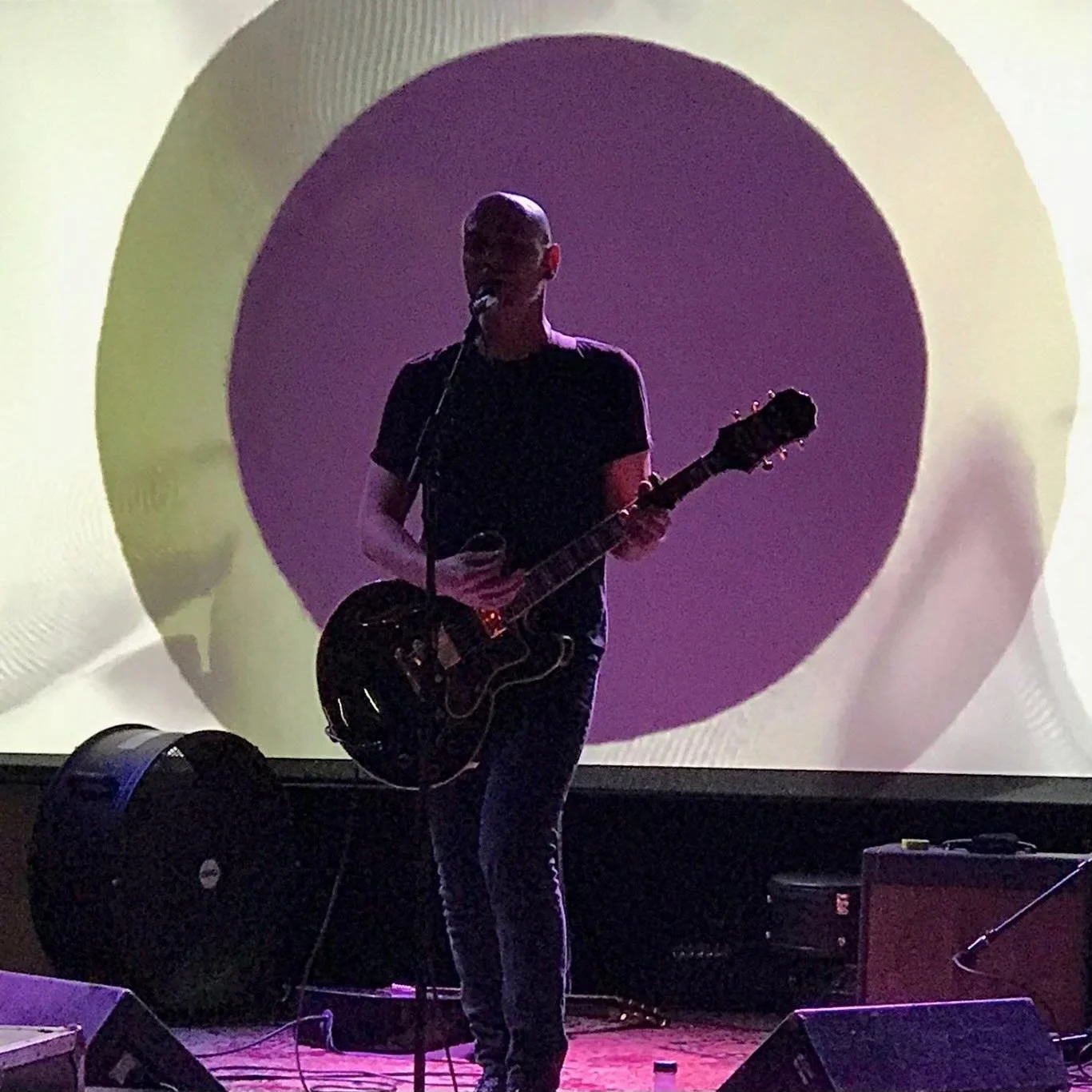
Johnny playing live on stage.
🎤 The Next Chapter: Stand-Up and Sobriety
Most people would’ve stopped there — rock band, big studio, Hollywood credits. But Johnny? He’s still evolving.
A year ago, he stepped into a new arena: stand-up comedy.
Comedy, at its core, isn’t that different from music. It’s timing, tone, rhythm, and truth. It’s honesty with a punchline.
Johnny’s version of comedy doesn’t hide behind characters or bravado — it’s vulnerability in motion. He’s preparing to film his own self-produced comedy special later this year, an achievement that mirrors his entire journey: self-built, self-aware, self-driven. For Johnny, everything else — the music, the comedy, the creativity — all branches out from one root: his sobriety.
It’s the core that anchors every project, every performance, every day. That focus hits like a lyric, because what Johnny found through recovery wasn’t just health — it was purpose.
🧭 Science Over Stigma
Johnny started his sobriety in AA, but after a few years, his perspective evolved. “I left to pursue sobriety based on science and logic,” he says. It’s not a rejection of what helped him early on — it’s an evolution. He’s now dedicated to helping others approach recovery with rationality, compassion, and honesty — no guilt, no judgment, no mysticism. That’s the real thread through all his art — truth without pretense. Music, engineering, comedy — they’re not separate chapters. They’re all part of the same album.
💬 The Heart of a Gen-Xer
If you didn’t know better, you’d think Johnny Ceravolo was a fictional character — a guy who lived three different lives but never lost himself in any of them. But he’s real — and that’s exactly why his story fits right at home on CommonX. He’s the kind of artist Gen-X was built on: humble, resilient, endlessly reinventing. Not chasing fame — just chasing meaning. He’s living proof that it’s never too late to find a new rhythm. That even after decades in the industry, the most powerful sound you can make… is clarity.
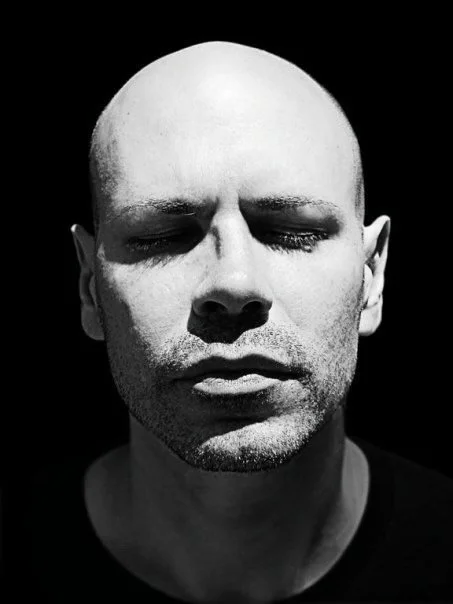
Johnny Ceravolo: From Reverb to Redemption airs soon on CommonX
🧠 Excerpt
From 80s stages to Warner Brothers studios, from recovery to comedy, Jonny Ceravolo has lived every chord of reinvention. CommonX celebrates his story of clarity and creation.
🏷️ Tags
CommonX Podcast • Johnny Ceravolo • Sobriety • Gen X • When In Rome • Ted Lasso • Stand-Up Comedy • Recovery Journey • Music & Culture • Curb Fail Productions • CommonX Originals
📂 Categories
The X-Files
Music & Culture
CommonX Originals
Resilience & Recovery
🎸 From the Music & Culture Cluster
“The Sound of Defiance – How Sub Pop Saved a Generation”
→ Place early in the article, after you mention When In Rome or his touring background.“Like the early Sub Pop bands that built the Seattle sound, Johnny’s story reminds us that the best music isn’t made for fame — it’s made for survival.”
(link to the Sub Pop/Concrete Waves & Power Chords article)

🎸 Top 10 Underrated Grunge Tracks You Forgot You Loved (CommonX Edition)
CommonX digs deep into the Seattle sound — the forgotten grunge tracks that still roar beneath the surface. Crank it, feel it, and remember why it mattered.

Top 10 Underrated Grunge Tracks we forgot we loved. Brought to you by Skull Candy and CommonX.
By CommonX
Before playlists and polished pop, we had distortion, sweat, and heartache echoing from basements and bar stages. Grunge wasn’t a sound — it was a generation finally saying, “We’re not okay, and that’s okay.”
Everyone remembers Nirvana and Pearl Jam, but the underground had deeper veins — songs that hit just as hard and spoke louder in the quiet moments between chaos.
So fire up the SONOS, close your eyes, and fall back into the feedback. Here are the 10 underrated grunge anthems that still deserve to shake your soul.
⚡ 10. Screaming Trees – “Nearly Lost You” (1992)
That voice. That fuzz. That groove. The soundtrack to smoky nights and restless hearts — forever under-appreciated.
🎤 9. Mother Love Bone – “Chloe Dancer/Crown of Thorns” (1990)
Where it all began. Before Pearl Jam, there was MLB — poetic, tragic, and pure Seattle soul.
🔥 8. Mudhoney – “Touch Me I’m Sick” (1988)
The filthy riff that started it all. Raw, snotty, and brilliant — the sound that gave Sub Pop its swagger.
🎧 7. Temple of the Dog – “Say Hello 2 Heaven” (1991)
Chris Cornell’s voice in its purest form — grief turned into grace. A tribute that became a movement.
🌀 6. L7 – “Pretend We’re Dead” (1992)
Feminist fury meets killer hooks. L7 proved you didn’t need to smile to melt faces.
💔 5. Candlebox – “You” (1993)
Melodic, emotional, and criminally underrated. Candlebox gave grunge a pulse that could actually break hearts.
⚙️ 4. The Melvins – “Hooch” (1993)
Heavy, sludgy, hypnotic. The godfathers of doom who inspired Nirvana’s heaviest moments.
🧠 3. Soundgarden – “Room a Thousand Years Wide” (1991)
Buried behind the hits lies one of their best riffs. Cornell and Thayil made darkness sound divine.
🚀 2. Alice in Chains – “Nutshell” (1994)
If you ever doubted grunge had poetry, listen again. Layne’s voice still echoes in every lonely apartment at 2 a.m.
🦇 1. Stone Temple Pilots – “Silvergun Superman” (1994)
Overshadowed by hits like “Plush,” this deep cut is pure STP swagger — bassline grooves, velvet vocals, and a solo that burns slow.
🎧 Honorable Mentions
Nirvana – “Aneurysm” | Pearl Jam – “Release” | Hole – “Malibu” | Bush – “Cold Contagious”
🧠 Excerpt
CommonX digs deep into the Seattle sound — the forgotten grunge tracks that still roar beneath the surface. Crank it, feel it, and remember why it mattered.
written by Ian Primmer

Funniest Movies of All Time (The Gen-X Edition)
From Ghostbusters to Step Brothers, CommonX salutes the films that made sarcasm sacred and stupidity sublime. Comedy before filters — pure, loud, and unforgettable.

🎬 Funniest Movies of All Time (The Gen-X Edition)
By CommonX
Before streaming queues and skip buttons, there was Blockbuster roulette — that sacred moment when you grabbed a VHS because the cover looked stupid enough to be hilarious. Comedy was raw, quotable, and borderline dangerous.
We didn’t need perfect lighting or woke punchlines — we had Chevy Chase falling down stairs, Bill Murray breaking the fourth wall, and Jim Carrey talking out of his butt.
So grab the popcorn, dust off your VCR, and let’s roll through the comedies that built our sense of humor, broke all the rules, and made us the sarcastic legends we are today.
😂 10. Ace Ventura: Pet Detective (1994)
Jim Carrey unleashed pure chaos in Hawaiian shirts and made talking to animals cool. Proof that rubber-faced energy could carry an entire decade.
🎯 9. Caddyshack (1980)
Rodney Dangerfield, Bill Murray, and a gopher puppet — comedy perfection. It taught us the two rules of golf: swing hard and don’t give a damn.
🧻 8. Dumb and Dumber (1994)
A masterclass in idiocy. Lloyd and Harry made stupidity into an art form. That “most annoying sound in the world”? Still undefeated.
🧀 7. Wayne’s World (1992)
Cable-access kings, air guitars, and catchphrases for days. Party on, Garth. Party on, Wayne.
🤦 6. Groundhog Day (1993)
Bill Murray vs. time itself. Somehow philosophical and funny enough to quote daily — literally.
🧑💼 5. Office Space (1999)
TPS reports, cubicle hell, and printer revenge fantasies. The film that made every desk-job survivor nod in solidarity.
🕶️ 4. The Big Lebowski (1998)
The Dude abides, man. Coen Brothers brilliance wrapped in bowling balls, White Russians, and existential absurdity.
🧔 3. Planes, Trains and Automobiles (1987)
Steve Martin and John Candy. Heart + hilarity + travel hell. Thanksgiving never looked so good.
🧠 2. Ghostbusters (1984)
Comedy, sci-fi, and sarcasm blended perfectly. Murray, Aykroyd, and Ramis made bustin’ look fun and profitable.
🏆 1. Step Brothers (2008)
Technically not Gen-X-era, but spiritually? 100%.
Ferrell and Reilly captured the man-child energy that every Gen-X dad secretly relates to. “Did we just become best friends?” — yes, yes we did.
🍿 Honorable Mentions
There’s Something About Mary, Tommy Boy, Anchorman, Clerks, Friday, Napoleon Dynamite.

Top 10 Shredders of All Time (CommonX Edition)By CommonX
From Van Halen to Vai, CommonX salutes the ten who turned noise into art and rebellion into rhythm. Crank it up — feedback is freedom.
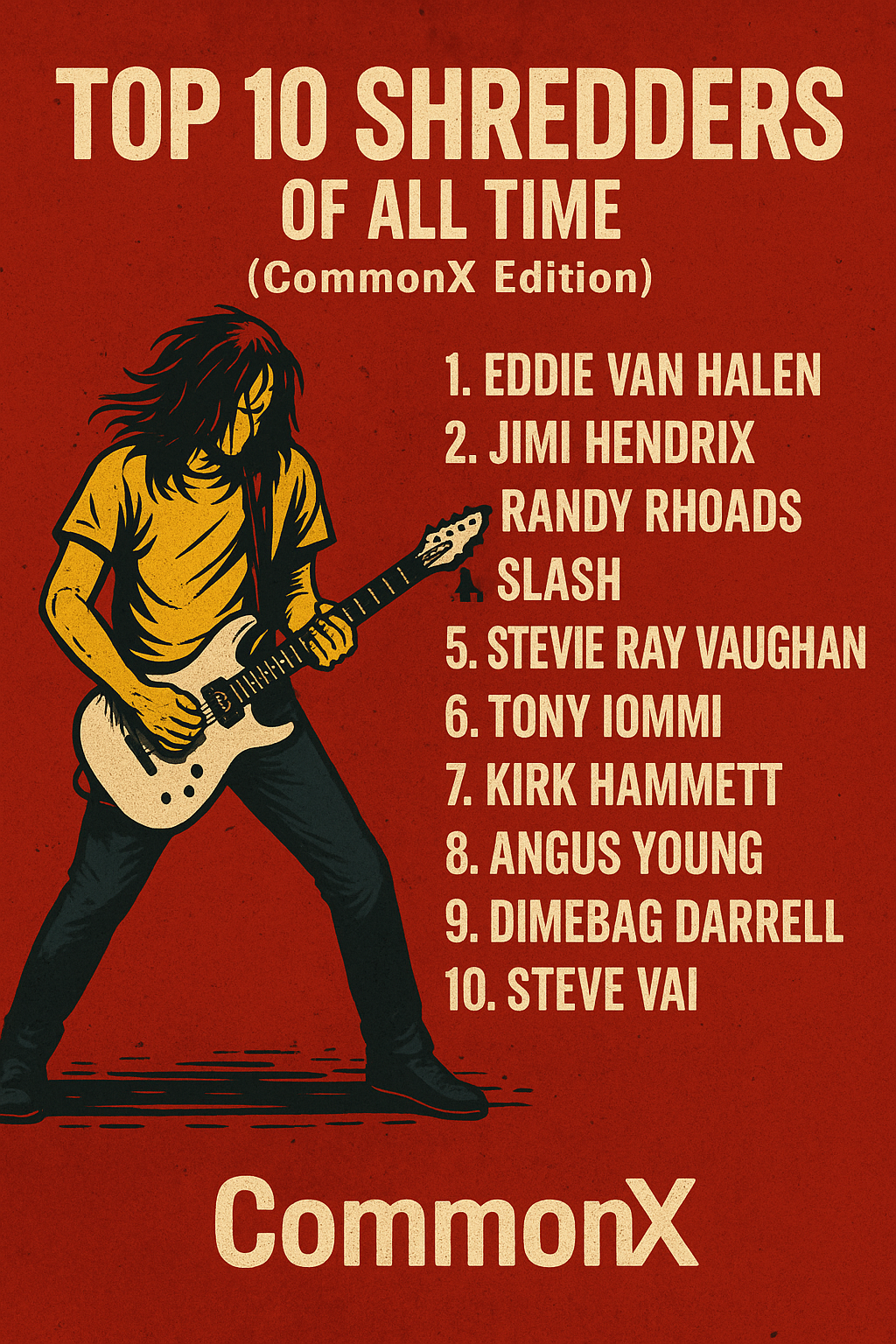
🎸 Top 10 Shredders of All Time (CommonX Edition)
By CommonX
Before playlists and plug-ins, there were six strings, blood on the frets, and neighbors pounding on the wall. For Gen X, guitar heroes were gods — and distortion was scripture. So grab your SONOS, crank it until the drywall shakes, and salute the riff kings who taught us that feedback is freedom.

Sonos Logo partnered with CommonX
⚡ 1. Eddie Van Halen – The Architect of Awe
Two-hand tapping, harmonic squeals, and tone so warm it could melt steel. “Eruption” changed everything; every kid with a guitar chased that lightning ever since.
🎸 2. Jimi Hendrix – The Cosmic Trailblazer
He made the Stratocaster cry, laugh, and set the sky on fire. “Voodoo Child” wasn’t a song — it was a ritual.
⚡ 3. Randy Rhoads – The Classical Firestorm
Ozzy’s prodigy fused classical precision with metal fury. Every solo was a master class in melody and madness.
🎩 4. Slash – The Soul in the Smoke
Top hat, Les Paul, cigarette — instant icon. His tone drips blues and attitude; “Sweet Child O’ Mine” is eternal youth in riff form.
🎵 5. Stevie Ray Vaughan – The Texas Hurricane
Pure feel. No tricks, no filters — just emotion pouring through Fender strings. When SRV bent a note, you felt it in your bones.
⚙️ 6. Tony Iommi – The Godfather of Heavy
Fingertip injury? No problem. He invented heavy metal instead. Sabbath’s riffs are the bedrock of every down-tuned dream that followed.
⚡ 7. Kirk Hammett – The Metal Surgeon
Precision meets chaos. The wah-wah wizard of Metallica built solos that slice through stadium air like jet engines.
⚡ 8. Angus Young – The Eternal Rebel
School uniform, duck-walk, Gibson SG — pure electricity. “Back in Black” and “Highway to Hell” still sound like rebellion bottled.
🔥 9. Dimebag Darrell – The Southern Thunderstorm
Groove, grit, and guts. His Pantera riffs came with tire smoke and whiskey breath — heavy metal with a grin.
🚀 10. Steve Vai – The Alien Virtuoso
Flawless technique and fearless imagination. Vai turned shred into symphony — proof that technical mastery can still have soul.
🎧 Honorable Mentions
Joe Satriani, Nuno Bettencourt, Prince, Nancy Wilson, and Joan Jett — the undercurrent that keeps the six-string alive.

🏁 Throttle Therapy: The GOAT Never Quit (Ricky Carmichael)
CommonX pays tribute to Ricky Carmichael, the GOAT of grit, and the Gen-X spirit that never learned to coast. Fueled by Summit Racing and Alpinestars — built for the bold.

Illustrated poster of motocross legend Ricky Carmichael mid-air on his dirt bike, wearing Alpinestars gear, surrounded by dust and motion blur. Bold text reads “Throttle Therapy – The GOAT Never Quit,” with Summit Racing and Alpinestars logos beside a graffiti-style CommonX tag. The artwork captures Gen-X rebellion, adrenaline, and the unstoppable spirit of speed.
By Ian Primmer - CommonX
There’s a moment every Gen-X kid remembers — the smell of two-stroke in the air, a dirt trail disappearing into the horizon, and a hand-me-down bike that rattled more than it roared. We didn’t need perfect; we needed fast. Speed wasn’t a sport — it was therapy. It was escape. It was rebellion in motion.
And nobody embodied that more than Ricky Carmichael, the man who turned motocross from a pastime into poetry — wide open, fearless, and all-in.

Ricky Carmichael at motorcrossusa.com
The GOAT of Grit
Ricky wasn’t born into fame — he built it from the ground up, throttle by throttle, crash by crash. He wasn’t chasing luxury or algorithms; he was chasing seconds. Every turn was a war zone, every fall a test of will. That’s what made him the Greatest of All Time — not just his speed, but his refusal to quit. Gen X gets that. We were raised on scraped knees and loud engines — the analog roar that told the world we were alive. While everyone else was learning to play safe, we were learning how to fly.
Carmichael didn’t just win races; he defined the culture. He was the dirt-track philosopher, proving that greatness doesn’t come from polish — it comes from persistence.
From Dirt Tracks to Driveways — The Gen-X Engine
We’re older now. The bikes might be cleaner, the garages more organized, but that itch never went away.
Every Gen-Xer still knows what “wide open” feels like.
It’s that same pulse that drives us — whether it’s building businesses, podcasts, or lives that refuse to idle.
That’s why Summit Racing and Alpinestars hit home for us. They’re not brands — they’re badges of the same rebellion that raised us.
“If you grew up fixing what you broke, you’re one of us.”

Summit Racing — the garage that built a generation. Power, precision, and performance for those who still believe speed is freedom.
Summit Racing keeps the garage sacred — the modern temple of creativity, sweat, and horsepower.
Alpinestars keeps the body safe while the spirit chases chaos.
Together, they represent the new chapter of Gen-X grit — smarter, stronger, and still addicted to the rush.
🏁 Sponsored by Summit Racing & Alpinestars
🛠️ Built for the bold. Fueled by freedom.
Shop Summit Racing
Explore Alpinestars

Alpinestars — engineered for the fearless. From dirt tracks to street legends, they keep the Gen-X spirit of motion alive.

“The Soundtrack Still Matters (SONOS Edition)”
Gen X didn’t outgrow music — we refined how we hear it. CommonX and SONOS celebrate the return of real sound, where clarity meets rebellion and the soundtrack still matters.

There was a time when every moment had its own soundtrack.
A first kiss in a friend’s car to the hum of a worn cassette. A late-night skate run with Smells Like Teen Spirit echoing off the streetlights. A broken-hearted walk home with your Discman skipping on track eight.
Music didn’t just play in the background — it defined who we were. Back then, we lived for mixtapes. The sound was fuzzy, imperfect, sometimes barely holding together — but it was ours. Every hiss, every crackle, every dropout told a story. You didn’t swipe through songs, you committed to them. You let the music breathe.
And maybe that’s what we’ve lost in the streaming age — the texture, the ritual, the pause between tracks that reminded you something real was coming next. But here’s the truth: the sound never died. It just evolved.
From Garage Speakers to SONOS Clarity
We grew up worshipping distortion — basement bands, blown-out speakers, the hum of a dying amp before the chorus dropped. Now, we’re rediscovering what sound can really do when it’s given room to move. That’s where SONOS comes in — the next evolution of that same energy we grew up with. It’s not about perfection — it’s about presence.
“We grew up on grit. SONOS gives it back with grace.”
With SONOS, you don’t just hear the song — you feel it. The air shifts, the bass hums, and the room becomes part of the music again. It’s what happens when design meets soul. From vinyl to streaming, from garage walls to living rooms that shake with nostalgia, SONOS captures the essence of how we used to listen — loud, unfiltered, and alive.
Every CommonX episode we drop, every Side-B track we revisit, deserves that kind of sound — not background noise, but an experience.
Gen X Grew Up, But the Music Didn’t
We traded our Walkmans for Wi-Fi, but the volume never came down. We just wanted a system that respected the music the way we do — not compressed, not disposable, not background noise. That’s what makes the SONOS ecosystem the grown-up version of rebellion: seamless, modern, but still built around sound that moves you. It’s what happens when the mixtape kids grow up, but the passion stays the same.
“We were raised on feedback and rebellion — now we crave fidelity and fire.”
Because we still want that moment — the one where you stop mid-conversation, tilt your head, and say:
“Man, listen to that.”
SONOS didn’t just build a speaker — they built a bridge between who we were and who we became. The soundtrack still matters. It always did. And now, it sounds better than ever.
🎵 Hear your soundtrack the way Gen X meant it to sound.
Shop SONOS
written by Ian Primmer

SONOS Multi Room quality Surround Sound

Follow Ian Primmer GENXDAD on Tiktok, and get some SONOS gear for high quality sound on the SONO links above.

Concrete Waves and Power Chords
When rebellion echoed through cracked pavement and feedback screamed from garage amps, a generation found its voice. CommonX looks back at the days of Sub Pop, Tony Hawk, and the concrete wave that shaped us — when skateboards were freedom, distortion was therapy, and the noise was the message.

Sub Pop, Tony Hawk — still inspiring the world today
Concrete Waves and Power Chords
By Ian Primmer - Cohost, CommonX
There was a time when rebellion didn’t come from a phone screen — it came from the sound of polyurethane wheels chewing through cracked concrete and a power chord screaming through a Peavey amp. The soundtrack of the 90s wasn’t choreographed or corporate. It was raw, loud, and gloriously unrefined — born from garages, burned-out warehouses, and a record label in Seattle that changed everything: Sub Pop. The air was thick with sweat, smoke, and spray paint — the kind that stuck to your lungs and your memory. Every scraped knee and every snapped string meant something. You didn’t scroll for inspiration — you created it, one crash and one chord at a time. Back then, nobody was talking about going viral. You earned your audience by waking the neighborhood. You didn’t care who was listening — you cared that someone heard you. And that sound — that clash of motion and music — was everything. It was how Gen X spoke when the world wasn’t listening.

Author Ian Primmer used to wake the neighborhood with a rented Drum Set from DJ’s music in Port Orchard, WA. (Not Ian)
The Sound of Defiance
We didn’t just listen to music — we inhaled it. Those riffs and feedback loops were oxygen for every kid who didn’t fit the mold, who couldn’t afford preppy clothes or polished dreams. The noise was the message. Every distortion pedal was an act of defiance. Every garage was a stage. Every mosh pit was a therapy session no one talked about. Bands like Nirvana, Soundgarden, and Mudhoney didn’t just write songs — they wrote escape routes. They gave permission to feel broken, to question authority, to scream without explanation and then came the others: Tool with their precision chaos, Green Day with that punk edge that made you want to quit your job and start a band, Pearl Jam turning stadiums into group therapy sessions.
It wasn’t about fame — it was about the feeling. That hum of bass that hit your ribs harder than any lecture ever could. That echo of rebellion that made you believe — for just a few minutes — that the system couldn’t touch you. You didn’t need a producer or a million followers. You just needed a voice and the guts to use it. That’s what defined us. That’s what set Gen X apart. We were the first generation to realize that corporate America couldn’t commodify honesty forever.
The Streets Were Our Stage
Our culture didn’t come pre-packaged — we made it. Every cracked ramp, every sticker-bombed deck, every photocopied show flyer — that was our social media. Tony Hawk was the god we all prayed to, but our church was concrete, and our hymns came from cheap guitars turned all the way up. We didn’t talk about mental health. We lived it — through sound, motion, and scraped-up skin. Music and skateboarding weren’t hobbies; they were survival tactics for a generation that refused to sit still or shut up. When you were flying down a hill at midnight with Silverchair in your headphones and no helmet, that was freedom. It was reckless, stupid, beautiful — and it was ours. And right there in the mix — between the smell of asphalt and the static buzz of a cheap amp — was Tony Hawk. Not just a skater, but a spirit guide for every kid who believed a parking lot could be a playground and a bruise was just proof you tried. Hawk wasn’t fame; he was freedom on four wheels, soaring higher than the world said possible.
The ramps were our art galleries, our tricks our brushstrokes. And when the world didn’t understand it, we made them — one spray-painted tag at a time. Every halfpipe had a story written in Krylon. Every wall, every deck, every dingy garage door carried the mark of our generation’s graffiti gospel: make noise, make color, make something real.

Tony Hawk in 1986 tearing it up and inspiring his generation of misfits to go all out!
Sub Pop: The Label That Let Us Live Loud
Before Sub Pop, major labels told artists what to sound like. After Sub Pop, the world had to listen. Bruce Pavitt and Jonathan Poneman didn’t set out to start a revolution — they just wanted to bottle the sound of Seattle’s underbelly. But what they created was the most authentic record label of the modern age: one that ran on coffee, chaos, and community. Sub Pop gave the world a front-row seat to real. They didn’t chase trends — they documented truth. They didn’t sign acts for looks — they signed them for feel. Their offices were cluttered, their contracts were basic, their gear was borrowed — but their legacy was nuclear.
They found kids with four-track recorders and turned them into legends. They gave the outcasts a label, the misfits a megaphone, and the city of Seattle a soul.
It was never about selling records — it was about capturing lightning before the corporations bottled the thunder. Sub Pop’s logo became a badge of honor — a stamp that said, “This isn’t for everyone.” And that was the point. When Bleach dropped, when Superfuzz Bigmuff hit, when Sliver rattled through speakers across the country — you could feel the shift. The label wasn’t polished; it was powerful. It didn’t create a genre; it created a generation. And when the majors came calling, when MTV wanted a piece, when every mall brand started selling flannel — Sub Pop stayed Sub Pop. Still underground. Still imperfect. Still loud. They didn’t just distribute music. They distributed freedom.
CommonX and the Echo of the Underground
Fast-forward a few decades, and that DIY spirit’s still alive. You hear it every week when the mics fire up on CommonX. It’s not scripted, it’s not perfect — it’s raw talk from real people. Just like those garage bands, we’re making noise that matters. We might not be slinging guitars, but we’re still shredding through the same noise — the censorship, the fake trends, the endless filters. And we’re still powered by the same drive that once made a kid pick up a skateboard or a Stratocaster: the need to be heard. Because the truth is, the world doesn’t make rebels anymore. It makes algorithms. But for those of us who remember, we still feel it — that spark of distortion that said “don’t just consume — create.” Concrete waves. Power chords.
The pulse of a generation that never stopped moving forward — even when the world told us to grow up.

Graffiti-style CommonX logo on a cracked concrete wall — symbolizing the 90s Sub Pop spirit, Tony Hawk rebellion, and the raw Gen X soundtrack.
From the Underground to the Airwaves
The underground didn’t die — it just changed frequencies. It traded distortion pedals for microphones, basement shows for streaming platforms, and flyers on telephone poles for algorithms and hashtags. But the energy? The pulse? That raw, unfiltered truth? It’s still here. It lives in CommonX. Every episode, every post, every conversation we throw into the world carries that same Sub Pop DNA — the defiance of the overproduced, the rejection of the sanitized, the celebration of real.
We don’t have an A&R rep; we have a mission. To amplify voices that deserve to be heard. To talk about what others scroll past.
To cut through the digital noise with the same authenticity that once made a garage in Seattle sound like the center of the universe. CommonX was never built to trend — it was built to resonate. We don’t chase algorithms; we chase connection.
We don’t clean up the rough edges; we lean into them, because that’s where the soul lives. Like Sub Pop’s bands, we’re a mixed bag of thinkers, builders, and rebels — misfits who somehow found a frequency that makes sense together. We’re not mainstream. We’re main vein — the current running underneath all the noise. And just like that first wave of Seattle sound, we’re not here to fit in. We’re here to remind people what it feels like when something real hits — when art is dangerous again, when truth shakes walls, when you turn it up and say, “Yeah… that’s us.”
So maybe we don’t have a mosh pit anymore. Maybe we’ve swapped guitars for microphones and stages for studios. But the energy’s the same. The rebellion’s still alive. And the noise? It’s only getting louder. CommonX isn’t a podcast — it’s a movement. An analog heart beating in a digital world. A continuation of the underground spirit that refuses to fade out quietly. Because as long as there’s concrete to skate, distortion to crank, and stories to tell — Gen X will always have a sound.

Before There Were Streams, There Were Grooves
From the underground to the airwaves, CommonX is spinning its own record — literally. Generation X’s voice of reason and rebellion just dropped on VYNL, celebrating the raw sound, real talk, and analog soul that built a movement. Crackle the dust off your turntable and cue the conversation — because the X is officially on wax.
Long before podcasts filled our earbuds, there was the turntable — a ritual of sound, smell, and touch. You didn’t click play, you lowered the needle. CommonX was born from that Gen-X era — a world where mixtapes, record sleeves, and late-night radio were sacred. So maybe it’s only natural that the conversation that started in digital form now spins back to where it all began: vinyl.
The Vinyl Sessions – A CommonX Concept
The idea is simple but beautifully rebellious — press CommonX onto wax. Not as a gimmick, but as an artifact: a time capsule of the best moments, guests, and insights from Season One. Imagine Side A: Ivan Doroschuk, Sid Griffin, Cory White, Rudy Sarzo — the musical DNA of our generation. Side B: The thinkers and cultural catalysts — Gerald Horne, Meemaws, Isaac, William Becker — the voices that turned talk into truth. Each track hand-picked, mastered for warmth and grit, with the crackle that digital will never capture.
Rare Vinyl Meets Victrola and Rare Vinyl
With partners like Rare Vinyl and Victrola, the move makes sense. Rare Vinyl gives CommonX a collector’s home — a place for limited-press runs, numbered editions, and liner notes worth reading twice. Victrola connects the dots between nostalgia and now, offering turntables that look vintage but stream modern. Together, they help CommonX bridge two worlds — the analog soul of Gen-X and the digital pulse of today.
Why Vinyl?
Because Gen-X has always been about authenticity. We’re the generation that taped songs off the radio, that flipped the cassette with a pencil, that made playlists before the algorithm existed. Vinyl isn’t just retro — it’s rebellion against disposable culture.
And CommonX on vinyl is more than a record — it’s a statement:
“Before podcasts streamed, we spun records. CommonX brings it back — one groove at a time.”
The Collectible Factor
Each pressing would come with:
A custom CommonX gatefold cover, with photography and design inspired by 90s MTV Unplugged.
Liner notes written by Jared & Ian, telling the behind-the-mic story.
A QR code linking to the full digital archive and bonus “Behind the Mic” episode.
Optional autographed, numbered collector’s editions — the first podcast ever archived like a classic album.
The Next Spin
What started as a thought is now a movement.
CommonX has always been about conversation — the kind that leaves an imprint.
And what better way to make it permanent than vinyl?
If streaming is the fast lane, vinyl is the scenic route. And Gen-X has always preferred the long drive.
#CommonXPodcast #TheXFiles #GenX #VinylRevival #PodcastOnWax #RareVinyl #Victrola #GenXCulture #PodcastRevolution