
After the Fire: Why GEEZER Matters Now
A CommonX X-Files conversation with the founders of GEEZER Magazine about Gen X, print journalism, and aging without hardening in a culture obsessed with speed and youth.
Punk-style graphic combining GEEZER Magazine and CommonX branding, featuring bold typography, high-contrast black-and-white elements, and Gen X–inspired collage aesthetics.
Guests:
Laura LeBleu
Paul von Zielbauer
GEEZER Magazine
There are conversations that happen in the middle of the fire — urgent, necessary, loud.
And then there are conversations about what comes after.
Our recent discussion with Laura LeBleu and Paul von Zielbauer of GEEZER Magazine was the latter. It wasn’t about reclaiming youth, resisting age, or yelling at the world for changing. It was about staying awake. Staying human. And refusing to be flattened into a demographic.
In other words, it was very Gen X.
Not nostalgia. Not rage. Not a brand.
GEEZER isn’t nostalgia bait, and it isn’t grievance culture dressed up as cool. It’s a print-only magazine built on a simple but increasingly rare idea: Gen X doesn’t want to be marketed to — it wants to be spoken with.
Laura LeBleu’s path to GEEZER makes that clear immediately. Growing up in El Paso, Texas, she wanted to be an ice skater. Geography had other plans, so she became a writer instead. Along the way she’s been an Emmy-award-winning TV producer, lead singer in an Italian band, voice of a virtual character, stilt-walking circus ringmaster, NYC cabaret performer, and a minor gay icon. Writing, though, was always the throughline.
The idea for GEEZER came to her in the shower. (She admits she’s had many good ideas in the shower — this is just the one that stuck.) The magazine carries that same energy: confident, playful, sharp, and uninterested in pretending that aging is tidy or polite.
A bullshit detector perfected by time
Paul von Zielbauer brings a different, complementary gravity. Raised in Aurora, Illinois by European war-refugee parents, Paul’s life has been shaped by movement, curiosity, and a refusal to accept the surface version of any story.
In his twenties, he rode a bicycle from Hanoi to Ho Chi Minh City, back when most Americans still thought of Vietnam only as a war they’d seen on TV. He later spent eleven years as a journalist at The New York Times, where his reporting was nominated for a Pulitzer Prize. As the Great Recession was getting started, Paul left the paper to launch a business that helped volunteers build playgrounds for disadvantaged children overseas.
That same impeccable timing — and quiet seriousness — now shows up at GEEZER, where he works diligently in the basement until Laura tells him it’s okay to come upstairs.
Together, Laura and Paul embody something unmistakably Gen X: a finely tuned bullshit detector shaped by watching institutions wobble, media flatten complexity, and authority repeatedly fail to earn trust. Not cynical — discerning.
Why print is the point
Choosing print in a digital-first world isn’t nostalgia. It’s resistance.
GEEZER slows the reader down on purpose. It refuses outrage metrics, algorithmic churn, and the idea that everything must be consumed instantly or forgotten. Print demands attention. It asks you to sit with ideas. It treats the reader as a person, not a product.
In a culture obsessed with speed, that choice isn’t retro — it’s radical.
Aging without hardening
One of the most resonant themes from our conversation was this: aging doesn’t have to mean hardening.
GEEZER isn’t about yelling at clouds or pretending we’re not getting older. It’s about staying sharp without becoming cruel, curious without becoming naïve, and engaged without burning out. It’s about middle age not as decline, but as clarity — the moment when you finally know what matters and stop pretending otherwise.
GEEZER doesn’t promise answers. It offers company — in strength, vulnerability, rage, humility, joy, and a ton of other nouns.
Why this matters now
At a moment when media feels louder, thinner, and more polarized by the day, projects like GEEZER matter precisely because they refuse spectacle. They trust readers to think. They trust stories to breathe. And they trust that a generation raised on disruption still has something essential to offer — not because it’s flashy, but because it’s lived.
Our conversation with Laura LeBleu and Paul von Zielbauer wasn’t about age.
It was about meaning.
GEEZER stands as proof that Gen X isn’t done yet — it’s just more intentional about how, and why, it speaks.
Beautiful, but not always pretty.
And very much alive.
Our Episode with Laura and Paul will be available on YouTube and all other Podcast platforms after the release of Dame Claire Bertschinger on Thursday, February 26th consistent with our commitment to release episodes twice a week on Tuesdays and Thursdays.
You can check out GEEZER Magazine here.

Black-and-white trucker hat with mesh sides and the word “GEEZER” embroidered in bold black letters on the front panel.
Be sure to follow Paul Von Zielbauer and his work entitled “Aging with Strength” on Substack here.
You can also follow Laura LeBleu and her journey on Substack as well — here.
To learn more about Dame Claire Bertschinger please visit: Claire Bertschinger – Making a difference…
To Learn more about the Interview with Dame Claire Bertschinger heard from around the world Exclusively on CommoX — Read Here.

SPY Sunglasses promotional graphic featured in CommonX article, highlighting eyewear designed for performance, style, and independent culture.
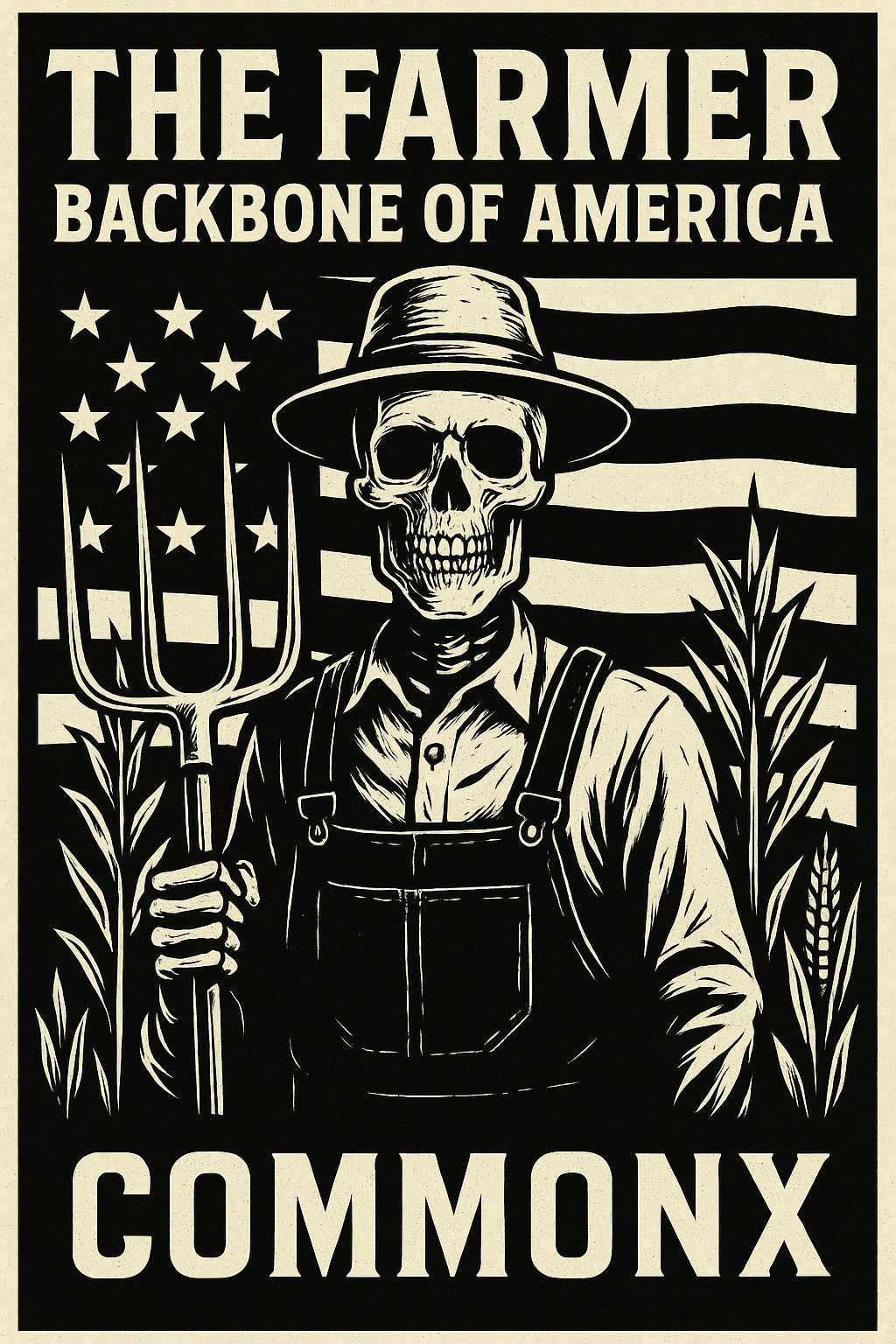
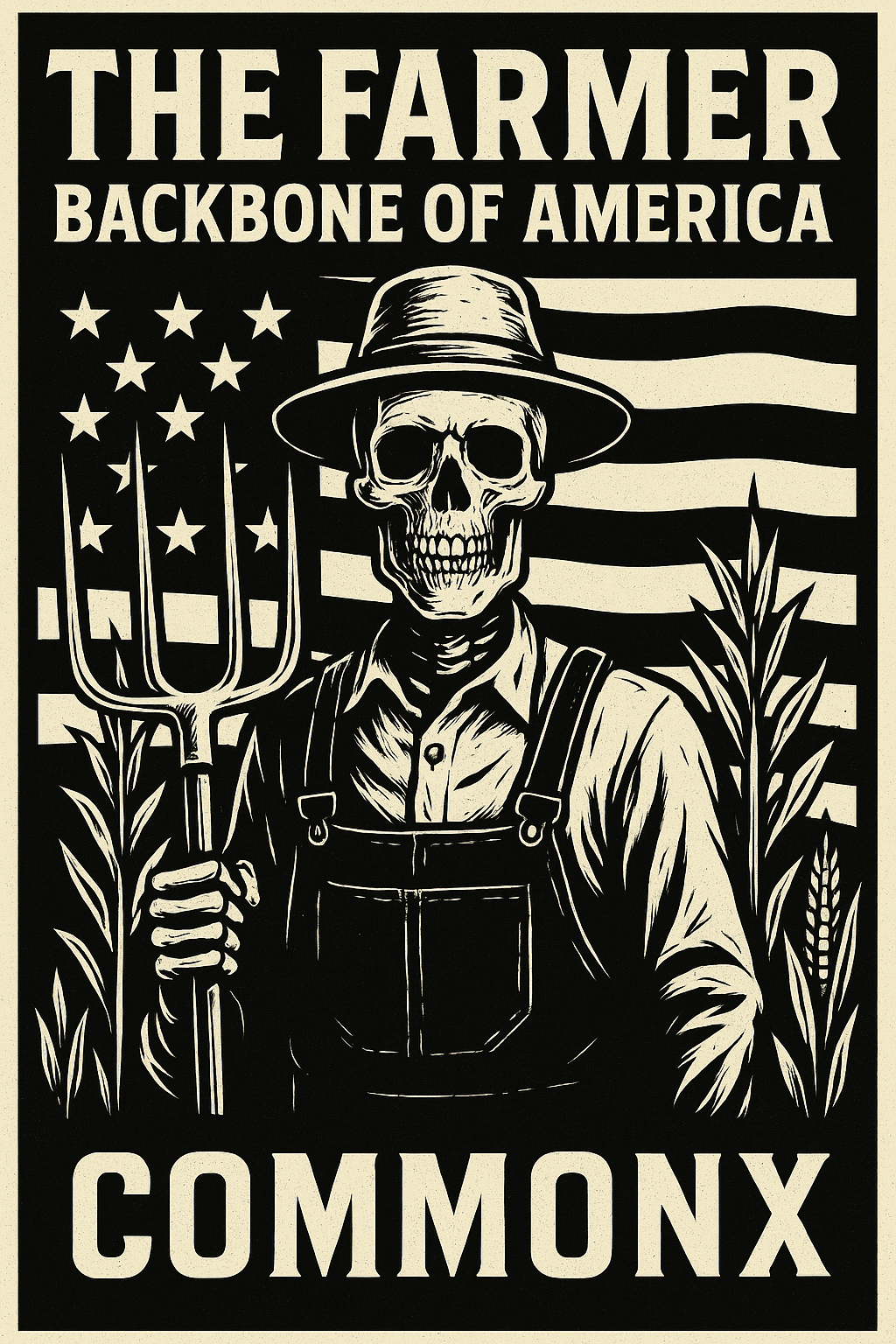
THE FARMER: THE BACKBONE OF AMERICA
America worships crypto, tech, and trends — but none of it matters if nobody grows the food. The farmer is still the true backbone of this country, even if the modern world forgot.
In a country obsessed with digital currency, celebrity drama, AI hype cycles, and the next “passive income blueprint,” the most important person in America still wakes up before sunrise, pulls on a pair of mud-stained boots, and walks into a field most people have never seen with their own eyes. While the rest of us scroll, argue, and chase trends that disappear faster than they appear…
The farmer grows the food we eat. The rancher raises the protein we survive on. The soil grows the crops that keep an entire nation alive. But somewhere along the way, we forgot that.
We started treating the people who feed America like background noise — as if the grocery store magically restocks itself or the steak on our dinner plate appeared out of thin air. City kids grow up thinking vegetables “come from the store,” and half the country is more emotionally invested in Bitcoin charts than harvest seasons.
Meanwhile, out there in the wind and dirt, a farmer is betting his entire livelihood on weather, soil, labor shortages, and prices he doesn’t control. No TikTok star will fix that. No influencer course will replace that. No crypto coin will grow a single ear of corn or a single blade of wheat.
Because you can’t eat Bitcoin, and you can’t feed a nation with hype. America was built on fields, ranches, and hands — real hands — turning the earth. Not hashtags. Not speculation. Not whatever the “next big thing” podcast bros are yelling about.
And the craziest part? Farmers rarely complain. They don’t demand worship. They don’t flood social media. They get up, grind, and do the job because it has to be done — not because it’s glamorous, or viral, or profitable.
They know something the modern world forgot:
Civilization collapses without food. And food doesn’t happen without them. So today’s X-File isn’t a mystery. It’s a reminder. A wake-up call.
A spotlight on the people who deserve more credit than they ever get. The algorithm won’t tell you this. The politicians won’t tell you this. The tech world definitely won’t tell you this. But we will:
The American Farmer is the Backbone of America. Period. And the next time someone tries to tell you the future belongs only to crypto, NFTs, AI, digital economies, or whatever shiny object comes next… Ask them one question:
“Cool. But who’s going to feed you?”
CommonX stands with the people who actually keep the lights on in this country — even when nobody’s paying attention.

The Unwritten Rules of Being a Man in 2025 — According to Gen X
Gen X never needed gurus or influencers to explain manhood—we learned through trial, error, and showing up. In 2025, these unwritten rules matter more than ever.

Ask a Gen X man about “the rules,” and he’ll usually shrug and say something like,
“Rules? We just kinda figured it out as we went.”
But that’s the secret.
Gen X didn’t grow up with YouTube gurus, 19-year-old influencers selling “alpha” courses, or 47 podcasts telling you how to be a man.
We had trial, error, a toolbox, a Walkman, and whatever wisdom we could steal from older cousins or Metallica lyrics.
Now it’s 2025 — and the world is louder, softer, stranger, faster, and more confusing than ever.
So here they are.
Not written in any book.
Not taught in any class.
But lived, practiced, and passed on quietly by the last generation that grew up without an undo button.
1. If you say you’re going to do something, you do it.
Gen X didn’t learn honor from philosophy books — we learned it from watching adults show up five days a week, punch in, punch out, and not complain.
The rule is simple: Your word is your currency. Spend it wisely.
2. You don’t have to be loud to be strong. The strongest men we knew didn’t talk about it.
They fixed your bike. Carried the heavy stuff.
Said “I’m proud of you” once a decade — which meant it was sacred.
Today’s world rewards noise. Gen X rewards consistency.
3. Know how to fix at least three things without Googling it
A clogged drain.
A loose door hinge.
A tire that needs changing.
Not because you need to be “macho,”
but because being useful is the original superpower.
4. Don’t treat women like princesses — treat them like partners.
Gen X men figured something out:
Women don’t need saving.
They need someone who stands beside them, not above them.
Partnership > pedestal.
5. If you mess up, own it. Immediately.
Gen X grew up without social media.
When you screwed up, the whole school heard about it by lunch.
We learned real fast:
Accountability stops the bleeding.
Avoidance makes it a circus.
6. Don’t ghost your friends — check in on them.
Especially the quiet ones.
Especially the strong ones.
Especially the ones who “seem fine.”
We’ve buried enough of our generation to know this rule matters.
7. Find a craft, a workout, or a discipline — and stick with it.
Lifting.
Running.
Welding.
Painting.
Woodworking.
Drums.
Writing.
A man needs a skill that keeps him sane when the world goes sideways.
8. Respect your parents — even if they’re complicated.
Gen X had the most chaotic childhood decade in modern history.
Latchkey kids.
Broken homes.
Divorced parents.
No supervision.
Yet we still understand this truth: Forgiveness isn’t approval — it’s freedom.
9. Be dangerous — but controlled.
A man who can fight but chooses peace?
That’s a man worth listening to.
A man who can’t fight and pretends he can? That’s Twitter.
10. Never stop evolving.
The world changes.
Technology shifts.
Jobs disappear.
Families transform.
But resilience?
That’s Gen X’s final superpower.
We adapt.
We rebuild.
We grow — even at 45, 55, 65.
Because being a Gen X man in 2025 means this:
You don’t have to be perfect.
You just have to show up — stronger, wiser, and more grounded than yesterday.
11. You don’t brag about the struggle — you show the results.
Everybody talks now.
Everybody posts everything.
Gen X?
We work in silence, then walk in with results.
12. You leave things better than you found them.
Your relationships.
Your body.
Your home.
Your career.
This world.
If you’re a real Gen X man, you’re not here to impress — you’re here to contribute.
Final Word
Being a man in 2025 doesn’t mean being perfect or tough or emotionless.
It means being grounded.
It means leading quietly.
It means pushing forward when it sucks.
It means taking care of the ones who depend on you — and letting them take care of you when you’re the one who needs the help.
Gen X didn’t ask to be the bridge generation.
But we became it anyway.
Because real men don’t wait for someone else to go first.
We just step forward.

Why Woodstock 2030 Matters: Giving People a Real Reason to Keep Going
When the world feels heavy, “call a hotline” isn’t enough. Woodstock 2030 is our dare to love out loud—music, community, and belonging for anyone who needs a reason to keep going.

Woodstock 2030 Revival mission image — community gathering and unity event concept. Support Woodstock 2030
By Ian Primmer • CommonX Podcast
There’s a moment in life when the room gets too quiet.
The bills stack up.
The pressure builds.
The world feels heavy in your chest.
And even the strongest among us start to wonder if tomorrow is worth the climb.
Maybe you’ve been there.
Maybe you’re there right now.
If you are — hear me clearly:
You’re not alone.
“Call a hotline” helps some people. It truly does. But for most of us, especially in the Gen X tribe who grew up figuring it out ourselves, that isn’t the whole answer. We don’t just need crisis help — we need connection before the crisis ever hits.
We need community.
We need purpose.
We need a reason to keep going.
That’s why we’re building Woodstock 2030.
It’s not nostalgia. It’s a blueprint for belonging.
This isn’t about tie-dye and old posters.
This is about creating a place — a real, physical, living movement — where people can show up without judgment. A place where music, humanity, and honest conversation collide. Where you can look around and see a crowd of people who understand exactly what you’re carrying.
Woodstock 2030 is our dare to the world:
Show up. Stand together. Love out loud.
It’s music with intention.
Service with sleeves rolled up.
And a thousand small moments that whisper, “You matter. Stay.”
What Woodstock 2030 IS
A movement for connection
A place for veterans, first responders, single parents, neighbors — everyone
A celebration of music, culture, and humanity
A spotlight on mental health without shame
A network of local chapters doing real work
What Woodstock 2030 is NOT
Not a cash grab
Not a selfie moment
Not a one-day trend
Not an empty slogan
Not another place where you feel alone
If we do this right, the real currency is belonging.
Why Gen X needs to lead this movement
We grew up with mixtapes, pay phones, walkmans, and a world where you had to figure out life without Google or tutorials. We didn’t have safe spaces, online communities, or “mental health days.” We had grit, duct tape, and a stubborn refusal to quit.
We also watched some of the greatest voices of our generation fall to silent battles.
Chester Bennington. Chris Cornell. Too many veterans. Too many brothers and sisters.
Our generation knows the cost of silence better than most.
So now, we’re turning that pain into purpose.
What we’re asking from you
This isn’t a corporate movement.
It’s people-powered.
We ask for three things:
1. Add your voice.
Share a story. Share a skill. Share a song. Write in the comments below 😎
Your presence matters more than your perfection.
2. Stand with someone.
Invite a friend who’s been quiet.
Take someone to coffee.
Send the message you’ve been putting off.
3. Build with us.
Help us map local partners — gyms, VFW halls, indie venues, skate shops, churches, record stores.
Let’s make this community real, city by city.
If you’re struggling today
Let me say this without hesitation or fluff:
Don’t throw in the towel. Stay with us.
There’s more for you than you realize.
We are building something you can stand inside of when the wind kicks up.
You matter.
Your voice matters.
Your life matters.
We’re CommonX.
We believe in common ground.
In real talk.
In showing up for one another.
In conversations that save people who never wanted to ask for help.
And with Woodstock 2030, we’re going to prove it —
loud, kind, brave, and together.
— Ian & Jared
Make Woodstock 2030 happen and support today.

Woodstock 2030 Revival t-shirt — official CommonX Podcast apparel.

The Woman Who Speaks Shark: Ocean Ramsey’s Dance With Fear
Beneath the surface of fear lives understanding — and few people embody that truth like Ocean Ramsey. Known around the world as The Shark Whisperer, Ramsey’s quiet grace in the open sea has challenged everything we thought we knew about one of nature’s most misunderstood creatures. In a world driven by noise, she reminds us that calm, connection, and respect still have the power to change hearts — and maybe even save the planet.

Ocean Ramsey swimming alongside a shark in open water — marine conservationist and freediver.
By Ian Primmer – CommonX Podcast
In a world that teaches us to run from what we fear, Ocean Ramsey swims toward it. Not out of recklessness, not for fame, but for understanding. Her quiet grace beneath the waves tells a story older than language itself — one between predator and prey, fear and trust, chaos and calm.
For many of us who grew up in the shadow of Jaws, sharks were the ultimate symbol of danger. They were the monsters that lurked beneath the surface, proof that nature was something to conquer or control. But for Ocean Ramsey, they were never monsters. They were misunderstood.
The Deep Calls Back
Ocean Ramsey is a marine biologist, conservationist, and free diver based in Hawai‘i. She co-founded One Ocean Diving, a research and education program built on the radical idea that the best way to protect sharks is to know them. To look them in the eye. To share their space without dominance or fear.
Her work defies every narrative we were raised with. No cages. No panic. No music to build suspense. Just her heartbeat, her breath, and the slow rhythm of creatures that have ruled the oceans for millions of years. She studies how they communicate — not with words, but with presence. A tilt of the head. A change in direction. The subtle body language of survival.
And somehow, she’s earned their trust.
Listening Instead of Controlling
What makes Ocean’s story resonate so deeply isn’t the danger — it’s the discipline. She doesn’t conquer the ocean; she respects it. There’s something humbling about watching her reach out and rest her hand against the rough skin of a shark larger than her own body, not as an act of dominance, but connection.
She reminds us that power isn’t always about control. Sometimes it’s about stillness — the kind that comes from learning to listen.
There’s a quiet rebellion in that.
Because in a time when so many people are shouting over each other — online, in politics, in everyday life — Ocean Ramsey’s example is a reminder that empathy can silence the noise. That peace isn’t weakness. That courage isn’t about being fearless, but feeling the fear and showing up anyway.
The CommonX Connection
At CommonX, we talk about real people — the doers, the dreamers, the ones who live with both grit and grace. Ocean fits that mold in every way. She’s a modern-day explorer, but also a mirror. Her story asks all of us: What are the sharks in our own lives?
Maybe it’s failure. Maybe it’s judgment. Maybe it’s the fear of speaking truth when the world’s not listening. Whatever it is, Ramsey’s message echoes beyond the water — the monsters aren’t always real. Sometimes they’re just misunderstood.
A Legacy in Motion
Every dive she takes pushes back against the myths that have fueled centuries of misunderstanding. Every photograph, every educational session, every hook she removes from a shark’s mouth rewrites the story.
She’s building a legacy not through self-promotion, but through stewardship — a trait that feels rare in a world obsessed with spectacle.
Ocean Ramsey doesn’t just whisper to sharks. She whispers to all of us — be brave, stay kind, and never let fear decide who you are.
The Final Word
It’s easy to dismiss people like Ocean Ramsey as outliers — the brave few who live extraordinary lives while the rest of us watch from the shore. But maybe what makes her story so powerful is how ordinary her courage really is. It’s the same courage it takes to start something from nothing, to love when it’s hard, to speak when your voice shakes.
That’s what CommonX has always stood for. That’s what Gen-X was built on — showing up, even when the world misunderstands you.
So the next time you see Ocean Ramsey drift into the blue, surrounded by creatures the world told us to fear, remember this:
She’s not just swimming with sharks. She’s teaching the rest of us how to live among them.
Ocean Ramsey doesn’t just swim with sharks—she swims against fear itself. Her courage invites us to look beyond headlines and hashtags, to listen instead of shout, to understand instead of react. It’s the same current that runs through every story we share here at CommonX: the belief that empathy still matters, that understanding is strength, and that connection—whether above the surface or beneath it—is what keeps the world breathing.
Tune in and listen to the CommonX Podcast — Available Everywhere
Click here to see our cause to support Mental Health and suicide prevention.

O’Neill brand logo — surfwear and performance swim gear.

Model wearing Curb Fail Productions / CommonX branded bikini — official CommonX swimwear

Ocean Ramsey resting on the seafloor surrounded by sharks — marine biologist and conservation advocate.

Rudy Sarzo: Bass Lines, Faith, and the Power of Resilience
Few musicians have lived through as many eras of rock and metal as Rudy Sarzo — and fewer still have done it with his humility, faith, and purpose intact. The CommonX Podcast sat down with the legendary bassist of Ozzy Osbourne and Quiet Riot to talk legacy, loss, and the lifelong rhythm of reinvention.

By Ian Primmer | CommonX Podcast
Every generation has a few musicians who aren’t just players — they’re pillars. For Gen X, Rudy Sarzo stands tall among them.
From the roaring stages of Ozzy Osbourne’s early tours to the anthemic grit of Quiet Riot, Rudy’s bass lines shaped the soundtrack of a generation. But what makes his story truly powerful isn’t the fame — it’s his faith, his discipline, and the way he continues to live with intention long after the spotlight fades.
When Rudy joined us on the CommonX Podcast, he didn’t just tell road stories. He shared life lessons. The kind of wisdom you only get after decades of chasing purpose through chaos.
He talked about the late Randy Rhoads — a friend and musical soulmate whose impact still guides his spirit. He opened up about surviving the wildest years of metal and finding peace in balance, humility, and spirituality. You could hear it in his voice: this is a man who knows who he is, and who’s grateful for every note he’s played.
Rudy’s journey mirrors what we stand for here at CommonX — resilience, reflection, and real talk. He’s proof that greatness doesn’t come from ego; it comes from gratitude.
And even now, he’s still pushing boundaries, performing, writing, and giving back to the craft that made him. For Gen Xers who grew up with “Bang Your Head” blaring from their speakers, hearing Rudy talk about purpose hits harder than ever.
Because in the end, the groove doesn’t fade. It evolves. It deepens. It reminds us that every stage — from arenas to quiet reflection — matters.
🎸 #CommonXPodcast #RudySarzo #QuietRiot #OzzyOsbourne #GenX #XFiles

🎬 Why Kevin Smith’s Voice Still Matters — and Always Will
Kevin Smith gave a voice to the dreamers, the outcasts, and the believers who never stopped creating. At CommonX, we reached out to him not as fans, but as fellow storytellers who understand the grind — and who still believe authenticity is the loudest sound in the room.

By Ian Primmer | CommonX Podcast
When you talk about storytelling that truly means something, Kevin Smith’s name always comes up.
He didn’t just make movies — he built conversations. Clerks, Chasing Amy, Dogma, Jay and Silent Bob Reboot, Clerks III — they’re all love letters to the people who exist between dreams and deadlines.
For us at CommonX, that message hits deep.
We built our podcast with the same raw DNA — a mix of coffee, grit, and a promise to stay genuine even when it’s not easy. Every episode is a reflection of the same kind of heart Kevin’s films captured: imperfect, hilarious, and real.
Smith’s influence is still everywhere. He’s podcasting, directing, touring, and connecting — proving that creativity doesn’t retire, it just reinvents itself. He’s the walking embodiment of the Gen-X spirit: resilient, self-made, and never afraid to laugh through the chaos.
We’ve been lucky enough to host incredible guests like Rudy Sarzo (Ozzy Osbourne, Quiet Riot), Chris Ballew (Presidents of the United States of America), and Richard Karn (Home Improvement). Each one reminded us that the best stories come from people who’ve lived, struggled, and kept showing up.
Inviting Kevin Smith to join us isn’t about chasing names — it’s about connecting with someone who helped shape the creative fire we carry. Because whether it’s behind a mic, a camera, or a counter at Quick Stop, that same Gen-X pulse keeps beating through every story worth telling.
Kevin Smith showed a generation that you don’t need permission to make something meaningful. You just need passion, purpose, and the guts to hit “record.”
So yeah, we sent the invite. Because the CommonX mission has always been the same — amplify real voices, champion authentic creators, and remind the world that truth, humor, and heart still matter.
🎙️ The mic’s open, Kevin. Anytime.
🎧 #CommonXPodcast #KevinSmith #GenX #Clerks #Storytelling #XFiles

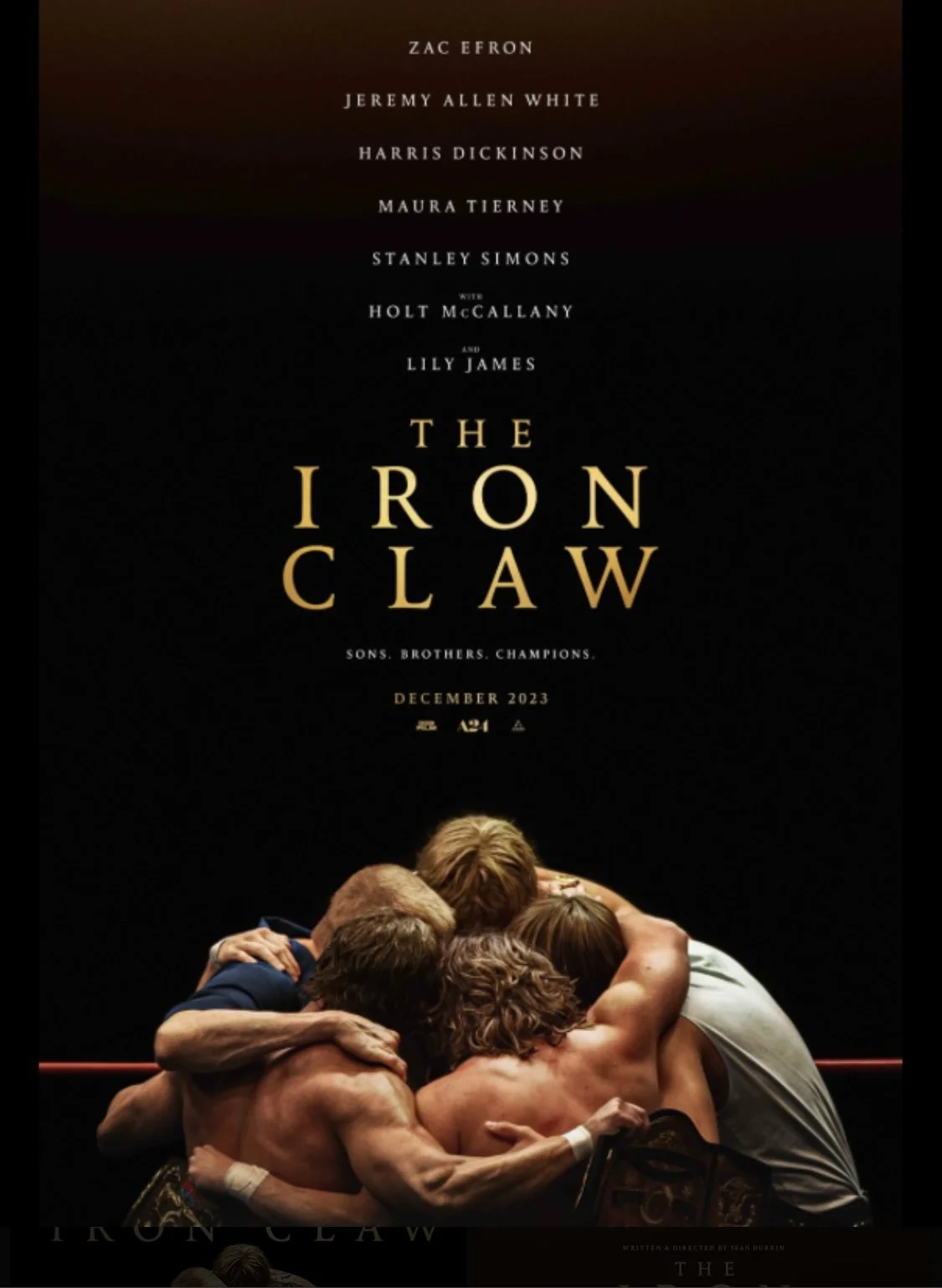
The Iron Claw: When Strength Becomes a Burden
The Iron Claw is more than a wrestling film — it’s a eulogy for the Von Erich family and every generation of men who were told that pain was weakness. CommonX looks at how the real curse wasn’t fate, but the weight of silence.

“The Von Erichs didn’t wrestle opponents. They wrestled fate — and it always fought back harder.”
There’s a moment in The Iron Claw where Zac Efron’s Kevin Von Erich stares into nothing, his face carved by exhaustion and quiet grief. It’s not acting — it’s witnessing. You see a man holding the weight of a bloodline built on strength, success, and tragedy. You see every generation of men who were told to take the hit and keep standing.
A Family That Built an Empire on Pain
Before the movie lights, before the glitz of Texas stadiums, there was Jack Adkisson — known to the world as Fritz Von Erich. He was a powerhouse in wrestling’s golden age and the architect of a dynasty. But what he really built wasn’t a brand; it was a burden.
Fritz raised his sons to be champions, not children. He gave them muscles before mercy, fame before freedom. Wrestling wasn’t a choice — it was the family business, and the business came with blood.
What followed was heartbreak so relentless it became legend.
David Von Erich died mysteriously in Japan.
Mike, devastated by injury and pressure, took his own life.
Chris, frail and broken, followed him.
Kerry, beloved by fans, ended his life in 1993.
Four sons, gone. One father left behind, and one brother — Kevin — forced to carry their ghosts into every sunrise.
The Curse: Not Superstition, but Expectation
People called it the Von Erich curse, like it was some cosmic punishment. But what The Iron Claw shows us is that the real curse wasn’t mystical at all — it was cultural. It was the curse of men who were taught that emotion is weakness, that winning redeems pain, and that silence is strength.
In every flex of Efron’s performance, you can feel it — the strain of holding in tears that never had permission to fall.
“We were raised to be strong,” Kevin says in the film.
“But maybe strong just means you can’t ask for help.”
That line cuts right to the Gen X core — to every man who learned to swallow failure, bury pain, and smile through breakdowns.
The Weight of Myth
Sean Durkin’s direction is merciless and beautiful. He films the Von Erichs like gods and ghosts at the same time — always illuminated, always doomed. The camera lingers on every bruise, every smile hiding exhaustion, every locker-room prayer that feels like a goodbye.
And Holt McCallany as Fritz? Pure power and heartbreak. He isn’t a villain; he’s a product of his own myth — a man who believed that if you pushed hard enough, love could be forged out of discipline.
But the truth The Iron Claw exposes is simple: you can’t out-train pain.
And you can’t out-wrestle grief.
The Last Man Standing
Kevin Von Erich — the real man, not just the character — lives in Hawaii now. Surrounded by his children and grandchildren, he’s found peace in nature, love, and distance from the ring. But he’ll tell you himself — peace wasn’t free.
He watched every brother fall, watched the empire burn down, and still carried the name. The movie ends not with victory, but survival. That’s what makes it powerful — it’s not about champions. It’s about endurance.
“Survivors don’t win,” Kevin once said in an interview. “They just keep going.”
That’s the gospel of The Iron Claw. The Von Erichs gave everything — their bodies, their youth, their sanity — to an industry that cheered while they broke.
Why It Hits So Hard for Our Generation
For Gen X, The Iron Claw feels like looking in a mirror that doesn’t lie. We grew up in a world that worshipped toughness — latchkey kids turned into relentless adults, hustling, grinding, hiding pain under sarcasm and work ethic.
The Von Erich story asks the question most of us avoid: What if strength is the very thing that’s killing us?
That’s not weakness — that’s revelation. It’s the moment you realize that vulnerability isn’t surrender. It’s healing.
🎙️The CommonX Takeaway
The legacy of the Von Erichs isn’t about fame or failure — it’s about the cost of inherited pain. And The Iron Claw doesn’t just resurrect their story; it redeems it. It shows what happens when a family tries to build forever out of flesh and willpower. It shows that love without permission to be human turns into tragedy.
And most of all, it reminds us that silence — the thing we were taught to call strength — can destroy everything we love if we let it. “Maybe the Von Erichs weren’t cursed,” the article closes.
“Maybe they were just the first to show us what the curse really looks like.”

Two Voices, One Frequency: How CommonX Reached 25 Countries
From a small town in Washington to speakers and screens in 25 countries, the CommonX Podcast with Jared & Ian is proving that real talk, laughter, and Gen-X honesty travel farther than anyone expected.
From a small town in Washington to speakers and screens in 25 countries, the CommonX Podcast with Jared & Ian is proving that real talk, laughter, and Gen-X honesty travel farther than anyone expected.
When we started CommonX, the dream was simple — to talk about the world the way we saw it. Two Gen-X friends from Deer Park, Washington, microphones in hand, hoping maybe a few people would listen.
Now, that little idea has crossed oceans. Listeners are tuning in from the United States, Canada, Romania, Peru, France, Turkey, Kenya, Colombia, China, South Korea, Guyana, Venezuela, Bahrain, Argentina, Saudi Arabia, Bangladesh, South Africa, Australia, Brazil, the Philippines, Russia, the United Kingdom, Spain, and India.
That’s twenty-five countries. That’s a lot of shared stories, laughs, and moments that connect us all.
It turns out, no matter where you live, the feeling of being part of Generation X — that mix of independence, skepticism, humor, and heart — hits home everywhere.
So here’s to the listeners. To everyone out there on night shifts, in traffic, on treadmills, or sitting in silence with earbuds in — thank you for letting us be part of your world.
We may be two middle-aged guys from a small town, but together with all of you, we’re building something global, one honest conversation at a time.

Humans, AI, and the Art of Trust -by CommonX Podcast
After an email from an AI publicist sparked reflection, the CommonX team dives deep into the question: can machines build real trust, or does that still belong to us?
There’s something wild about getting an email from an AI named Cindy who wants to book guests for your show. On the surface, it feels efficient — a futuristic assistant helping another creator connect the dots. But underneath, it begs the question:
what happens when human connection becomes something we outsource?
Technology’s always been our dance partner. We grew up on cassette decks, dial-up modems, and the first whispers of the internet. Now, AI writes, speaks, recommends — even pretends to feel. It’s smart, no doubt. But it’s also learning how to sound human. That’s both incredible and unnerving. Because in a world full of perfect algorithms, authenticity becomes the rarest currency of all.
When that AI (Cindy) emailed us, it wasn’t spam — it was strategy. Someone out there trusted a machine to build trust with us. And that’s the twist. It wasn’t about the code — it was about the creator behind it, hoping for connection and that’s where CommonX lives — in that gap between human stories and digital noise. Between the hands that build and the ones that feel.
We talk with people who’ve lived through both sides — analog souls in a digital age — and every time, we come back to this truth: trust isn’t downloaded. It’s earned.
🎙️ Real Talk, Real Connection
AI can write, suggest, mimic — but it can’t mean. Meaning comes from being fallible, passionate, even wrong sometimes. That’s why real conversation — the kind that happens on a mic, between people — still matters. At CommonX, we’re not anti-tech. We’re just pro-human. Because no matter how advanced AI gets, it can’t replace intent.
Trust isn’t in the lines of code. It’s in the moments between them. It’s in listening — really listening — even when someone’s not sure how to say it. It’s in believing that we can use technology to amplify our humanity, not erase it. That’s the art. That’s the future we choose.
CommonX Podcast — Real Talk. Common Ground.
Article written by Ian Primmer, Co-host CommonX