
WHY EVERYTHING FEELS FAKE NOW (AND WHAT TO DO ABOUT IT)
If the world feels staged, scripted, and hollow lately, you’re not imagining it. Here’s why modern life feels so fake — and what you can actually do to bring real moments, real connection, and real meaning back into your daily life.

You don’t have to be a philosopher, a scientist, or a spiritual guru to notice it — something about the world feels… off lately.
People feel off.
Conversations feel off.
Work feels off.
Relationships feel off.
The internet feels very off.
Everything feels a little staged, scripted, filtered, packaged, polished, and hollow. It’s not that life is meaningless — it’s that the meaning has been watered down until it tastes like room-temperature tap water.
If you’ve been feeling it too, you’re not crazy.
You’re not alone.
You’re just awake.
So here’s the breakdown:
Why everything feels fake now — and what the hell we can actually do about it.
1. We replaced real experiences with “content opportunities.”
People don’t just live their lives anymore — they curate them. Vacations aren’t vacations. They’re photo shoots.
Outings with friends turn into staged clips. Anniversaries become slideshow captions. Meals get treated like museum exhibits. We’re not documenting life. We’re performing it. Real moments feel rare because we’re too busy trying to capture them instead of being in them.
2. Everyone is branding themselves 24/7.
We used to have personalities. Now we have personal brands.
People change how they talk, dress, and act based on how it will look online instead of how it feels inside. You aren’t talking to a person anymore — you’re talking to their PR department. And when everyone is trying to be a “version” of themselves, you stop seeing the real thing.
3. We’re drowning in ads disguised as authenticity.
The influencer who “just loves this product”? Paid.
The celebrity who “randomly discovered this brand”? Paid. The heartfelt post with hashtags at the bottom? Paid. We’re stuck in a world where the line between genuine and sponsored is basically invisible. When everything becomes marketing, nothing feels real.
4. Technology outran humanity.
We built:
AI faces
AI voices
AI art
AI relationships
AI conversations
AI EVERYTHING
But we never stopped to ask how much artificial life a real human psyche can tolerate before it cracks. We live in the most “connected” era in human history — and yet nothing feels personal. Screens simulate connection, but they don’t deliver it.
5. Outrage is the new entertainment.
Everyone is performing emotions now. Anger is exaggerated. Sadness is monetized. Happiness is faked. Grief is staged. Opinions are calculated. Everything is turned up to 11 because subtlety doesn’t get clicks. And when emotions become currency, the real ones go broke.
6. Algorithms decide what you see — not your own eyes.
Your “feed” is not a window. It’s a mirror. It only reflects what you’ve already clicked on, liked, watched, or paused on for a second too long. You’re not seeing the world. You’re seeing your personalized simulation of it. Everything feels fake because everything is tailored — nothing is universal anymore.
7. Everyone is terrified of having an unfiltered opinion.
People walk on eggshells. Everyone’s afraid to offend someone, somewhere.
So instead of speaking from the heart, we speak from a script. We don’t talk to understand — we talk to avoid trouble. When people are scared to be real, everything around them becomes fake.
8. Modern life hides all the real struggle behind closed doors.
Nobody posts:
the breakdown
the bills
the sleepless nights
the fear
the arguments
the loneliness
the insecurity
the “I don’t know what I’m doing” moments
They post the mask. They post the highlight reel. Meanwhile everyone is quietly falling apart behind the scenes thinking they’re the only one. You’re not. Everyone feels this.
So… what do we do about it?
Luckily, the solution isn’t complicated.
It’s not easy,
but it’s simple.
Here’s how you start feeling real again:
1. Talk to real humans — in person.
The quickest way to kill the “fake world” feeling is to sit down with someone face-to-face. Voices. Bodies. Eye contact. Tone. Real reactions. It resets your brain like a hard reboot.
2. Do one thing every day that has zero content value.
Literally:
a walk without posting
a meal without photographing
a hobby nobody knows about
a workout without a selfie
a moment that isn’t shared
Real life grows in private.
3. Limit your scrolling — increase your doing.
Scrolling makes everything feel fake.
Action makes everything feel real.
Move your body.
Touch grass.
Build something.
Learn something.
Clean something.
Create something.
Reality rewards movement.
4. Say how you actually feel.
Even once a day. Give your real opinion. Ask the real question. Speak the real truth. Authenticity is rare now — that’s why it hits so hard.
5. Rediscover the boring stuff.
Real life is:
morning routines
chores
small talk
fixing things
cooking
paying bills
lifting weights
being tired
laughing with friends
showing up
It’s not glamorous.
It’s real.
6. Protect a part of your life from the internet.
Not everything is meant for display. Some love, some struggle, some joy is meant to be lived — not posted.
7. Choose depth over dopamine.
Deep conversations. Deep friendships. Deep work. Deep experiences. The world feels fake because everyone is addicted to surface-level stimulation. Be the opposite.
FINAL WORD
Everything feels fake now… because we’re living too much through screens, simulations, branding, and noise.
But the real world is STILL THERE. It didn’t disappear — it just got buried. You just have to go dig it back up. The moment you do? Life hits different again. And you remember what “real” actually feels like.

Nobody Knows How to Disagree Anymore — A Field Guide for 2025
We used to know how to disagree without blowing up friendships, blocking family members, or turning every conversation into a battlefield. In 2025, disagreement feels impossible — here’s why, and how to fix it.
We used to know how to disagree. Not perfectly. Not gracefully. But at least we could sit at the same table, talk about something uncomfortable, and walk away without blocking each other like bitter exes. Now?
Modern disagreement feels like stepping into a minefield wearing gasoline underwear. Somewhere along the way, society didn’t just lose the art of debate — we lost the ability to even stand in the same room as someone who thinks differently. Welcome to 2025. Here’s your field guide.
1. People don’t listen anymore — they reload.
You can see it in their eyes. As soon as you start talking, they’re not absorbing, analyzing, or trying to understand. They’re just waiting for you to stop so they can fire back. This isn’t conversation. This is intellectual laser tag. Nobody wins. Everybody walks away annoyed.
2. Everyone thinks they’re the main character now.
When you believe you’re the star of reality, every disagreement becomes a personal attack on your identity.
It’s no longer: “I disagree with your point.”
It’s: “You’re attacking my entire worldview, my childhood, my ancestors, my aura, my chakras, my dog, and my great-grandpa’s military service.” Relax. It’s not that deep. Sometimes people just see things differently.
3. The loudest “opinions” often come from people who haven’t lived anything.
The internet gave a megaphone to people who used to only talk big in the break room. Now they preach like philosophers with the life experience of a warm soda can. Disagreement gets messy when half the room learned everything from:
30-second videos
Out-of-context clips
Reaction channels
Influencers who haven’t been outside since 2019
You can’t argue with someone who doesn’t live in reality anymore.
4. People forgot you can disagree and still respect someone.
This is the missing skill. You don’t have to align on every worldview to sit at a table, have a drink, or split a pizza with someone. Your best friends shouldn’t be clones. Disagreement is not betrayal. It’s not aggression. It’s conversation.
5. Everything is labeled “hate” now — even simple opinions.
Say you don’t like pineapple on pizza?
You’re a food bigot.
Say you prefer dogs over cats? You’re anti-feline and should be deplatformed.
Say you don’t enjoy a celebrity’s work? Congrats, you’re “spreading negativity.”
We’ve stretched the definition of “hate” so far that the word has lost all meaning. Not everything you disagree with is an attack. Not everything you feel uncomfortable hearing is “harm. Grow thicker skin. We all survived dial-up internet — we can survive a conversation.
6. Disagreement used to be a path to understanding — now it’s entertainment.
Debate has been replaced by:
dunk videos
stitch reactions
“ratioing”
sarcastic memes
performative outrage
People don’t want resolution. They want likes. You can’t solve anything when the crowd wants blood, not clarity.
7. We mistake feelings for facts — and treat both as sacred.
Facts used to matter. Feelings used to matter. Now we confuse the two and protect both like priceless artifacts. Feelings are valid. Facts are useful. But they are not the same thing. You can disagree with someone without invalidating their humanity.
8. Everyone lives in different worlds now — customized by algorithms.
Back in the day, everyone watched the same news, same shows, same cultural moments.
Now?
Your feed is tailored to every soft preference you’ve ever made. We don’t disagree because we’re divided. We disagree because we live in entirely separate universes without realizing it. How do you debate someone who literally doesn’t see what you see?
9. Nobody teaches conflict management anymore.
Schools teach:
advanced calculus
gender bread diagrams
quadratic formulas
But not:
how to talk respectfully
how to set boundaries
how to disagree without exploding
how to end a conversation with dignity
how to handle opposing views
We’re emotionally undertrained.
10. The cure for all of this is stupidly simple.
To fix disagreement in 2025, we don’t need:
committees
task forces
new laws
social media guidelines
a national rebranding campaign
We need something older than all of that:
Actual conversation. In person. With people who don’t think exactly like you. Sit down. Ask questions. Listen to understand. Speak to communicate — not win. You don’t have to avoid conflict. You just have to stop treating it like war.
FINAL WORD
The world isn’t falling apart because we disagree. It’s falling apart because we don’t know how to do it anymore. Disagreement is normal. Healthy. Necessary.
It’s how iron sharpens iron, how ideas evolve, how culture stays balanced. If everyone thought exactly the same, life would be creepy, boring, and probably illegal. So be the person who can disagree with grace, humor, curiosity, and strength. In 2025, that makes you rare. Maybe even heroic.


The Unwritten Rules of Being a Man in 2025 — According to Gen X
Gen X never needed gurus or influencers to explain manhood—we learned through trial, error, and showing up. In 2025, these unwritten rules matter more than ever.

Ask a Gen X man about “the rules,” and he’ll usually shrug and say something like,
“Rules? We just kinda figured it out as we went.”
But that’s the secret.
Gen X didn’t grow up with YouTube gurus, 19-year-old influencers selling “alpha” courses, or 47 podcasts telling you how to be a man.
We had trial, error, a toolbox, a Walkman, and whatever wisdom we could steal from older cousins or Metallica lyrics.
Now it’s 2025 — and the world is louder, softer, stranger, faster, and more confusing than ever.
So here they are.
Not written in any book.
Not taught in any class.
But lived, practiced, and passed on quietly by the last generation that grew up without an undo button.
1. If you say you’re going to do something, you do it.
Gen X didn’t learn honor from philosophy books — we learned it from watching adults show up five days a week, punch in, punch out, and not complain.
The rule is simple: Your word is your currency. Spend it wisely.
2. You don’t have to be loud to be strong. The strongest men we knew didn’t talk about it.
They fixed your bike. Carried the heavy stuff.
Said “I’m proud of you” once a decade — which meant it was sacred.
Today’s world rewards noise. Gen X rewards consistency.
3. Know how to fix at least three things without Googling it
A clogged drain.
A loose door hinge.
A tire that needs changing.
Not because you need to be “macho,”
but because being useful is the original superpower.
4. Don’t treat women like princesses — treat them like partners.
Gen X men figured something out:
Women don’t need saving.
They need someone who stands beside them, not above them.
Partnership > pedestal.
5. If you mess up, own it. Immediately.
Gen X grew up without social media.
When you screwed up, the whole school heard about it by lunch.
We learned real fast:
Accountability stops the bleeding.
Avoidance makes it a circus.
6. Don’t ghost your friends — check in on them.
Especially the quiet ones.
Especially the strong ones.
Especially the ones who “seem fine.”
We’ve buried enough of our generation to know this rule matters.
7. Find a craft, a workout, or a discipline — and stick with it.
Lifting.
Running.
Welding.
Painting.
Woodworking.
Drums.
Writing.
A man needs a skill that keeps him sane when the world goes sideways.
8. Respect your parents — even if they’re complicated.
Gen X had the most chaotic childhood decade in modern history.
Latchkey kids.
Broken homes.
Divorced parents.
No supervision.
Yet we still understand this truth: Forgiveness isn’t approval — it’s freedom.
9. Be dangerous — but controlled.
A man who can fight but chooses peace?
That’s a man worth listening to.
A man who can’t fight and pretends he can? That’s Twitter.
10. Never stop evolving.
The world changes.
Technology shifts.
Jobs disappear.
Families transform.
But resilience?
That’s Gen X’s final superpower.
We adapt.
We rebuild.
We grow — even at 45, 55, 65.
Because being a Gen X man in 2025 means this:
You don’t have to be perfect.
You just have to show up — stronger, wiser, and more grounded than yesterday.
11. You don’t brag about the struggle — you show the results.
Everybody talks now.
Everybody posts everything.
Gen X?
We work in silence, then walk in with results.
12. You leave things better than you found them.
Your relationships.
Your body.
Your home.
Your career.
This world.
If you’re a real Gen X man, you’re not here to impress — you’re here to contribute.
Final Word
Being a man in 2025 doesn’t mean being perfect or tough or emotionless.
It means being grounded.
It means leading quietly.
It means pushing forward when it sucks.
It means taking care of the ones who depend on you — and letting them take care of you when you’re the one who needs the help.
Gen X didn’t ask to be the bridge generation.
But we became it anyway.
Because real men don’t wait for someone else to go first.
We just step forward.
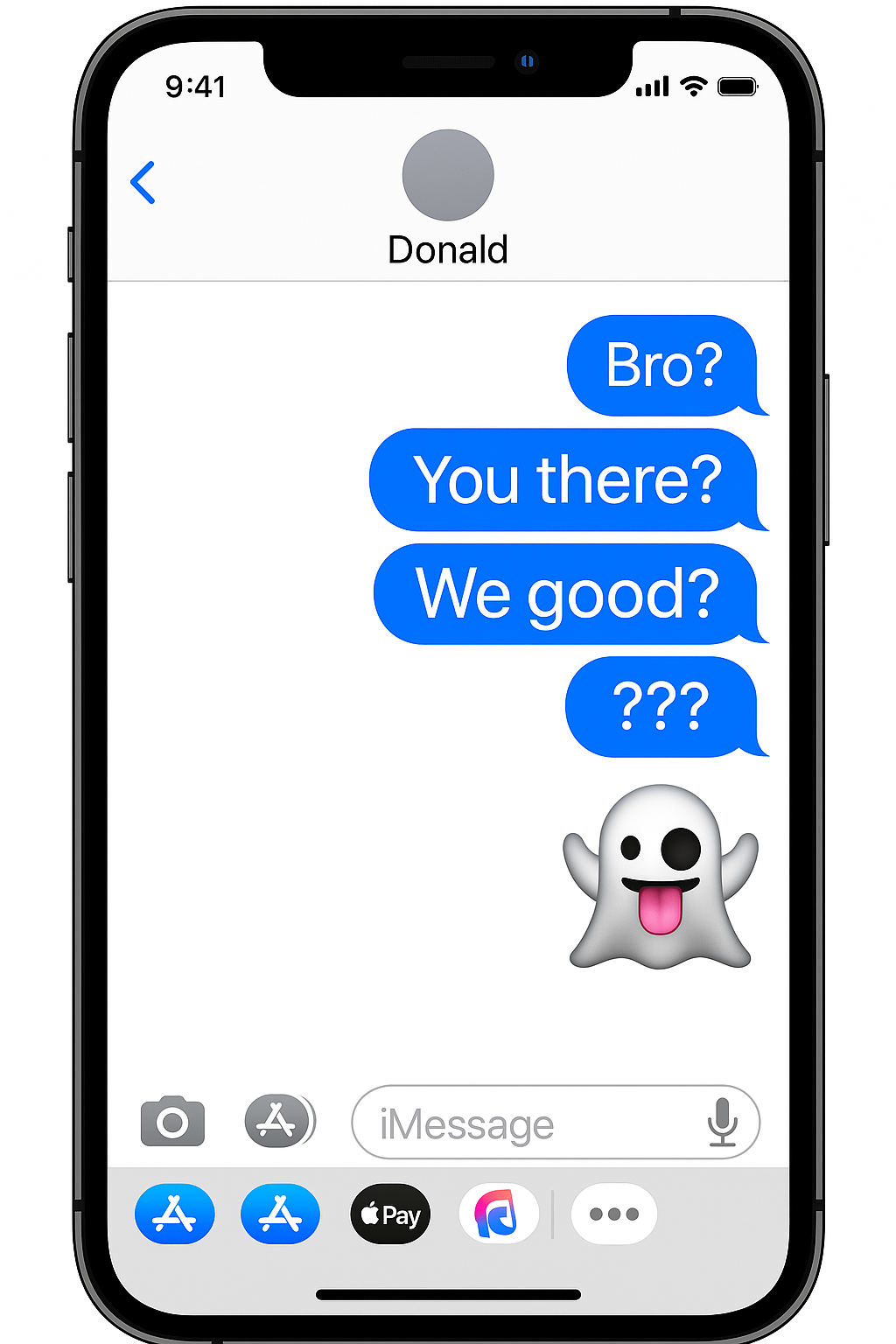
How to Ghost Trump Without Upsetting Your Friends
Ever defend a celebrity way too hard—only to wake up one day and realize you need to quietly step back before your friends roast you alive? This isn’t about politics. It’s about Gen-X survival. From R. Kelly playlists to P. Diddy gym tracks to Kanye confusion, we’ve ALL lived through the Celebrity Shame Spiral. Here’s how to ghost Trump (or any famous meltdown) without blowing up your friend group—or your sanity.
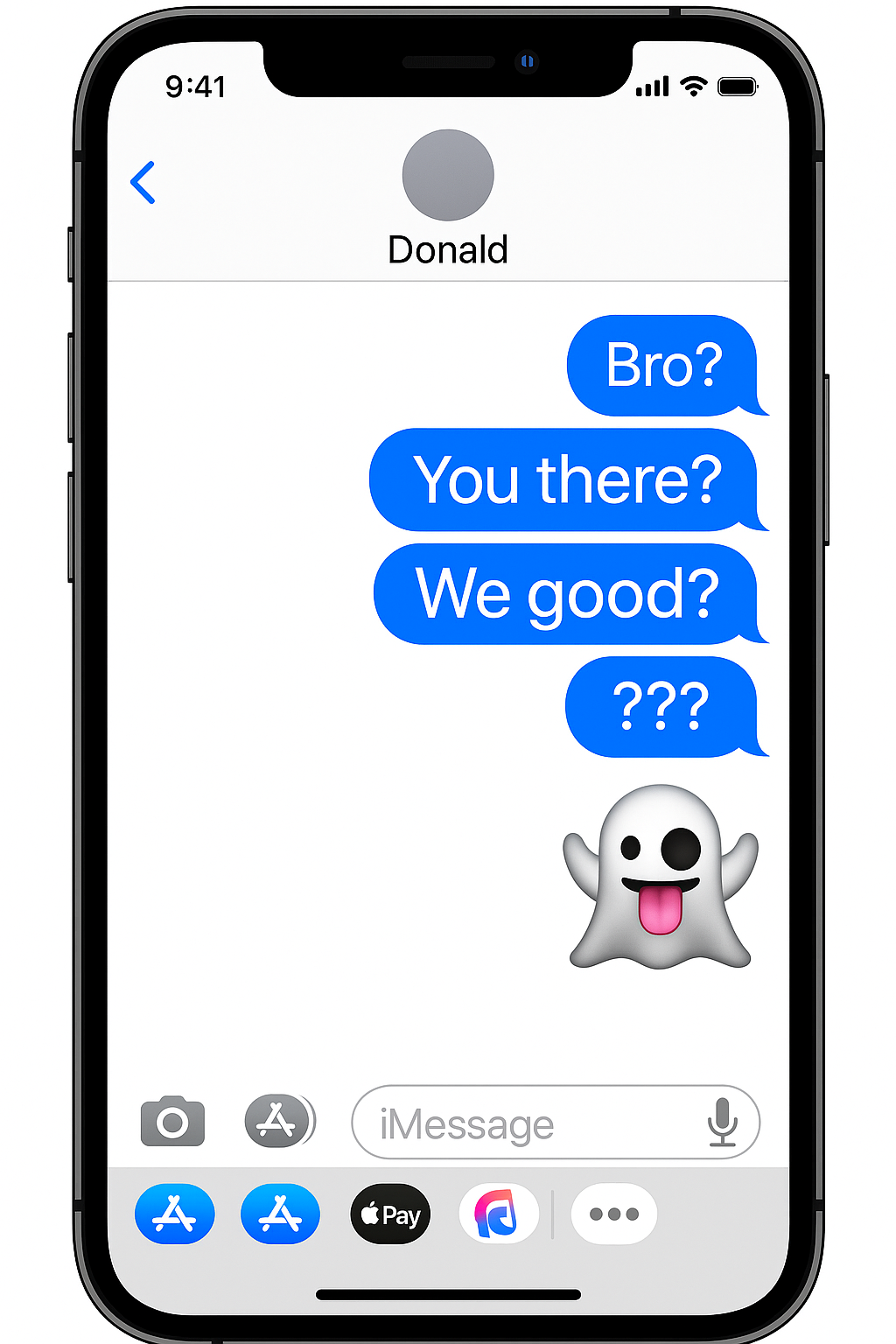
(A Gen-X Survival Guide to Celebrity Turbulence)
By CommonX Podcast
Every Gen-Xer knows the feeling:
You’ve backed a celebrity for YEARS.
You’ve argued at barbecues.
You’ve posted the memes.
You may or may not have owned a questionable T-shirt.
And then one morning you wake up…and the news is like:
“Yeahhhh… THIS dude is in trouble.”
Suddenly you’re like:
“Oh. Cool. Guess I’m gonna… quietly… stop bringing him up.”
And here’s the truth:
This isn’t about politics.
This isn’t about taking sides.
This is about friend dynamics and avoiding looking like the guy who still proudly bumps R. Kelly in a public parking lot.
Because every generation has lived through The Celebrity Shame Spiral — and Gen-X might have the best examples in history. Let’s break them down…
1. The R. Kelly Rule
Every Gen-X’er knows EXACTLY where they were the moment it became socially illegal to play “Ignition (Remix)” at a cookout.
Do we all secretly agree the song is catchy?
Sure.
Will anyone admit it in a group setting?
Not unless they want to get side-eyed by the entire tri-county area.
The R. Kelly Rule is simple:
You can still remember the good times — you just don’t blast the playlist around your buddies.
This rule applies to EVERY celebrity meltdown, including…
2. The P. Diddy Clause
There was a time when yelling “TAKE THAT! TAKE THAT!” in the gym was completely normal behavior. Now?
You whisper it like it’s Voldemort. Diddy falls into the category of:
“I’m not throwing out the CDs… but I’m also not making eye contact with them.”
Every Gen-X playlist has a couple of Diddy tracks floating around like radioactive material — you just swim around them.
3. The Kanye Conundrum
Let’s be brutally honest: Half of us still love the music.
Half of us don’t want to get caught loving the music. And ALL of us are confused.
Kanye taught us a critical lesson:
You can be a genius AND extremely exhausting at the same time.
Ghosting Kanye in public while still keeping “Stronger” in your private gym playlist is now a universally accepted lifestyle.
4. The O.J. Effect
This is the final boss of awkward. You didn’t stop being a fan of O.J.’s athletic ability. You just stopped bringing him up.
Forever.
Always.
He is the permanent archive folder of American culture. This one trains you for the big leagues…
5. The Trump Twist
Now the whole point of this article…
You’ve got a crew of hardcore Trump bros.
You’ve laughed, argued, memed, and debated.
You’ve defended the guy harder than you defended your first car.
Then suddenly:
Court cases. Headlines. Weird interviews. Epstein lists.
Basically the cultural equivalent of watching your favorite band break up during a live show. So you’re stuck wondering:
“How do I pump the brakes without causing a friend-group meltdown?”
Here’s how…
How to Ghost Trump (Gently) Without Getting Your Friends All Fired Up
A) Switch the conversation to something universally masculine
Trucks
Hunting
Dogs
Boats
“That one time someone almost died doing something stupid”
Men will IMMEDIATELY lock into these topics like ducks to breadcrumbs.
B) Use the Magic Gen-X Phrase:
“Wild times, huh?”
This phrase says nothing, implies nothing, reveals nothing — but makes everyone feel deeply understood.
C) Laugh instead of defend
If someone brings up the headlines, just chuckle and say:
“Bro, this whole world is crazy anymore.”
Boom. You’re Switzerland.
D) Keep the memes, hide the yard signs
The digital stuff lives forever. The physical stuff gets quietly… relocated to the garage. Not thrown away. Just… winter storage.
E) Claim you’re on a “news detox”
In 2025, a “detox” is the ultimate UNO reverse card.
Nobody argues with it. Nobody questions it. Most of your friends will say:
“Yeah bro, I should do that too.”
Detoxes are the new Get Out of Jail Free cards.
F) Let THEM speak first
This is the #1 trick. If someone asks your opinion, respond with:
“I dunno man, what do YOU think of all this?”
Then just nod occasionally. Men love hearing themselves talk politics more than they love being right. You walk away untouched.
G) The CommonX Wisdom: Real Friends Don’t Care
Here’s the beautiful truth:
Your real friends don’t care if you want to take a break from the chaos. You’re Gen-X. You’ve survived:
Two wars
Five recessions
Grunge
Crystal Pepsi
Blockbuster late fees
Limp Bizkit
Y2K
Dial-up
MySpace
And now… whatever this era is
Friendships like yours don’t fall apart over political vibes. They last because of:
Loyalty
Humor
Shared trauma
And the mutual understanding that we’re all just trying to stay sane in a world that has lost its damn mind.
Final Thought
You don’t have to renounce, unfollow, switch teams, or fight anybody. Sometimes you just need a quiet season. And that’s what ghosting is:
Not abandoning someone — just stepping back until the noise fades.
Gen-X mastered the art of the Irish Goodbye. This is just the political version.

The Art of Absurd Violence
It’s stupid. It’s savage. It’s everything we can’t look away from.
In a world obsessed with safety and filters, slap fighting reminds us what raw, unfiltered humanity looks like — pain, pride, and the pursuit of dominance, all in one perfect slow-motion hit.

(An X-Files Feature — CommonX Podcast)
By Ian Primmer | CommonX Podcast
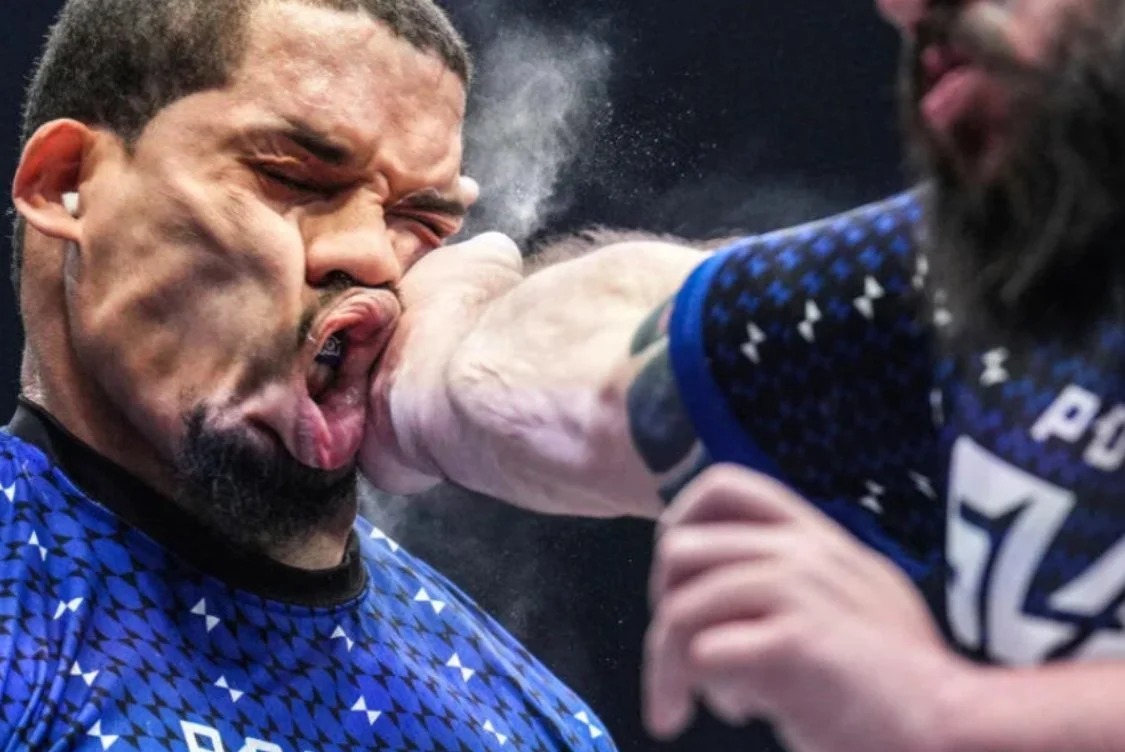
There’s something hypnotic about it. Two competitors, standing inches apart, waiting for impact. The air is still. The crowd leans in. Then — crack. A hand snaps across a face with the sound of a gunshot, chalk dust hanging in the air like smoke.
It’s primal. It’s ridiculous. It’s the most honest sport no one asked for.
Slap fighting — part gladiator spectacle, part internet meme — has become one of the most viral events of the modern era. Born out of bars, backyards, and bad ideas, it’s now televised, sponsored, and streamed to millions. The appeal? Simple: it’s chaos you can measure.
There are no judges arguing over points, no politics, no footwork. Just grit, endurance, and pain tolerance. Whoever stands last, wins. GenX gets it.
We were raised on backyard wrestling, hockey fights, and that stubborn streak of “shake it off.” Slap fights tap into that old-school toughness — the kind that doesn’t hide behind hashtags or filters. But there’s something darker too: maybe we watch because we miss authenticity.
When everything’s staged and sanitized, pain looks real. It’s the absurd poetry of impact. A sport that walks the line between stupidity and art. Between danger and discipline. Between entertainment and existential question:
“How far will someone go just to prove they’re tougher?”
So yeah — it’s dumb. But it’s human.
And maybe that’s why we can’t stop watching.

Life on the Road: Finding Balance Between Motion and Meaning
The road doesn’t wait for anyone. It hums, it breathes, and it teaches — one faded mile marker at a time. Somewhere between the hotel treadmills and neon gas station lights, I realized balance isn’t something you find; it’s something you build in motion.

(An X-Files Original — CommonX Podcast)
By Ian Primmer | CommonX Podcast
The road has a rhythm all its own. It doesn’t care who you are or what you’re chasing — it just rolls on, mile after mile, testing your patience, your habits, and your resolve. Out here, comfort isn’t an option. You learn to live out of a duffel bag, fuel up on protein shakes, and find meaning in the miles that nobody else sees.
For some, the road is an escape. For others, it’s survival. For me, it’s both.
Every late-night gym session, every walk through a strange city, every quiet meal in a parking lot is a reminder that balance doesn’t come from rest — it comes from showing up when nobody’s watching.
The people who live life on the road — truck drivers, touring musicians, dreamers chasing paychecks across state lines — we share something deeper than wanderlust. It’s that quiet grind. That inner voice that says, keep moving.
There’s peace in the repetition. The hum of the tires, the white noise of the highway, the glow of a hotel treadmill’s digital readout — they become meditations. You start to measure progress not in distance, but in discipline.
When you live on the road, you realize that freedom and structure aren’t opposites — they’re partners.
The road strips you down to what matters. It makes you honest. And somewhere between exhaustion and purpose, you find yourself again.

The Lottery Delusion: Why We Love to Lose
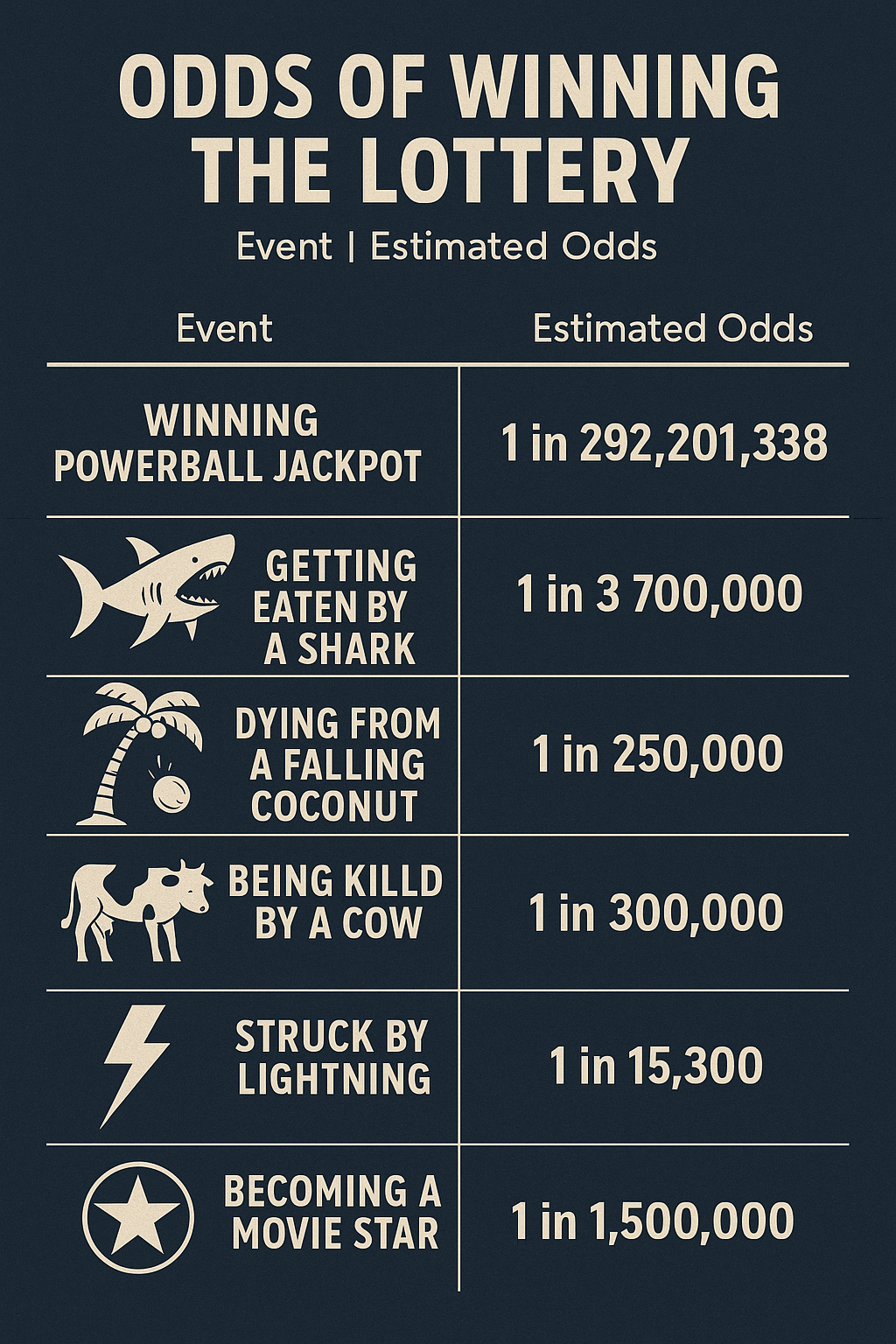
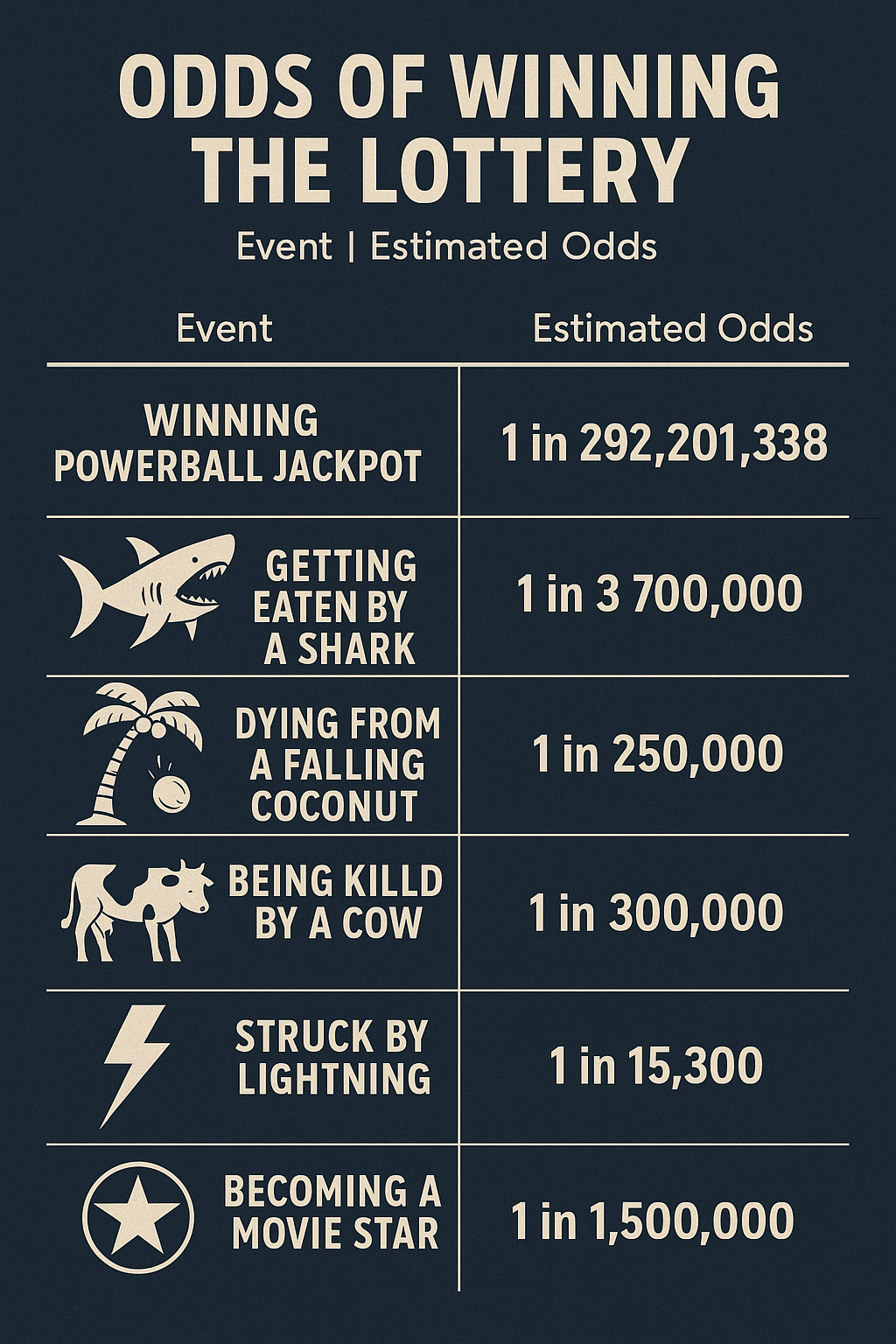
Waiting in line at the gas station, I watched a man clutch his Powerball tickets like life support. The truth? You’re more likely to die from a falling coconut than win the lottery.
By Ian Primmer CommonX | The X-Files Blog | November 12, 2025
I was standing in line at the gas station, watching a guy clutch his Powerball tickets like they were life support. His hands were shaking, eyes locked on the glowing jackpot sign — $512 million. Behind it, the Mega Millions ticker blinked even louder: $965 million.
The man didn’t buy gas. Didn’t buy a snack. Just the tickets. And in that moment, I couldn’t help but think: we’re all a little addicted to the dream.
The $2 Fantasy
Every ticket is a tiny prayer — a way to imagine a version of yourself that finally caught a break. For two bucks, you buy the right to daydream: no boss, no bills, no alarm clocks. But here’s the math that shatters that illusion:
Powerball jackpot odds: 1 in 292,201,338
Mega Millions jackpot odds: 1 in 302,575,350
Expected value of a $2 ticket: roughly $0.82
That’s right — even if you won, the ticket was worth less than a cup of gas station coffee.
☠️ Reality Check: You’re More Likely To…
You’re 79× more likely to be eaten by a shark.
1,169× more likely to die from a falling coconut.
974× more likely to be killed by a cow.
And 19,000× more likely to be struck by lightning.
The truth? You’re more likely to become a movie star than to hit the Powerball jackpot. Just sayin…
The Psychology of Losing on Purpose
So why do we play? Because humans crave control — even fake control. Picking “lucky numbers” gives the illusion that fate can be hacked. The lottery isn’t about money — it’s about hope marketing, sold to people who’ve run out of better bets. And the house knows it. States make billions off tickets — and they call it “education funding.” It’s a slick way of saying the poor fund the schools so the rich don’t have to.
The Real Jackpot
If you’ve ever said, “I’ll be happy when…” — you’ve already bought the mental version of a lottery ticket.
The truth is, you don’t need to hit the jackpot to win. You just need to wake up, build your own luck, and stack your own small wins every day. Because out here in the real world, the odds don’t matter — the effort does.

GENX ICONS UNDER SIEGE FROM CANCEL CULTURE
The artists who raised GenX with grit, guitars, and unapologetic truth are now one old quote away from digital execution. What happened to the world that once celebrated rebellion? And why are our icons suddenly under siege from the same culture they helped create?
(Full X-Files Feature Article)
By CommonX — Ian Primmer
For the X-Files / Culture & Commentary
The artists who raised a generation with guitars, grit, and truth are now caught in a cultural crossfire.
In the 80s and 90s, musicians didn’t censor themselves. They didn’t apologize for being raw, messy, loud, or real. They challenged the world, punched through walls of conformity, and gave GenX a voice when nobody else did.
Fast-forward to 2025 — that voice is under attack.
Today’s cancel culture machine doesn’t wait for context or conversation. It doesn’t pause for nuance or humanity. It weaponizes outrage, scrolls for shortcuts, and hunts for mistakes like blood in the water. The same icons who once defined rebellion are now one old tweet, one misunderstood lyric, or one off-the-cuff interview away from being digitally executed.
What changed?
The artists… or the society that listened to them?
GenX grew up in a different world — when artists were allowed to be human.
We lived through an era where art and truth mattered more than perfection. MTV actually played music. Bands were larger than life. Artists bled their souls on stage.
If you screwed up, you learned. You evolved. You moved forward. You didn’t get erased. Cancel culture doesn’t operate like that. When the mob swarms, it isn’t looking for growth — it’s looking for a trophy.
And it rarely cares who gets crushed in the process.
Social media doesn’t forgive, and it never forgets.
Platforms built for connection and creativity have become courtrooms.
One viral clip — stripped of context — can end a 40-year career overnight.
A musician’s legacy becomes a hashtag.
Corporate sponsors panic.
Labels backpedal. Algorithms throttle distribution.
The artist becomes a villain before they get a chance to speak.
The irony?
GenX was raised on artists who spit in the face of censorship. From punk rock to grunge, from hip-hop to alternative, the icons of our youth thrived by challenging norms, questioning authority, and rejecting conformity. Their imperfections made them human — and their humanity made them legendary.
Now those same qualities are treated like liabilities.
We’re watching a cultural rewriting in real time.
This isn’t just about one artist or one scandal. It’s about a system that punishes authenticity. When musicians are afraid to speak freely:
art becomes sanitized
lyrics lose bite
interviews turn robotic
passion gets replaced by press-tested compliance
The cost isn’t just to the artist — it’s to every fan who found strength in their vulnerability.
GenX refuses to be silent.
We’ve seen enough cycles in this world to understand something simple:
People are complicated. Art is complicated. Life is complicated. None of us are perfect — and neither were our heroes. But imperfection is where honesty lives. GenX doesn’t cancel — we confront.
We talk.
We debate.
We accept truth in all its messy, uncomfortable glory.
The real question: do younger generations understand what we’re losing?
Take away the ability to question society through art, and you strip away something primal from the human experience.
Music becomes safe.
Artists become disposable.
Legacies become fragile.
Cancel culture isn’t creating accountability — it’s manufacturing fear.
And fear is the enemy of creativity.
The CommonX stance: defend the artists who shaped us.
We’ve sat across the table from musicians who lived through eras most people only dream about. We’ve heard stories that would never survive today’s outrage algorithms.
These legends aren’t perfect — but damn, they’re real. And in a world drowning in fakery, that’s worth protecting.

🇺🇸 The Veterans of CommonX — Strength, Service & the Voices Who Keep Fighting
On Veterans Day, we honor the warriors who carried the weight of service and continue to fight long after the battlefield fades. From Marines to medics to mentors, these veterans shared their truth with CommonX — raw, unfiltered, and unforgettable. Their courage isn’t a moment… it’s a lifetime.

Veterans Day isn’t just a date — it’s a reminder of the men and women who stepped forward, accepted the weight of service, and carried burdens most people never see. On CommonX, we’ve been privileged to sit across from veterans whose stories aren’t polished or perfect — they’re raw, real, and unfiltered. They show us what courage looks like long after the uniform comes off.
Today on the X-Files, we honor the veterans who have shared their truth with us:
Isaac — The Marine Who Pulled Back the Curtain
A former Marine who didn’t sugarcoat anything. Isaac spoke about duty, conflict, systems, scars, and the realities behind the headlines — the things you only understand when you’ve been there. His honesty hit hard and still resonates with every listener who’s worn the uniform or loved someone who has.
Joey “Devil Doc” Martinez — A Medic With a Mission
Joey didn’t just serve — he continues serving. As a Navy Corpsman and host of the Devil Doc Talk Show, he uses his voice to lift up veterans fighting invisible battles: PTSD, depression, suicide prevention, faith, and purpose. Joey is proof that healing comes from connection. His mission saves lives every day.
Jeremy Montgomery — Leadership Beyond the Battlefield
Jeremy took the pain, transition, and chaos that follow military life and turned it into guidance for others. Through his work with Lean Synergy Staffing, he helps veterans step into civilian careers with direction, dignity, and confidence. His strength isn’t loud — it’s steady, and it changes lives.
Why Their Stories Matter
These men didn’t just answer the call once. They answered it again… and again… and again.
Their service didn’t end with discharge papers — it evolved into mentorship, advocacy, truth-telling, and building community. They remind us that bravery is not a moment. It’s a lifetime.
To Every Veteran
Your sacrifices matter.
Your stories matter.
Your strength matters.
You are seen. You are respected. You will always be part of the CommonX family.
From Ian, Jared, and the whole crew —
Thank you. 🇺🇸

THE HEROIN DIARIES: THE DARKEST PAGE IN ROCK & THE FIGHT TO STAY HUMAN
Nikki Sixx’s “The Heroin Diaries” is more than a memoir—it’s a raw, unfiltered look into addiction, survival, and the brutal reality behind rock’s most infamous era. In this CommonX X-Files deep dive, we examine the madness, the music, and the message that still echoes through generations.

By Ian Primmer CommonX Podcast — X-Files
Christmas Day, 1987
Nikki Sixx was dead. Clinically. Literally.
Two needles full of adrenaline later, his heart screamed back to life in a cheap Los Angeles apartment surrounded by strangers, paranoia, blood, and a body count of empty syringes. Outside, the world kept spinning to the soundtrack of “Home Sweet Home.” Inside, one of rock’s most iconic bassists lay in the shadows between fame and oblivion.
This wasn’t a movie. This wasn’t glam.
This was the truth behind the eyeliner.
And it became The Heroin Diaries.
GENX GREW UP ON THE CHAOS
We didn’t just witness the 80s—we were raised on it.
MTV, neon lights, hairspray bands, leather jackets soaking in cigarette smoke, and the soundtrack of a generation blasting from boom boxes. Our heroes looked bulletproof. Our icons were immortal.
And our culture said never show weakness.
Behind the music, there was a darkness no one wanted to talk about:
addiction
mental collapse
the crushing pressure of success
loneliness buried under the noise
Nikki Sixx put every ugly truth on paper. Not because he wanted sympathy—because he wanted to remember what he barely survived.
THE MONSTER BEHIND THE MUSIC
Heroin doesn’t care if you’re famous. It doesn’t care if you’re rich. It doesn’t care if you have a sold-out world tour. It’s a black hole that eats everything.
In Sixx’s own words from the diaries, he described entire weeks of paranoia so intense he barricaded himself inside his bathroom with a loaded gun, convinced intruders were coming to kill him. He wrote about crawling on the floor searching for imaginary needles. He wrote about seeing demons in his mirror. He described his mind as a battlefield where he was both the soldier and the casualty.
And all of it was happening while he was writing platinum hits. That’s the part GenX understands better than any other: the mask and the meltdown can coexist.
THE DIARY ISN’T ABOUT DRUGS — IT’S ABOUT DESPERATION
The Heroin Diaries is brutal because it’s honest. It’s pages stained with fear and ego and shame and hope all tangled together. Sixx wrote about losing everything that actually mattered:
family
friendships
identity
sanity
He even wrote about being hated by the version of himself he used to be. And it’s heartbreaking because you can feel him clawing at life while the world cheered his destruction.
WHAT OUR GENERATION LEARNED THE HARD WAY
GenX didn’t grow up with therapy culture.
We grew up with “walk it off.”
We grew up with silence.
We grew up with mental health shoved in a closet and locked with a padlock. We lost legends because of it:
Chester Bennington
Chris Cornell
Layne Staley
Shannon Hoon
Scott Weiland
And countless people we knew personally who weren’t famous enough for headlines. Nikki Sixx was lucky. He lived long enough to become a warning instead of a statistic.
2025: THE REALITY CHECK
Addiction doesn’t look like it did in the 80s. Today it’s quieter.
It’s the person next to you at work.
It’s the veteran who can’t sleep.
It’s the parent who hides their pain.
It’s the guy at the gym trying to outrun a past that claws at his heels.
Even now — decades after Nikki’s overdose — suicide rates climb. Veterans fight invisible wars long after the battlefield. People spiral in silence because they fear judgment more than death.
That’s why CommonX exists.
Not to lecture — to talk, openly.
To punch through the stigma with honesty and humanity.
To tell the truth that most people are afraid to say out loud.
THE COMEBACK
Nikki Sixx’s comeback wasn’t glamorous.
It wasn’t a montage set to “Kickstart My Heart.”
It was withdrawals, therapy, rebuilding his brain one sober hour at a time.
It was choosing life by inches. And that’s the real message of The Heroin Diaries: Recovery isn’t a highlight reel. It’s a knife fight with your own past.
WHY HIS STORY STILL MATTERS
Because it proves something we need to tattoo on the soul of this generation: You can be broken and still come back.
You can fall off the edge and still climb back up.
You can be dead for two minutes and still walk back into the light. And you can take your story and use it to help somebody else find theirs. That’s the heart of CommonX. That’s the mission. That’s why this article exists.
THE FINAL NOTE
Nikki Sixx didn’t write The Heroin Diaries to glorify anything.
He wrote it to remember.
He wrote it to anchor himself to truth.
He wrote it to keep someone—ANYONE—from following him into the abyss. And maybe—just maybe—that’s the legacy he didn’t know he’d leave.
Nikki Sixx’s “The Heroin Diaries” is more than a memoir—it’s a raw, unfiltered look into addiction, survival, and the brutal reality behind rock’s most infamous era. In this CommonX X-Files deep dive, we examine the madness, the music, and the message that still echoes through generations.

THE PENALTY BOX — The Most Badass Enforcers in American History
They weren’t thugs or villains — they were the shields who stood in the fire so their teammates could breathe. From Bob Probert to Donald Brashear, meet the Enforcers whose grit, loyalty, and sacrifice carved their names into American sports history.

Digital poster for The Penalty Box article showcasing hockey fight imagery with gloves on ice and bold typography.
by Ian Primmer - CommonX
There’s a certain kind of human who doesn’t work for applause. They don’t chase headlines. They don’t beg for validation. Their purpose is carved out of grit, loyalty, and the silent promise that when the world turns violent, they’ll be the first ones to step into the storm. On the ice, they called them Enforcers. In real life, they’re something else entirely. They’re the men and women who take the hits so others don’t have to.
Growing up, we called them “goons” — a word Hollywood later turned into slapstick with the movie Goon. But anyone who really understands the role knows the truth: these men weren’t clowns or caricatures. They were Enforcers — the protectors, the shields, the ones who stepped into the fire so the rest of the team could breathe.
The Spirit of the Enforcer
Being an Enforcer was never about being the biggest or the baddest. It was about standing between your people and the danger they couldn’t see. It’s spine, heart, and a willingness to taste your own blood if it meant keeping someone else safe.
Enforcers always knew:
they weren’t going to get the glory
they weren’t going to be on magazine covers
they weren’t going to be the hero in a highlight reel
But they strapped up anyway. Because that’s the code.
The enforcers who made our childhoods legendary
Gen-X grew up on a diet of raw, unapologetic hockey grit. We didn’t watch for the pretty plays — we watched for the warriors who turned the rink into a battlefield. These were the names spoken with reverence:
BOB PROBERT — THE TITAN WITH A BROKEN HALO

Bob Probert gripping an opponent’s jersey and winding up for a punch in a heated NHL on-ice fight.
Career Stats:
16 NHL seasons (Red Wings, Blackhawks)
3,300+ penalty minutes
All-Star Game appearance (as an Enforcer — unheard of)
162 fights recorded
Iconic Fights:
Probert vs. Domi — Round 1 (career-defining)
Probert vs. McSorley
Probert vs. Wendel Clark (pure nuclear energy)
Legacy Moment:
The night of his All-Star Game.
No fists, no violence — just pure hockey skill.
Probert smiled like a kid who’d finally been seen for something more than the chaos.
Behind the Scenes:
Teammates called him “Probie.”
He was known for giving the shirt off his back — literally.
He’d check on rookies after fights, buy them dinner, talk them through the nerves.
Dark Truth:
Probert’s demons were as fierce as any opponent.
He battled addiction, arrests, rehab, depression.
But he never stopped trying to claw his way back.
Quote:
“You play the cards you’re dealt.” — Probert
Why he matters:
Probert wasn’t tough for fame.
He was tough because he had to be to survive.
TIE DOMI — THE LITTLE BIG MAN WHO LAUGHED IN THE FACE OF GIANTS

Tie Domi gripping an opponent’s jersey and pulling back for a punch and throwing down on the ice.
Career Stats:
1,020 NHL games
3,515 penalty minutes
Most fighting majors in NHL history
Played for Jets, Rangers, Maple Leafs
Iconic Fights:
Domi vs. Probert Round 1 & 2 — VHS tape legend
Domi vs. Rob Ray
Domi vs. Chara (the moment everyone gasped)
Legacy Moment:
That time Domi knocked a Flyers fan into the penalty box after the guy tried to climb in.
Domi caught him, held him gently, and said:
“You okay, buddy?”
THAT was Tie Domi — equal parts savage and sweetheart.
Behind the Scenes:
Known for intense gym discipline
Great father (his son Max Domi is an NHL star)
Loved by teammates
Infamous smile before every fight
Quote:
“I’m only 5’10”, but I’ve never lost a fight because of size.” — Domi
Why he matters:
Domi fought giants and did it with charisma.
He’s a symbol of Gen-X fearlessness.
MARTY McSORLEY — DEFENDER OF THE GREAT ONE

Marty McSorley preparing to engage in a fight during an NHL game.
Career Stats:
961 NHL games
3,375 penalty minutes
Played for: Oilers, Kings, Penguins, Bruins, Sharks
Protective Highlights:
Gretzky specifically requested McSorley on his team
Opposing players skated differently when McSorley was out
Gretzky’s freedom to create is partially thanks to McSorley’s presence
Iconic Fights:
McSorley vs. Dave Brown (two titans)
McSorley vs. Probert
McSorley vs. Brashear (controversial, emotional legacy moment)
Legacy Moment:
The Kings’ 1993 playoff run — Gretzky’s magic + McSorley’s shield = Hollywood hockey.
LA became a hockey town because of these two men.
Behind the Scenes:
Fiercely loyal
Intimidating presence
Known for leadership in the room
Soft-spoken away from the rink
Quote:
“My job was simple: protect my team.” — McSorley
Why he matters:
McSorley embodied the protector archetype.
His legacy is complicated, human, and real.
DONALD BRASHEAR — THE WARRIOR WHO REFUSED TO BREAK

Donald Brashear preparing to fight during an NHL game
Career Stats:
1,009 NHL games
2,634 penalty minutes
Played for: Canadiens, Canucks, Flyers, Capitals, Rangers
Iconic Fights:
Brashear vs. Laraque — two modern-era beasts
Brashear vs. Probert — power vs power
Brashear vs. McSorley — emotional, defining moment
Legacy Moment:
One of the first Black enforcers to dominate in a league that wasn’t always welcoming.
He faced hell — and earned respect through toughness and heart.
Behind the Scenes:
Practiced martial arts
Trained like a machine
Quiet and thoughtful off-ice
Known for helping teammates through personal struggles
Trauma:
Brashear came from a violent childhood.
Literally fought his way out of darkness.
His resilience is unmatched.
Quote:
“I don’t need people to like me. I just need them to respect the work.” — Brashear
Why he matters:
Brashear represents the survivor spirit.
He’s proof that toughness isn’t born — it’s forged.
DAVE “THE HAMMER” SCHULTZ — GODFATHER OF THE BROAD STREET BULLIES

Dave Shultz preparing to jack somebody up on the ice.
Career Stats:
535 NHL games
2,294 penalty minutes
Stanley Cup Champion (Flyers, 1974 & 1975)
Iconic Fights:
Schultz vs. Dale Rolfe — an infamous moment of raw power
Schultz vs. Gary Howatt
Schultz vs. the entire league in the 70s
Legacy Moment:
The Flyers’ back-to-back Stanley Cups.
They didn’t just win — they intimidated the entire NHL.
Schultz was the heart of that identity.
Behind the Scenes:
Intelligent
Charismatic
Wrote a book: The Hammer
Advocated for player safety later in life
The Record:
472 PIM in a single season
A number that will NEVER be touched again
The league changed rules because of him
Quote:
“If you mess with one of us, you mess with all of us.” — Schultz
Why he matters:
Schultz changed the sport.
He is the blueprint for raw Gen-X toughness.
These men weren’t perfect. They weren’t saints. They weren’t villains. They were human beings carrying the weight of a role that demanded strength beyond fists — strength of character, loyalty, and sacrifice. They didn’t just fight for their team… they fought for their identity.
But the real enforcers walk among us
We grew up admiring the warriors on the ice… But life taught us something deeper: The hardest hits aren’t always thrown with fists. They’re carried by:
Veterans who fight invisible battles long after the war
First responders who walk into burning buildings
Truckers who keep America moving through storms and loneliness
Nurses and paramedics who bleed empathy until they’re empty
The father working three jobs so his kids never miss a meal
The mother who protects her family like a lioness
The friend who checks on you when everyone else disappears
These are the real enforcers. The ones without helmets or gloves or crowd applause. The ones who sit in life’s penalty box every single day.
The Silent Penalty Box
Here’s the truth nobody likes to say out loud: Being an enforcer takes a piece of you. The world expects you to be steel. But steel bends. Steel breaks. Steel rusts. And when you’re the one everyone leans on — who do you lean on? That’s the burden. Behind every protector is a story of:
isolation
exhaustion
trauma
anxiety
depression
loss
Some of the toughest people you’ll ever meet have entertained the darkest thoughts. Because warriors don’t always die in battle — sometimes they collapse in silence.
This is a call to every Enforcer reading this
You’re not invisible. You’re not alone. You are NOT weak for being tired. You are NOT broken for reaching your limit. You are human. And humanity is stronger than fists, fights, or frozen knuckles.
The CommonX Mission
At CommonX, we aren’t here to glorify violence or the old-school “suck it up” mentality. We’re here to honor courage, and courage is often quiet. We believe in:
mental health
unity
brotherhood
community
truth
vulnerability
purpose
We’re standing up for the Enforcers — on the ice, in the streets, in the homes, in the battlefields, and in the hearts of the people who keep our world spinning. And we’re building something bigger.
Woodstock 2030 isn’t just an idea — it’s a movement.
A gathering of music, love, community, awareness, and a united stand against the silent battles too many of us are fighting alone. If you’re reading this… You are part of that movement now. Join us in the movement now to make Woodstock 2030 happen.
Take a breath. Stay in the fight. And remember:
The penalty box is temporary. Your story is not.

Why Woodstock 2030 Matters: Giving People a Real Reason to Keep Going
When the world feels heavy, “call a hotline” isn’t enough. Woodstock 2030 is our dare to love out loud—music, community, and belonging for anyone who needs a reason to keep going.

Woodstock 2030 Revival mission image — community gathering and unity event concept. Support Woodstock 2030
By Ian Primmer • CommonX Podcast
There’s a moment in life when the room gets too quiet.
The bills stack up.
The pressure builds.
The world feels heavy in your chest.
And even the strongest among us start to wonder if tomorrow is worth the climb.
Maybe you’ve been there.
Maybe you’re there right now.
If you are — hear me clearly:
You’re not alone.
“Call a hotline” helps some people. It truly does. But for most of us, especially in the Gen X tribe who grew up figuring it out ourselves, that isn’t the whole answer. We don’t just need crisis help — we need connection before the crisis ever hits.
We need community.
We need purpose.
We need a reason to keep going.
That’s why we’re building Woodstock 2030.
It’s not nostalgia. It’s a blueprint for belonging.
This isn’t about tie-dye and old posters.
This is about creating a place — a real, physical, living movement — where people can show up without judgment. A place where music, humanity, and honest conversation collide. Where you can look around and see a crowd of people who understand exactly what you’re carrying.
Woodstock 2030 is our dare to the world:
Show up. Stand together. Love out loud.
It’s music with intention.
Service with sleeves rolled up.
And a thousand small moments that whisper, “You matter. Stay.”
What Woodstock 2030 IS
A movement for connection
A place for veterans, first responders, single parents, neighbors — everyone
A celebration of music, culture, and humanity
A spotlight on mental health without shame
A network of local chapters doing real work
What Woodstock 2030 is NOT
Not a cash grab
Not a selfie moment
Not a one-day trend
Not an empty slogan
Not another place where you feel alone
If we do this right, the real currency is belonging.
Why Gen X needs to lead this movement
We grew up with mixtapes, pay phones, walkmans, and a world where you had to figure out life without Google or tutorials. We didn’t have safe spaces, online communities, or “mental health days.” We had grit, duct tape, and a stubborn refusal to quit.
We also watched some of the greatest voices of our generation fall to silent battles.
Chester Bennington. Chris Cornell. Too many veterans. Too many brothers and sisters.
Our generation knows the cost of silence better than most.
So now, we’re turning that pain into purpose.
What we’re asking from you
This isn’t a corporate movement.
It’s people-powered.
We ask for three things:
1. Add your voice.
Share a story. Share a skill. Share a song. Write in the comments below 😎
Your presence matters more than your perfection.
2. Stand with someone.
Invite a friend who’s been quiet.
Take someone to coffee.
Send the message you’ve been putting off.
3. Build with us.
Help us map local partners — gyms, VFW halls, indie venues, skate shops, churches, record stores.
Let’s make this community real, city by city.
If you’re struggling today
Let me say this without hesitation or fluff:
Don’t throw in the towel. Stay with us.
There’s more for you than you realize.
We are building something you can stand inside of when the wind kicks up.
You matter.
Your voice matters.
Your life matters.
We’re CommonX.
We believe in common ground.
In real talk.
In showing up for one another.
In conversations that save people who never wanted to ask for help.
And with Woodstock 2030, we’re going to prove it —
loud, kind, brave, and together.
— Ian & Jared
Make Woodstock 2030 happen and support today.

Woodstock 2030 Revival t-shirt — official CommonX Podcast apparel.

Do You Remember Talking Like This? 90s Slang vs Today’s TikTok Talk
Do you remember talking like this? From “rad” and “gnarly” to “rizz” and “no cap,” we break down 90s slang versus today’s wild TikTok talk in the funniest way possible. Nostalgia, culture, and pure humor collide.

By Ian Primmer — CommonX Podcast
If you ever shouted “Take a chill pill!” out a rolled-down car window while Stone Temple Pilots blasted from the stereo, congratulations — you survived an era where you could say “bogus,” “rad,” and “home skillet” in the same sentence and nobody questioned your grip on reality. Meanwhile, the youth today are apparently communicating through a combination of Fortnite dances, soundboard memes, and words that sound like rejected Pokémon names.
Language evolves. We evolved with it — usually with a beer in one hand and a look of deep confusion in the other.
Let’s break down the slang then vs. now, and laugh at how gloriously weird it all is.
THEN: The 80s/90s Slang That Raised Us
Rad
Translation: “I approve of this thing with my entire soul.”
Usage: “Those JNCOs are rad, bro.”
Bonus: Still acceptable — especially when spoken in the presence of a skateboard.
Gnarly
Translation: Could mean everything from “awesome” to “oh God, that was traumatic.”
Usage: “Dude, that fall was gnarly.”
“Dude, that wave was gnarly.”
Outcome: Confusion for anyone born after 2005.
Take a Chill Pill
Translation: You’re losing your mind and need to relax before someone calls your mom.
Usage: Every parent in 1994.
Talk to the Hand
Translation: “I no longer acknowledge your existence.”
Usage: Practically every teenage girl at least once.
Side effect: Nobody ever actually shut up because of this phrase.
As If!
Translation: A weaponized version of “Nope.”
Usage: Perfected by Alicia Silverstone. Forever iconic.
Bogus
Translation: “This situation is unacceptable and I blame the universe.”
Certified by Bill & Ted, therefore eternal.
NOW: The Slang That Makes Us Rub Our Eyes and Stare at the Ceiling
Rizz
Translation: “Charisma,” shortened for people too exhausted to say the full word.
Usage: “Dude has mad rizz.”
Reaction: Us: “Rizz? Riz? Risotto?”
No Cap
Translation: “I’m telling the truth.”
Usage: “Pizza is the best food, no cap.”
Reaction: Us: “Son… I am wearing a hat. What exactly do you mean?”
Bet
Translation: “Okay.”
Usage: “You coming over?” “Bet.”
Reaction: Us: “Bet WHAT? Money? Beer? Are we gambling?”
Ghosting
Translation: Disappearing without explanation.
Usage: Dating apps. Job interviews. Your cousin who said he’d help you move.
Our translation: “We just never called people back.”
Drip
Translation: Style. Fashion. Fit.
Usage: “His fit has drip.”
Reaction: Us: “Drip used to mean your roof had a problem.”
Skibidi
Translation: No one knows. Not even Gen Z.
Usage: Something involving a toilet-sound meme and dancing characters.
Reaction: Sliding down in a chair whispering, “Make it stop…”
WHY SLANG EVOLVES
Slang is culture. Slang is rebellion. Slang is evolution.
We perfected sarcasm, deadpan humor, and the ability to say “whatever” without moving a single facial muscle. The next generations added:
Internet speed
Viral memes
TikTok
Emojis
Sound effects
Entire languages made of abbreviations
We walked so the kids today could yeet.
THE COMMON-X TAKE
At Common-X, we celebrate language because it keeps conversations real, messy, human, and hilarious.
Whether you’re saying:
“Dope”
“No cap”
“Rad”
“Bet”
You’re speaking your generation’s truth — and honestly, it’s all ridiculous in the best possible way.
CLOSING
If you still say “sweet,” “killer,” or “awesome,” don’t worry — we do too.
We don’t age out.
We just get better playlists.

Jared Ball: The Voice Breaking Through the Noise
Dr. Jared Ball brings sharp intellect and unfiltered honesty to the CommonX conversation, challenging the narratives we’re fed and pushing us to think bigger. In a world drowning in noise, his clarity cuts through — and this episode reminds us why real dialogue still matters.

Every once in a while, a voice enters the room and changes the temperature. Not by volume, not by theatrics — but by substance. Professor Jared Ball is one of those voices.
When he joined us on CommonX, it wasn’t just an interview. It was a masterclass in clarity, contradiction, accountability, and raw honesty. Ball talks like a man who has seen the system from the inside, understood its gears, and still chooses to challenge it — not for fame, not for followers, but because he believes in truth.
And that matters.
It matters in an age where information travels faster than understanding. It matters when algorithms reward outrage instead of integrity. It matters when Gen X — our people — are looking around the digital landscape and asking, “Who can we trust?”
Jared Ball is one of the few who can answer that question with his work, not his words alone.
The Genius Behind “I Mix What I Like!”
Ball’s podcast “I Mix What I Like!” is a perfect reflection of the man himself:
unapologetically intelligent
culturally grounded
politically fearless
historically aware
creatively bold
The show doesn’t spoon-feed. It doesn’t pander. It challenges listeners to think, to interrogate narratives, to understand power, media, and culture from angles most people never see.
Supporting this show isn’t just supporting Jared Ball. It’s supporting critical thinking. It’s backing the kind of media that refuses to let anyone off the hook — not the government, not corporate media, not us as individuals.
This is the kind of content that makes people better.
A Conversation That Hit Home for CommonX
Our audience felt it.
We felt it.
Jared felt it too.
The chemistry was undeniable — two Gen X hosts hungry for depth, a guest armed with decades of research and lived experience, and a conversation that mattered. The episode reminded us why CommonX exists in the first place:
to explore the overlooked corners of humanity, culture, and truth with courage and compassion. Ball brought that out of us.
Honoring a Voice the World Needs
So today, we stand with Jared Ball.
We support his message.
We amplify his podcast.
We encourage our audience to seek out voices that challenge the mainstream narrative — voices that push us to think harder, dig deeper, and grow.
And in a media landscape built on clickbait and conformity, Ball’s authenticity is a rare and powerful thing.

The Woman Who Speaks Shark: Ocean Ramsey’s Dance With Fear
Beneath the surface of fear lives understanding — and few people embody that truth like Ocean Ramsey. Known around the world as The Shark Whisperer, Ramsey’s quiet grace in the open sea has challenged everything we thought we knew about one of nature’s most misunderstood creatures. In a world driven by noise, she reminds us that calm, connection, and respect still have the power to change hearts — and maybe even save the planet.

Ocean Ramsey swimming alongside a shark in open water — marine conservationist and freediver.
By Ian Primmer – CommonX Podcast
In a world that teaches us to run from what we fear, Ocean Ramsey swims toward it. Not out of recklessness, not for fame, but for understanding. Her quiet grace beneath the waves tells a story older than language itself — one between predator and prey, fear and trust, chaos and calm.
For many of us who grew up in the shadow of Jaws, sharks were the ultimate symbol of danger. They were the monsters that lurked beneath the surface, proof that nature was something to conquer or control. But for Ocean Ramsey, they were never monsters. They were misunderstood.
The Deep Calls Back
Ocean Ramsey is a marine biologist, conservationist, and free diver based in Hawai‘i. She co-founded One Ocean Diving, a research and education program built on the radical idea that the best way to protect sharks is to know them. To look them in the eye. To share their space without dominance or fear.
Her work defies every narrative we were raised with. No cages. No panic. No music to build suspense. Just her heartbeat, her breath, and the slow rhythm of creatures that have ruled the oceans for millions of years. She studies how they communicate — not with words, but with presence. A tilt of the head. A change in direction. The subtle body language of survival.
And somehow, she’s earned their trust.
Listening Instead of Controlling
What makes Ocean’s story resonate so deeply isn’t the danger — it’s the discipline. She doesn’t conquer the ocean; she respects it. There’s something humbling about watching her reach out and rest her hand against the rough skin of a shark larger than her own body, not as an act of dominance, but connection.
She reminds us that power isn’t always about control. Sometimes it’s about stillness — the kind that comes from learning to listen.
There’s a quiet rebellion in that.
Because in a time when so many people are shouting over each other — online, in politics, in everyday life — Ocean Ramsey’s example is a reminder that empathy can silence the noise. That peace isn’t weakness. That courage isn’t about being fearless, but feeling the fear and showing up anyway.
The CommonX Connection
At CommonX, we talk about real people — the doers, the dreamers, the ones who live with both grit and grace. Ocean fits that mold in every way. She’s a modern-day explorer, but also a mirror. Her story asks all of us: What are the sharks in our own lives?
Maybe it’s failure. Maybe it’s judgment. Maybe it’s the fear of speaking truth when the world’s not listening. Whatever it is, Ramsey’s message echoes beyond the water — the monsters aren’t always real. Sometimes they’re just misunderstood.
A Legacy in Motion
Every dive she takes pushes back against the myths that have fueled centuries of misunderstanding. Every photograph, every educational session, every hook she removes from a shark’s mouth rewrites the story.
She’s building a legacy not through self-promotion, but through stewardship — a trait that feels rare in a world obsessed with spectacle.
Ocean Ramsey doesn’t just whisper to sharks. She whispers to all of us — be brave, stay kind, and never let fear decide who you are.
The Final Word
It’s easy to dismiss people like Ocean Ramsey as outliers — the brave few who live extraordinary lives while the rest of us watch from the shore. But maybe what makes her story so powerful is how ordinary her courage really is. It’s the same courage it takes to start something from nothing, to love when it’s hard, to speak when your voice shakes.
That’s what CommonX has always stood for. That’s what Gen-X was built on — showing up, even when the world misunderstands you.
So the next time you see Ocean Ramsey drift into the blue, surrounded by creatures the world told us to fear, remember this:
She’s not just swimming with sharks. She’s teaching the rest of us how to live among them.
Ocean Ramsey doesn’t just swim with sharks—she swims against fear itself. Her courage invites us to look beyond headlines and hashtags, to listen instead of shout, to understand instead of react. It’s the same current that runs through every story we share here at CommonX: the belief that empathy still matters, that understanding is strength, and that connection—whether above the surface or beneath it—is what keeps the world breathing.
Tune in and listen to the CommonX Podcast — Available Everywhere
Click here to see our cause to support Mental Health and suicide prevention.

O’Neill brand logo — surfwear and performance swim gear.

Model wearing Curb Fail Productions / CommonX branded bikini — official CommonX swimwear

Ocean Ramsey resting on the seafloor surrounded by sharks — marine biologist and conservation advocate.

Rudy Sarzo: Bass Lines, Faith, and the Power of Resilience
Few musicians have lived through as many eras of rock and metal as Rudy Sarzo — and fewer still have done it with his humility, faith, and purpose intact. The CommonX Podcast sat down with the legendary bassist of Ozzy Osbourne and Quiet Riot to talk legacy, loss, and the lifelong rhythm of reinvention.

By Ian Primmer | CommonX Podcast
Every generation has a few musicians who aren’t just players — they’re pillars. For Gen X, Rudy Sarzo stands tall among them.
From the roaring stages of Ozzy Osbourne’s early tours to the anthemic grit of Quiet Riot, Rudy’s bass lines shaped the soundtrack of a generation. But what makes his story truly powerful isn’t the fame — it’s his faith, his discipline, and the way he continues to live with intention long after the spotlight fades.
When Rudy joined us on the CommonX Podcast, he didn’t just tell road stories. He shared life lessons. The kind of wisdom you only get after decades of chasing purpose through chaos.
He talked about the late Randy Rhoads — a friend and musical soulmate whose impact still guides his spirit. He opened up about surviving the wildest years of metal and finding peace in balance, humility, and spirituality. You could hear it in his voice: this is a man who knows who he is, and who’s grateful for every note he’s played.
Rudy’s journey mirrors what we stand for here at CommonX — resilience, reflection, and real talk. He’s proof that greatness doesn’t come from ego; it comes from gratitude.
And even now, he’s still pushing boundaries, performing, writing, and giving back to the craft that made him. For Gen Xers who grew up with “Bang Your Head” blaring from their speakers, hearing Rudy talk about purpose hits harder than ever.
Because in the end, the groove doesn’t fade. It evolves. It deepens. It reminds us that every stage — from arenas to quiet reflection — matters.
🎸 #CommonXPodcast #RudySarzo #QuietRiot #OzzyOsbourne #GenX #XFiles

🎬 Why Kevin Smith’s Voice Still Matters — and Always Will
Kevin Smith gave a voice to the dreamers, the outcasts, and the believers who never stopped creating. At CommonX, we reached out to him not as fans, but as fellow storytellers who understand the grind — and who still believe authenticity is the loudest sound in the room.

By Ian Primmer | CommonX Podcast
When you talk about storytelling that truly means something, Kevin Smith’s name always comes up.
He didn’t just make movies — he built conversations. Clerks, Chasing Amy, Dogma, Jay and Silent Bob Reboot, Clerks III — they’re all love letters to the people who exist between dreams and deadlines.
For us at CommonX, that message hits deep.
We built our podcast with the same raw DNA — a mix of coffee, grit, and a promise to stay genuine even when it’s not easy. Every episode is a reflection of the same kind of heart Kevin’s films captured: imperfect, hilarious, and real.
Smith’s influence is still everywhere. He’s podcasting, directing, touring, and connecting — proving that creativity doesn’t retire, it just reinvents itself. He’s the walking embodiment of the Gen-X spirit: resilient, self-made, and never afraid to laugh through the chaos.
We’ve been lucky enough to host incredible guests like Rudy Sarzo (Ozzy Osbourne, Quiet Riot), Chris Ballew (Presidents of the United States of America), and Richard Karn (Home Improvement). Each one reminded us that the best stories come from people who’ve lived, struggled, and kept showing up.
Inviting Kevin Smith to join us isn’t about chasing names — it’s about connecting with someone who helped shape the creative fire we carry. Because whether it’s behind a mic, a camera, or a counter at Quick Stop, that same Gen-X pulse keeps beating through every story worth telling.
Kevin Smith showed a generation that you don’t need permission to make something meaningful. You just need passion, purpose, and the guts to hit “record.”
So yeah, we sent the invite. Because the CommonX mission has always been the same — amplify real voices, champion authentic creators, and remind the world that truth, humor, and heart still matter.
🎙️ The mic’s open, Kevin. Anytime.
🎧 #CommonXPodcast #KevinSmith #GenX #Clerks #Storytelling #XFiles

The Big Dogs Are Done Paying for Gridlock
When the government shuts down, it’s not politicians who pay the price — it’s the people who keep the country running. From air-traffic controllers to TSA agents to families waiting on checks, the real cost of gridlock is felt by working Americans. CommonX calls for accountability and protection for essential workers through the Shutdown Accountability & Essential Worker Protection petition

By CommonX | The X-Files
Every time Congress stalls, regular Americans pay the price. Government workers miss paychecks, air-traffic controllers hold the line, and families watch leaders argue while bills pile up. Enough’s enough.
CommonX is calling for accountability. If the government can’t keep itself open, it shouldn’t be taking our tax dollars. Period.
Our new petition demands a Shutdown Accountability & Essential Worker Protection Act — a plan that protects the people who keep the country running and puts pressure where it belongs: on the decision-makers.
👉 Sign the Petition Here Help us make it loud — share it, tag your reps, and tell them:
“No pay for political failure. Protect the people who actually work.”

The Iron Claw: When Strength Becomes a Burden
The Iron Claw is more than a wrestling film — it’s a eulogy for the Von Erich family and every generation of men who were told that pain was weakness. CommonX looks at how the real curse wasn’t fate, but the weight of silence.

“The Von Erichs didn’t wrestle opponents. They wrestled fate — and it always fought back harder.”
There’s a moment in The Iron Claw where Zac Efron’s Kevin Von Erich stares into nothing, his face carved by exhaustion and quiet grief. It’s not acting — it’s witnessing. You see a man holding the weight of a bloodline built on strength, success, and tragedy. You see every generation of men who were told to take the hit and keep standing.
A Family That Built an Empire on Pain
Before the movie lights, before the glitz of Texas stadiums, there was Jack Adkisson — known to the world as Fritz Von Erich. He was a powerhouse in wrestling’s golden age and the architect of a dynasty. But what he really built wasn’t a brand; it was a burden.
Fritz raised his sons to be champions, not children. He gave them muscles before mercy, fame before freedom. Wrestling wasn’t a choice — it was the family business, and the business came with blood.
What followed was heartbreak so relentless it became legend.
David Von Erich died mysteriously in Japan.
Mike, devastated by injury and pressure, took his own life.
Chris, frail and broken, followed him.
Kerry, beloved by fans, ended his life in 1993.
Four sons, gone. One father left behind, and one brother — Kevin — forced to carry their ghosts into every sunrise.
The Curse: Not Superstition, but Expectation
People called it the Von Erich curse, like it was some cosmic punishment. But what The Iron Claw shows us is that the real curse wasn’t mystical at all — it was cultural. It was the curse of men who were taught that emotion is weakness, that winning redeems pain, and that silence is strength.
In every flex of Efron’s performance, you can feel it — the strain of holding in tears that never had permission to fall.
“We were raised to be strong,” Kevin says in the film.
“But maybe strong just means you can’t ask for help.”
That line cuts right to the Gen X core — to every man who learned to swallow failure, bury pain, and smile through breakdowns.
The Weight of Myth
Sean Durkin’s direction is merciless and beautiful. He films the Von Erichs like gods and ghosts at the same time — always illuminated, always doomed. The camera lingers on every bruise, every smile hiding exhaustion, every locker-room prayer that feels like a goodbye.
And Holt McCallany as Fritz? Pure power and heartbreak. He isn’t a villain; he’s a product of his own myth — a man who believed that if you pushed hard enough, love could be forged out of discipline.
But the truth The Iron Claw exposes is simple: you can’t out-train pain.
And you can’t out-wrestle grief.
The Last Man Standing
Kevin Von Erich — the real man, not just the character — lives in Hawaii now. Surrounded by his children and grandchildren, he’s found peace in nature, love, and distance from the ring. But he’ll tell you himself — peace wasn’t free.
He watched every brother fall, watched the empire burn down, and still carried the name. The movie ends not with victory, but survival. That’s what makes it powerful — it’s not about champions. It’s about endurance.
“Survivors don’t win,” Kevin once said in an interview. “They just keep going.”
That’s the gospel of The Iron Claw. The Von Erichs gave everything — their bodies, their youth, their sanity — to an industry that cheered while they broke.
Why It Hits So Hard for Our Generation
For Gen X, The Iron Claw feels like looking in a mirror that doesn’t lie. We grew up in a world that worshipped toughness — latchkey kids turned into relentless adults, hustling, grinding, hiding pain under sarcasm and work ethic.
The Von Erich story asks the question most of us avoid: What if strength is the very thing that’s killing us?
That’s not weakness — that’s revelation. It’s the moment you realize that vulnerability isn’t surrender. It’s healing.
🎙️The CommonX Takeaway
The legacy of the Von Erichs isn’t about fame or failure — it’s about the cost of inherited pain. And The Iron Claw doesn’t just resurrect their story; it redeems it. It shows what happens when a family tries to build forever out of flesh and willpower. It shows that love without permission to be human turns into tragedy.
And most of all, it reminds us that silence — the thing we were taught to call strength — can destroy everything we love if we let it. “Maybe the Von Erichs weren’t cursed,” the article closes.
“Maybe they were just the first to show us what the curse really looks like.”


Shaun White — The Last of the Wild Ones
Before the hashtags and highlight reels, there was just snow, speed, and attitude. Shaun White didn’t follow the culture — he built it. As the first flakes start flying, Common-X takes a look at the man who turned gravity into an opinion.

Shaun White soaring high above a snow-covered halfpipe, performing a snowboard trick under a bright winter sky — symbolizing motion, rebellion, and Gen-X energy.
X-Files by CommonX | Winter Feature Presented with Alpinestars + 32 Degrees
Before the hashtags and highlight reels, there was just snow, speed, and attitude. Shaun White didn’t follow the culture — he built it. As the first flakes start flying, Common-X takes a look at the man who turned gravity into an opinion.
❄️ The Cold Calls You Back
Every winter pulls us toward something familiar. The bite in the air. The sound of boards carving and engines warming up before dawn. For Gen-X, that feeling isn’t nostalgia — it’s identity.
Shaun White was the kid who never stopped chasing it. From plywood half-pipes behind his parents’ house to Olympic podiums, he became the proof that rebellion, when paired with discipline, can conquer mountains.
🔥 Fire in the Snow
White’s story mirrors our own timeline: the VHS-tape era of discovery, the garage-band grind of figuring it out without a manual, and the slow climb from chaos to craft.
He fell hard, got back up harder. Broken bones, failed runs, critics calling him done — and then another gold medal.
That’s not hype; that’s Gen-X fuel. It’s the same thing that keeps tradesmen on the job site in the snow, truckers on the road at 3 a.m., and creators in the studio when everyone else clocks out.
🧥 Gear That Keeps Up
When the cold hits, the mission doesn’t stop.
That’s why we ride with 32 Degrees for warmth that works, and Alpinestars for the edge-tested protection built for motion.
No fluff, no flash — just gear that performs while you do the hard part. From the job site to the slopes, comfort isn’t weakness — it’s strategy.
🎧 Soundtrack of the Rebels
You can almost hear it: Rage Against the Machine cutting through the mountain air, The Offspring echoing off frozen ramps.
Snowboarding wasn’t just a sport — it was a mixtape. Shaun rode with the rhythm of a generation that refused to blend in.

32 Degrees logo — black and white minimalist design featuring the number 32 followed by the word Degrees in bold modern font, symbolizing performance, warmth, and everyday comfort.
Legacy in Motion
He didn’t just land tricks; he landed perspective. Age didn’t slow him down — it sharpened him.
“The trick isn’t the jump; it’s sticking the landing.”
That line could hang above every garage, gym, and workbench in the world. It’s the Common-X creed: stay moving, keep learning, don’t coast.
Shaun White is more than a headline; he’s a blueprint for momentum. As the snow falls and the world slows down, remember that motion is medicine. Whether you’re welding, driving, building, or creating — keep chasing altitude.
Stay Warm with 32 Degrees
I Want My CommonX Wears My X Gear? Alpine Stars What is CommonX? Listen
Read Next:
🎬 The Smashing Machine Review — The Rock’s Rawest Role Yet ❄️ Stay Warm, Stay Working — The Gen-X Winter Code (32 Degrees Feature)

Man wearing Alpinestars gear sitting in the back of a pickup truck with sunglasses on.

GenX Chill Keeper can koozie from Curb Fail Productions, featuring the Common-X aesthetic — durable, black-and-red design built to keep drinks cold during workdays, podcasts, or post-gym hangs.