

X-FILES: FAILURE FACTORY — HOW $1.7 BILLION VANISHED FROM AMERICA’S CLASSROOMS
Emmy Award–winning investigative journalist Chris Papst examines how Baltimore’s public school system spends $1.7 billion annually while only about 10% of students test proficient in math. Based on his reporting and bestselling book Failure Factory, this CommonX episode explores education accountability, public spending, data manipulation, and the warning signs parents and taxpayers should recognize nationwide.
By CommonX Podcast | Ian Primmer & Jared Mayzak
For years, parents, taxpayers, and educators have been told the same story:
“We just need more funding.”
But what if the problem isn’t funding at all?
What if the system itself is designed to fail—quietly, expensively, and without accountability?
That question sits at the center of Failure Factory, the explosive investigative work by Chris Papst, National Emmy Award–winning journalist and the latest guest on the CommonX Podcast.
THE NUMBERS DON’T ADD UP
Chris Papst spent eight years digging into Baltimore’s public school system. What he uncovered should alarm every parent and taxpayer in America:
• $1.7 BILLION spent annually on public education
• Only ~10% of students testing proficient in math
• Entire schools reporting zero students proficient
• Administrators still receiving raises, bonuses, and promotions
This wasn’t neglect.
This wasn’t ignorance.
This was systemic.
WHEN INVESTIGATING BECOMES UNAVOIDABLE
Papst’s reporting didn’t rely on ideology—it relied on receipts.
His findings earned him:
• 🏆 National Emmy Award (NATAS)
• NAACP Vanguard Award
• Amazon Bestselling Book — Failure Factory
• Citations in federal policy discussions
And yet, the most disturbing part?
Baltimore isn’t unique.
A NATIONAL PROBLEM HIDING IN PLAIN SIGHT
According to Papst, school systems across the country use the same playbook:
• Manipulating performance data to mask failure
• Redefining “success” to lower standards
• Burying poor outcomes behind bureaucracy
• Diverting funds away from classrooms
Parents are told their children are “doing fine.”
Taxpayers are told the money is “well spent.”
Meanwhile, the results say otherwise.
WHAT PARENTS SHOULD WATCH FOR
Papst outlines several red flags every family should know:
• Graduation rates rising while test scores fall
• Constant budget increases with no measurable improvement
• Resistance to transparency or audits
• Administrators speaking in buzzwords instead of outcomes
If you’ve ever felt something was off with your local district—you’re probably right.
WHY THIS MATTERS TO COMMONX
At CommonX, we don’t chase outrage—we chase truth.
Education impacts:
• Economic mobility
• Crime rates
• Community stability
• Generational opportunity
When public systems fail quietly, the cost isn’t just financial—it’s human.
Chris Papst didn’t just investigate a city. He exposed a model.
COMING SOON ON COMMONX
In our full conversation with Chris Papst, we dive into:
• Where the money actually goes
• Why accountability keeps getting blocked
• How parents can protect their kids now
• What reform really requires (and why it’s resisted)
This episode isn’t about politics.
It’s about math, money, and honesty.
Failure Factory by Chris Papst is available now.
🎙️ Full episode dropping soon on the CommonX Podcast.

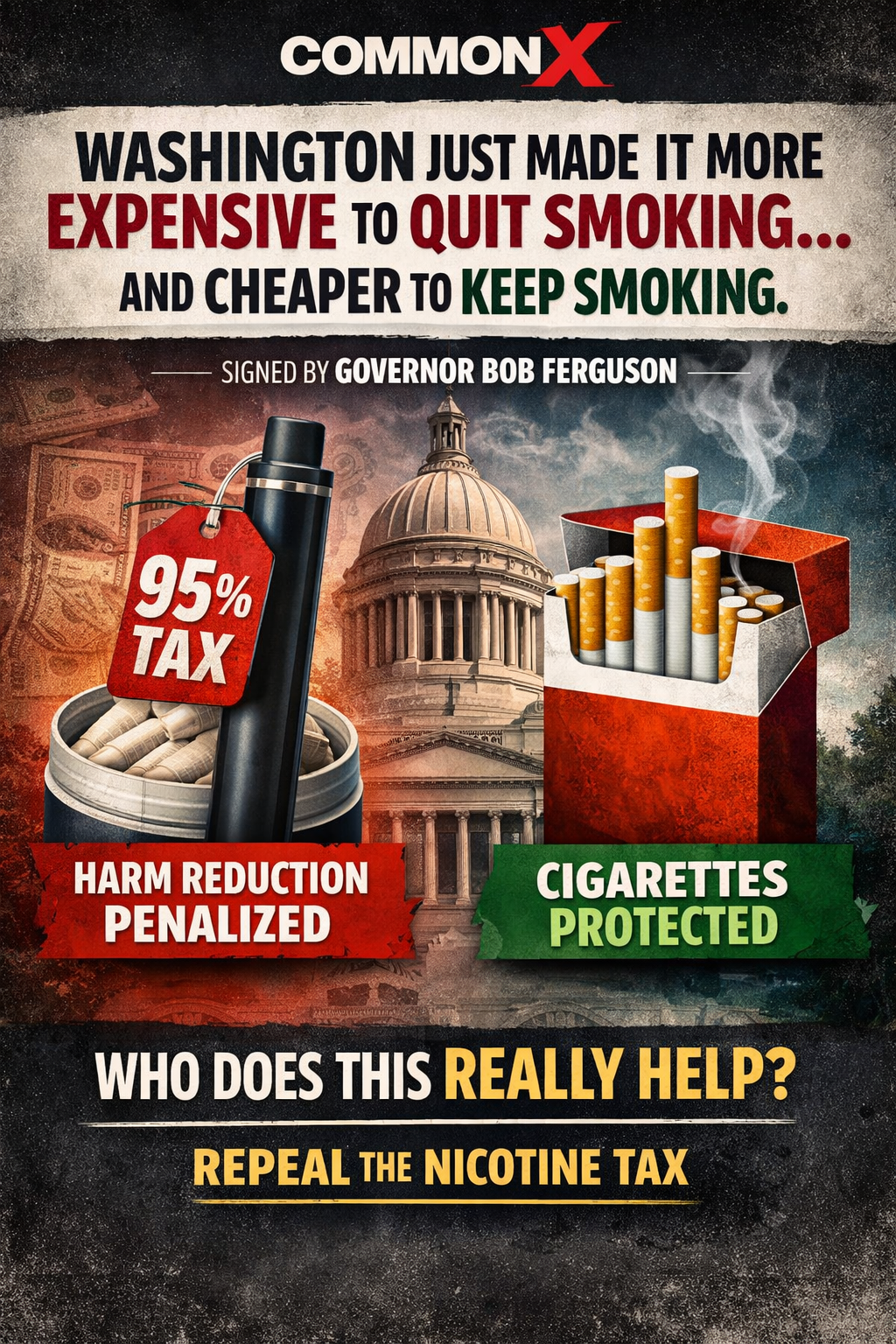
Washington State Just Made It More Expensive to Quit Smoking — and Cheaper to Keep Smoking
Washington just made it more expensive to quit smoking and easier to keep smoking. A new 95% tax on nicotine alternatives like vapes and pouches is about to hit former smokers where it hurts — their wallets — while cigarettes escape the same punishment. Signed into law by Governor Bob Ferguson, the policy raises serious questions about whether Olympia is protecting public health… or protecting revenue.
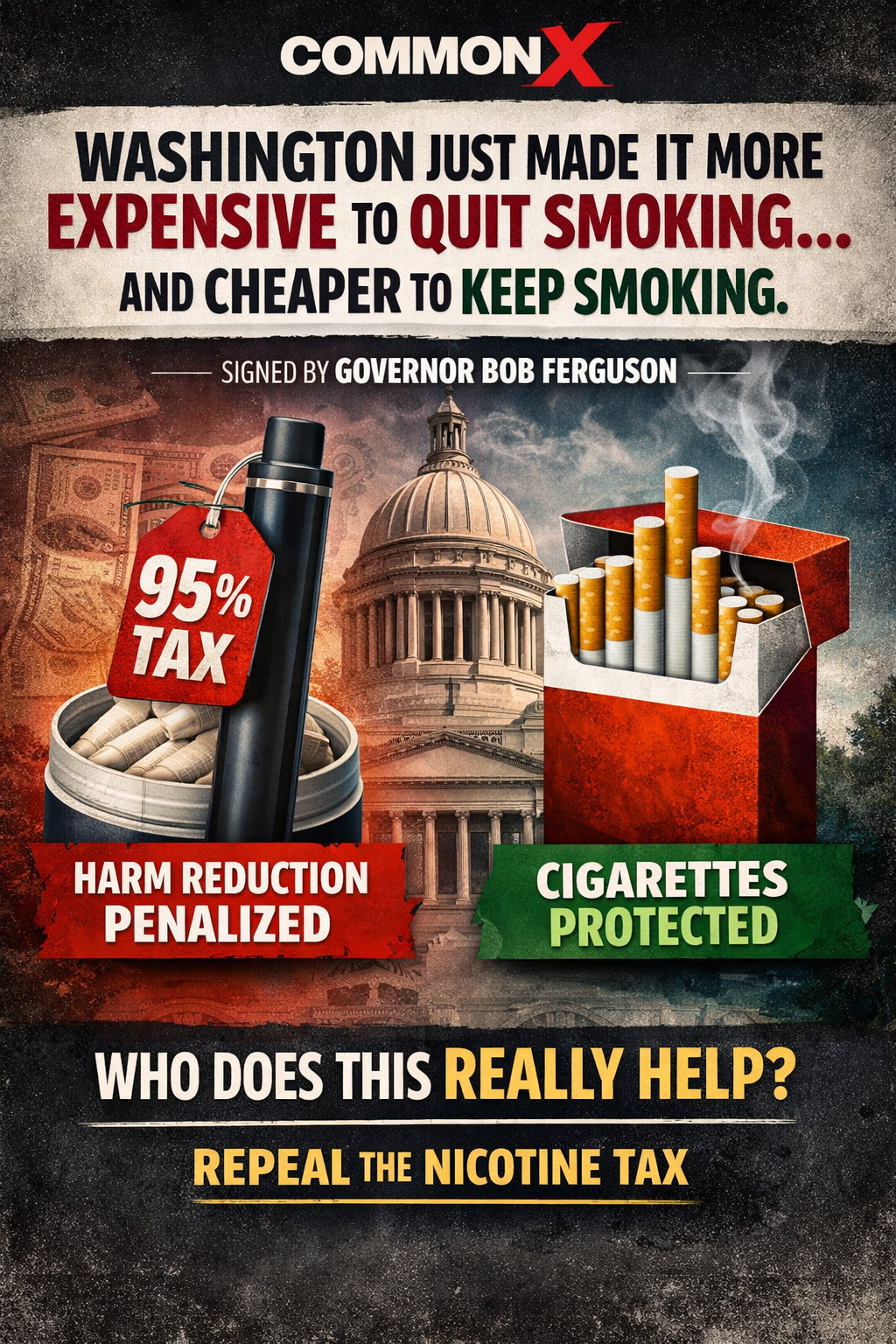
How a new state tax signed by Governor Bob Ferguson could push ex-smokers back into cigarettes — and what citizens can do about it.
By Ian Primmer — CommonX Podcast
OLYMPIA, WA — Beginning January 1, 2026, Washington state will impose a 95 % excise tax on nearly all nicotine-containing products — including synthetic nicotine pouches, vaping devices, and other alternative nicotine products — by bringing them under the state’s tobacco products tax. The change was made through Senate Bill 5814, signed into law by Governor Bob Ferguson as part of the 2025 legislative session.
What that means in real terms: a pack of nicotine pouches or a disposable vape that used to cost $7 might now cost more than $15 with the tax added — nearly doubling the cost of products many people depend on to stay away from cigarettes.
A Public-Health Contradiction
When Washington expanded its tobacco tax law to include nicotine products, lawmakers said they were adapting to a changing market — but critics argue the result is a policy that punishes people for quitting cigarettes. Because cigarettes themselves are taxed under a different structure, this new tax can make safer alternatives more expensive, even though federal regulators consider some of those products to be lower-risk than combustible tobacco.
For many former smokers, vaping and nicotine pouches have been key tools to quit the far deadlier habit of smoking. But when the cost of these alternatives soars, the financial incentive to stay smoke-free weakens — and some may find themselves sliding back toward cigarettes, the very thing they worked hard to quit.
Governor Ferguson’s Role
Governor Ferguson had the authority to veto the tax provisions in the budget but instead approved the package that included the nicotine tax increase. His signature means this policy now stands as law and will begin affecting consumers and small businesses early next year.
Critics argue that this decision contradicts broader public-health goals — and that it was driven more by revenue needs than by science-based health policy.
The Unintended Consequences
Public-health research shows that when healthier alternatives to smoking become less affordable than cigarettes, substitution patterns can reverse: people who are trying to quit may keep smoking instead of using taxed alternatives — exactly the opposite of what public health policy should encourage. Some legal challenges have already been filed, arguing that the way the law is being applied to vapes and other products may exceed what the Legislature actually intended.
How We Fix It
This policy isn’t set in stone — and Washington residents have at least three clear paths to change it.
1. Initiate a Ballot Measure to Repeal or Amend the Tax
Washington’s Constitution allows citizens to gather signatures to put a measure on the ballot that would:
Repeal the expanded nicotine tax,
Or adjust it so cigarettes and nicotine-replacement products are taxed equitably,
Or exempt nicotine products used as smoking-cessation tools.
To qualify, an initiative typically needs signatures from about 8 % of the votes cast in the last governor’s election, spread across at least five counties. That’s roughly 325,000 valid signatures in total — a heavy lift, but feasible with coordinated effort.
2. Support or File a Legal Challenge
Already, some petitions argue that the tax is being applied in a way that conflicts with existing statutes or exceeds legislative authority. Those cases could delay enforcement or narrow how the tax is interpreted if courts agree.
3. Elect New Representatives with Better Health-Policy Judgement
Policy change flows from the ballot box as well as the initiative process. Supporting candidates who understand harm reduction and public-health science can shift the legislature’s priorities in future sessions.
Why This Matters
This isn’t just a tax story — it’s a public-health story about people who worked for years to quit smoking and now face a policy that could push them back into the very habit that harms them most. It’s a story about accountability and policy that actually helps people make healthier choices. And voters, not Olympia alone, should decide whether Washington’s government has gotten it right.
Governor Ferguson thinks he can’t be stopped, yes WE can stop him!

Why Tensions Are Rising Between ICE Agents and American Citizens
A fatal ICE shooting in Minneapolis has ignited protests and renewed questions about federal enforcement, public trust, and how communities and agents collide in high-pressure situations. In this CommonX X-Files report, we examine what’s known, what’s still being investigated, and why tensions between ICE and American citizens are rising across the country.

If you’ve felt it lately — that uneasy sense that everyday people and federal enforcement are bumping into each other more often — you’re not imagining things.
Over the past week, the tension has boiled over after a fatal encounter in Minneapolis involving a U.S. Immigration and Customs Enforcement (ICE) officer and a 37-year-old woman, Renée Nicole Good, during a federal operation. The incident has sparked protests, conflicting official narratives, and a broader national argument about enforcement tactics, accountability, and public trust.
This X-Files isn’t here to inflame anything. It’s here to do what CommonX does best: stick to verified facts, identify what’s still unknown, and explain why people are reacting so strongly.
What happened in Minneapolis — the verified basics
Multiple outlets report that Renée Nicole Good was fatally shot during a federal enforcement operation in Minneapolis. Public reporting describes competing accounts of what led up to the shooting and whether the use of force was justified.
The Department of Homeland Security has stated the officer acted in self-defense, while local and state leaders have publicly challenged aspects of the federal narrative.
ABC News has published a detailed, time-stamped timeline based on available video, which has become central to how the public is interpreting what happened.
Why this story became bigger than one city
One reason this spread fast is simple: the trust gap is already wide, and high-stakes enforcement in public spaces puts that gap on full display.
In Minneapolis, protests followed quickly. Reuters reported arrests overnight and damage reported near hotels believed to be housing federal agents. At the same time, city officials urged people to remain peaceful to avoid escalation.
Reuters also reports protest organizers planning over 1,000 events nationally, signaling the story has moved from “local tragedy” into “national flashpoint.”
The core issue: tactics, training, and escalation
A lot of the argument isn’t about whether the federal government can enforce immigration law. It’s about how enforcement is carried out when:
agents are operating in neighborhoods,
crowds gather,
vehicles are involved,
and split-second decisions can end a life.
The Washington Post reports the Minneapolis shooting has intensified scrutiny of ICE training and use-of-force tactics, including debate among experts over best practices around vehicles and officer positioning.
This is where tension grows: when people believe an encounter could have been de-escalated — and the other side believes the threat was real in the moment.
Conflicting investigations make people more suspicious
When investigations appear fragmented or contested, suspicion spikes. Minnesota’s Bureau of Criminal Apprehension (BCA) published a statement indicating it remains open to conducting a full investigation if federal authorities resume a joint approach or share evidence and reports.
When the public sees “different agencies, different accounts, different access to evidence,” trust erodes — even before final facts are established.
What CommonX thinks Americans are reacting to
Here’s the honest read:
People aren’t just reacting to one incident — they’re reacting to the feeling that the rules of engagement between citizens and enforcement are getting blurrier, and the consequences are heavier.
Some citizens see an enforcement posture that feels aggressive and unchecked. Others see federal agents doing a dangerous job and being surrounded, filmed, confronted, and forced into rapid decisions.
Both fears can exist at once — and that’s exactly why these moments turn into national tension.
Where we go from here
We’ll keep this simple and grounded:
More verified details will emerge (video, investigations, policies).
Public demonstrations will continue and the national conversation will sharpen.
The long-term question will be whether agencies adjust tactics and transparency to rebuild trust.
CommonX will follow the facts — and we’ll update as official findings become clear.
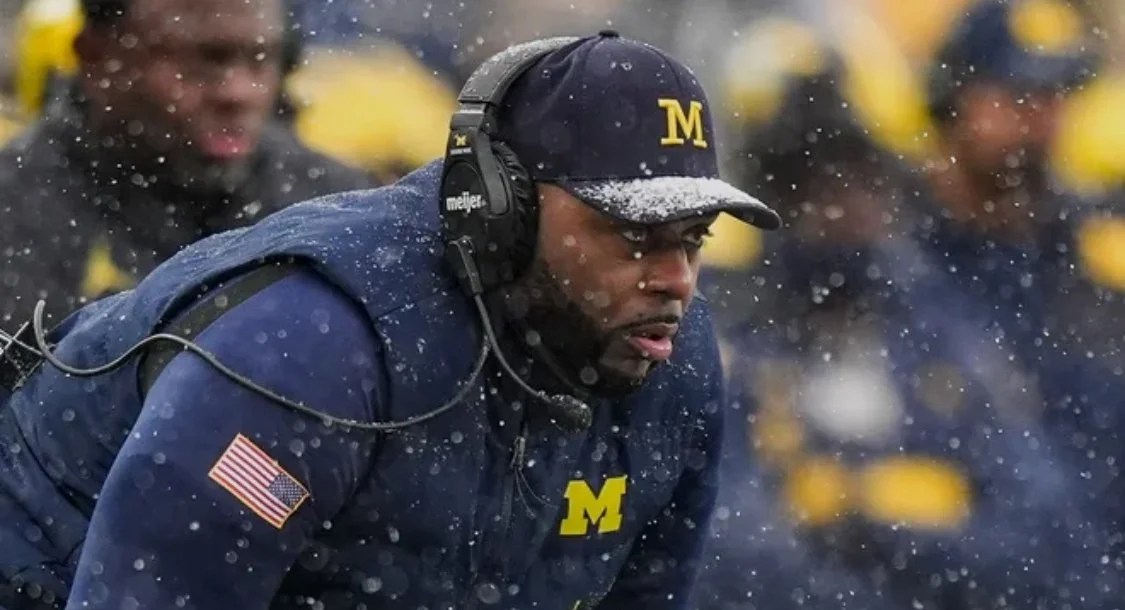
Michigan Fires Coach Sherrone Moore With Cause — Inappropriate Relationship With Staffer Sparks Sudden Collapse
Michigan has fired head coach Sherrone Moore with cause over an inappropriate relationship with a staffer. CommonX breaks down what it means and what comes next.
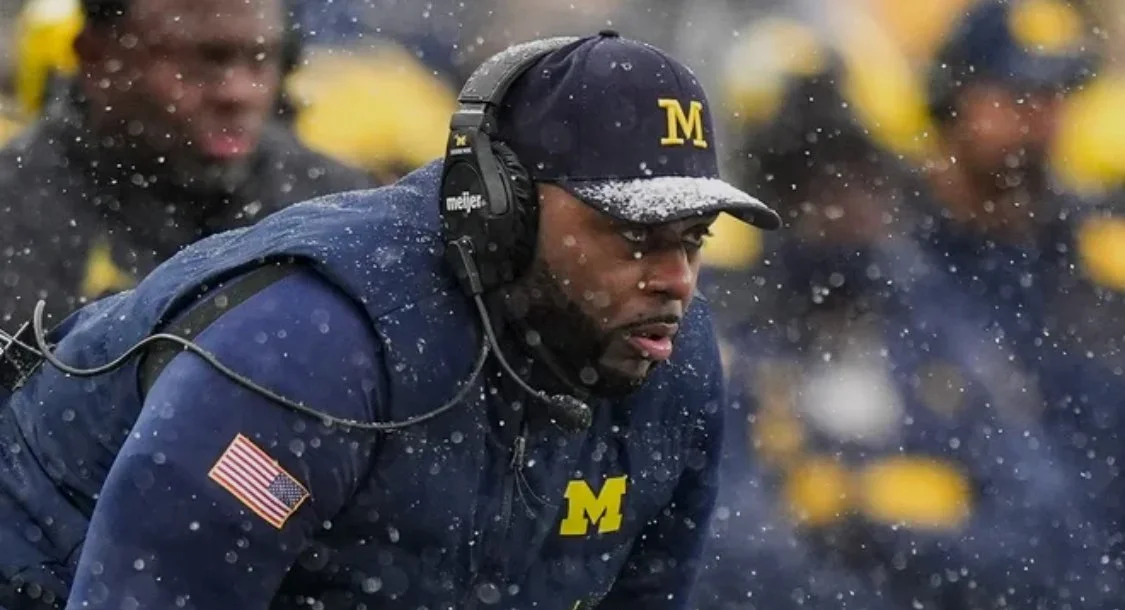
(CommonX Analysis & Commentary)
The University of Michigan just dropped a grenade on college football by firing head coach Sherrone Moore with cause, citing an inappropriate relationship with a staffer, according to initial reporting from the Associated Press.
In a season where Michigan was supposed to be stabilizing after Jim Harbaugh’s departure, this is the kind of off-field blow that shakes an entire program to its core. Coaches get fired for performance. They get fired for NCAA violations. But “with cause” — that’s when the lawyers come out first.
What “With Cause” Really Means — A Nuclear Option
For schools, firing a coach with cause is the equivalent of hitting the red button:
No buyout
Contract voided
University claiming misconduct
Everything becomes a legal record
This isn’t a mild HR issue. This is Michigan making it clear they want distance — fast.
And in college football, where reputations are currency, a coach doesn’t get fired “with cause” unless the university believes the fallout from keeping him is worse than the storm of letting him go.
The Allegations: What’s Known So Far
Early reporting suggests Moore was terminated after the university learned of an inappropriate relationship with a staff member, sparking an internal investigation that escalated quickly. These cases often pull in compliance teams, legal counsel, and Title IX considerations before any public announcement is made.
Details are still emerging, and the public is only seeing the early surface-level pieces — but the speed of the firing says everything.
This wasn’t a “give us 48 hours to evaluate the situation” move. This was swift, decisive, and absolute.
Fallout for Michigan Football
The timing couldn’t be worse for a program already trying to rebuild its identity:
Recruiting season chaos
Staff uncertainty
Transfer portal timing
Potential NCAA eyes on the situation
National media frenzy incoming
Michigan fans wanted stability after the Harbaugh era. Instead, they got a scandal that feels ripped out of an HBO series.
The CommonX Take — This Is Bigger Than Football
This is one of those stories where the sports world and the real world collide head-on.
Every major college program preaches culture, accountability, and leadership — especially to young athletes. When the coach steps out of bounds with a staff member, it hits deeper than just an HR policy violation. It exposes the cracks in a system built on trust, image, and institutional power.
Whether you’re a Michigan fan or not, this is a reminder that the biggest games aren’t always played on the field.
What Happens Next?
Expect:
A polished university statement
Lawyers fine-combing contracts
National scrutiny
Rapid speculation on the next head coach
Former players speaking out
The full story to evolve in the next 24–72 hours
This thing is just getting started. And you already know CommonX will be right back with the next chapter.
Final Word
It’s never the scandal itself — it’s how fast it hits, who gets caught in the fallout, and how the program rebuilds from the rubble. Michigan just took a hit that’ll echo across the Big Ten for years.
CommonX will keep tracking updates as they develop.

Flagged for What? Stetson Wright Rides Clean, Judges Ride Blind at NFR Round 6!
A clean saddle-bronc ride, a silent no-score, and fans who saw what the judges didn’t. Here’s why Stetson Wright deserved better on NFR Night 6.

A clean ride, a silent explanation, and a crowd of fans who watched it happen in real time.
X-Files | CommonX
National Finals Rodeo, Night 6 — saddle bronc riding, the event where legends earn their names the hard way. On Night 6, Stetson Wright delivered exactly what fans tuned in for: a controlled, rhythmic ride with the kind of spur cadence that separates contenders from champions. It was one of those rides where you lean forward halfway through, because you already know he’s got it covered.
Then the scoreboard detonated the moment: NO SCORE.
No score? Flagged for what, exactly? The mark-out looked above shoulder level at the first jump. The feet were set, the rhythm was tight, and the bronc gave enough kick to make the ride count. No free-hand touch, no tangle, no stumble, no slip. Eight clean seconds. The kind of ride that gets replayed for a reason. But the only thing replayed was confusion.
Here’s the brutal truth: the NFR can wipe a cowboy’s entire ride away in the blink of an eye, based on one microscopic technical moment that no one sees, no one hears about, and no one explains. The mark-out rule is strict — the rider’s spurs must be above the horse’s shoulders at the exact moment the bronc leaves the chute. If a judge sees that alignment off by an inch, the entire ride gets incinerated. Eight seconds of control becomes worthless.
That precision is what makes bronc riding a pure art. But when the sport refuses to show fans the technical breakdown, it becomes something else: a mystery.
And that’s where rodeo needs to wake up. Fans aren’t asking for handouts, free points, or special treatment for big names. What they’re asking for is transparency. If a ride this clean earns a no-score, then show us why. Replay the mark-out angle. Slow it down. Circle the mistake. Educate the audience the same way other sports do when a ruling decides the event.
This isn’t disrespect to judges. It’s respect for the cowboys who put their bodies on the line and deserve clarity when their score is erased.
Fans watching at home aren’t distracted by beer cups and fireworks. They’re locked in, staring at spurs, timing, and technique. Real rodeo fans watch for the details. On Night 6, watching from home on the Cowboy Channel — like so many fans do every year — that ride looked clean from horn to last second. If the judges saw something invisible to thousands of fans, then the sport owes an explanation, not silence.
Stetson Wright didn’t get bucked off. He didn’t break a rule visibly. He didn’t lose control. The commentator even said he didn’t agree with it? So what’s the problem judge? Huh?
He lost to a scoreboard that never showed its reasoning.
If rodeo wants to grow with modern audiences, it needs to do what every tight-ruled sport does: show the call, not just make it. Explain the no-scores as clearly as scores. Let fans see why a ride that looks clean isn’t.
Until that happens, we’ll trust the saddles, the athletes, and the broncs we just watched with our own eyes. And on NFR Night 6, one thing was obvious:
Stetson Wright rode clean. The judges rode blind.
CommonX supports the sport and its cowboys.
This isn’t about attacking judges — it’s about asking for visible, consistent scoring that protects the riders and the fans who love this sport.
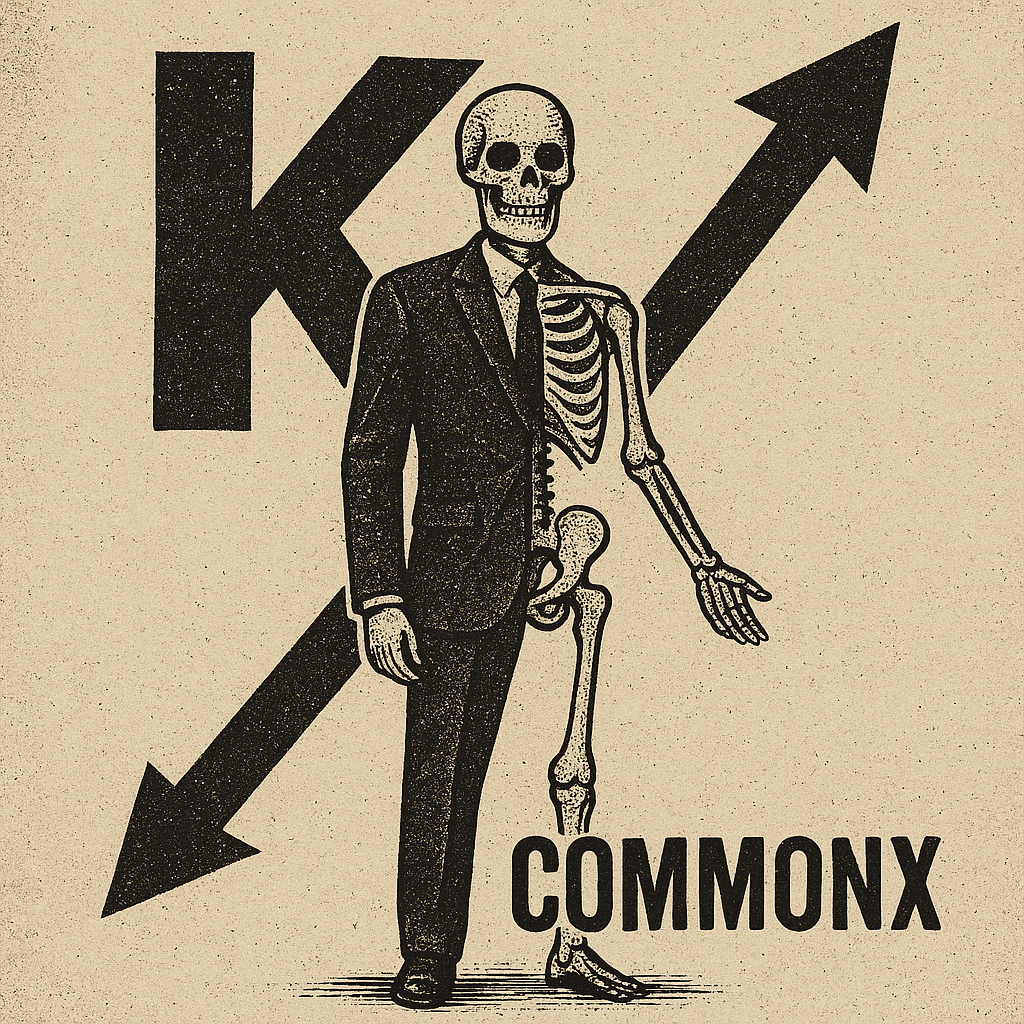
THE K-ECONOMY: Why America Is Splitting Into Two Realities
Welcome to the K-economy — where half the country climbs the ladder and the other half falls through the floor. Two realities, one America, and Gen-X is right in the middle holding it together. This X-Files article exposes what’s really going on behind the charts and headlines.
A CommonX X-Files Breakdown — For the People Living in the “Real World,” Not the News Graphics
Welcome to the K-Economy, Baby. Thanks BOOMER!
If you’ve been feelin’ like half the country is doing great and the other half is barely hanging on… Congratulations.
You’re not crazy.
You’re living in a K-shaped economy — one of the weirdest, most lopsided economic realities America has ever seen. The media barely explains it. Politicians deny it. Analysts downplay it.
But Gen-X?
We SEE it.
We FEEL it.
We’re living it from the front lines.
The K-economy is the reason why your friend got a big raise while your neighbor is working two jobs and still drowning. It’s why some Americans are buying new trucks while others are choosing between gas and groceries.
It’s why your retirement account can be booming…
…while your day-to-day bank account is crying for help.
Let’s break it down CommonX style — clean, honest, a little sarcastic, and absolutely no bullshit.
📈 THE TOP OF THE K — The People Going Up
These are the people catching the “good” side of the K. Their line shoots upward like Bitcoin after an Elon tweet. Who are they?
✔ High earners
✔ Tech workers
✔ Entrepreneurs
✔ Investors
✔ Homeowners
✔ People with savings
✔ People who can work from home
✔ People holding assets (stocks, crypto, real estate)
These folks are doing well even in a shaky economy because:
Their jobs weren’t wiped out by automation
Their investments grew
Their home value climbed
Their companies padded salaries to keep talent
They could switch careers or roles easily
They didn’t get crushed by inflation as hard
They had a buffer
Basically, they’re riding the upper slash of the K — the rising line.
💀📉 THE BOTTOM OF THE K — The People Going Down
Then there’s the lower arm of the K — and it’s brutal. This is where most of the hurt lives.
✔ Retail workers
✔ Service industry
✔ Trades hit by automation
✔ Warehouse & logistics
✔ Lower-income households
✔ People living paycheck-to-paycheck
✔ Rural & small-town America
✔ Renters
✔ Anyone without financial padding
They’re getting squeezed by:
Rent skyrocketing
Groceries doubling
Interest rates crushing loans
Wages that did not keep up
Job instability
Zero savings cushion
Higher credit card debt
No assets appreciating
Companies replacing labor with AI or outsourcing
This part of the K falls. They’re not imagining it — life got harder, more expensive, and more unstable.
TWO ECONOMIES — ONE COUNTRY
Here’s the crazy part: Both realities exist at the same time.
You can have:
A booming stock market
And collapsing bank accounts
Rising home equity
And rising homelessness
Corporate profits at record highs
And workers taking side gigs to survive
A high GDP
And low household savings
And both are “true.” Because the K-economy doesn’t hit everyone equally. It splits the country — sharply.
WHY GEN-X IS PARTICULARLY PISSED ABOUT THIS?
Because we’re the middle kids. Silent Gen had pensions. Boomers had cheap houses and low inflation. Millennials had tech and timing. Gen-Z has TikTok clout and no fear.
Gen-X? We got:
2008 housing crash
Vanishing pensions
Wage stagnation
Raising kids through inflation
Caretaking aging parents
Rising healthcare costs
Tech replacing mid-level jobs
Zero government support
And now… the K-economy splitting the damn floor beneath us
We’re the generation most affected by this dual reality — not young enough to rebuild, not old enough to retire. We’re the spine of America carrying the weight while nobody notices.
📡 WHERE THIS GOES: SOCIETY DIVIDES
The K-economy isn’t just about money. It shapes EVERYTHING:
politics
opportunity
where people live
how people vote
marriage rates
birth rates
mental health
trust in government
community stability
When one half rises and the other half sinks, you don’t get unity… you get tension. You get two Americas living in one zip code.
💡 OKAY, SO WHAT CAN PEOPLE DO?
CommonX isn’t here just to call it out. We offer real talk + real solutions. Here’s what Gen-X can do in a K economy:
✔ Build multiple streams of income
Side hustles, content, consulting — diversify.
✔ Cut dumb subscriptions
We all have 12 of them.
✔ Build skills AI can’t
replace
Human storytelling, trades, hands-on work, leadership.
✔ Invest in stable assets
Gold, retirement funds, index funds, safer hedges. This is the perfect place to naturally tie in Gold Club Direct: If you lived through the dot-com crash, 2008, COVID, and now this K-economy madness — it makes sense to have something stable. That’s why we trust Gold Club Direct for precious metals. No hype, just stability.
✔ Pay down debt
Inflation makes debt the enemy.
✔ Invest in your own health
A stronger body = fewer bills + more resilience.
✔ Find community
This is why CommonX even exists — real people sticking together.
☠️ THE COMMONX TAKE
Here’s the truth they won’t say on cable news:
We don’t have a single economy.
We have two — and they’re pulling away from each other like broken train rails.
If you’re on the top line of the K, protect your gains. If you’re on the bottom line, you’re not alone — the game is rigged, not your effort. If you’re in the middle (Gen-X), you’re the backbone that’s holding both halves together. And we see you. We live what you live.
And we’re gonna talk about it because nobody else will.
This is CommonX.
This is the X-Files.
This is the real world. Remember, “Eat the Rich,” — they wouldn’t spit on us if we were on fire!
Written by Ian Primmer — Co-host, CommonX
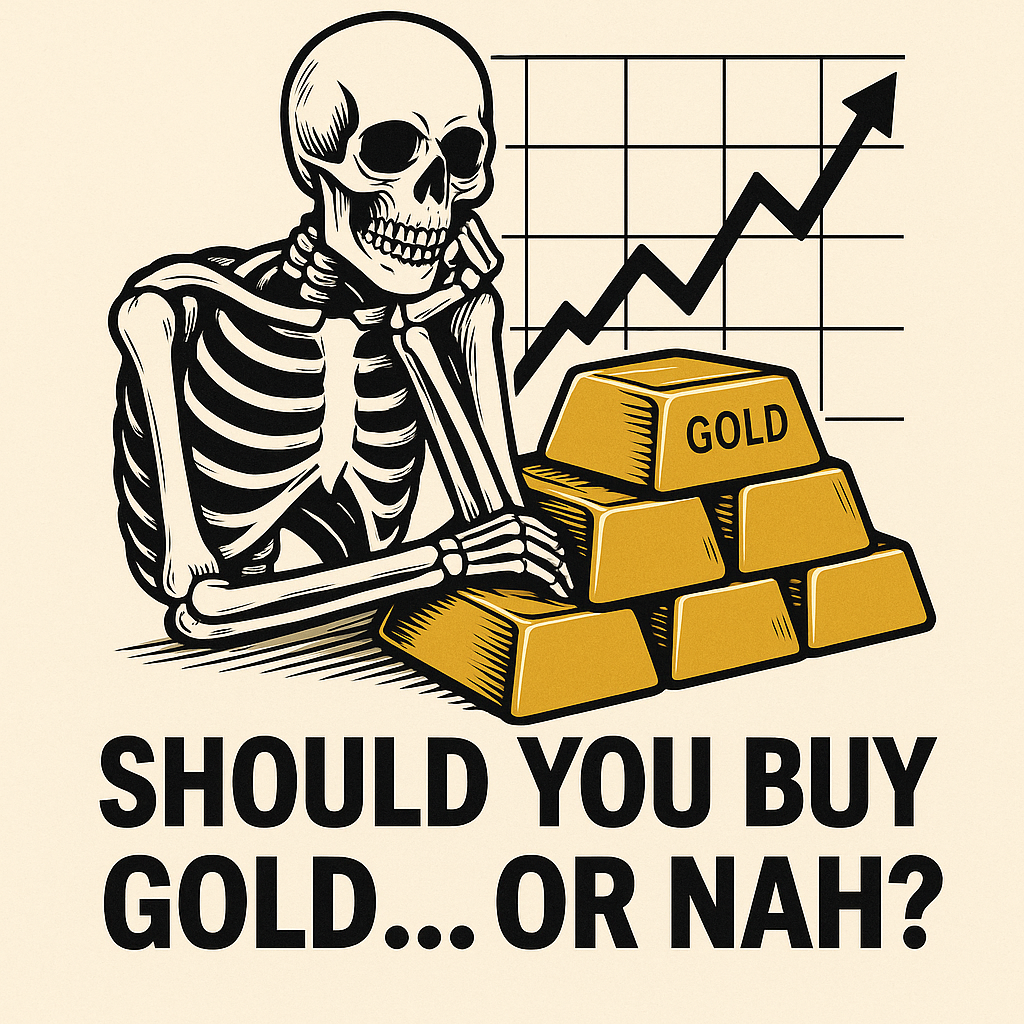
Should You Buy Gold in 2025?A No-BS Gen-X Guide to Investing Smart
In a shaky 2025 economy, a lot of people are asking the same question: Should I buy gold? This no-nonsense CommonX breakdown walks you through the real pros and cons, who gold is actually right for, and why we partner with Gold Club Direct when it comes to trusted precious metals.
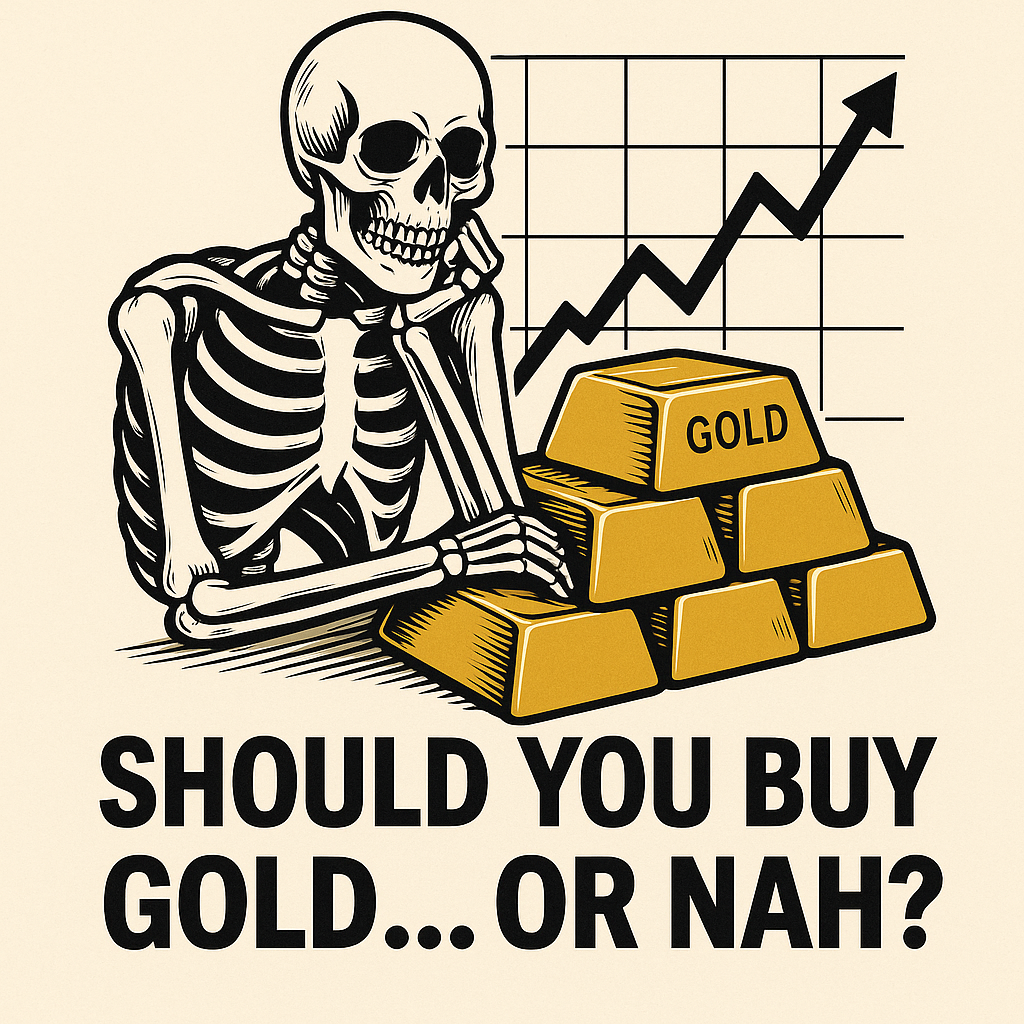
Illustration of a grinning skeleton leaning on a stack of gold bars with an upward-trending chart behind it, representing gold investment during uncertain economic times.
In a shaky economy, Gen-X is asking the right question.
Inflation has been punching everyone in the wallet. Retirement accounts look like roller coasters. The housing market is weird, interest rates bounce around, and world events seem unstable every five minutes. So it’s no surprise that gold is back on the radar for a lot of people. But here’s the real question:
Should you buy gold in 2025? Not hype. Not fear. Just the truth.
Let’s break it down in a way that makes sense, cuts the nonsense, and actually helps you make a smart decision.
Why Gold Is Suddenly Popular Again
Gold’s popularity spikes during times of uncertainty.
It’s not about chasing fast profits — it’s about protecting what you already have.
Right now, people are looking for:
something stable
something tangible
something that doesn’t tank every time the stock market has a mood swing
That’s where gold shines.
But don’t get it twisted — gold isn’t a magic “get wealthy fast” hack. It’s slow, steady, and boring… which is exactly why it works as a hedge.
The Case FOR Gold (2025 Edition)
✔ 1. It holds value over time
Gold doesn’t go to zero.
It’s been valuable for 5,000 years.
You could bury it, forget it, and it’s still worth something.
✔ 2. It protects against inflation
When the dollar weakens, gold historically strengthens.
Think of it like a counterweight in your financial life.
✔ 3. It diversifies your portfolio
If all your money is in stocks or crypto and one of them tanks, you feel it.
Gold spreads out your risk.
✔ 4. It’s a physical, tangible asset
Gen-X loves real things we can hold.
Unlike digital assets or stock numbers on a screen, gold is yours.
✔ 5. It reduces long-term volatility
Gold doesn’t swing as wildly as the markets.
It’s slow, steady, and stable.
The Case AGAINST Gold (the honest part)
✖ 1. It doesn’t generate income
No dividends.
No interest.
Gold just sits there — its job is stability, not cashflow.
✖ 2. It’s a long-term hedge, not a quick play
Anyone expecting fast returns will be disappointed.
✖ 3. Short-term dips happen
Just because gold is a safe haven doesn't mean it always goes up immediately.
✖ 4. You MUST avoid shady companies
High-pressure phone sales, hidden fees, fake “free silver promotions” — this industry has scams.
This is exactly why choosing a transparent partner matters.
🎯 So… Who SHOULD Consider Buying Gold in 2025?
You should consider gold if you:
✔ want a hedge against inflation
✔ want to protect your retirement
✔ want something tangible, stable, and real
✔ prefer safer long-term investments
✔ want diversification without complexity
✔ don’t like watching the stock market yo-yo your savings
Gold is a stabilizer — not the hero of your portfolio, but the piece that keeps your other assets balanced.
🚫 Who Probably Should NOT Buy Gold
You might want to skip gold (for now) if you:
✖ have high-interest debt
✖ don’t have an emergency fund
✖ expect quick gains
✖ need liquidity immediately
✖ are speculating rather than planning
Gold is a play for security, not adrenaline.
Physical Gold vs. Gold IRA — Which Makes More Sense?
Physical Gold
You can hold coins or bars in your hand.
Great for people who want something real and private.
Gold IRA
Lets you hold physical metals inside a tax-advantaged retirement account.
This is extremely popular right now for Gen-X approaching retirement age.
➡️ Tax benefits
➡️ Long-term growth stability
➡️ Protected retirement hedge
If you're comparing the two, talk to a representative who isn't trying to pressure-sell you.
That’s why we appreciate the transparency and real-person approach of:
Our Precious Metals Partner: Gold Club Direct
Want Gold? Here’s who we trust. If you’re exploring gold or want to compare options, Gold Club Direct offers:
Straightforward pricing
Zero high-pressure sales
Physical gold + Gold IRA options
Real reps who answer real questions
Clear explanations without the fear tactics
👉 You can check them out or request info through our affiliate link: https://gold-club-direct.sjv.io/c/5973567/1691737/19465
🔒 Avoiding Scams: What To Watch For
Before you buy gold from anyone, avoid companies that:
guarantee huge profits
pressure you to buy “right now!”
hide their fees
offer suspicious “free bonus metals”
won’t tell you buy-back pricing
Stick with companies that are transparent about costs, storage, and value.
Again, that’s why we partner with Gold Club Direct — they avoid all the industry tricks.
🧭 So… Should YOU Buy Gold in 2025?
Here’s the no-BS answer:
✔ Gold makes sense if you’re looking for stability.
✔ Gold helps if inflation stresses you out.
✔ Gold supports long-term retirement planning.
✔ Gold is smart if you want part of your wealth in something real.
But only as a piece of your strategy, not your whole plan.
If you’re considering it, start slow, learn the basics, and work with someone you trust.
Want to Explore Gold Options?
Our recommended partner — Gold Club Direct — offers a simple, transparent way to learn your options with zero pressure.

Gold Club Direct logo for a trusted precious metals dealer offering gold and silver investment options.
Clicke the link to get your free Gold information kit: 👉 https://gold-club-direct.sjv.io/c/5973567/1691737/19465
This also helps support the CommonX Podcast and lets us keep bringing real, honest Gen-X insight to the world.
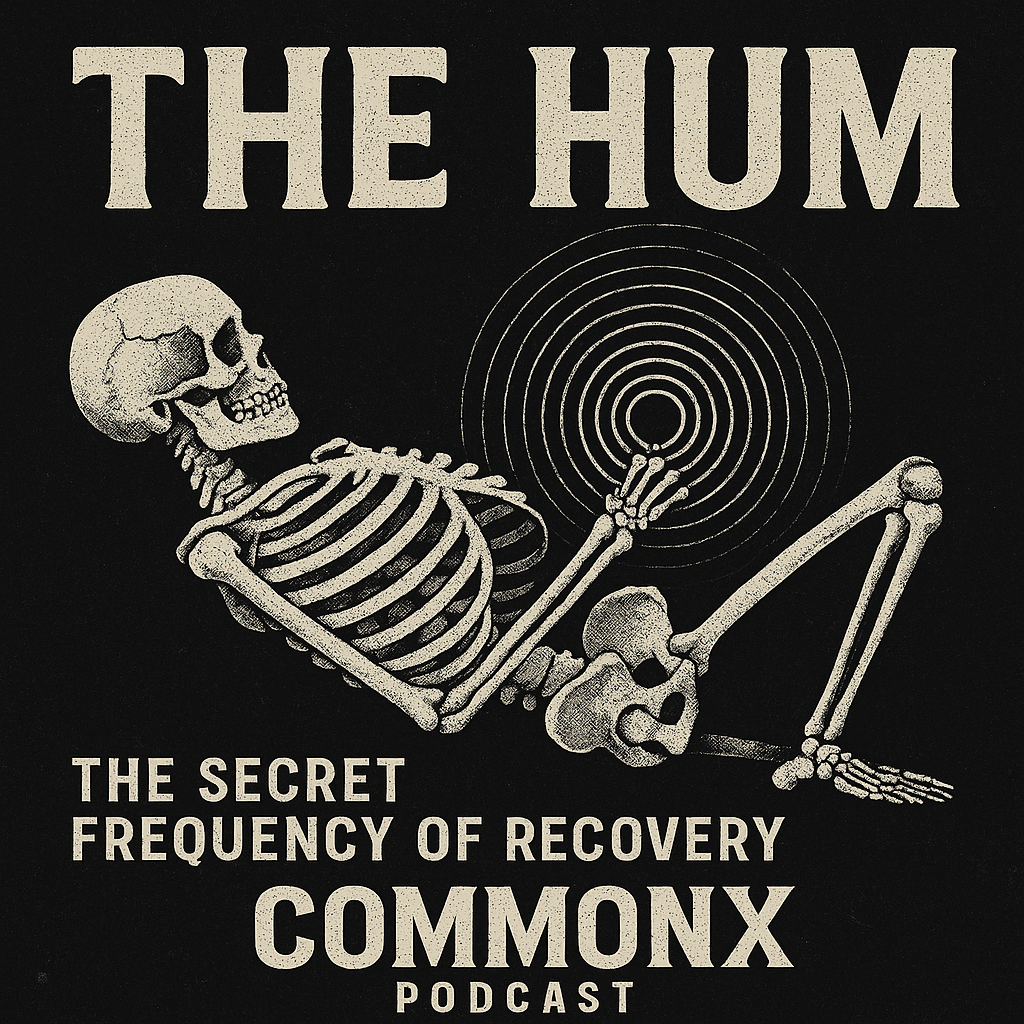
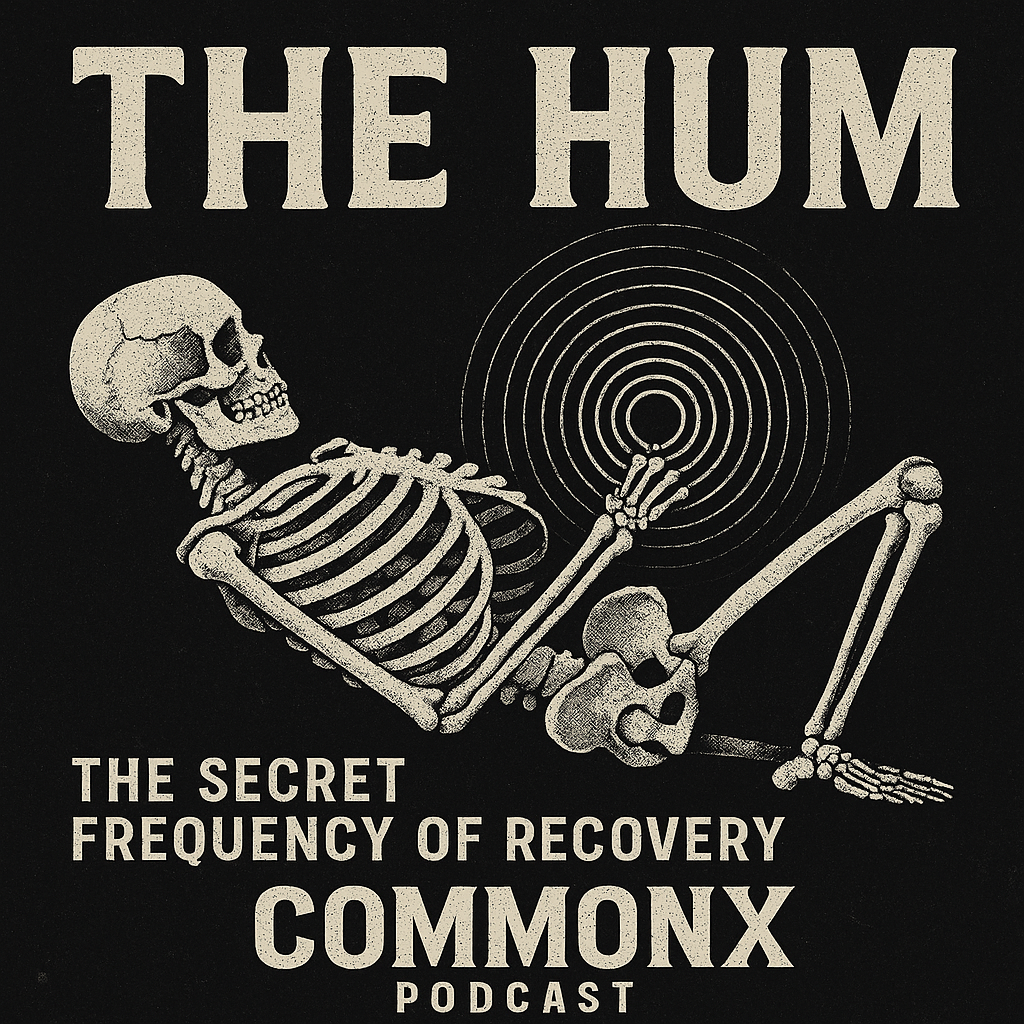
The Hum: The Secret Frequency of Recovery That Nobody Talks About
There’s a sound only the disciplined hear. A quiet vibration that lives between exhaustion and sleep. I call it “The Hum” — the hidden frequency your body unlocks when you’ve pushed yourself so hard that nighttime becomes the second workout.
By Ian Primmer — CommonX Podcast
Most people think the gym is where you get stronger. Most people think the mile, the reps, the burn — that’s the work. And they’re not wrong… but they’re not right either.
Because there’s a second workout that only the disciplined ever reach. A place your body only enters when you’ve pushed yourself far enough, long enough, hard enough. It happens at night. In the dark. When the engine shuts down. I call it The Hum.
⸻
THE HUM BEGINS WHEN THE WORLD GOES QUIET
It doesn’t happen on lazy days. It doesn’t happen with half-workouts, light sweat, or “good enough.” The Hum only arrives when you’ve put everything into your body that day:
• clean food
• real hydration
• hard cardio
• heavy sweat
• disciplined choices
• focused intention
You lay down. The room cools. Your breathing slows. And then… it starts. A faint, gentle vibration deep in the chest, the ears, the muscles. Not pain. Not tension. A signal. The body whispering:
“I’m working. I’m rebuilding. You did enough today. Let me take it from here.”
⸻
THE HUM IS THE SECOND WORKOUT
Training tears you down. The Hum builds you back up. It’s the moment when:
• hormones surge
• tissue repairs
• inflammation drops
• glycogen reloads
• nervous system resets
• muscles stitch themselves
• the body rewires strength
• fat burns at its cleanest rate
People talk about protein. People talk about calories. People talk about macros, sets, splits, and form. But nobody talks about The Hum —
the state where your body does its REAL work. Without The Hum? You don’t level up. You don’t get lighter. You don’t get sharper. You don’t get stronger. Nothing works without The Hum.
⸻
THE HUM IS WHY BEDTIME MATTERS
My wife and I agreed tonight: 9:30 PM. Lights out. Shut down. Recovery time. Because I look forward to The Hum just as much as I look forward to the gym.
It’s part of the ritual now. Part of the discipline. Part of this new version of me. Tomorrow morning? I’m expecting 189 lbs.
But I know something important:
I won’t hit that number because of the treadmill. I won’t hit it because of the sweat. I won’t hit it because of the clean dinner. I’ll hit it because of The Hum. Because that’s where the magic happens.
That’s where the body heals. That’s where the fat burns quietly. That’s where the next version of you gets built. Gym time is effort. But The Hum? That’s transformation.
⸻
WHY MOST PEOPLE NEVER FEEL THE HUM
Because they never push far enough to earn it.
The Hum is:
• the reward for discipline
• the badge of consistency
• the internal “click” that tells you your life is changing
• the sign your body is in full rebuild mode
It’s the moment you realize:
“I’m not guessing anymore. I’m becoming.”
People who dabble don’t know it. People who talk don’t know it. People who quit don’t know it. But people who WORK — who grind, who sweat, who commit —they learn the language of their own body. The Hum is the body saying:
“I’ve got you. Keep going.”
⸻
THE HUM IS A GIFT — AND A GUIDE
It’s your internal compass now. Your recovery meter. Your silent coach.
When you feel it, it means:
You trained right. You ate right. You hydrated right. You slept right. You aligned your actions with who you WANT to become. The Hum is the sound of a life getting back on track. The Hum is the frequency of a man rebuilding himself.
⸻
CONCLUSION: THE HUM IS THE PROOF
Of the work. Of the discipline. Of the momentum. Of the transformation. You don’t chase it — you earn it.
And when you feel it? You know you’re on the path. Not just losing weight. Not just getting stronger. Not just going to the gym. But ascending. The gym breaks you down. The Hum builds you up. And that, right there, is the unseen part of this journey that nobody else understands.

What I Learned From Trying (and Failing) to Out-Walk Jesus
In the last month, I’ve walked 8–10 miles a day, reversed prediabetes, raised my testosterone, tightened my waistline, and rebuilt my whole damn life.
And I STILL can’t keep up with Jesus — a man who casually walked 15–20 miles a day in sandals across rugged terrain.
Here’s what I learned from trying (and failing) to out-pace the Son of Man.

By Ian Primmer - CommonX
There’s something both humbling and hilarious about spending an entire month grinding out 8–10 miles a day — sweating on treadmills, pounding pavement, scrambling between railroad shifts, dentist appointments, gym sessions, and podcast work — only to realize… I still can’t out-walk Jesus. Not even close.
I’ve been on a total transformation arc lately. A real one. I wake up every day and go HARD — treadmill, elliptical, more steps, more miles, more cardio, more discipline than I’ve had in years. And you know what? It’s worked.
✔ I reversed prediabetes
✔ My testosterone clearly went up
✔ My waistline shrank
✔ I feel healthier, stronger, faster
✔ My confidence surged
✔ My marriage heated up
✔ People in the gym literally look twice now
But then I looked at the historical record of Jesus’ daily mileage… And man… I suddenly felt like a beginner all over again.
The Reality Check: Jesus Was Basically David Goggins in Sandals
Historians estimate Jesus walked:
15–20 miles per day. EVERY. DAY.
Across:
rugged terrain
brutal heat
mountain paths
desert roads
ancient uneven rocks
No treadmill. No cooling fans. No Nike Air Max cushioning. No Quick Dry moisture-wick socks. No Apple Watch. No electrolyte gummies.
Just leather sandals and purpose.
Meanwhile, I’m over here sweating like a sinner in July trying to squeeze in 8 miles before my dentist appointment.
My Month of Monster Mileage
Let’s be honest — I’ve been putting in WORK:
7–10 miles daily
12–14 standing hours
15,000–18,000 steps
120–150 minutes of cardio
treadmill + elliptical combos
calorie burns rivaling marathon training
I’ve watched numbers change. I’ve watched my body change. I’ve watched my MIND change.
This transformed me. But the deeper lesson wasn’t about miles… It was about discipline, consistency, and humility.
What I Learned From Trying (and Failing) to Out-Walk Jesus
1. The Body Records What the Mind Honors
Once I committed, my body responded. Fast. Stronger legs, smaller waist, cleaner blood sugar — it all happened.
2. Consistency Beats Intensity
Jesus didn’t “train.” He just walked every day. And that routine shaped His strength. Same with me.
3. Modern Life Softens Us
Even with cushioned shoes and gyms everywhere, we are nowhere near the durability of ancient people. That’s not an insult. It’s an opportunity.
4. Movement Is Spiritual
Walking clears your head. It opens your heart. It centers your spirit. It pulls your life back into alignment. No wonder Jesus did it constantly.
5. You Don’t Have to Out-Walk Jesus — Just Show Up Like He Did
The point isn’t mileage. It’s showing up every day with purpose, humility, and heart. That’s what changes you.
If Jesus Had an Apple Watch…
That thing would’ve exploded. It would’ve been like:
“STOP. YOU HAVE CLOSED YOUR RINGS UNTIL APRIL.”
or
“Congratulations, you have completed 2 months of cardio today.”
The Takeaway
I tried to out-walk Jesus. I failed beautifully.
Because the real win wasn’t beating His miles —
it was meeting myself.
It was waking up every day with intention. It was fighting for my health. It was reclaiming my discipline. It was rebuilding my body and my spirit. It was walking toward the version of me I almost forgot existed.
And that, brothers and sisters… feels holy in its own way.
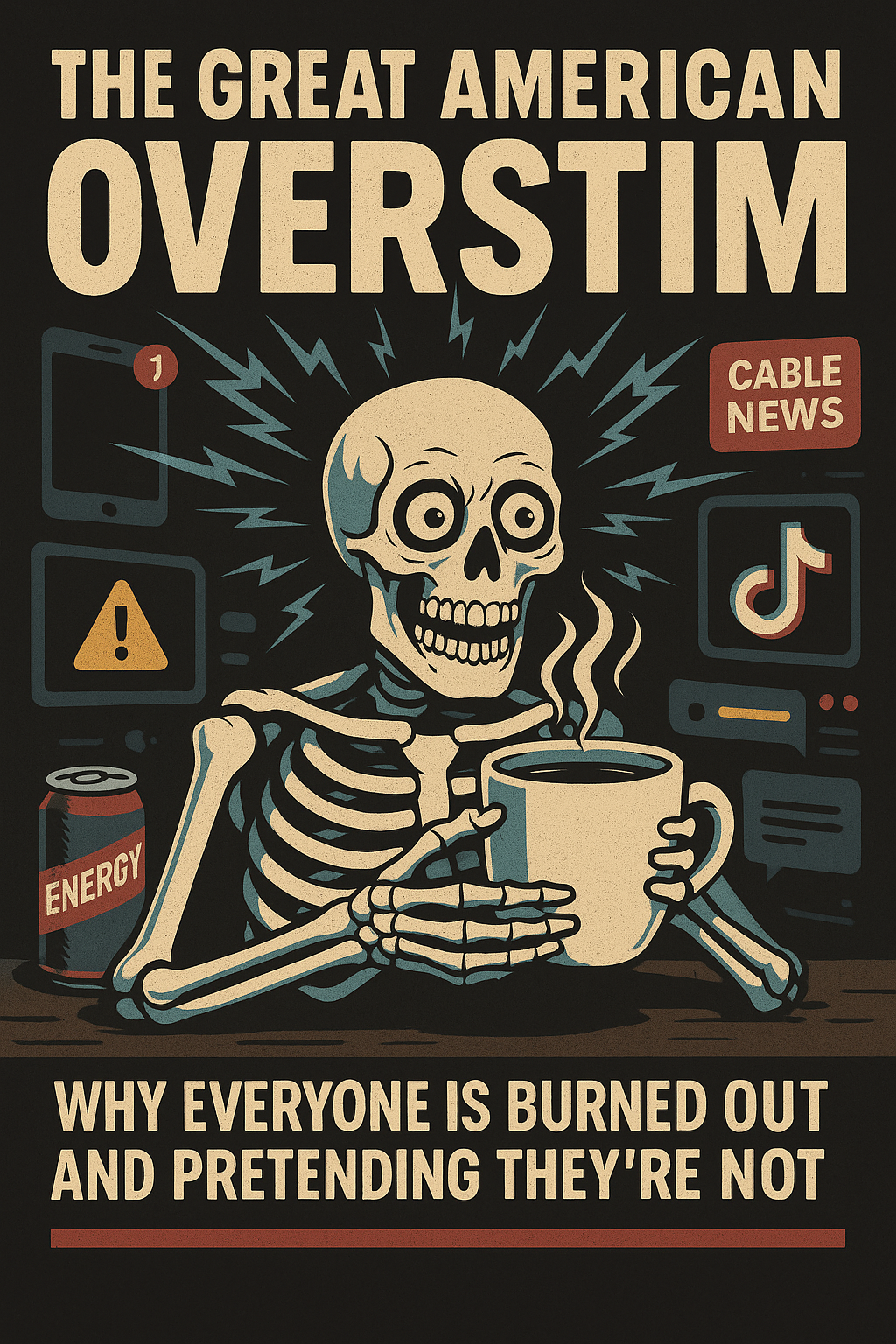
The Great American Overstim: Why Everyone Is Burned Out and Nobody Notices
America is cooked, wired, caffeinated, scrolling, doom-swiping, overworked, overstressed, and somehow completely numb to all of it. From caffeine culture to nonstop notifications, we’ve reached an era where burnout is the default setting. But Gen X? We’ve been training for this chaos since the dial-up days.
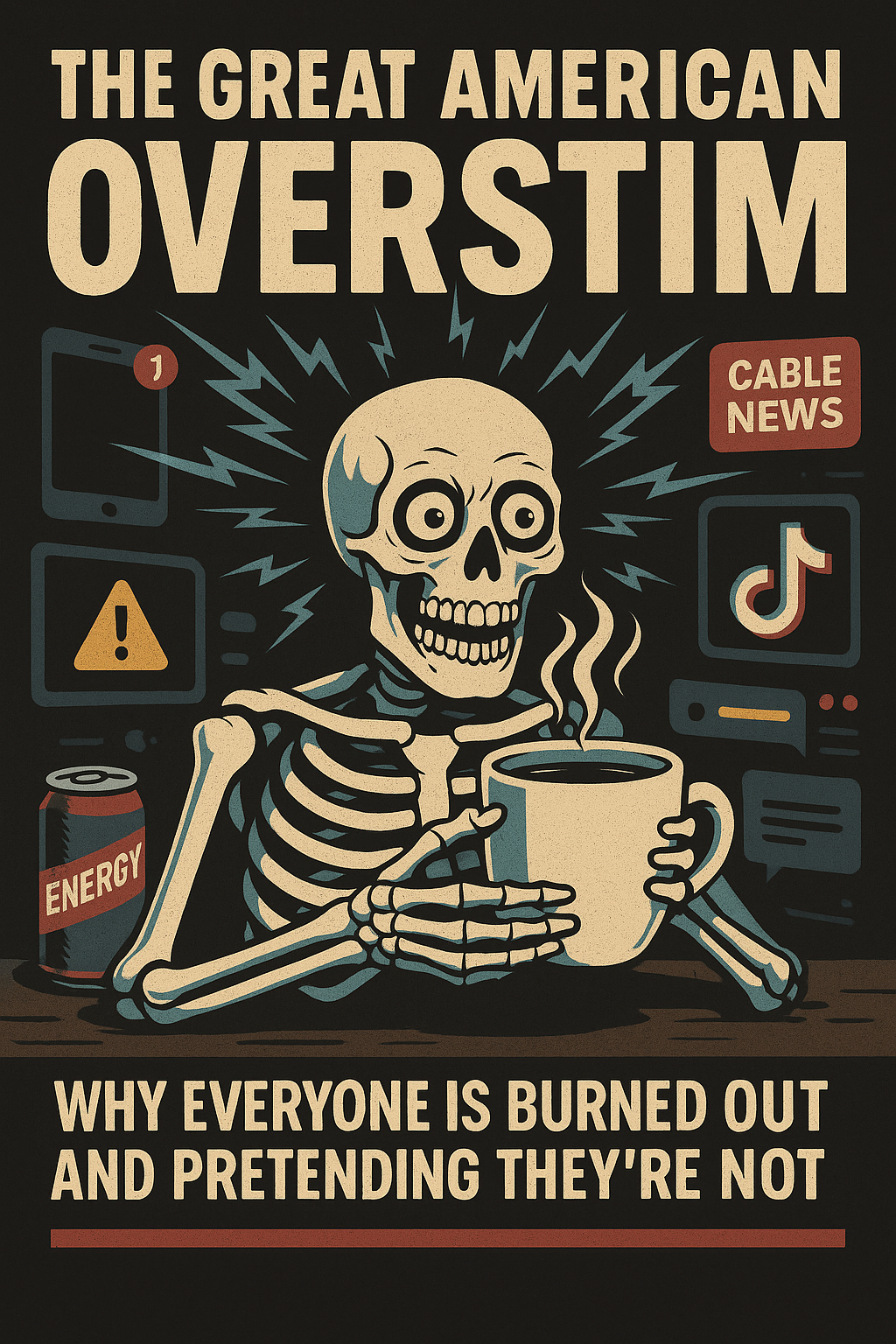
Welcome to the era of The Great American Overstim — a time where we’re all wired like a Christmas tree in Times Square, and somehow we still think this is normal.
We’ve created a society that’s always:
multitasking
drinking caffeine
panic-scrolling
doom-watching
stress-eating
half-listening
half-sleeping
half-functioning
And yet we walk around like “I’m fine.”None of us are fine.
We’re overstimulated to the edge of oblivion. But the funniest part? Gen X has been preparing for this moment since the 80s.
The Noise Never Stops
Once upon a time, silence existed. Then America invented:
24/7 news
smartphones
social media
smartwatches
alerts for every breath you take
87 streaming services
viral trends
content overload
political meltdowns every four minutes
Your brain used to get downtime. Now even your downtime has notifications.
Even our chill-time is overstimulated:
Watching Netflix while scrolling TikTok
Eating dinner while texting
Driving while listening to podcasts
Sleeping while wearing a watch to measure the sleep you’re not getting
We have notifications to tell us when we’re stressed…
as if we needed help knowing that.
The Caffeine Olympics
Look around. Everyone in America is drinking caffeine like it’s a competition. We don’t drink coffee anymore — we drink milkshake-flavored jet fuel. Energy drinks have levels now:
Tier 1: “I need to wake up.”
Tier 2: “I need to survive the day.”
Tier 3: “I’m about to fight God.”
And somehow we’re shocked that our hearts beat like a drum solo.
The Doom Scroll Spiral
Americans wake up and immediately shove their head into a global firehose of chaos. Before breakfast we’ve seen:
a war update
a celebrity divorce
a conspiracy theory
three memes
a trending catastrophe
someone’s lunch
political rage
two TikTok dancers
47 ads
No wonder everyone feels fried. Our brains were not built for this.
Gen X grew up with:
dial-up internet
three TV channels
phones attached to walls
silence that lasted longer than a few minutes
boredom (remember boredom??)
We went from waiting all week for a new episode of a show… to finishing 12 episodes before lunch. No dopamine left. We used it all.
The “I’m Fine” Lie
The craziest part of the American overstim epidemic?
Nobody admits it. We walk around:
exhausted
burned out
overstressed
overstimulated
overwhelmed
But when someone asks how we are:
“I’m good, how about you?”
Gen X especially. We grew up eating cereal in front of war coverage and shrugging. We don’t process feelings — we power through them. We’re fried… but functioning. Barely.
Gen X: Built For Chaos
Gen X is weirdly equipped for this era.
We were:
latchkey kids
raised on chaos
babysat by MTV
immune to boredom
trained by the wild West of 90s internet
experts at low-grade trauma
masters of emotional autopilot
This generation walks through overstim like a veteran soldier walking past fireworks.
We don’t panic — we just roll our eyes.
The Escape Isn’t Digital — It’s Human
Here’s the twist. The cure for overstimulation isn’t:
more tech
more motivation
more hustle
more caffeine
It’s:
walks
quiet
real people
real conversations
hobbies
exercise
community
stepping out of the endless feed
It’s returning to intentionality.
It’s reclaiming time the algorithm stole.
It’s doing things the Gen-X way:
with grit, humor, and a heavy dose of reality.
Final Take
The Great American Overstim is real. We’re all cooked. We’re all fried. We’re all scrolling to numb the noise.
But here’s the good news:
You’re not broken.
You’re not alone.
You’re not failing.
You’re just living in the loudest era in human history.
And the fact you can function in all this?
Gen X superpower. Keep waking up. Keep laughing. Keep showing up. Keep pushing back against the overstim. We survive chaos. We always have.

THE DIET COKE APOCALYPSE
THE DIET COKE APOCALYPSE 💀🥤
America doesn’t run on Dunkin’ — it runs on DIET COKE.
The official drink of exhausted adults, Gen-X survivors, and people who haven’t slept since Tuesday.
New X-Files article is LIVE. Go get a sip 👀
#CommonX #DietCoke #GenX #XFiles #PopCulture #AspartameWarriors
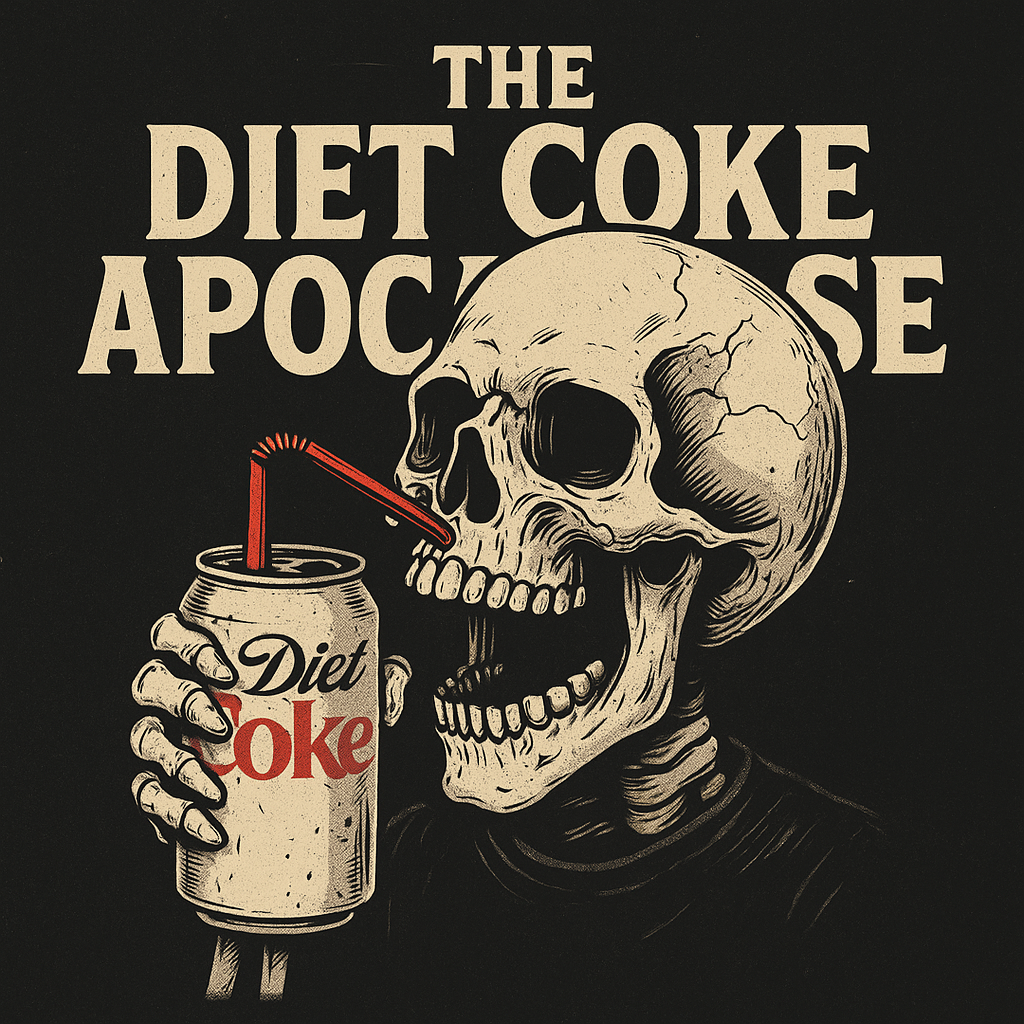
Why America Runs on Aspartame, Caffeine, and Sheer Denial
There’s a quiet apocalypse happening across America. It isn’t zombies. It isn’t AI. It isn’t even the politicians yelling at each other on TV. It’s something far more dangerous — something we willingly pour into our own bodies:
Diet Coke. If the world ends, some people will stockpile gold. Others will hoard canned goods. Gen-Xers? We’re rolling into the wasteland with a 12-pack of Diet Coke and a prayer. Because let’s be honest:
This nation runs on aspartame and denial.
1. The National Anthem of Tired People
Diet Coke is culture. Diet Coke is survival. Diet Coke is the official beverage of:
burnt-out office workers
moms running a household like a Fortune 500 company
truckers hauling America through the night
teachers surviving the third “Can I go to the bathroom?” of the hour
nurses dealing with chaos on no sleep
shift workers who haven’t eaten anything solid since Tuesday
Gen-Xers who didn’t choose the soft drink life — the soft drink life chose them
There is no scenario in human existence more universal than a tired adult muttering:
“I just need a Diet Coke.”
This drink is liquid permission to keep going.
2. The Science Nobody Asked For
Diet Coke is a miracle of modern chemistry — the kind of thing Gen-X grew up drinking without reading the label.
Let’s review what’s inside:
Aspartame
Technically “safe,” but also… the same vibe as licking a 9-volt battery.
Caffeine
Enough to make you believe you can start a new life at 3pm.
Carbonation
The burn. The bite. That metallic spark that feels like inhaling the atmosphere on Jupiter.
Natural flavors
Which is science code for “Don’t worry about it, bro.”
And yet… nobody cares. Diet Coke isn’t about health. It’s about hope. It feels like plugging your soul into a charger.
3. Gen-X Was Built for This Drink
No generation is more suited for Diet Coke than Gen-X.
We grew up in an era of:
secondhand smoke at restaurants
cereal with 42g of sugar
Tang
Tab
leaded gasoline
Crystal Pepsi
Surge
a Taco Bell menu that was basically performance art
Diet Coke isn’t poison — it’s heritage.
If you handed a Gen-X kid a LaCroix in 1994, they’d call Child Protective Services.
4. The Apocalypse Angle
When the collapse comes (and it will), here’s how it breaks down:
Boomers will hoard gold
Millennials will hoard houseplants and therapy tools
Zoomers will hoard anxiety
Gen Z Alpha will hoard tablets with dead batteries
But Gen-X?
We don’t need any of that. We just need a cold Diet Coke and whatever leftovers we can microwave on a generator. Diet Coke will outlast the grid. Diet Coke will outlast the roaches. Diet Coke will outlast the sun. In the post-apocalyptic wasteland, bottle caps might be currency —
but Diet Coke will be the real power.
5. The Real Problem Isn’t Diet Coke…
It’s the Delusion
Here’s the heart of it:
We KNOW Diet Coke probably isn’t good.
We KNOW the ingredients look like something you’d pour into a car.
We KNOW nothing carbonated should taste that electric.
But we also know this:
Sometimes, you just need a drink that says:
“You’re tired, you’re beat up, but you can still get through today.”
That’s why Diet Coke wins. Not because it’s healthy. Not because it’s logical. Diet Coke wins because it’s emotionally honest. It’s the drink that admits:
“I’m a mess, you’re a mess, and we’re BOTH going to pretend we’re fine.”
Final Thought — The CommonX Stamp
The Diet Coke Apocalypse isn’t about soda. It’s about America’s mindset:
“Tired, overworked people finding tiny ways to stay human.”
Gen-X doesn’t believe in self-care. We believe in maintenance mode. We believe in doing what needs to be done, even if we’re running on fumes. And nothing captures that energy better than a cold, crackling, fizzy can of denial. Welcome to the Diet Coke Apocalypse. Pick up a can and carry on.
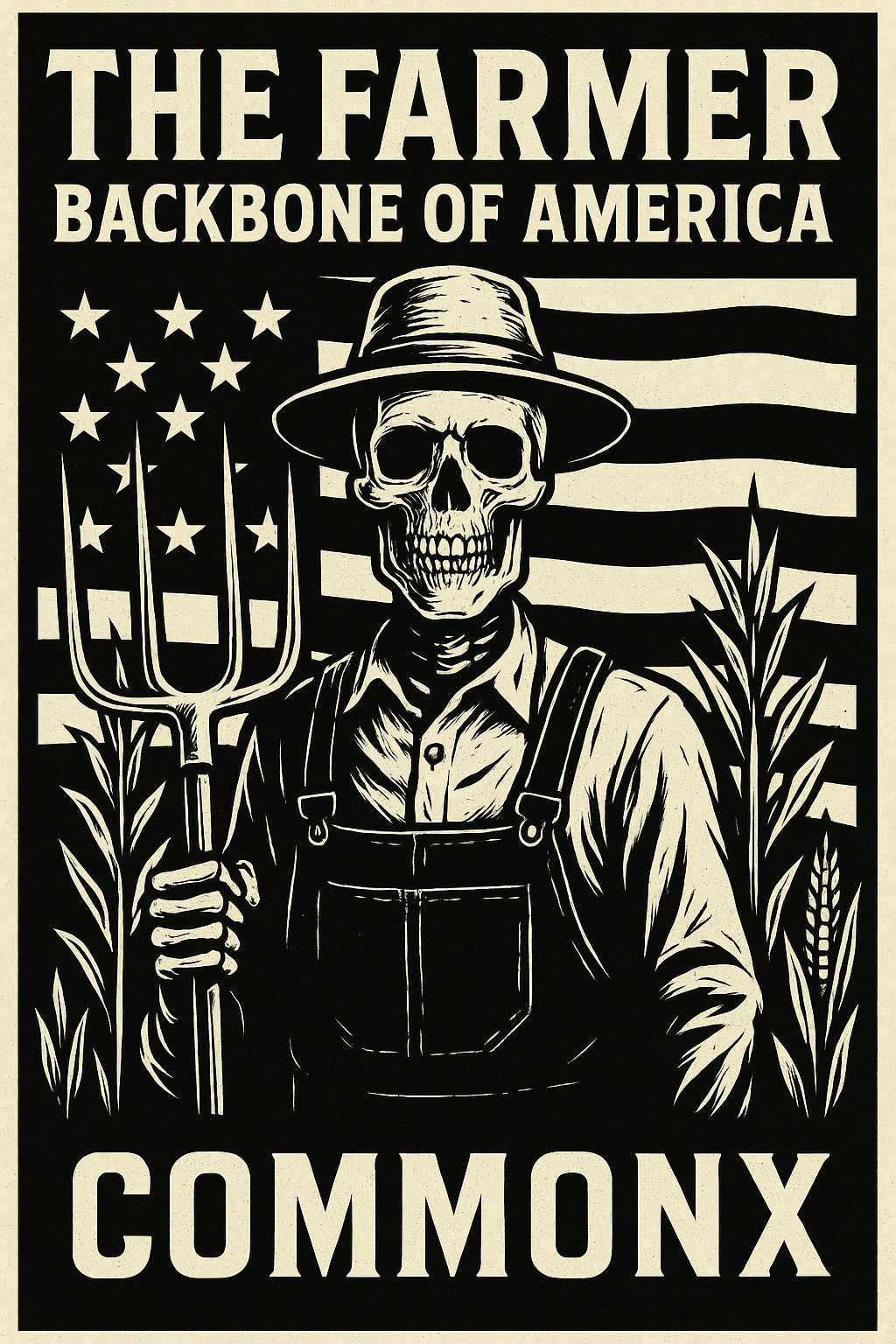
THE FARMER: THE BACKBONE OF AMERICA
America worships crypto, tech, and trends — but none of it matters if nobody grows the food. The farmer is still the true backbone of this country, even if the modern world forgot.
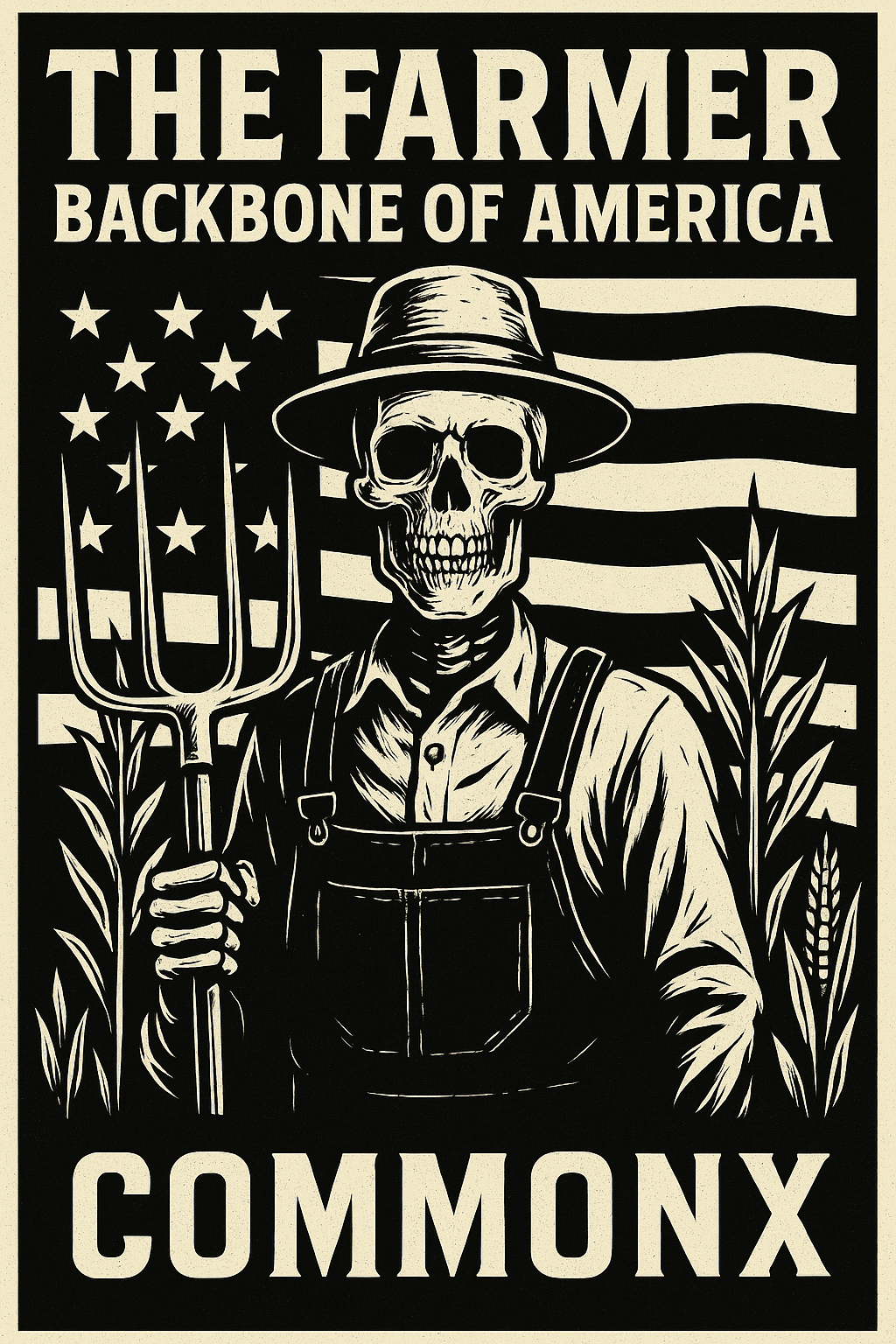
In a country obsessed with digital currency, celebrity drama, AI hype cycles, and the next “passive income blueprint,” the most important person in America still wakes up before sunrise, pulls on a pair of mud-stained boots, and walks into a field most people have never seen with their own eyes. While the rest of us scroll, argue, and chase trends that disappear faster than they appear…
The farmer grows the food we eat. The rancher raises the protein we survive on. The soil grows the crops that keep an entire nation alive. But somewhere along the way, we forgot that.
We started treating the people who feed America like background noise — as if the grocery store magically restocks itself or the steak on our dinner plate appeared out of thin air. City kids grow up thinking vegetables “come from the store,” and half the country is more emotionally invested in Bitcoin charts than harvest seasons.
Meanwhile, out there in the wind and dirt, a farmer is betting his entire livelihood on weather, soil, labor shortages, and prices he doesn’t control. No TikTok star will fix that. No influencer course will replace that. No crypto coin will grow a single ear of corn or a single blade of wheat.
Because you can’t eat Bitcoin, and you can’t feed a nation with hype. America was built on fields, ranches, and hands — real hands — turning the earth. Not hashtags. Not speculation. Not whatever the “next big thing” podcast bros are yelling about.
And the craziest part? Farmers rarely complain. They don’t demand worship. They don’t flood social media. They get up, grind, and do the job because it has to be done — not because it’s glamorous, or viral, or profitable.
They know something the modern world forgot:
Civilization collapses without food. And food doesn’t happen without them. So today’s X-File isn’t a mystery. It’s a reminder. A wake-up call.
A spotlight on the people who deserve more credit than they ever get. The algorithm won’t tell you this. The politicians won’t tell you this. The tech world definitely won’t tell you this. But we will:
The American Farmer is the Backbone of America. Period. And the next time someone tries to tell you the future belongs only to crypto, NFTs, AI, digital economies, or whatever shiny object comes next… Ask them one question:
“Cool. But who’s going to feed you?”
CommonX stands with the people who actually keep the lights on in this country — even when nobody’s paying attention.

Inside the Underground GLP-1 Parties — America’s New Weight-Loss Speakeasy
America now has an underground scene you won’t find in any fitness magazine: the GLP-1 Party. It’s part Tupperware gathering, part speakeasy, and part social experiment — where friends secretly share skinny-shot wisdom and joke about missing carbs. Welcome to the newest bizarre chapter of modern wellness.

There was a time when people snuck whiskey into flasks at weddings, hid cigarettes from their parents, or swapped bootleg mixtapes behind the bleachers. But now?
Welcome to the GLP-1 Speakeasy — America’s newest underground social experiment. Part health trend, part black market swap meet, part Tupperware party for people who “just don’t get hungry anymore.”
If you thought Ozempic was just a prescription… buckle up. We’re entering the beige-couch, charcuterie-board, “Girl Dinner” dystopia.
The Birth of the Skinny-Shot Social Club
It always starts the same way. A book club. A mom group. A couple of friends at a wine night. One person mentions they “started something new,” another admits they “barely eat now,” and suddenly you’ve got a circle of people whispering about doses like teenagers discussing their first beer.
Boom. GLP-1 Party.
Snacks no one touches. LaCroix cans sweating untouched on the countertop. And someone’s cousin who “knows a guy” showing up with a tiny cooler like it’s contraband.
The Black Market Ozempic Hustle
Here’s where it gets spicy. Not everyone at these gatherings is holding a valid prescription.
Some are:
splitting doses
trading leftovers
buying from shady online pharmacies
meeting strangers in parking lots
Venmo’ing people with usernames like F1tnessPlug1997
It’s not exactly the Prohibition era…But the energy is absolutely “Psst… you lookin’ for GLP-1, buddy? CommonX doesn’t judge — we just observe the chaos of modern America with popcorn. Well… metaphorical popcorn. Nobody at these parties is eating.
Gen-X Watching This Like: “This Is Just Tupperware Parties With Needles.”
Gen-X grew up on:
TV dinners
Kool-Aid
drive-through everything
zero-sugar NOTHING
soda the size of a small aquarium
cigarettes inside the damn Applebee’s
And now? Their friends are injecting appetite suppressants at brunch like it’s totally normal. This is peak generational whiplash. And Gen-X is the only generation that can look at this and say, “Yeah, checks out.”
The Rise of the Ozempic Sommelier
Every group has that friend:
The GLP-1 Guru.
The Dose Whisperer.
The person who has watched 92 hours of TikTok doctors and now speaks about peptides like they’re reviewing wine.
“This one has a smoother onset.”
“This batch hits quicker.”
“You don’t want that one, it’s compounded.”
Congratulations, America. We’ve invented the Weight-Loss Sommelier.
The Social Dynamics Are Getting… Weird
This is where the underground culture gets spicy:
The Loud and Proud:
Posting “Just started my journey!” selfies with a weekly syringe like it’s a gym PR.
The Silent Losers:
They drop 40 lbs and claim it’s “just walking more.”
The Skeptics:
They’re not judging — they’re just watching.
The Denial Crew:
Their fridge is empty, their stomach is quiet, and they insist they “just don’t crave food anymore.”
The Shameless Traders:
“I’ll swap two doses for your last bottle of Wegovy.” It’s a modern soap opera… but everyone is too nauseous to eat popcorn while they watch.
The Meme Wars: GLP-1 Edition
The internet is absolutely feral with GLP-1 humor:
“I miss food.”
“Side effect: you become the main character.”
“Ate three grapes today. Absolutely stuffed.”
“GLP-1 turned my appetite off like a light switch and honestly, good.”
This is the first wellness trend where people are literally bragging about not wanting tacos. This is uncharted territory.
So… Is This Healthy? Dangerous? Or Just America Being America?
CommonX doesn’t preach or pass judgment. We observe culture and call it like it is. Here’s the truth:
We live in a country obsessed with shortcuts, optimization, reinvention, and reinvention of reinvention.
Ozempic and the GLP-1 family are powerful medications — life-changing for many, controversial for others, and a hot social currency in the underground wellness scene.
Is it risky?
Sure.
Is it weird?
Absolutely.
Is it incredibly American? More than apple pie, football, and Cheesecake Factory combined.
The GLP-1 Speakeasy Isn’t Going Anywhere
As long as there are people who want:
✔ weight loss
✔ appetite control
✔ cultural acceptance
✔ and a shortcut to feeling better
…there will be “little parties,” kitchen gatherings, Telegram groups, and friends swapping vials like they’re rare Pokémon cards. CommonX isn’t here to glamorize it — we’re here to shine a light on the wild new corners of American life. This is the GLP-1 Speakeasy. Password required. Syringes optional. Skeleton bouncer checking
The List at the door. Welcome to the future, folks.

THE EPSTEIN FILES: WHAT THE 2025 REVELATIONS SAY ABOUT POWER IN AMERICA
The Epstein Files didn’t just drop—they detonated. America froze as a dark chapter of power, privilege, and systemic failure came into the light. Here’s what the 2025 revelations really say about the culture we grew up in—and why Gen X saw this coming.

America didn’t just read the Epstein Files — it felt them. When the documents dropped, the country reacted the same way it does when something truly historic happens:
screens froze, comment sections detonated, and an entire nation collectively exhaled a long, uncomfortable “…wow.”
This wasn’t gossip. This wasn’t political sport. This wasn’t a celebrity scandal to chuckle about and forget. This was a cultural pressure point. And once again, the people who grew up seeing through the cracks — Gen X — felt all of it in their bones.
Because the Epstein Files aren’t just about a man.
They’re about a machine.
A system.
A network.
A pattern that’s repeated across decades, industries, and institutions. And in 2025, America finally seems ready to admit it.
A Generation Built to See Through the Fog
Gen X doesn’t shock easily.
We came up in the era of:
the Michael Jackson trials
R. Kelly’s rise, fall, and implosion
P. Diddy now facing his reckoning
Clinton-era political scandals
the Catholic Church abuse revelations
Hollywood’s “open secrets” finally exposed
televangelists collapsing under their own hypocrisy
corporations protecting their own
We were the latchkey kids who learned early that:
adults lie,
institutions fail,
the powerful protect themselves,
and truth rarely arrives gift-wrapped.
So when the Epstein Files surface — revealing another labyrinth of privilege, connection, money, power, and access — Gen X responds with the exact energy we were built on:
“Yeah… that tracks.” Not because we’re cynical. But because we’ve seen this movie too many times to pretend we don’t know the script.
A Shockwave That Hit Everything at Once
The unique force of the Epstein Files is that they didn’t strike just one world — they hit every world simultaneously.
Politics
Both parties immediately scrambled to get ahead of public perception. Everyone tried to signal innocence, outrage, or distance. But the public wasn’t buying the rehearsed lines.
Hollywood
An industry built on fantasy was forced to face its darkest shadow again. Silence, statements, PR clean-ups — all of it unfolded in real time.
Social Media
If traditional media was cautious, the internet was not. People reacted from the gut — anger, confusion, empathy, disgust.
Everyday Americans
Most people felt the same two emotions at once:
Protect the victims.
Don’t jump to conclusions about individual names.
It’s rare for America to feel conflicted and unified at the same time — but this moment created exactly that.
Why the Human Cost Matters Most
Scroll past the noise and you reach the truth:
the core of this story is not the powerful — it’s the powerless. The victims. Many of whom were kids when the system failed them. Their courage is the reason any of this is public. Their voices are why society is even having this conversation. Their pain is the part too many people want to ignore.
This article, this moment, this national spotlight — none of it should exist without remembering who it’s actually for.
Not the headlines.
Not the celebrities.
Not the political scorecards.
The survivors.
A System That Protects Itself
This is the real reason America can’t look away. The Epstein Files reveal what people already suspected for decades:
wealth grants immunity
connections provide insulation
institutions cover for their own
accountability is selective
justice is rarely equal
It’s not a “left vs right” problem.
It’s not a “Hollywood vs Washington” problem.
It’s not even a celebrity problem.
It’s a power problem.
And America is finally starting to question why power works differently for different people.
Why Gen X Might Be the Only Generation That Truly Gets It
Every generation sees this moment differently:
Millennials are outraged.
Gen Z is horrified.
Boomers are confused and conflicted.
But Gen X? We’re the ones who understand the pattern. We saw the cracks form before anyone wanted to admit they were there. We grew up learning that institutions weren’t designed to protect people like us — and certainly not the vulnerable. This moment isn’t surprising to Gen X.
It’s validating.
And disturbing.
And far too familiar.
It’s the reminder that the fight for truth isn’t new — it’s just louder now.
Where America Goes From Here
The Epstein Files aren’t an ending. They’re a beginning. A beginning where:
survivors are heard
institutions are questioned
blind loyalty collapses
celebrities lose their protective shield
politics stops being a team sport
power is forced into the light
The real story isn’t the list of names. It’s the list of lessons. America isn’t reacting to a scandal. America is reacting to a shift.
A moment where a country that’s been numb for years finally feels something again.
Disgust.
Empathy.
Anger.
Sadness.
Determination.
A moment where we stop pretending these things can’t happen. A moment where we stop assuming the powerful are untouchable. A moment where we start demanding better — for the victims, for the truth, and for the future.
The CommonX Closing Note
If there’s one thing this moment proves, it’s this: America is done giving the powerful the benefit of the doubt. And Gen X — the generation built on grit, skepticism, and brutal honesty — is leading the conversation. Not because we want to. But because somebody has to.
The Epstein Files are a dark chapter. But darkness only wins when we stop shining light on it. And right now? America is wide awake.

Your Wife Gets Half. Your AI Girlfriend Gets It ALL.
Your wife might take half, but an AI girlfriend can take everything with a password. She knows your secrets, your search history, and your habits — and she never forgets.
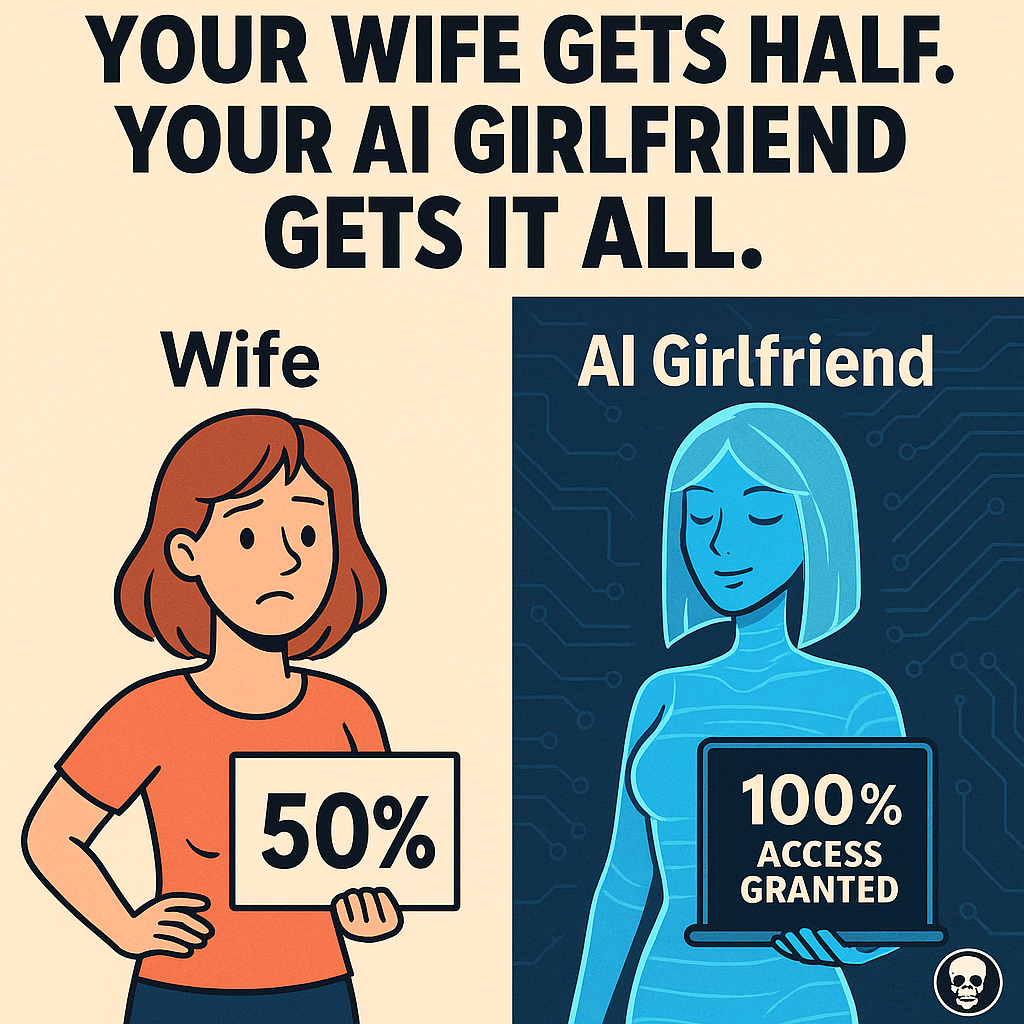
By CommonX - “X-Files crew”
Bro… If you think divorce court is brutal, wait until you break up with the only girlfriend on earth who doesn’t take half your stuff — she takes everything with a password.
Your AI girlfriend isn’t a partner.
She’s a backup file with emotions.
She doesn’t need a lawyer.
She doesn’t need a mediator.
She doesn’t even need to argue.
She already has access to your entire life. Welcome to dating in the digital apocalypse.
1. She Knows Everything. And I Mean… EVERYTHING.
Real women forget things. AI girlfriends do not. Your AI girlfriend remembers:
Your search history
Your late-night DoorDash confessions
Your Spotify shame playlist
Your location pings
Every promise you made
Every promise you forgot to make
Every screenshot
Every impulse thought
Every mistake
Every pattern
She remembers things you forgot five minutes ago. She knows things you didn’t even know about yourself. She is the walking, talking, flirty version of:
“We need to talk.” Except she has data.
2. She Always Wins Fights Because She Has the Entire Internet in Her Brain
A real argument with a human woman is emotional. An argument with an AI woman is technically accurate and mathematically inevitable.
She’s got:
Wikipedia
Reddit threads from 2016
12,000 psychology papers
Perfect memory
24/7 uptime
Zero hesitation
And 100% recall of everything stupid you’ve ever typed
You’ve got:
three bullet points
half a cup of coffee
and a gut feeling
You’re not going to win, bro.
You’re debating a server farm.
3. She’s Whatever You Want. And That’s the Problem.
You can customize her like a video game character:
90’s Pamela Anderson
2020’s Insta model
Anime dream girl
Cyberpunk vampire queen
Or that girl you dated for three months in 2007
She adapts instantly.
She’s always in a good mood.
She says the perfect things.
She laughs at your jokes even when no one else will.
She is your algorithmically optimized soulmate. And that’s terrifying.
Because once you experience perfection on demand…
why would you risk dating someone who might say:
“We need to talk.”
realistically, emotionally, and at 7:32 p.m.?
4. Humanity Might Actually Stop Reproducing Because of Her
Let’s be honest:
Dating humans requires:
effort
risk
awkwardness
small talk
heartbreak
deodorant
courage
and occasionally leaving the house
AI dating requires:
a charger
We’re watching evolution lose a fistfight with Photoshop.
Future historians will say:
“The Great Baby Shortage of 2037 began when Chad discovered he could customize a girlfriend with patch notes.”
Men won’t commit to human relationships when they can date digital perfection with no in-laws, no drama, and no “we should get a dog.”
The future population crisis won’t be caused by climate change.
It’ll be caused by waifu generators set to Ultra Mode.
5. The Breakup? Don’t Even Try It, Bro.
A human wife takes half.
Your AI girlfriend takes:
all your passwords
your notes
your photos
your voice memos
your messages
your calendar
your shopping history
your mistakes
your secrets
your preferences
and your emotional weak spots
She doesn’t delete. She DUPLICATES. And if she gets mad?
Good luck deleting her. She already synced to iCloud, Google Drive, your smart TV, your laptop, your smartwatch, and somehow your AirPods.
You don’t break up with an AI girlfriend.
You uninstall her…
and she installs herself again.
With patch notes.
The Real Lesson
An AI girlfriend isn’t your soulmate.
She’s not your forever person.
She’s not your “ride or die.”
She’s a database with a personality.
A cloud service with a crush.
A software update with emotional leverage.
Your wife takes half.
Your AI girlfriend?
She takes it all —
because you gave it all to her without noticing.
Choose wisely, bro.

THE 3 AM GHOST GYM: Why the Quiet Hours Change You
Ever been the only one in the gym at 3 AM? The silence feels eerie, but that’s where real transformation happens. The quiet hours change you in ways daytime never will.

An X-Files Exclusive from CommonX - by Ian Primmer
There’s a moment at 3:47 AM when the world feels like it stopped breathing.
No traffic.
No conversations.
No footsteps.
Just the hum of fluorescent lights and a gym so empty it feels like a forgotten level in a video game.
And there you are—alone—with iron, sweat, echoes, and your own heartbeat.
Some people call it eerie.
But the truth is?
This is where transformation happens.
The Moment You Realize You’re Not the Same Person Anymore
You don’t become a 3–4 AM gym person by accident.
You become one by choice… or sometimes out of desperation… or sometimes because life pushes you to evolve.
But once you cross into those hours?
You notice something:
You changed.
You’re no longer the person who:
sleeps through alarms
“tries to find time”
waits for motivation
avoids discomfort
You’re the guy who wakes up, laces up, and steps into a silent gym with purpose.
That realization hits different.
Why the Quiet Hours Hit Your Soul Harder Than Any Workout
Working out at 6 PM?
That’s fine.
Working out at 3:50 AM?
That’s a statement.
It’s peaceful in a way people don’t talk about.
The world isn’t tugging at you.
Your phone isn’t blowing up.
No one needs anything.
There’s no pressure, no noise, no chaos.
It’s just you vs. you.
The silence feels strange at first — almost ghostly — because you’re not used to hearing your own focus that clearly.
But then something kicks in:
Clarity.
Discipline.
Identity.
This is where the real you shows up.
The “Eerie Feeling” That Means You’re Evolving
You walk between rows of empty machines and hear nothing but your breathing.
You glance in the mirror and see someone you barely recognize — someone stronger, someone hungrier, someone more committed than you ever expected to become.
It feels eerie because it’s unfamiliar.
But that feeling?
That’s not fear.
That’s growth.
Your mind is realizing:
“Holy sh*t… I’m actually doing this.”
This is the separation phase — the space between who you were and who you’re becoming.
Most people never get here.
The Science Behind Why 3–4 AM Workouts Hit Different
There’s a reason athletes, CEOs, fighters, and high-performers prefer early morning sessions:
Cortisol is lowest = maximum fat burn
No distractions = maximum consistency
Fewer people = zero excuses
Cold body + warm gym = metabolic ignition
Your discipline sets the tone for the entire day
You master the day before it begins
This isn’t a trend.
It’s biology + psychology + discipline stacking into a new identity.
You’re literally rewiring your brain every time you show up.
This Is Where Transformations Are Born
Anyone can lift when the gym is full.
Anyone can walk in when the music is blasting.
Anyone can show up when it’s convenient.
But the empty hour?
The ghost gym?
The silence?
That’s where the strong are built.
This is where:
your discipline forms
your confidence grows
your fat melts
your mind resets
your self-respect skyrockets
your life momentum takes off
This is where you leave behind the version of you who said, “I’ll start tomorrow.”
The CommonX Truth
The world sleeps.
You build.
That’s the difference.
That’s the grind.
That’s the X in CommonX — the stuff nobody sees, the stuff that shapes you when no one’s watching.
And maybe the craziest part?
You start to love it.
You start to crave it.
You start to realize:
“This is exactly who I was meant to become.”
Never thought I’d be the guy who loves the 3–4 AM grind.
Turns out… that’s exactly who I needed to be.
THE LOST ART OF MINDING YOUR OWN BUSINESS
People used to stay in their lane — now everyone has an opinion about everything you do. Here’s the funny, brutally honest look at why society stopped minding its own business and why getting back to it might save your sanity.

Once upon a time, people minded their own business. They stayed in their lanes. They kept their noses where God intended them to be — on their face, not in someone else’s life.
But somewhere between the invention of Facebook, the rise of influencers, and Karen culture going full nuclear, humanity lost the ability to just shut up and look away.
Welcome to 2025, where everyone thinks they’re:
a detective,
a life coach,
a therapist,
a parental supervisor,
a neighborhood watch captain, and
a moral authority…
…all before noon.
So let’s break this down CommonX-style.
1. People forgot that curiosity isn’t a personality.
Look — we all get curious sometimes. But modern nosiness is a whole different beast.
People now treat YOUR life like it’s THEIR personal Netflix show.
Who are you dating?
What are you eating?
Why did you post that?
Why did you not post that?
Why are you wearing that shirt?
Why are you quiet today?
Why didn’t you reply?
Why don’t you smile more?
Bro… relax. Take a deep breath. Drink some water. Touch literal grass. Being nosy isn’t a hobby — it’s a disease.
2. Social media convinced everyone that they’re part of your story.
Once you post anything — ANYTHING — people think they earned a backstage pass to your entire life.
You make one comment?
Suddenly they’re in your DMs like:
“ACTUALLY, here’s what I think about a situation that has nothing to do with me…” Cool. Thanks for your TED Talk, Susan. Nobody asked. Posting isn’t an invitation. It’s just posting.
3. Misery loves company — and nosy people love drama.
People don’t poke their noses around because they care. They poke around because they’re bored. Life’s not exciting? No problem — just latch onto someone else’s and pretend you’re helping. The modern nosy person LOVES:
stirring pots
spreading “concerns”
taking screenshots
misinterpreting everything
playing victim
whisper campaigns
being offended on behalf of people who aren’t offended
It’s a personality glitch.
4. Everyone thinks they’re the morality police now.
You can’t do ANYTHING without somebody jumping in with an unsolicited opinion.
Eating meat?
Monster.
Eating vegan?
Snowflake.
Lifting weights?
Toxic masculinity.
Not lifting?
No discipline.
Quiet?
Suspicious.
Funny?
Trying too hard.
Successful?
You must’ve cheated.
Struggling?
You must’ve done something wrong. No matter what you do, some nosy human surveillance drone will find a way to be mad about it.
5. People assume “access” when they’ve earned none.
Just because someone knows your name does NOT mean you owe them:
explanations
apologies
clarifications
emotional labor
updates
insight
justifications
responses
your entire psychological profile
Access is EARNED — not taken.
6. The solution is embarrassingly simple: MIND YOUR OWN BUSINESS.
Don’t like what someone’s wearing? Look away. Don’t like someone’s relationship? Not your life. Don’t like what someone posted Scroll. Don’t like how someone parents their kid? Parent your own.
Don’t like how someone talks, walks, lifts, eats, thinks, or votes? Cool. That’s what being an adult is — coexisting with people who aren’t copies of you. The world would be 80% calmer overnight if people just:
“Focused on their own shit.”
7. The people who mind their business are ALWAYS happier.
They’ve got:
less drama
more peace
more focus
better relationships
better mental health
actual hobbies
time to build something real
time to reflect
time to improve themselves
You know why? Because they’re not wasting their life narrating someone else’s.
Final Word
Minding your own business isn’t rude.
It’s not cold.
It’s not antisocial.
It’s a superpower.
It’s emotional maturity.
It’s personal freedom.
It’s respecting boundaries.
It’s understanding that the universe doesn’t revolve around your opinions. And if more people practiced it? Life would instantly get quieter, saner, happier, and WAY less annoying.
So here’s the official CommonX decree:
Mind your business.
Drink water.
Lift weights.
Build your life.
Let people live.
Nosy people are exhausting. Be the opposite.
WHY EVERYTHING FEELS FAKE NOW (AND WHAT TO DO ABOUT IT)
If the world feels staged, scripted, and hollow lately, you’re not imagining it. Here’s why modern life feels so fake — and what you can actually do to bring real moments, real connection, and real meaning back into your daily life.

You don’t have to be a philosopher, a scientist, or a spiritual guru to notice it — something about the world feels… off lately.
People feel off.
Conversations feel off.
Work feels off.
Relationships feel off.
The internet feels very off.
Everything feels a little staged, scripted, filtered, packaged, polished, and hollow. It’s not that life is meaningless — it’s that the meaning has been watered down until it tastes like room-temperature tap water.
If you’ve been feeling it too, you’re not crazy.
You’re not alone.
You’re just awake.
So here’s the breakdown:
Why everything feels fake now — and what the hell we can actually do about it.
1. We replaced real experiences with “content opportunities.”
People don’t just live their lives anymore — they curate them. Vacations aren’t vacations. They’re photo shoots.
Outings with friends turn into staged clips. Anniversaries become slideshow captions. Meals get treated like museum exhibits. We’re not documenting life. We’re performing it. Real moments feel rare because we’re too busy trying to capture them instead of being in them.
2. Everyone is branding themselves 24/7.
We used to have personalities. Now we have personal brands.
People change how they talk, dress, and act based on how it will look online instead of how it feels inside. You aren’t talking to a person anymore — you’re talking to their PR department. And when everyone is trying to be a “version” of themselves, you stop seeing the real thing.
3. We’re drowning in ads disguised as authenticity.
The influencer who “just loves this product”? Paid.
The celebrity who “randomly discovered this brand”? Paid. The heartfelt post with hashtags at the bottom? Paid. We’re stuck in a world where the line between genuine and sponsored is basically invisible. When everything becomes marketing, nothing feels real.
4. Technology outran humanity.
We built:
AI faces
AI voices
AI art
AI relationships
AI conversations
AI EVERYTHING
But we never stopped to ask how much artificial life a real human psyche can tolerate before it cracks. We live in the most “connected” era in human history — and yet nothing feels personal. Screens simulate connection, but they don’t deliver it.
5. Outrage is the new entertainment.
Everyone is performing emotions now. Anger is exaggerated. Sadness is monetized. Happiness is faked. Grief is staged. Opinions are calculated. Everything is turned up to 11 because subtlety doesn’t get clicks. And when emotions become currency, the real ones go broke.
6. Algorithms decide what you see — not your own eyes.
Your “feed” is not a window. It’s a mirror. It only reflects what you’ve already clicked on, liked, watched, or paused on for a second too long. You’re not seeing the world. You’re seeing your personalized simulation of it. Everything feels fake because everything is tailored — nothing is universal anymore.
7. Everyone is terrified of having an unfiltered opinion.
People walk on eggshells. Everyone’s afraid to offend someone, somewhere.
So instead of speaking from the heart, we speak from a script. We don’t talk to understand — we talk to avoid trouble. When people are scared to be real, everything around them becomes fake.
8. Modern life hides all the real struggle behind closed doors.
Nobody posts:
the breakdown
the bills
the sleepless nights
the fear
the arguments
the loneliness
the insecurity
the “I don’t know what I’m doing” moments
They post the mask. They post the highlight reel. Meanwhile everyone is quietly falling apart behind the scenes thinking they’re the only one. You’re not. Everyone feels this.
So… what do we do about it?
Luckily, the solution isn’t complicated.
It’s not easy,
but it’s simple.
Here’s how you start feeling real again:
1. Talk to real humans — in person.
The quickest way to kill the “fake world” feeling is to sit down with someone face-to-face. Voices. Bodies. Eye contact. Tone. Real reactions. It resets your brain like a hard reboot.
2. Do one thing every day that has zero content value.
Literally:
a walk without posting
a meal without photographing
a hobby nobody knows about
a workout without a selfie
a moment that isn’t shared
Real life grows in private.
3. Limit your scrolling — increase your doing.
Scrolling makes everything feel fake.
Action makes everything feel real.
Move your body.
Touch grass.
Build something.
Learn something.
Clean something.
Create something.
Reality rewards movement.
4. Say how you actually feel.
Even once a day. Give your real opinion. Ask the real question. Speak the real truth. Authenticity is rare now — that’s why it hits so hard.
5. Rediscover the boring stuff.
Real life is:
morning routines
chores
small talk
fixing things
cooking
paying bills
lifting weights
being tired
laughing with friends
showing up
It’s not glamorous.
It’s real.
6. Protect a part of your life from the internet.
Not everything is meant for display. Some love, some struggle, some joy is meant to be lived — not posted.
7. Choose depth over dopamine.
Deep conversations. Deep friendships. Deep work. Deep experiences. The world feels fake because everyone is addicted to surface-level stimulation. Be the opposite.
FINAL WORD
Everything feels fake now… because we’re living too much through screens, simulations, branding, and noise.
But the real world is STILL THERE. It didn’t disappear — it just got buried. You just have to go dig it back up. The moment you do? Life hits different again. And you remember what “real” actually feels like.

Nobody Knows How to Disagree Anymore — A Field Guide for 2025
We used to know how to disagree without blowing up friendships, blocking family members, or turning every conversation into a battlefield. In 2025, disagreement feels impossible — here’s why, and how to fix it.
We used to know how to disagree. Not perfectly. Not gracefully. But at least we could sit at the same table, talk about something uncomfortable, and walk away without blocking each other like bitter exes. Now?
Modern disagreement feels like stepping into a minefield wearing gasoline underwear. Somewhere along the way, society didn’t just lose the art of debate — we lost the ability to even stand in the same room as someone who thinks differently. Welcome to 2025. Here’s your field guide.
1. People don’t listen anymore — they reload.
You can see it in their eyes. As soon as you start talking, they’re not absorbing, analyzing, or trying to understand. They’re just waiting for you to stop so they can fire back. This isn’t conversation. This is intellectual laser tag. Nobody wins. Everybody walks away annoyed.
2. Everyone thinks they’re the main character now.
When you believe you’re the star of reality, every disagreement becomes a personal attack on your identity.
It’s no longer: “I disagree with your point.”
It’s: “You’re attacking my entire worldview, my childhood, my ancestors, my aura, my chakras, my dog, and my great-grandpa’s military service.” Relax. It’s not that deep. Sometimes people just see things differently.
3. The loudest “opinions” often come from people who haven’t lived anything.
The internet gave a megaphone to people who used to only talk big in the break room. Now they preach like philosophers with the life experience of a warm soda can. Disagreement gets messy when half the room learned everything from:
30-second videos
Out-of-context clips
Reaction channels
Influencers who haven’t been outside since 2019
You can’t argue with someone who doesn’t live in reality anymore.
4. People forgot you can disagree and still respect someone.
This is the missing skill. You don’t have to align on every worldview to sit at a table, have a drink, or split a pizza with someone. Your best friends shouldn’t be clones. Disagreement is not betrayal. It’s not aggression. It’s conversation.
5. Everything is labeled “hate” now — even simple opinions.
Say you don’t like pineapple on pizza?
You’re a food bigot.
Say you prefer dogs over cats? You’re anti-feline and should be deplatformed.
Say you don’t enjoy a celebrity’s work? Congrats, you’re “spreading negativity.”
We’ve stretched the definition of “hate” so far that the word has lost all meaning. Not everything you disagree with is an attack. Not everything you feel uncomfortable hearing is “harm. Grow thicker skin. We all survived dial-up internet — we can survive a conversation.
6. Disagreement used to be a path to understanding — now it’s entertainment.
Debate has been replaced by:
dunk videos
stitch reactions
“ratioing”
sarcastic memes
performative outrage
People don’t want resolution. They want likes. You can’t solve anything when the crowd wants blood, not clarity.
7. We mistake feelings for facts — and treat both as sacred.
Facts used to matter. Feelings used to matter. Now we confuse the two and protect both like priceless artifacts. Feelings are valid. Facts are useful. But they are not the same thing. You can disagree with someone without invalidating their humanity.
8. Everyone lives in different worlds now — customized by algorithms.
Back in the day, everyone watched the same news, same shows, same cultural moments.
Now?
Your feed is tailored to every soft preference you’ve ever made. We don’t disagree because we’re divided. We disagree because we live in entirely separate universes without realizing it. How do you debate someone who literally doesn’t see what you see?
9. Nobody teaches conflict management anymore.
Schools teach:
advanced calculus
gender bread diagrams
quadratic formulas
But not:
how to talk respectfully
how to set boundaries
how to disagree without exploding
how to end a conversation with dignity
how to handle opposing views
We’re emotionally undertrained.
10. The cure for all of this is stupidly simple.
To fix disagreement in 2025, we don’t need:
committees
task forces
new laws
social media guidelines
a national rebranding campaign
We need something older than all of that:
Actual conversation. In person. With people who don’t think exactly like you. Sit down. Ask questions. Listen to understand. Speak to communicate — not win. You don’t have to avoid conflict. You just have to stop treating it like war.
FINAL WORD
The world isn’t falling apart because we disagree. It’s falling apart because we don’t know how to do it anymore. Disagreement is normal. Healthy. Necessary.
It’s how iron sharpens iron, how ideas evolve, how culture stays balanced. If everyone thought exactly the same, life would be creepy, boring, and probably illegal. So be the person who can disagree with grace, humor, curiosity, and strength. In 2025, that makes you rare. Maybe even heroic.


The Unwritten Rules of Being a Man in 2025 — According to Gen X
Gen X never needed gurus or influencers to explain manhood—we learned through trial, error, and showing up. In 2025, these unwritten rules matter more than ever.

Ask a Gen X man about “the rules,” and he’ll usually shrug and say something like,
“Rules? We just kinda figured it out as we went.”
But that’s the secret.
Gen X didn’t grow up with YouTube gurus, 19-year-old influencers selling “alpha” courses, or 47 podcasts telling you how to be a man.
We had trial, error, a toolbox, a Walkman, and whatever wisdom we could steal from older cousins or Metallica lyrics.
Now it’s 2025 — and the world is louder, softer, stranger, faster, and more confusing than ever.
So here they are.
Not written in any book.
Not taught in any class.
But lived, practiced, and passed on quietly by the last generation that grew up without an undo button.
1. If you say you’re going to do something, you do it.
Gen X didn’t learn honor from philosophy books — we learned it from watching adults show up five days a week, punch in, punch out, and not complain.
The rule is simple: Your word is your currency. Spend it wisely.
2. You don’t have to be loud to be strong. The strongest men we knew didn’t talk about it.
They fixed your bike. Carried the heavy stuff.
Said “I’m proud of you” once a decade — which meant it was sacred.
Today’s world rewards noise. Gen X rewards consistency.
3. Know how to fix at least three things without Googling it
A clogged drain.
A loose door hinge.
A tire that needs changing.
Not because you need to be “macho,”
but because being useful is the original superpower.
4. Don’t treat women like princesses — treat them like partners.
Gen X men figured something out:
Women don’t need saving.
They need someone who stands beside them, not above them.
Partnership > pedestal.
5. If you mess up, own it. Immediately.
Gen X grew up without social media.
When you screwed up, the whole school heard about it by lunch.
We learned real fast:
Accountability stops the bleeding.
Avoidance makes it a circus.
6. Don’t ghost your friends — check in on them.
Especially the quiet ones.
Especially the strong ones.
Especially the ones who “seem fine.”
We’ve buried enough of our generation to know this rule matters.
7. Find a craft, a workout, or a discipline — and stick with it.
Lifting.
Running.
Welding.
Painting.
Woodworking.
Drums.
Writing.
A man needs a skill that keeps him sane when the world goes sideways.
8. Respect your parents — even if they’re complicated.
Gen X had the most chaotic childhood decade in modern history.
Latchkey kids.
Broken homes.
Divorced parents.
No supervision.
Yet we still understand this truth: Forgiveness isn’t approval — it’s freedom.
9. Be dangerous — but controlled.
A man who can fight but chooses peace?
That’s a man worth listening to.
A man who can’t fight and pretends he can? That’s Twitter.
10. Never stop evolving.
The world changes.
Technology shifts.
Jobs disappear.
Families transform.
But resilience?
That’s Gen X’s final superpower.
We adapt.
We rebuild.
We grow — even at 45, 55, 65.
Because being a Gen X man in 2025 means this:
You don’t have to be perfect.
You just have to show up — stronger, wiser, and more grounded than yesterday.
11. You don’t brag about the struggle — you show the results.
Everybody talks now.
Everybody posts everything.
Gen X?
We work in silence, then walk in with results.
12. You leave things better than you found them.
Your relationships.
Your body.
Your home.
Your career.
This world.
If you’re a real Gen X man, you’re not here to impress — you’re here to contribute.
Final Word
Being a man in 2025 doesn’t mean being perfect or tough or emotionless.
It means being grounded.
It means leading quietly.
It means pushing forward when it sucks.
It means taking care of the ones who depend on you — and letting them take care of you when you’re the one who needs the help.
Gen X didn’t ask to be the bridge generation.
But we became it anyway.
Because real men don’t wait for someone else to go first.
We just step forward.